A practical luxury buyer’s guide to assessing daily pet routines, building rules, service access, and resale considerations before purchasing in Hallandale Beach.

For a luxury buyer, pet-friendly is not a decorative phrase. It is a daily operating system. In Hallandale Beach, where buyers often compare waterfront privacy, vertical living, resort services, and easy regional access, the right residence should make life with a dog or cat feel natural rather than negotiated.
That evaluation should begin before the showing. A polished lobby, generous terrace, and serene primary suite matter, but they do not answer the essential questions: How does the morning walk unfold? Which elevator is used after rain? Where does a groomer park? What happens when a guest arrives with a second dog? Can a senior pet move comfortably from the residence to outdoor space without stress?
The strongest purchase is rarely about whether a building allows pets in the abstract. It is about whether the building, residence, staff rhythm, and surrounding streets support the routine you actually live. A buyer considering 2000 Ocean Hallandale Beach, for example, should evaluate the residence not only through views and finishes, but through the quiet mechanics of daily pet care.
A serious buyer should request the written pet policy early, ideally before emotional attachment sets in. Review limits on number of pets, weight, breed language, registration requirements, deposits, common-area restrictions, elevator expectations, guest-pet rules, and any approval process. Verbal comfort is not enough.
Pay attention to how the policy is administered. A building can appear permissive while operating with informal friction. Another may have clear boundaries that create a calmer environment for everyone. For high-net-worth owners, predictability is the luxury. If a rule may affect your day, your staff, your guests, or future resale, it deserves review before contract.
Ask whether rules differ for owners, tenants, seasonal occupants, and guests. Clarify how the association treats service animals and emotional support animals, while recognizing that documentation and legal treatment can be sensitive. This is an area for counsel, not assumption.
A midday showing rarely reveals the truth. Pet-friendly living should be tested at the hours when life actually happens: early morning, after dinner, during building turnover, and on weekends. Notice lobby traffic, elevator wait times, valet flow, lighting, noise, and whether the path from unit to exterior feels discreet.
For a dog owner, a beautiful building can lose its grace if every walk feels like a performance. The ideal route is intuitive: leash on, elevator called, ground level reached, exit found, outdoor moment completed, and return made without awkward detours. For a cat owner, the questions differ but are just as important: acoustic calm, balcony safety, ventilation, and the ability to maintain privacy during housekeeping or maintenance.
The phrase dog park should not become a checkbox. Some owners want dedicated pet relief areas. Others prefer quiet walking routes and controlled contact with unfamiliar animals. Define your standard before touring, then measure each building against it.
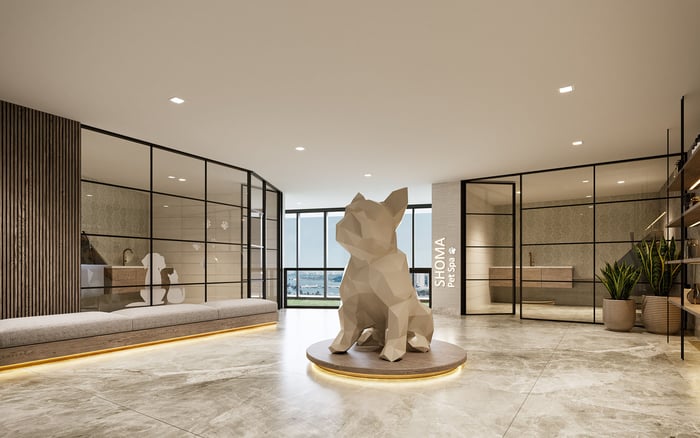
Luxury towers can be exceptional for pets when design and management align. They can also introduce hidden complications. Elevator dependence matters for puppies, senior dogs, anxious animals, and owners who travel frequently. Ask whether pets are expected to use a service elevator, whether wet paws require a particular route, and how staff handles a pet emergency when the owner is away.
Floor height is not automatically good or bad. A higher residence may offer calm and views, while a lower one may reduce time to the exterior. The right answer depends on your animal, household staff, and tolerance for repetition. Buyers should also think about terrace depth, door thresholds, flooring durability, sunlight exposure, and where feeding, grooming, sleeping, and storage will occur.
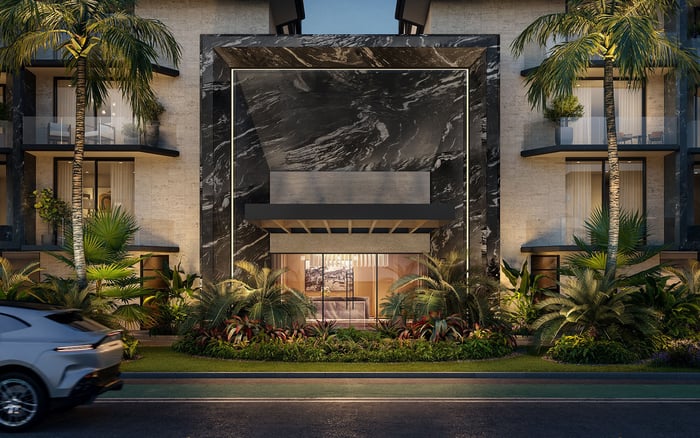
At Shell Bay by Auberge Hallandale, as with any major luxury offering, the prudent buyer should separate the broader lifestyle appeal from the exact pet experience documented in building materials and association rules. The distinction is important.
Many South Florida luxury owners travel often. A pet-friendly purchase should therefore work when the owner is not home. Can a dog walker access the building efficiently? Is there a protocol for recurring vendors? Does the residence have a practical place for leashes, carriers, towels, food deliveries, litter supplies, medications, and bathing accessories?
The best residences make pet care invisible. Storage matters. Service circulation matters. So does staff familiarity. A buyer should ask how the building handles deliveries related to pets, whether recurring pet-care professionals can be registered, and how entry is managed without compromising security.
Absence planning is especially important for second-home owners. If the residence will be used seasonally, confirm how pets fit into arrival days, departure cleaning, and guest stays. A property may be elegant for a weekend but inefficient for a three-month stay with two dogs and rotating family members.
Hallandale Beach buyers often look across a broader South Florida map. That comparison can be useful, provided the lens remains practical. A residence near Fort Lauderdale, such as Auberge Beach Residences & Spa Fort Lauderdale, may prompt different questions about daily walking rhythm, guest patterns, and service access than a Hallandale address. A Sunny Isles option such as Bentley Residences Sunny Isles may raise its own considerations around vertical circulation, privacy, and building protocol.
The point is not to assume one location is more pet-friendly than another. The point is to compare like an owner, not a tourist. In Hallandale, the strongest fit will be the property that harmonizes residence layout, staff culture, outdoor rhythm, and written rules.
This is where Hallandale Beach can appeal to buyers who want a refined coastal routine without losing access to the wider South Florida luxury corridor. But access is only valuable if the pet routine remains calm once the novelty of the purchase fades.
Pet-friendly features can enhance livability, but buyers should avoid over-customizing in ways that narrow future demand. Built-in feeding stations, pet doors, specialized flooring zones, and terrace modifications should be reviewed for aesthetics, reversibility, and association compliance. Luxury buyers expect discretion. Pet accommodations should feel integrated, not improvised.
Also consider how a future buyer will interpret the same rules. A clear, well-managed pet policy can reassure the market. Ambiguity can create hesitation. If you plan to rent the residence at any point, review whether pet rules change for tenants or guests, and whether insurance or deposits are required.
A thoughtful pet-friendly purchase is ultimately a form of risk management. It protects the animal’s comfort, the owner’s time, the residence’s condition, and the property’s long-term marketability.
Before making an offer, tour the exact path from residence to exterior. Time the elevator. Ask for the pet policy in writing. Confirm vendor access. Inspect flooring, terrace conditions, storage, thresholds, and acoustic privacy. Consider how the routine changes in rain, high heat, late night, and during building events.
Then ask yourself one simple question: Would I still love this home on an ordinary Tuesday morning with a leash in one hand and a conference call in ten minutes? If the answer is yes, the residence is not merely pet-friendly. It is lifestyle-friendly in the way that matters most.
What is the first pet-related document a Hallandale Beach buyer should request? Request the written pet policy and any association rules that affect pets, guests, vendors, elevators, and common areas.
Is a pet-friendly building always easy for daily dog walks? No. Permission and convenience are different, so buyers should test the actual route from residence to outdoor space.
Should I ask about weight or breed limits before touring? Yes. Clarifying restrictions early prevents wasted time and reduces the risk of discovering a conflict after you favor a residence.
Do guest pets matter in a luxury condo purchase? They can. If family, friends, or seasonal guests travel with pets, confirm whether guest animals are allowed and under what conditions.
How important is elevator protocol for pet owners? Very important. Elevator rules affect privacy, timing, staff interaction, and the comfort of both the pet and owner.
Should cat owners evaluate pet-friendliness differently? Yes. Cat owners should focus on acoustic calm, balcony safety, ventilation, maintenance access, and secure interior routines.
Can pet accommodations affect resale value? They can if modifications feel too personal or are difficult to reverse, so keep upgrades elegant and association-compliant.
What should second-home buyers consider for pets? They should plan for arrivals, departures, pet-care vendors, storage, cleaning, and periods when the owner is away.
Is a dog park the most important amenity for every pet owner? Not always. Some owners value controlled, private, predictable routes more than shared pet social spaces.
When should legal or insurance guidance be involved? Use professional guidance when questions involve service animals, emotional support animals, liability, leases, or association enforcement.
To compare the best-fit options with clarity, connect with MILLION.
If branded residences are on your mind — as a home or as an allocation — we would be glad to share what we are seeing, privately.
Begin a quiet conversation