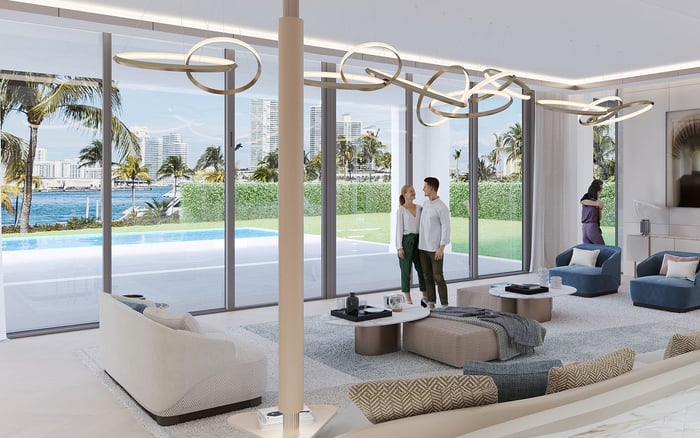
As currency markets tilt away from peak-dollar conditions, South Florida’s ultra-luxury corridor is being repriced in real time for global buyers. The story is not simply that a softer greenback makes Miami “cheaper.” It is that currency moves, cash-heavy international demand, and the region’s deep new-development pipeline are converging into a distinctly 2026 playbook: secure best-in-class assets, manage transaction eligibility and carrying costs, and treat FX as a material part of underwriting.
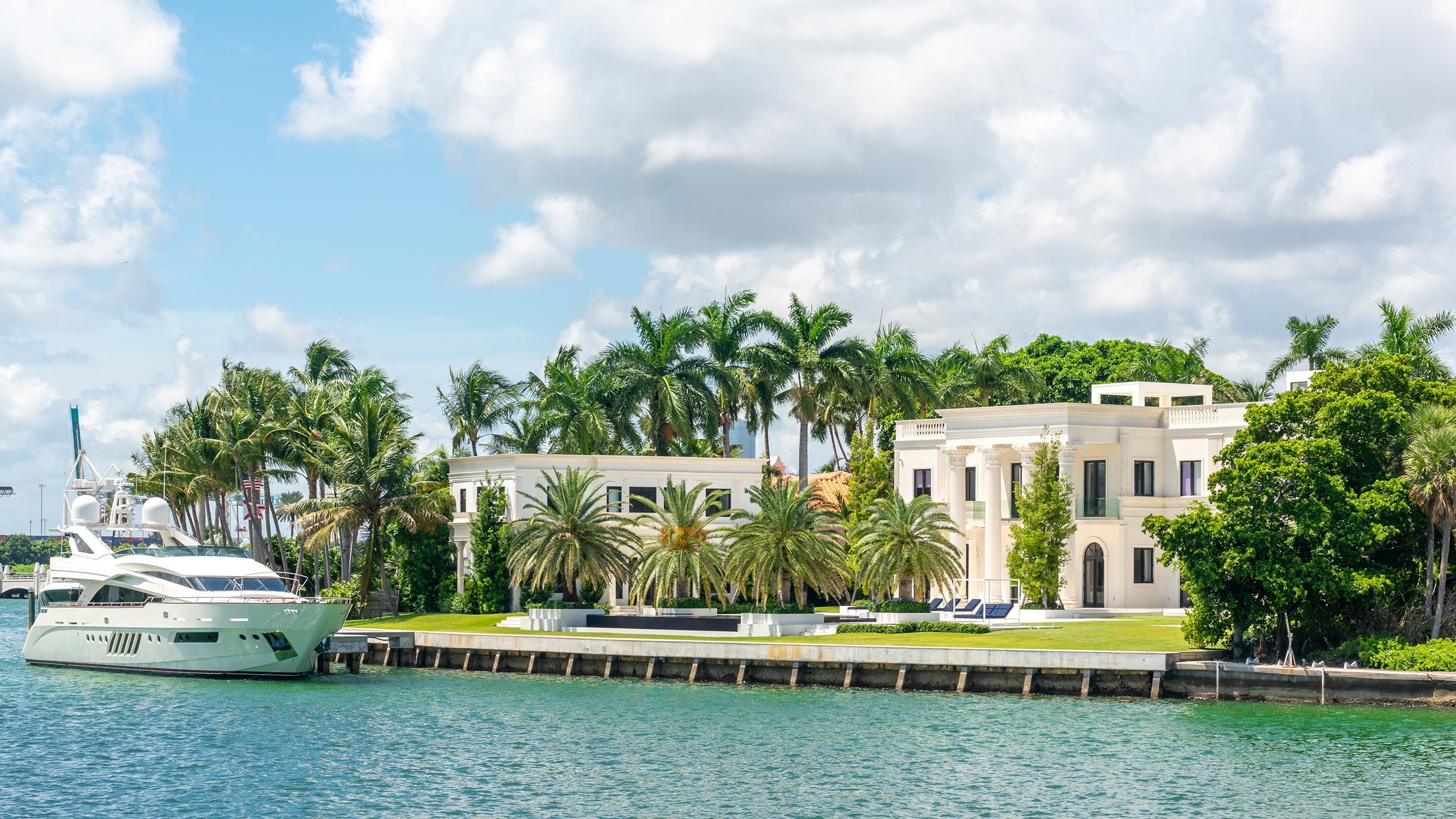
South Florida is one of the most internationally liquid luxury markets in the US. At the closing table, many deals carry an unspoken second ledger: the buyer’s base currency. When the US dollar weakens, the same Miami Beach residence can translate into materially fewer euros, yen, or Swiss francs, even if the price in US dollars is unchanged. For global households and family offices that already view prime US real estate as a capital-preservation asset, that translation effect can be the difference between monitoring a property and moving capital.
In 2026, that currency lens is especially relevant. Strategy desks have characterized the backdrop as “post-peak USD,” a shift that can quietly broaden the buyer pool for South Florida’s best inventory. Miami also benefits from something many prime global cities lack: a deep new-development ecosystem, including branded, amenity-forward, waterfront product built to international expectations.
MUFG Research reported the US dollar fell about 9.4% in 2025 on a DXY-weighted basis and forecast an additional roughly 5% decline in 2026. Even if the path is uneven, the real estate implication is simple: modest FX moves can produce meaningful changes in purchase power at the contract and closing stages.
A Redfin-cited analysis summarized by Real Estate News put hard numbers behind the concept. It estimated year-over-year purchasing-power gains of about 5.6% for euro buyers and roughly 7.6% for yen buyers, with Swiss franc and Swedish krona buyers also estimated around an 8% currency-related “discount” versus the prior year. The same analysis noted that ruble buyers paid about 9.6% less in ruble terms year over year even as US dollar prices rose roughly 1%.
The point is not that FX guarantees a bargain. It is that currency can be as consequential as a price negotiation, and timing, hedging, and home-currency exposure can swing the outcome in either direction.
South Florida’s luxury distribution is global by design, and the data reflects it. Miami REALTORS reported that foreign buyers accounted for 52% of South Florida new-construction, pre-construction, and condo-conversion sales over the 22 months through November 2025, with buyers coming from 73 countries. In an earlier comparable period of 18 months through June 2025, the foreign-buyer share was reported at 49%, suggesting international participation strengthened into late 2025.
The same Miami REALTORS dataset highlighted a Latin American concentration in several core submarkets. Neighborhood-level figures cited a large share of Latin American buyers among international buyers in areas such as Miami Beach, Brickell, Coral Gables, and Downtown Miami. The largest source countries for foreign new-development buyers included Colombia (23%) and Mexico (20%), followed by Argentina (11%) and Brazil (9%).
In practical terms, South Florida luxury is not only priced in dollars. It is distributed through a mature cross-border broker and referral network, often to buyers who can act quickly when FX, politics, or portfolio needs shift. When the dollar softens, that existing machinery tends to convert interest into signed contracts with fewer steps.
Miami Beach demand is often explained through lifestyle, but its durability is structural: beachfront scarcity, global status signaling, and a persistent preference for turn-key, service-forward residences. In a softer-dollar environment, the relative entry point into a trophy address can look more compelling for buyers comparing Miami with other global hubs.
Public comparisons of prime-market purchasing power have suggested that roughly $1 million buys about 58 square meters in Miami versus around 19 square meters in Monaco and about 34 square meters in London and New York. The value of that comparison is directional. It reinforces why Miami continues to present as competitive in global context, particularly when FX improves.
From an underwriting standpoint, the most legible inventory is often the easiest to evaluate from abroad: clear brand standards, predictable amenity programs, and operations aligned with international expectations. That is part of why buyers continue to focus on projects such as Shore Club Private Collections Miami Beach, where the residential concept is explicitly tied to hospitality and long-term positioning.
A similar logic applies to globally recognized lifestyle anchors such as Setai Residences Miami Beach, where brand familiarity can reduce perceived friction for buyers who divide time across multiple cities.
How a market clears matters as much as who is shopping. The National Association of REALTORS reported that 47% of foreign buyers paid all cash in US existing-home purchases, compared with 28% for all buyers. In luxury transactions, that cash tilt can shorten timelines, reduce contingencies, and keep deals less sensitive to incremental shifts in mortgage pricing.
That said, financing expectations still influence sentiment, especially for domestic buyers and leveraged investors. Redfin’s 2026 outlook projected 30-year mortgage rates averaging about 6.3% in 2026, with declines expected but not a return to ultra-low rates. In the upper tier, this reinforces a familiar rule: the most differentiated product stays most resilient, and carrying costs demand disciplined underwriting.
FX can widen the funnel of global demand, but the market still rewards fundamentals: scarcity, design, views, and a building’s operational profile.
At the high end, certainty is a feature. Florida’s SB 264, effective July 1, 2023, created restrictions on real-property ownership in Florida for certain “foreign principals,” as summarized in a legal analysis by Bilzin Sumberg. For international buyers and their advisors, eligibility checks and entity structuring have become part of transaction readiness.
The most prudent approach is to treat compliance as early-stage due diligence, not a closing-week scramble. In a competitive set, the cleanest deal often wins, and “clean” now includes a well-prepared legal posture.
South Florida’s luxury story has included substantial gains. Miami has been cited among the fastest-rising luxury markets globally from 2019 to 2024, with reporting pointing to about 84% cumulative growth over that period.
But 2026 is also a year when sophisticated buyers separate headline pricing from total ownership cost. Zillow’s Home Value Index showed a Miami-Dade County average home value of about $513,948 in November 2025, down roughly 3.7% year over year. That county-level measure does not define the ultra-prime segment, but it does signal that the broader market can soften at the margins.
Redfin’s 2026 outlook also flagged Miami and Fort Lauderdale among coastal Florida markets “most likely to cool down,” citing pressures such as insurance and disaster risk. For luxury purchasers, that translates into a more complete underwriting model: assumptions for insurance, resilience upgrades, and HOA or condo fees that reflect modern operations.
This is where the “global bargain” argument has limits. Price-per-area comparisons help frame relative value, but they do not capture South Florida’s carrying costs. A well-advised buyer weighs both the asset’s global positioning and the local cost to operate it.
Even in cooling cycles, certain micro-markets behave differently, especially where scarcity is extreme. Axios reported Fisher Island (33109) as the most expensive US ZIP code in 2025, with a median sale price of about $9.5 million. The takeaway is less about a single statistic and more about market structure: South Florida is a mosaic of micro-markets where supply constraints can override broader sentiment.
In Miami Beach’s most premium coastal bands, truly distinct new inventory can still command attention from domestic and international buyers, particularly when FX conditions are favorable. For buyers who prioritize discretion, low density, and design clarity, an oceanfront offering such as 57 Ocean Miami Beach illustrates the type of product that tends to trade on long-term desirability rather than short-term headlines.
For those whose definition of luxury includes service, brand stewardship, and a residence that functions like a private pied-a-terre with hotel-caliber support, The Ritz-Carlton Residences® Miami Beach sits squarely in the lane international buyers often favor.
In an FX-sensitive year, the strongest buyers behave less like tourists and more like allocators. This is the practical framework we see among sophisticated purchasers.
First, run two ledgers: the asset in US dollars and the asset in your base currency. If you are a euro or yen buyer, currency movement can meaningfully change real acquisition cost even when the asking price is unchanged.
Second, decide where you want liquidity. Brickell can present a different liquidity profile than Miami Beach, and that difference matters when you are planning an exit strategy or building a long-term hold portfolio.
Third, align your approach with the inventory cycle. New-construction and Pre-construction purchases can secure modern product and building standards, but they require patience and a clear view of timeline risk. For buyers prioritizing immediacy and known operating costs, resale can be the more efficient path.
Fourth, underwrite carrying costs with the same rigor as purchase price. Insurance, reserves, and building operations can change true annual cost per square foot materially.
Finally, treat legal readiness as part of offer strength. SB 264 and related compliance realities mean speed and clarity can differentiate you, especially when best-in-class homes attract multiple bidders.
For investors, this is also the moment to be explicit about intent. Strategies that depend on frictionless execution should prioritize the cleanest assets and the cleanest deal structures.
Tags to know in this context: Miami-beach, Brickell, New-construction, Pre-construction, Investment, and Fisher-island.
Is a weaker dollar automatically a discount on Miami real estate?
Not automatically. A weaker dollar can improve purchasing power for some foreign-currency buyers, but the impact depends on your base currency, timing, and whether you hedge.
Are international buyers still a major force in South Florida new development?
Yes. Miami REALTORS reported foreign buyers represented 52% of South Florida new-construction, pre-construction, and condo-conversion sales over the 22 months through November 2025.
Does cash still matter at the top of the market?
Yes. NAR reported 47% of foreign buyers paid all cash in US existing-home purchases, a dynamic that often supports faster, cleaner closings.
What should buyers watch in 2026 besides price?
Total cost of ownership and risk factors. Outlook commentary has highlighted insurance and disaster risk pressures in coastal Florida, which can influence underwriting and carrying costs.
For tailored guidance on South Florida’s ultra-prime inventory and deal execution, visit MILLION Luxury.
If branded residences are on your mind — as a home or as an allocation — we would be glad to share what we are seeing, privately.
Begin a quiet conversation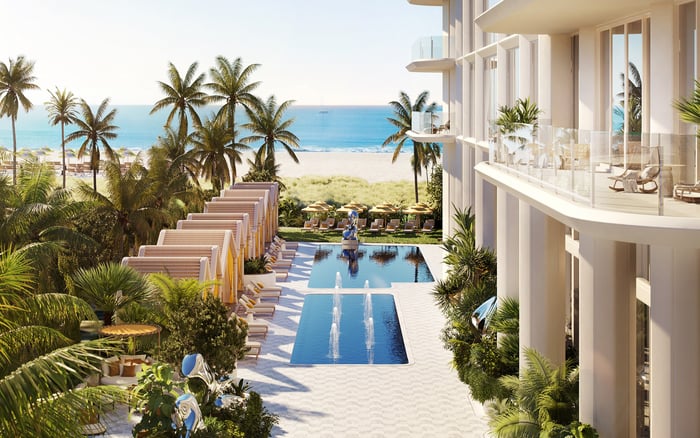
.jpg&width=700&height=438&fit=cover)