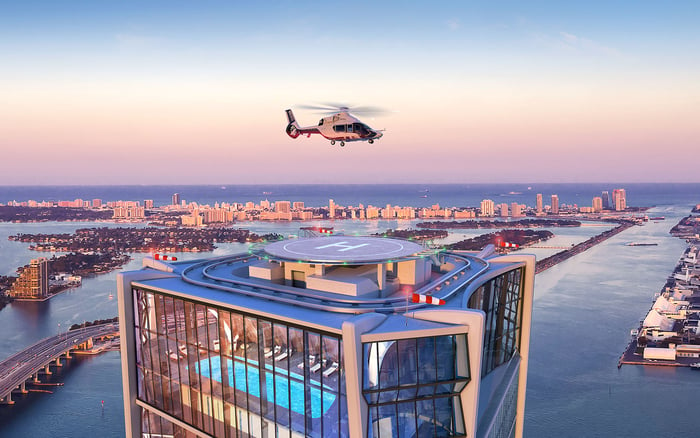
A practical, buyer-focused guide to evaluating restaurant exhaust considerations around Waldorf Astoria Residences Downtown Miami, with emphasis on seasonal ownership, high-floor due diligence, odor pathways, mechanical systems, and resale confidence.
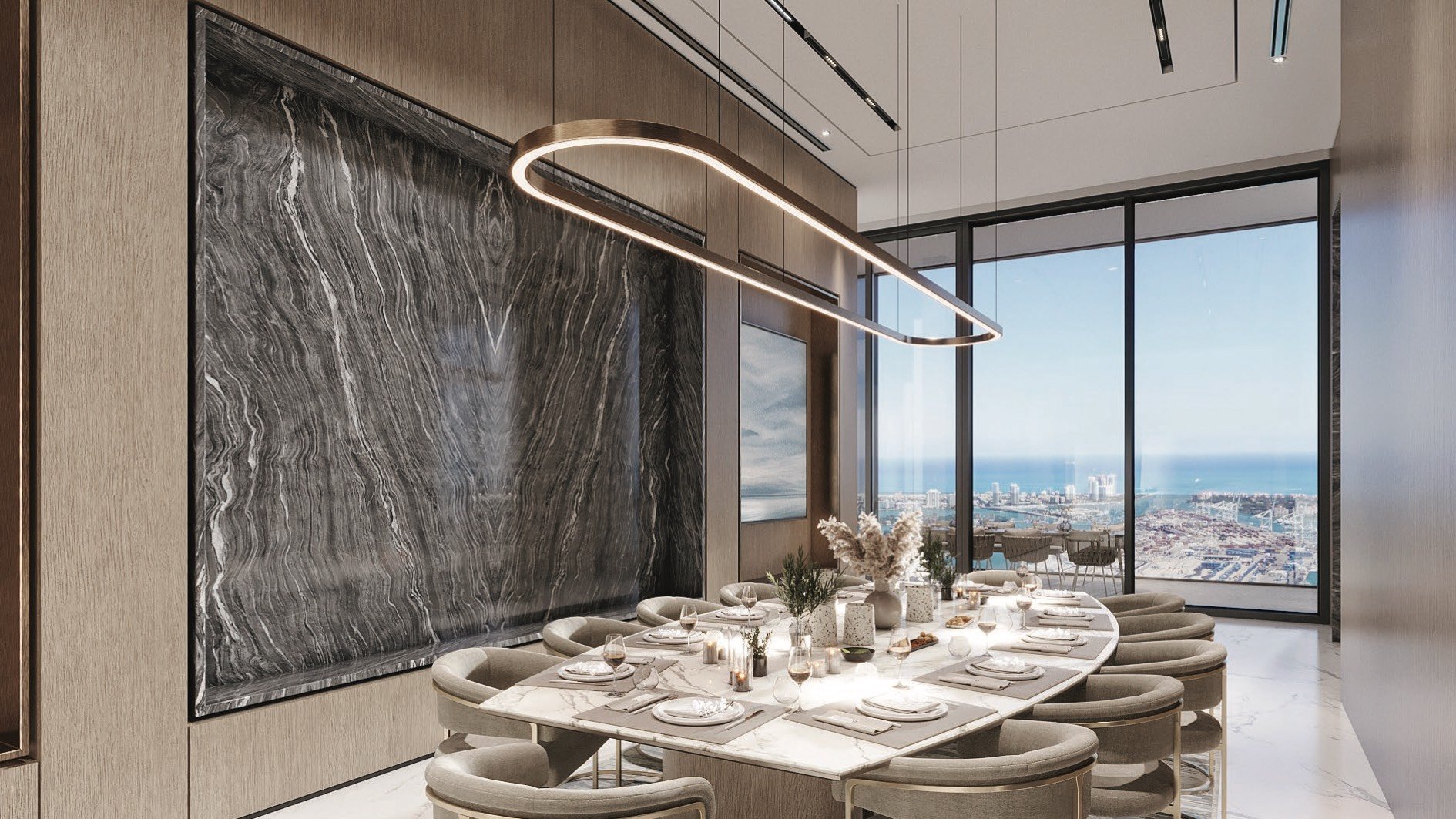
For seasonal buyers considering Waldorf Astoria Residences Downtown Miami, the conversation often starts with views, service, arrival sequence, finishes, privacy and the cachet of a globally recognized hospitality name. In a dense urban setting, however, one of the most practical questions is also among the easiest to overlook: how nearby restaurant exhaust may affect daily life when the residence is actually in use.
Restaurant exhaust is not simply a question of whether a kitchen sits below or nearby. It is a layered due diligence topic shaped by air movement, wind direction, terrace exposure, vertical distance, filtration, duct routing, building pressurization, operating hours and the way a city block behaves across the year. Downtown Miami is a high-energy environment where residential, hospitality, dining and office uses sit in close proximity. For a buyer arriving for winter, holiday periods, major cultural moments or long weekends, timing can matter as much as the floor plan.
This is especially relevant for second-home ownership, where the residence may be occupied most intensely during the same periods when restaurants, lounges and private dining rooms are most active. The right question is not whether restaurant activity exists. In a sophisticated urban luxury market, it usually does. The better question is whether the specific residence, terrace, exposure and mechanical context align with the buyer’s tolerance and intended lifestyle.
Odor is the most obvious concern, but it is not the only one. Restaurant exhaust can also introduce subtle acoustic issues, including fan noise, vibration or intermittent mechanical cycling. In some settings, the concern may be less about cooking aromas and more about the rhythm of operation: morning prep, lunch service, dinner service, late-night cleanup and weekend peaks.
For buyers who prize terrace use, the most relevant issue is the experience at the outdoor edge of the home. A living room may feel serene while a balcony or loggia captures occasional cooking aromas depending on wind and temperature. Conversely, a terrace may be unaffected while a service corridor, parking arrival, pool deck or porte-cochère picks up a noticeable trace at certain hours.
Luxury buyers should also distinguish between temporary construction-era uncertainty and completed-building reality. In new-construction contexts, restaurants may not yet be operating, retail tenants may not be finalized, and mechanical systems may still exist more in plans than in lived experience. That does not make the issue unmanageable. It means the buyer should ask more precise questions before assuming that a high floor automatically eliminates every practical concern.
Seasonal residents often experience Miami differently than year-round owners. They may arrive when evenings are cooler, terraces are used more often, restaurants are busier, and social programming is more concentrated. A residence that performs beautifully on a quiet weekday afternoon should also be considered during the hours a seasonal owner is most likely to entertain, dine nearby or open terrace doors.
Downtown has its own urban character, distinct from beachfront enclaves and low-rise residential neighborhoods. It rewards buyers who want access, energy and skyline living. It also requires a more metropolitan lens. In areas near Brickell, the Miami River, cultural venues and major hospitality corridors, food and beverage activity is part of the lifestyle ecosystem. For many buyers, that energy is an asset. For others, the priority is a residence that feels removed from it once the elevator doors close.
The decision is rarely binary. A buyer may welcome a vibrant streetscape while being highly selective about unit orientation. Another may want high floors for views and privacy but still ask how exhaust systems discharge, where intake vents are located, and whether prevailing breezes can carry odors upward or across façades.
The most productive approach is to ask disciplined, residence-specific questions. Where are commercial kitchen exhaust outlets expected to be located? Are any vents positioned near amenity decks, podium areas, arrival zones, pool terraces, private balconies or air intakes? If restaurant tenants are not yet known, what types of food and beverage uses are contemplated for the retail or hospitality components? Will there be charcoal cooking, high-output kitchens, late-night venues or mostly controlled indoor dining?
A seasonal buyer should also ask about separation. Vertical separation helps, but it is not the only variable. Horizontal offset, façade geometry, wind corridors, neighboring buildings and mechanical discharge height can all affect whether exhaust remains invisible or becomes part of the sensory experience.
Contract diligence should include a careful review of relevant plans, offering materials, use restrictions, maintenance obligations and building rules. Buyers may also want their representatives to ask how odor complaints are handled, how grease exhaust systems are maintained, and whether future commercial build-outs require approval that considers residential impact.
For Waldorf Astoria Residences Downtown Miami, the brand association may naturally encourage expectations of polish and discretion. That makes it even more important to evaluate practical urban performance with the same seriousness applied to finishes and service. The most elegant ownership experience is one in which the glamorous and the mechanical have both been considered.
Start with exposure. A residence facing one direction may have a very different relationship to exhaust pathways than another home on the same floor. Corner units can capture more breeze and more view, but they may also interact with wind in more complex ways. Terraces, operable windows, sliding glass systems and outdoor kitchens all deserve attention.
Next, consider the use pattern. If the home is primarily for quiet mornings and occasional long weekends, the buyer may weigh the issue differently than someone who plans to host dinners during peak season. If the residence will serve as a family retreat, sensitivity to odor and outdoor usability may matter more. If rental potential is part of the strategy, even occasional nuisance factors can influence guest perception.
A walk-through, when available, is most informative at the right hour. Late afternoon, early evening and weekend periods often reveal more than a polished midday showing. In a pre-completion setting, buyers cannot test the lived condition, so the analysis shifts to drawings, mechanical disclosures, developer representations and the professional judgment of advisors familiar with urban mixed-use buildings.
Restaurant exhaust diligence is not only about comfort. It is also about future marketability. Sophisticated buyers increasingly understand that the best residence is not simply the one with the highest elevation or the most dramatic view. It is the one with the fewest compromises that require explanation during resale.
In a luxury negotiation, small experiential factors can become meaningful. A terrace with a protected view but periodic cooking odor may still be desirable, but it should be priced and evaluated with clear eyes. A residence that combines privacy, view, clean air movement and quiet mechanical surroundings may command broader appeal among seasonal and international buyers.
This is where discretion matters. The goal is not to alarm a buyer or diminish the appeal of Downtown living. It is to make the acquisition more intelligent. Restaurant culture is part of Miami’s luxury identity, and many buyers want that convenience close by. The key is ensuring it does not intrude into the private realm of the home.
For the ultra-premium buyer, restaurant exhaust should sit alongside other refined but practical checks: elevator strategy, service access, valet flow, back-of-house routing, loading areas, amenity adjacency, sound transmission and privacy from neighboring towers. These are not glamorous topics, but they are often what separate a good purchase from an effortless one.
The most successful buyers approach Waldorf Astoria Residences Downtown Miami with both imagination and discipline. They can appreciate the symbolism of the address while still asking where ducts terminate, how air moves, and what the residence feels like at 8 p.m. in season. In a city defined by water, light, hospitality and vertical living, that combination of aspiration and precision is the true luxury posture.
Should restaurant exhaust be a concern for every buyer? Not necessarily. It depends on the residence, exposure, elevation, wind behavior and the buyer’s sensitivity to odor or mechanical sound.
Do higher floors always avoid restaurant exhaust? Higher elevation can help, but it is not a guarantee. Wind, building form and exhaust discharge locations can still matter.
What should seasonal buyers ask first? Ask where restaurant exhaust outlets, air intakes and amenity areas are located in relation to the specific residence being considered.
Is odor the only issue to evaluate? No. Fan noise, vibration, operating hours and terrace comfort can also influence the ownership experience.
Can this be evaluated before the building is complete? Yes, but the review relies more on plans, disclosures, mechanical information and professional interpretation than lived observation.
Does restaurant activity reduce the appeal of Downtown living? Not for many buyers. Dining energy can be a lifestyle advantage when properly separated from private residential space.
Should terrace buyers be more careful? Yes. Outdoor space is more exposed to wind and surrounding uses, so terrace orientation deserves special attention.
Can future restaurant tenants change the analysis? They can. Different cuisines, hours and kitchen systems may create different exhaust profiles.
Is this mainly a resale issue or a lifestyle issue? It is both. Comfort during ownership and clarity during resale are closely connected in the luxury market.
Who should help review this topic? Buyers should work with advisors who understand luxury condominiums, mixed-use buildings and the practical details of urban ownership.
For a tailored shortlist and next-step guidance, connect with MILLION.
If branded residences are on your mind — as a home or as an allocation — we would be glad to share what we are seeing, privately.
Begin a quiet conversation