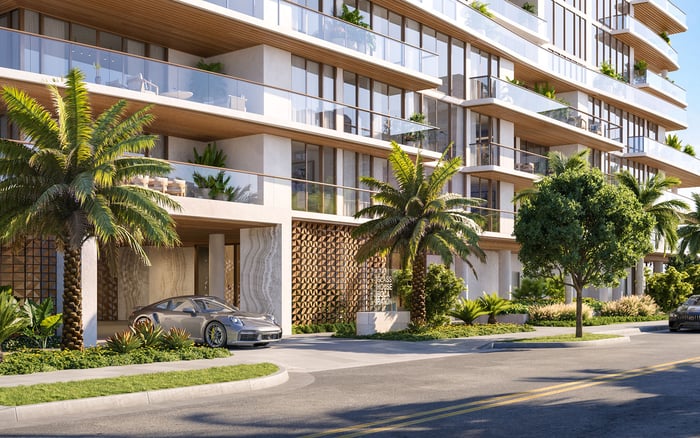
At Glass House Boca Raton, insurance diligence should connect the association’s master program, owner coverage, deductible allocation, flood protection, reserves, and potential assessments into one ownership-cost analysis.

At Glass House Boca Raton, insurance is not a peripheral closing item. It is central to annual carrying costs, downside protection, and future assessment risk for primary-residence and second-home buyers.
Wind, flood, and storm exposure require careful review. A significant loss can create a financial gap if policy limits, deductibles, exclusions, or reserves do not respond as expected.
A polished presentation cannot answer technical coverage questions. Investment discipline begins with current documents, not assumptions.
The condominium association's master insurance program should anchor diligence. Buyers and their advisers should review current declarations and endorsements, identifying insured limits, covered property, exclusions, valuation basis, and named-storm provisions. The objective is not merely to confirm that coverage exists, but to understand what the policy is designed to pay, what falls outside the contract, and where an owner may ultimately bear a shortfall.
The review should also connect policy language to the condominium documents. Coverage boundaries can determine whether the association or individual owner is responsible for particular finishes, improvements, fixtures, or other items after a loss. Project-specific carrier, premium, deductible, flood-zone, and engineering information must be confirmed through current association and transaction materials.
The same framework applies when comparing Boca Raton alternatives such as Alina Residences Boca Raton or The Residences at Mandarin Oriental Boca Raton. The comparison should rest on verified insurance and financial documents rather than branding or perceived luxury positioning.
Windstorm diligence begins with a deceptively simple question: Is the deductible a fixed dollar amount or a percentage? A percentage deductible can create materially different exposure from a fixed sum, so buyers should request the actual deductible schedule and determine the value to which any percentage applies.
The next question is allocation. If a storm loss falls below the deductible, exceeds a sublimit, or involves excluded property, the association may need to fund the gap. Buyers should determine whether that amount could be absorbed by operating funds or reserves-or allocated among owners through an assessment. The condominium documents, budget, board materials, insurance endorsements, and pending-assessment disclosures should be read together.
For high-value units, loss-assessment coverage under an individual policy warrants particular attention. The limit should be tested against the owner's potential share of an association deductible or uninsured loss, rather than selected as an abstract policy feature.
Flood review should extend beyond the residence. The relevant inquiry encompasses the structure, common areas, parking, mechanical equipment, and other potentially exposed building components. Buyers should request the current flood policy and examine its limits, covered property, deductibles, and exclusions alongside available flood-zone and elevation documentation.
Broad comparisons can mislead because each condominium may have a different physical configuration, coverage structure, or reserve posture. A buyer considering Rosewood Residences Hillsboro Beach should apply the same questions independently to each association. No project's answers should be inferred from another's.
The master policy does not eliminate the need for individual protection. Owners may remain exposed through their unit policies, personal-property coverage, loss-assessment coverage, and responsibility for items excluded from the association program. The unit policy should be coordinated with the master policy so that coverage boundaries are clear before binding.
A disciplined review asks whether the owner's policy covers interior property and improvements for which the owner is responsible, provides adequate personal-property protection, and carries sufficient loss-assessment coverage. An insurance adviser should also identify exclusions or conditions that could create gaps between the policies. The goal is a coordinated structure, not two policies reviewed in isolation.
Reserve funding influences whether an association can absorb deductibles, uninsured losses, and major repairs without turning quickly to owners. Buyers should review the current budget, reserve schedule, recent board minutes, claims history, and pending-assessment disclosures. A reserve balance has limited meaning without context: planned expenditures, funding assumptions, and competing demands all matter.
The practical test is liquidity under stress. If a named storm creates a deductible obligation while a major repair is also pending, can the association address both without a special assessment? The answer may affect near-term cash flow and the predictability of ownership costs.
Resilience features and disciplined reserve funding can improve cost predictability, but neither should be presumed. Relevant building features should be confirmed through current project and engineering documents.
Premiums, deductibles, reserve contributions, and potential assessment exposure belong in the acquisition model. A prudent projection separates recurring costs-such as the owner's policy and association insurance embedded in common charges-from contingent exposures, including a deductible allocation or uninsured repair.
Buyers should look beyond the current premium. The more consequential question is how the association has structured protection, funded reserves, handled prior claims, and disclosed future obligations. That perspective makes insurance diligence a measure of governance and cost predictability rather than a last-minute request for evidence of coverage.
Why is the master policy central to diligence? It defines much of the building-level protection and can reveal limits, exclusions, deductibles, and coverage boundaries that affect owners.
What should a buyer request first? Request current master-policy declarations and endorsements, the flood policy, claims history, budget, reserve schedule, board minutes, and assessment disclosures.
Why does the wind deductible structure matter? Fixed-dollar and percentage deductibles can create very different association-level exposures after a covered storm.
How could an association deductible affect one owner? Any unfunded portion may be allocated among owners under the condominium documents, potentially resulting in an assessment.
What should flood diligence cover? Review protection for the structure, common areas, parking, mechanical equipment, and other exposed components-not solely the residence.
Does the association policy cover everything inside a unit? Coverage boundaries vary, so buyers must verify responsibility for interiors, improvements, fixtures, personal property, and excluded items.
What is loss-assessment coverage? It is owner-level coverage that may respond to certain assessments arising from association deductibles or uninsured losses, subject to its terms.
Why examine reserves when reviewing insurance? Reserves can influence whether the association absorbs deductibles and repairs internally or turns to owners for additional funds.
Can project-specific insurance terms be assumed from luxury positioning? No. Carrier, premium, deductible, flood-zone, engineering, and policy details require confirmation through current documents.
How should insurance enter the purchase budget? Include recurring premiums and reserve contributions, then model contingent deductible allocations, uninsured losses, and special assessments.
For a discreet conversation and a curated building-by-building shortlist, connect with MILLION.
If branded residences are on your mind — as a home or as an allocation — we would be glad to share what we are seeing, privately.
Begin a quiet conversation