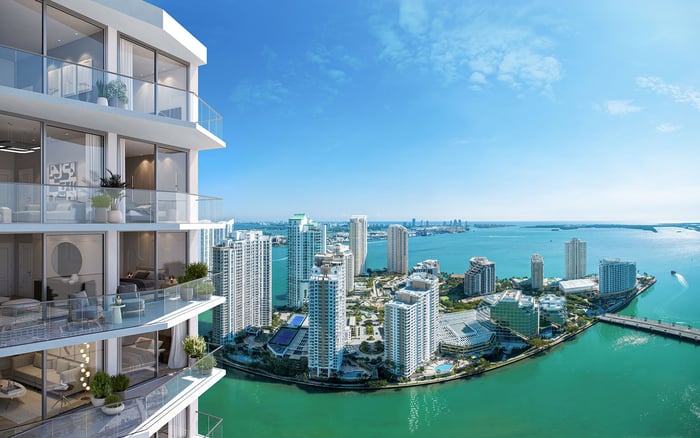
A discreet buyer’s guide to evaluating Brickell Key through the lens of private aviation, with emphasis on arrival flow, privacy, service logistics, residence fit, and resale discipline.
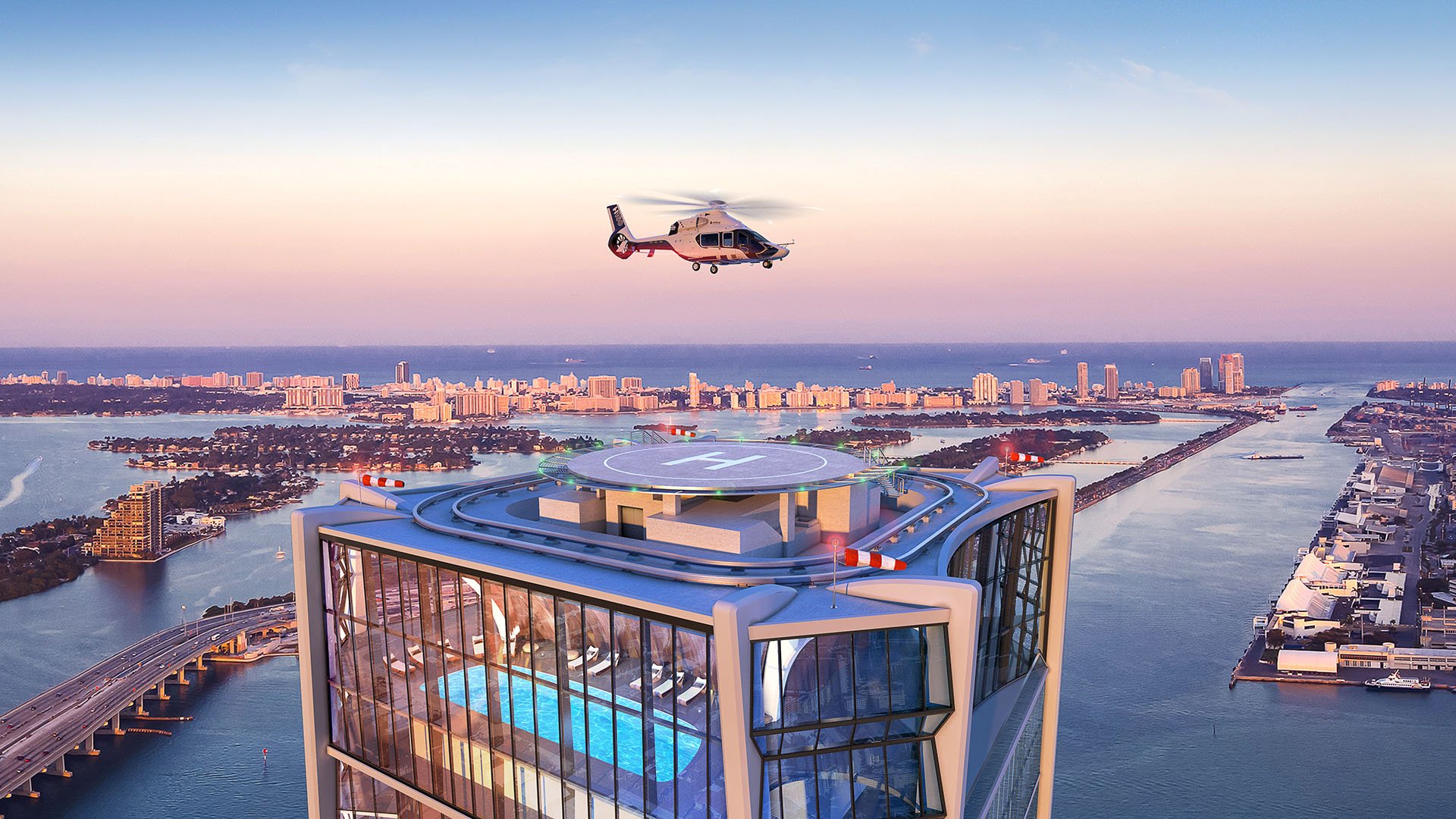
For a private aviation user, a luxury residence is only as strong as its arrival sequence. Brickell Key may feel like a natural fit for buyers who want an urban waterfront setting with a measure of separation from the mainland pace, but the decision should not begin with finishes, skyline exposure, or a dramatic terrace. It should begin with a timed, repeated, real-world transfer from aircraft to front door.
Ask your advisor to arrange a test that mirrors your life, not a sales appointment. Arrive with the same number of people who usually travel with you. Bring the luggage you normally carry. Include a driver, security detail, assistant, children, pets, or guests if they are part of your routine. The question is not whether the residence photographs well. The question is whether it performs gracefully after a late flight, in formalwear, with bags, calls, and no tolerance for friction.
This is where Brickell, Downtown, Waterview, High-floors, New-construction, and Second-home should be treated as practical search lenses rather than marketing labels. Each term implies a different operational reality, and private aviation buyers should test those realities before negotiating.
A serious pressure test has at least three runs: one during a calm weekday window, one during an evening arrival, and one when the household is moving quickly. Do not rely on a best-case route. Record the entire sequence from aircraft exit to residence entry, including car positioning, luggage transfer, building arrival, elevator timing, valet handoff, security desk interaction, and the walk into the unit.
The most revealing moments are often small. Does the driver have a dignified place to pause? Is the entrance intuitive for guests who have never been there? Can staff unload without making the arrival feel public? Does the building team understand the rhythm of high-discretion residents, or does every arrival require explanation?
If you are also considering newer Brickell addresses, use them as live comparables. A showing at The Residences at 1428 Brickell can help frame how you value arrival, lobby sequence, vertical circulation, and residence planning against the quieter island proposition. The goal is not to crown a winner in one visit. It is to understand the kind of daily choreography you are buying.
Private aviation users tend to prize control. That control can be diluted by predictable moments: a vehicle waiting in the wrong place, luggage visible in the lobby, guests unsure where to go, or service providers entering through a path that feels too exposed. Before buying, ask to see every route a household may use, including owner arrival, guest arrival, staff access, deliveries, moving logistics, and emergency access.
Privacy is not only about who can see into a residence. It is about who observes your patterns. A residence with commanding views may still fail if the daily entry sequence feels overly legible. Conversely, a less theatrical unit can be more valuable to a particular buyer if the building handles arrivals with discretion and consistency.
Compare that experience with mainland Brickell residences such as St. Regis® Residences Brickell or Baccarat Residences Brickell, especially if brand service, guest handling, and formal hospitality are high priorities. The private aviation buyer is not only comparing floor plans. The real comparison is between service cultures.
A residence used after frequent flights must help its owner recover. That sounds simple, yet many beautiful apartments are designed for presentation before restoration. During a showing, spend time in the primary suite, kitchen, family area, terrace, and quietest room. Imagine arriving after a long flight. Where do bags land? Where does an assistant work for ten minutes without intruding? Where does a guest wait? Where can a child sleep while the household is still active?
Light, acoustics, elevator adjacency, bedroom separation, and staff circulation should be evaluated through lived scenarios. High-floors may offer drama, but they should also be measured against elevator dependence and the owner’s tolerance for vertical movement. Waterview may be deeply calming, but only if the plan lets you enjoy it in the rooms you actually use.
If the property will function as a Second-home, the pressure test changes. You need to know how the residence feels after weeks away. Is the entry sequence simple for caretakers? Can the home be opened quickly? Does the building team support the cadence of an owner who appears intensely, then disappears for stretches?
The most polished acquisition can feel fragile without a backup plan. Private aviation households should define what happens when the primary driver is delayed, when guests arrive separately, when luggage is sent ahead, when a pet must be handled discreetly, or when weather changes the day’s rhythm. The building does not need to solve every issue, but it should be compatible with the way your team solves them.
Ask direct, practical questions. How are late arrivals handled? Where do trusted vendors wait? How are large deliveries scheduled? What happens if the owner wants no lobby interaction? How does the building communicate with household staff? None of these questions is glamorous, which is precisely why they matter.
For buyers comparing the island experience with a more urban Downtown profile, Aston Martin Residences Downtown Miami can serve as a useful counterpoint in the tour schedule. A private aviation buyer may discover that proximity to dining and city energy matters less than anticipated, or more. The only reliable answer comes from testing the lifestyle, not imagining it.
A disciplined buyer also studies the exit before entering. The next purchaser may be another private aviation user, an international family, a finance principal, or a buyer seeking a lock-and-leave waterfront home. Your residence should make sense to more than one future audience.
Look for attributes that remain legible without overexplaining: a gracious arrival, a rational plan, privacy, usable outdoor space, views that are easy to understand, and building operations that feel composed. Avoid paying solely for a feature that matters only to your current routine unless you are comfortable treating it as personal consumption rather than investment logic.
The best Brickell Key purchase is not necessarily the most dramatic one. It is the residence that makes repeated arrivals feel calm, keeps the household invisible when desired, supports staff without spectacle, and still reads beautifully to the next qualified buyer.
What should a private aviation buyer test first? Start with the full arrival sequence from aircraft exit to residence entry. Time it under conditions that resemble your real travel life.
How many arrival tests are enough before buying? Three is a sensible minimum: calm daytime, evening, and a more demanding scenario with luggage, guests, or staff.
Should views outweigh arrival logistics? Not for this buyer profile. A spectacular view loses power if every arrival feels exposed, slow, or poorly managed.
Why compare Brickell Key with mainland Brickell? The comparison clarifies whether you value separation, brand service, city energy, or a particular building culture more.
What should staff evaluate during showings? Staff should review loading, vendor access, delivery procedures, communication style, and how discreetly the building operates.
Is a High-floors residence always better? Not always. High-floors can be compelling, but buyers should weigh the view against elevator rhythm and daily convenience.
What makes a residence work as a Second-home? It should be easy to open, easy to secure, and simple for trusted caretakers to manage when the owner is away.
How should buyers think about New-construction? New-construction should be evaluated for operational fit, not only design freshness. Service flow and privacy still need testing.
Does a Waterview automatically improve resale? A Waterview can broaden appeal, but resale strength also depends on plan, privacy, condition, and building execution.
What is the best way to shortlist comparable options for touring? Start with location fit, delivery status, and daily lifestyle priorities, then compare stacks and elevations to validate views and privacy.
To compare the best-fit options with clarity, connect with MILLION.
If branded residences are on your mind — as a home or as an allocation — we would be glad to share what we are seeing, privately.
Begin a quiet conversation