Salt air gives South Florida residences their emotional pull, but it also tests whether a wellness program is truly resilient. For luxury buyers, the difference lies in materials, maintenance intelligence, mechanical comfort, and design choices that make coastal living feel calm long after the brochure moment fades.
In South Florida luxury real estate, wellness is no longer a room on the amenity floor. It is the full experience of arrival: the quiet of a corridor, the freshness of interior air, the way a terrace door closes after a stormy afternoon, and the confidence that proximity to the ocean will not slowly erode the daily experience of ownership.
Salt air is beautiful, but it is also unforgiving. It moves through balconies, pool decks, outdoor kitchens, railings, hardware, landscaping, spa areas, and mechanical spaces. It settles into finishes and reveals whether a residence has been conceived as a coastal home or merely styled as one. For buyers comparing oceanfront towers, Miami Beach addresses, branded residences, and boutique waterfront buildings, salt exposure separates real wellness from amenity marketing with unusual clarity.
The distinction is subtle at first. A rendering can make any spa glow. A deck can look serene before a building is occupied. A balcony can be staged with pale furniture and sculptural planting. But over time, wellness depends on resilience. The most desirable properties are not simply those with the longest amenity menus. They are the ones where materials, air, shade, water, circulation, and maintenance work together.
A cold plunge, sauna, massage room, yoga studio, and pool may suggest wellness, but they do not guarantee it. In a salt-air environment, true wellness begins with how the building manages exposure. Does the amenity deck feel comfortable in humid, windy conditions? Are outdoor surfaces selected for grip, durability, and ease of care? Do shaded areas support real use during bright afternoons? Do indoor wellness spaces feel fresh rather than perfumed?
This is where sophisticated buyers should read beyond lifestyle language. A well-executed wellness program considers the transitions between spaces: lobby to elevator, residence to terrace, gym to recovery area, pool to shower suite, beach path to service corridor. In coastal living, comfort often depends on these thresholds. The most refined buildings make movement feel effortless without allowing the ocean environment to overwhelm interiors.
New-construction buyers should be especially attentive because newness can disguise untested decisions. Fresh finishes can look flawless at delivery, yet the more important question is how they are expected to age. Wellness should not require owners to forgive constant staining, corrosion, heat gain, glare, or dampness. It should reduce friction.
Salt air has a way of exposing decorative thinking. Metals, exterior fabrics, stone selections, wood-look surfaces, door hardware, lighting fixtures, and poolside details all contribute to the wellness experience because they determine whether a place continues to feel serene after regular coastal use.
For a luxury buyer, the question is not whether a finish looks expensive. The question is whether it belongs near salt, sun, wind, and humidity. The best coastal residences approach materials with restraint. They avoid novelty where durability matters, favor tactile calm over fragility, and anticipate how owners actually live after a swim, a beach walk, or a stormy evening.
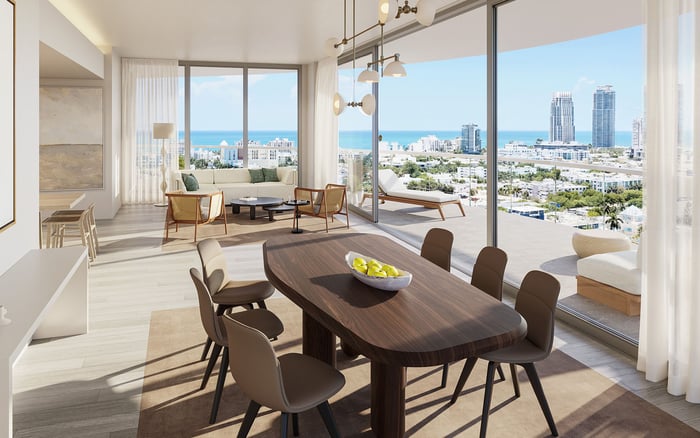
This is especially important on private terraces and outdoor rooms. The terrace has become one of South Florida’s defining luxury spaces, but it is also one of the most exposed. If flooring, railings, drains, planters, lighting, and furniture zones are not considered as a single environment, the terrace can become more performative than restorative. Real wellness means the owner uses the space often, not only when it photographs well.
In coastal residences, air is central to comfort. Buyers often focus on views, ceiling heights, and amenity counts, but the daily quality of a home is shaped by ventilation, humidity control, filtration, and the ability to move between indoor and outdoor living without making interiors feel heavy.
Salt air is part of the emotional appeal of South Florida. It makes mornings feel open and evenings feel cinematic. Yet inside a private residence, wellness requires control. Bedrooms should feel calm. Closets should feel protected. Fitness and spa areas should not feel damp after peak use. Common corridors should not carry the scent of pool chemicals, wet towels, or service traffic.
This is why the best wellness buildings feel composed rather than scented. Fragrance is not air quality. A softly perfumed lobby cannot compensate for poor humidity management or uncomfortable transitions. Sophisticated buyers notice whether interiors feel naturally clean, whether amenity spaces recover well after use, and whether the building’s atmosphere feels consistent from morning to night.
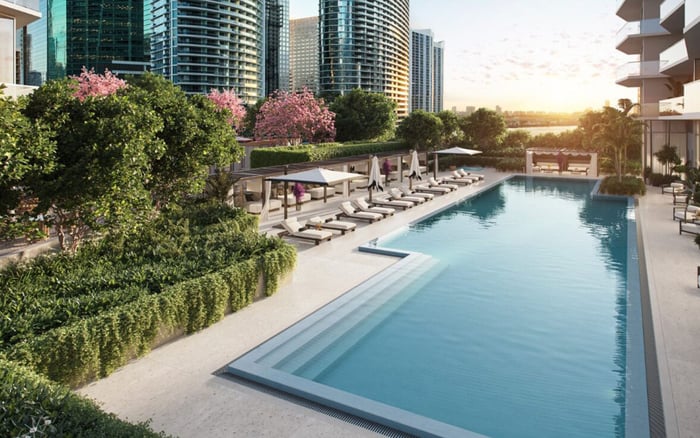
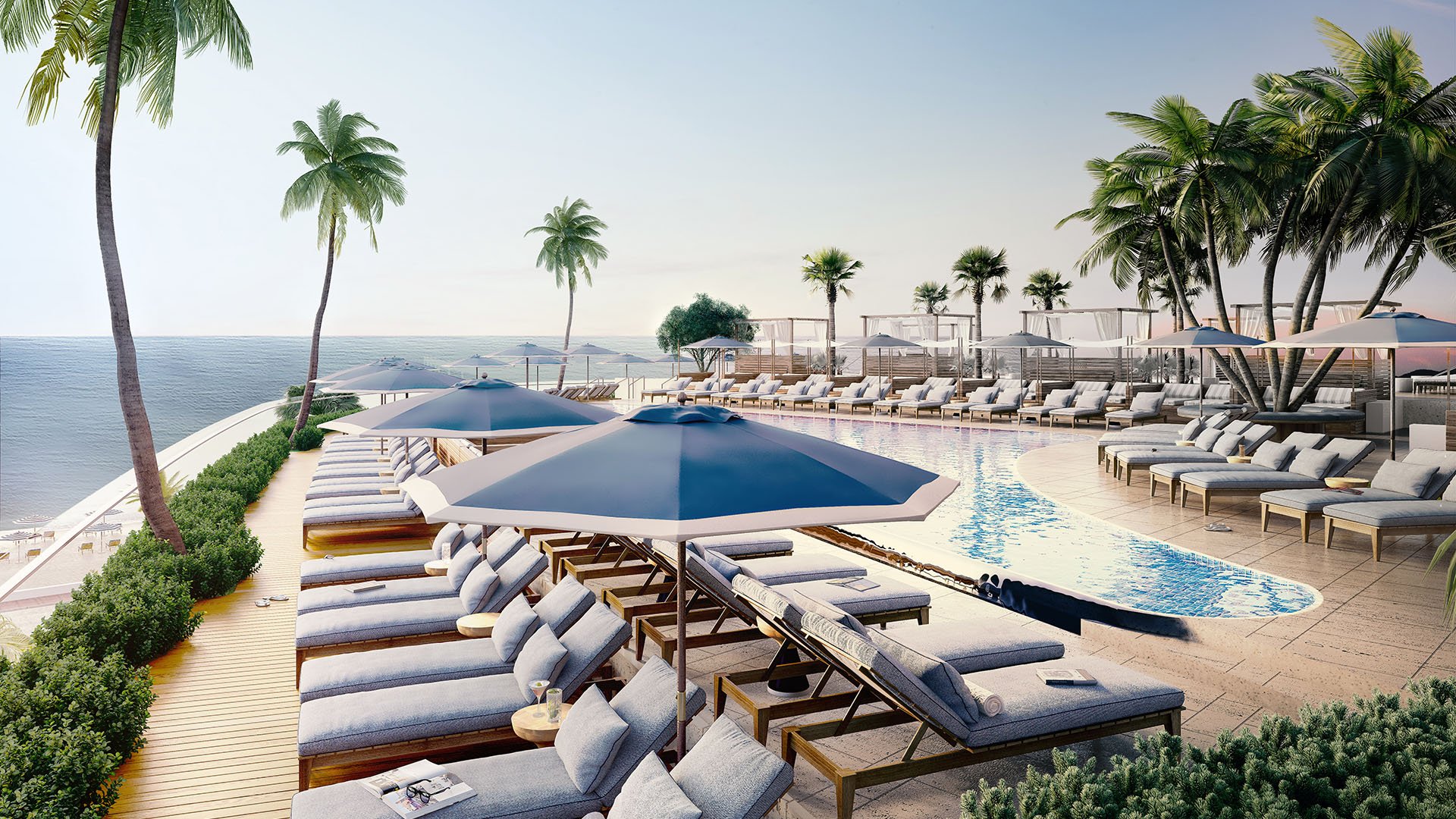
Few areas reveal the seriousness of a wellness concept faster than the pool deck. It is exposed to sun, salt air, water, sunscreen, food service, foot traffic, and social use. It must be beautiful, durable, safe, and calming all at once.
A true wellness pool environment is not simply a large body of water with cabanas. It considers shade, acoustics, privacy, towel service flow, shower access, planting resilience, surface temperature, lighting, and the relationship between active and quiet zones. A pool that looks resort-like but feels loud, slippery, overheated, or crowded is not wellness. It is branding.
Buyers should also think about how pool areas age. Are furnishings easily refreshed without changing the character of the space? Are planters and edges detailed to avoid a tired appearance? Does the deck support both social life and solitude? The best luxury buildings understand that wellness is not one mood. It must accommodate exercise, recovery, family time, reading, sun, shade, and privacy.
The balcony is often treated as a view platform, but in South Florida it is also a private wellness room. It is where an owner takes morning coffee, reads in the wind, stretches after a flight, or watches the water at night. Its value depends less on staging and more on usability.
Depth, privacy, shade, wind comfort, drainage, lighting, and furniture planning matter. A narrow balcony with a spectacular view may still feel less useful than a calmer outdoor room with thoughtful proportions. Salt-air exposure intensifies the issue. If the space is difficult to furnish, clean, or protect, it becomes occasional rather than habitual.
The strongest residences make outdoor living feel natural. They allow owners to keep doors open when conditions are right, host without crowding interiors, and enjoy exposure without feeling exposed. In this sense, the balcony or terrace is not an accessory. It is part of the residence’s wellness infrastructure.
Marketing tends to describe wellness as abundance. Owner reality values reliability. The difference becomes visible after move-in, when service teams, maintenance schedules, resident behavior, and material performance begin shaping the lived environment.
A building may advertise multiple wellness spaces, but buyers should ask how they are managed. Is the gym positioned for privacy and natural light? Are recovery rooms insulated from noise? Are wet areas designed for heavy use? Is the spa sequence intuitive? Does the building support wellness at peak hours, or only in an empty sales-gallery narrative?
Discretion is another indicator. The best wellness spaces do not make residents feel displayed. They offer privacy without isolation, service without intrusion, and programming without pressure. For high-net-worth buyers, this may be more valuable than spectacle. Wellness is personal; the building should make it easy to maintain rituals quietly.
Before purchasing in a salt-air environment, buyers should look at wellness through practical questions. How are exposed materials maintained? How are outdoor furnishings specified? How are humidity, ventilation, and odors controlled? How does the building separate beach, pool, delivery, valet, pet, and service flows? How do amenity spaces feel when they are actually in use?
These questions are not anti-romantic. They protect the romance. South Florida living is at its best when the sensory pleasures of water, light, breeze, and openness are supported by intelligent design. The right residence makes the coast feel effortless. The wrong one asks the owner to manage the consequences of exposure.
In the luxury segment, wellness should be measured by how gracefully a property absorbs the realities of its location. Salt air is not an inconvenience to be hidden. It is the defining environmental condition. Buildings that respect it will feel calmer, age more elegantly, and serve owners more convincingly.
Why does salt air matter in luxury real estate? Salt air affects exposed surfaces, outdoor amenities, comfort, and long-term upkeep. It reveals whether a residence was designed for coastal living or simply marketed that way.
Is a larger amenity program always better for wellness? No. A smaller, better-designed program can feel more restorative than a long list of spaces that are uncomfortable, crowded, or difficult to maintain.
What should buyers inspect on a terrace or balcony? Look for usable proportions, shade, drainage, privacy, wind comfort, lighting, and materials that appear appropriate for coastal exposure.
How can a pool deck indicate building quality? A pool deck shows how a property handles sun, water, traffic, service, shade, safety, and durability in one highly visible setting.
Does new construction guarantee better wellness design? Not automatically. Newness can be appealing, but buyers should still evaluate materials, maintenance plans, air comfort, and real usability.
Why is air quality so important near the ocean? Coastal living invites indoor-outdoor movement, so humidity control, ventilation, and freshness shape everyday comfort inside the residence.
Are branded residences more reliable for wellness? A brand can signal intent, but execution matters more. Buyers should judge the physical environment, service model, and long-term maintenance approach.
What is the difference between wellness design and amenity marketing? Wellness design improves daily life through comfort, privacy, resilience, and ease. Amenity marketing may emphasize features without proving how they function.
Should investors care about salt-air performance? Yes. Residences that age gracefully and remain comfortable may be easier to position in the luxury market over time.
What is the simplest buyer takeaway? Treat every wellness promise as part of a larger coastal system. If the building respects salt air, the lifestyle usually feels more authentic.
For a tailored shortlist and next-step guidance, connect with MILLION.
If branded residences are on your mind — as a home or as an allocation — we would be glad to share what we are seeing, privately.
Begin a quiet conversation