A buyer-focused comparison of two of Miami’s most closely watched new luxury towers, clarifying where pricing overlaps, how the amenity models diverge, and which ownership profile each residence best serves.
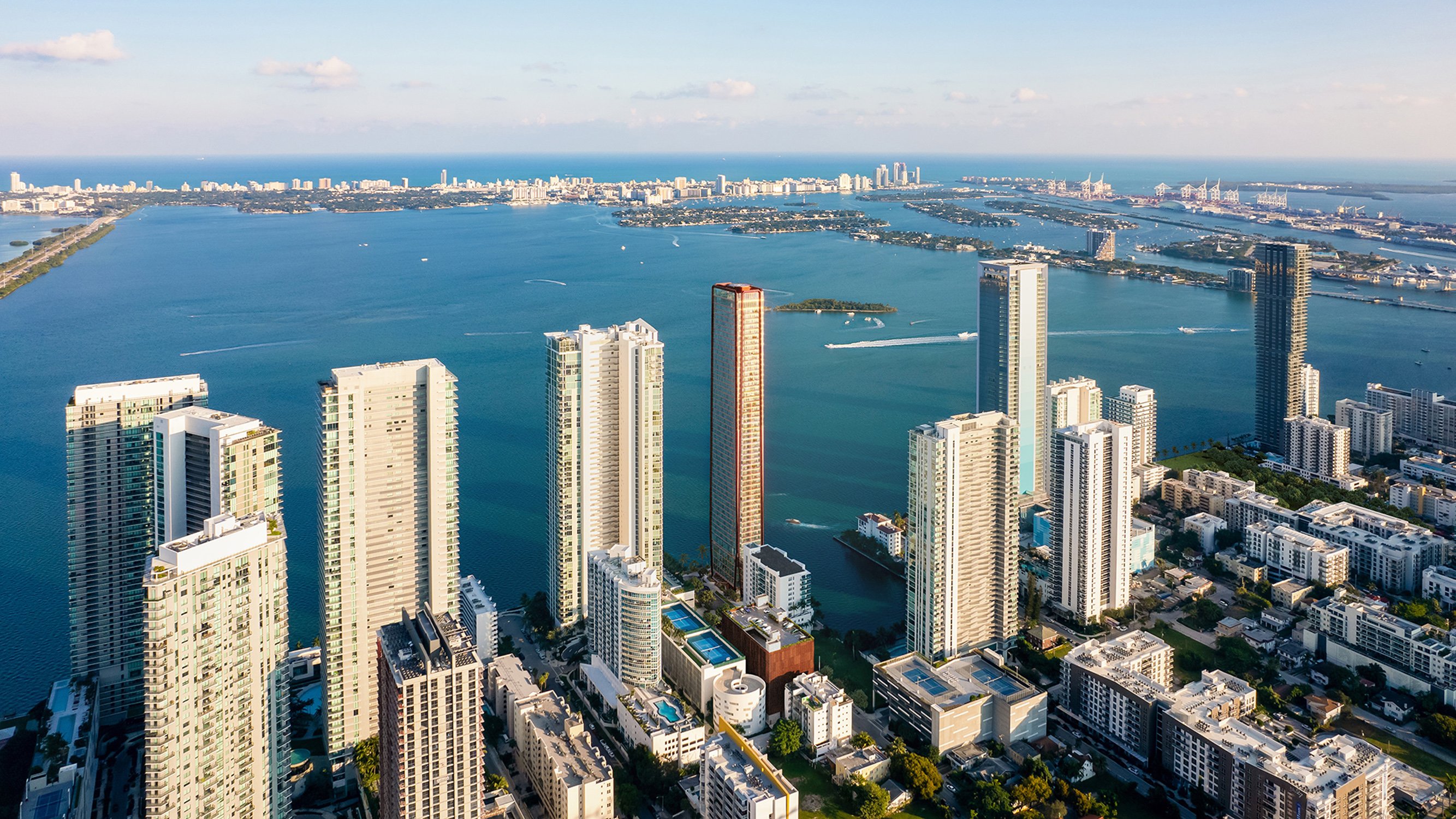
For buyers surveying new inventory in Miami, the comparison between Villa Miami and Waldorf Astoria Residences Downtown Miami is compelling precisely because the towers can appear to target the same affluent purchaser while, in reality, serving very different lives.
At first glance, both occupy the upper tier of new-construction luxury, and both sit within Miami’s broader evolution into a city where branded residences, design-led towers, and lifestyle-forward homes increasingly define the market. Yet the true distinction is not simply pricing, or even neighborhood identity. It is the ownership proposition itself.
Villa Miami is best understood as a residential-first tower for buyers who want Miami as a lived experience. Waldorf Astoria Residences Downtown Miami is better understood as a hospitality-led residence for those who place equal or greater value on service infrastructure, global brand recognition, and lock-and-leave ease.
That difference may sound subtle. In practice, it shapes everything from entry pricing to amenity expectations to which buyers will feel genuinely at home in each building.
In directional terms, Villa Miami enters the conversation at a meaningfully lower threshold. Its residences are framed around one-, two-, and three-bedroom layouts, with starting pricing around the high-$800,000s and extending above $2 million. That creates a broader funnel for urban buyers seeking a new luxury address without immediately stepping into the ultra-luxury bracket.
Waldorf Astoria Residences Downtown Miami begins higher. The project is generally positioned from around $2 million and moves well beyond $5 million, placing it more firmly in the rarefied segment of branded, service-rich ownership. There is overlap between the towers, especially in the roughly $2 million to $3 million range, but overlap in price does not mean overlap in purpose.
A buyer considering a premium residence at Villa Miami may still be comparing the tower against other urban lifestyle properties such as ORA by Casa Tua Brickell and Mercedes-Benz Places Miami, where the draw is neighborhood energy, programming, and identity. A buyer entering Waldorf Astoria often compares on a different axis: brand hierarchy, service standards, and the assurance of a globally legible luxury name.
This is why inventory discussions need to move beyond raw price bands. The question is not only what is available. It is what kind of ownership experience that availability is designed to support.
Villa Miami is tailored to the buyer who intends to inhabit Miami, not simply visit it elegantly. Its profile aligns with professionals, entrepreneurs, and owner-users who want design, culture, wellness, and social life integrated into the cadence of daily living. The tower’s positioning emphasizes art, curated programming, community spaces, and a sense of residential identity over a hotel-operated environment.
That matters for full-time and near-full-time residents. Buyers in this segment often care less about formalized hospitality and more about the quality of ordinary life: how the building feels on a Tuesday morning, whether common areas foster genuine social familiarity, and whether the address supports a more grounded urban rhythm.
The appeal is especially strong for purchasers who want Miami’s cultural and business energy close at hand, and who see value in a home that feels rooted rather than transient. In that sense, Villa Miami sits comfortably beside the broader evolution of lifestyle-driven residences seen across the urban core, from Baccarat Residences Brickell to waterfront design statements such as Aria Reserve Miami.
For this buyer, luxury is not primarily about being serviced. It is about belonging.
Waldorf Astoria Residences Downtown Miami is aimed at a different buyer altogether: globally mobile, brand-conscious, and often already fluent in the language of luxury hospitality. This is the purchaser who values concierge access, valet, housekeeping options, spa-oriented privileges, and food-and-beverage service as part of the ownership experience.
The building’s real power lies in what branded hospitality communicates. For some buyers, especially second-home owners and international purchasers, a globally recognized flag is not merely decorative. It is a decision-making shortcut. It signals expected service, a curated arrival experience, and a familiar operating standard that can feel reassuring across markets.
This helps explain why branded residences often command a premium over non-branded luxury condos. The buyer is not paying only for square footage or finish level. They are paying for systems, consistency, identity, and the convenience of a residence that behaves, in important ways, like a private extension of a luxury hotel.
In Downtown, that proposition can be especially persuasive for owners who are in Miami frequently but not continuously. They may want a high-design home, but they also want to arrive with minimal friction, depart with confidence, and rely on service layers that reduce the operational demands of ownership.
The clearest way to evaluate these two towers is to ignore marketing categories and ask a more intimate question: what kind of life will the residence support when the novelty wears off?
Villa Miami is for the buyer who wants a home first. Its value proposition is community, culture, everyday livability, and a more residential social fabric. Even at elevated pricing, it remains the more natural fit for those who expect to spend substantial time living in Miami and who prefer a tower without a dominant hotel identity.
Waldorf Astoria is for the buyer who wants service first, or at least service in equal measure with design and location. Its value proposition is convenience, prestige, hospitality integration, and international recognition. It is a cleaner match for owners who want the reassurance of a branded ecosystem and may place flexibility above rootedness.
Neither model is inherently superior. But they are not interchangeable.
A local executive relocating from another urban luxury tower in Brickell may find Villa Miami’s residential-first sensibility more intuitive. A frequent traveler splitting time between multiple global residences may feel that Waldorf Astoria better reflects the rhythms of modern wealth.
With both projects selling within overlapping windows and active availability capable of shifting quickly, any inventory comparison should be treated as directional rather than static. Release schedules, premium-line absorption, and the pace of contract activity can all change the practical meaning of value from one quarter to the next.
For that reason, serious buyers should focus on comparative fit, not just comparative asking price. In Miami’s new-construction market, the wrong luxury purchase is rarely wrong because it lacks prestige. It is wrong because the building’s operating philosophy does not align with the owner’s actual pattern of use.
If the buyer wants Miami as a primary lifestyle base, Villa Miami offers the more convincing argument. If the buyer wants a globally legible trophy residence with hotel-level convenience in Downtown, Waldorf Astoria is the clearer expression of that ambition.
In a market crowded with polished renderings and overlapping promises, this distinction remains unusually sharp. One tower is selling a sophisticated residential life. The other is selling branded, service-led certainty.
Is Villa Miami generally more accessible on price than Waldorf Astoria Residences Downtown Miami? Yes. Villa Miami is positioned with a lower starting point, while Waldorf Astoria begins in a higher ultra-luxury bracket.
Do the two towers compete for the same buyer? Partly, especially around the $2 million to $3 million range. But their strongest appeal is tied to different ownership priorities.
Who is the better fit for full-time Miami living? Villa Miami is generally the stronger match for buyers who expect to live in Miami on a more continuous basis.
Who is the better fit for a second-home owner? Waldorf Astoria often suits second-home buyers who value service, convenience, and an internationally recognized brand.
Does Waldorf Astoria have a stronger hospitality component? Yes. Its appeal is closely tied to concierge-led service and a hotel-style residential experience.
Is Villa Miami a hotel-branded residence? No. It is better understood as a residential-first luxury tower rather than a hotel-integrated ownership model.
Why do branded residences often command higher pricing? Buyers often pay a premium for service infrastructure, brand recognition, and consistency of experience.
Is there meaningful price overlap between the projects? Yes. Better-positioned inventory can overlap, particularly in the upper-luxury portion of Villa Miami’s range.
Are inventory counts and pricing fully static in these projects? No. Availability and absorption can change quickly as sales phases progress.
What is the simplest way to choose between them? Decide whether you want a residential lifestyle tower or a hospitality-led branded residence first, then compare floor plans and pricing.
For a tailored shortlist and next-step guidance, connect with MILLION Luxury.
If branded residences are on your mind — as a home or as an allocation — we would be glad to share what we are seeing, privately.
Begin a quiet conversation