A practical guide for family offices assessing garage access analytics in South Florida luxury residences, with emphasis on discretion, security, privacy governance, and ownership underwriting.
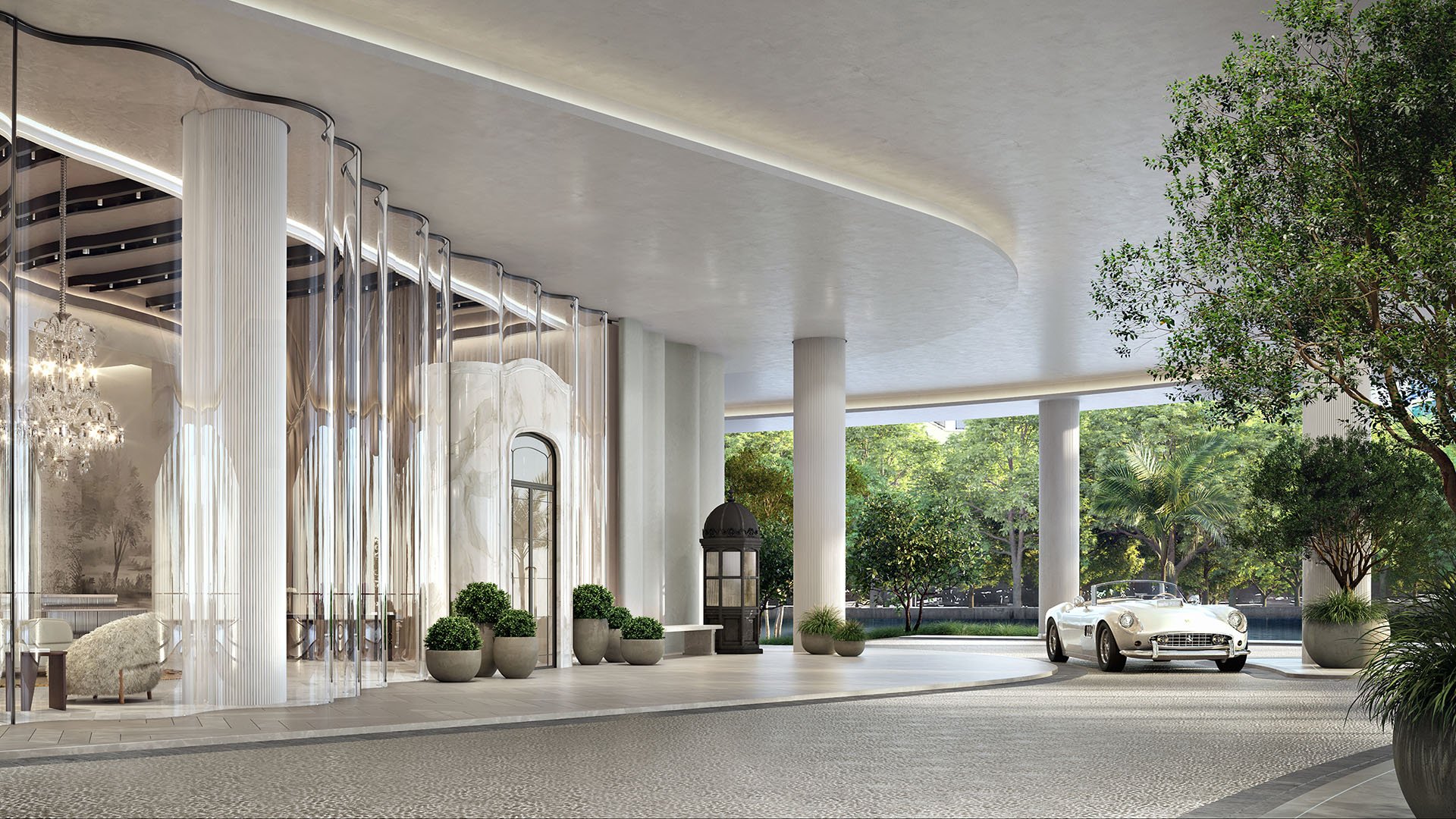
For ultra-prime families, the garage is not merely a place to park. It is the private threshold where security, service, household rhythm, and discretion converge. In South Florida residences, where owners may divide time among multiple homes, receive guests at irregular hours, and rely on drivers, staff, vendors, and family assistants, the garage can reveal more about daily livability than the lobby ever will.
Garage access analytics means a disciplined review of entry and exit activity, credential use, guest flow, service access, valet coordination, elevator connection, exception events, and the protocols that govern each touchpoint. Its value is not surveillance for its own sake. Its value is pattern recognition. A family office should be able to determine whether a residence supports a principal’s lifestyle quietly, whether operating teams can separate expected activity from anomalies, and whether the building’s private arrival sequence is resilient enough for high-net-worth ownership.
A beautiful residence can still disappoint if the arrival experience is inconsistent. Conversely, a property with restrained design can feel exceptionally refined when garage access, vertical circulation, and service movement are handled with discipline. For a family office, this is an ownership question as much as a security question.
The first task is to separate useful analytics from decorative technology. A dashboard matters only if it answers specific ownership questions. Who enters the garage, under what credential, at what time, through which access point, and in what relationship to the residence? How are guests validated? How are vendors separated from residents? How are drivers, household staff, and service providers handled during peak arrival windows?
A strong review should consider resident credentials, guest permissions, vendor access, valet events, failed entry attempts, after-hours activity, elevator authentication, package or service coordination, and incident escalation. The goal is not to collect every possible signal. The goal is to determine whether the property can distinguish routine activity from operational noise.
Family offices should also examine how long records are kept, who can view them, whether exports are permitted, and what happens when a unit changes ownership or occupancy. Access analytics can create comfort, but only when the data is governed with equal care.
Garage performance cannot be judged through a single lens. A highly restrictive system may create unnecessary friction for legitimate residents. An effortless system may be too permissive for a family with a visible profile. The strongest luxury residences find the middle course: controlled, intuitive, and calm.
Discretion is essential. Principals do not want to be announced by operational chaos. They do not want repeated phone calls to confirm known guests, nor do they want casual access granted to recurring vendors without review. The question is whether the building can support a predictable private arrival without making residents feel processed.
Family offices should ask building representatives to walk through realistic scenarios. A principal arrives late after travel. A driver returns with luggage. A family guest arrives before the owner. A recurring vendor needs access while the household is away. A new staff member requires limited permission. These scenarios quickly reveal whether garage analytics support genuine service or merely record events after the fact.
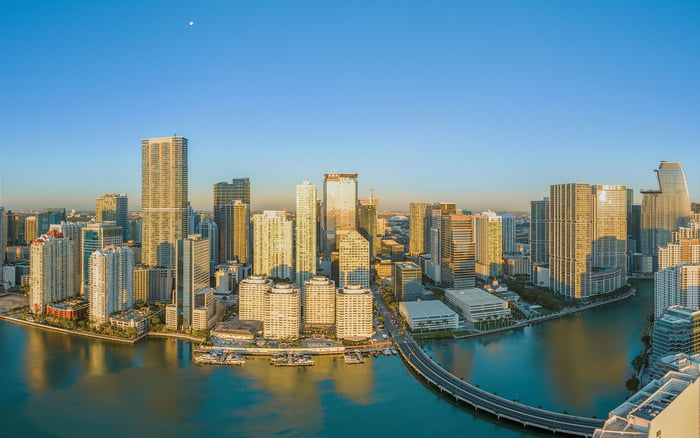
South Florida adds complexity because ownership patterns vary widely by neighborhood and asset type. In Brickell, garage systems often need to reconcile dense urban movement, staffed residences, and rapid transitions between professional and private life. In Aventura, the family office may focus more closely on guest flow, household routines, and ease of access for extended family. Across Broward, waterfront, beach-oriented, and urban residences can present different service patterns, arrival sequences, and staffing assumptions.
For a family office, the labels used in an internal memo matter. Investment, Rent, and Resale should not be treated as separate files from operating performance. A residence that performs smoothly at the garage level may support stronger owner satisfaction, more dependable occupancy planning, and a cleaner future narrative for the next buyer. A property that struggles with access control may require additional staffing, technology upgrades, or more conservative underwriting assumptions.
This is where luxury real estate becomes operational. The garage is one of the few places where lifestyle promises meet actual systems. A residence may offer privacy in its architecture yet compromise privacy in its access workflow. Analytics help expose that gap before acquisition.
A family office should approach garage access analytics with direct, practical questions. What access technologies are in place today? How are residents, guests, vendors, staff, and drivers differentiated? Can permissions be time-limited or role-specific? What happens when a credential is lost, shared, or misused? How are failed access attempts reviewed? Who receives alerts, and who decides whether an event requires escalation?
The answers should be consistent across management, security, concierge, and ownership documents. If each team describes a different process, the property may rely more on individual personnel than durable systems. That is a risk, especially for owners who expect continuity during holidays, storms, peak season, staff turnover, or extended absences.
Family offices should also ask how garage access connects to elevators and private residential corridors. The central question is not simply whether someone can enter the garage. It is whether that access allows movement deeper into the residential environment. A refined building will make those layers clear.
The most sophisticated access system can become a liability if governance is weak. Privacy protocols should be explicit. Data retention should be purposeful. Access to logs should be limited. Any use of license plate recognition, biometric tools, mobile credentials, or integrated camera systems should be reviewed through the lens of resident consent, household sensitivity, and legal guidance.
Family offices should also consider reputational risk. If access records reveal a principal’s travel cadence, household staffing pattern, or guest activity, the information should be treated as sensitive. The building’s culture matters. Technology cannot compensate for casual operational habits.
A mature property will be able to explain not only what it records, but why it records it, who reviews it, and how exceptions are handled. That clarity is a luxury feature in itself.
Garage access analytics should influence underwriting in several ways. First, they can reveal staffing needs. A building with frequent manual intervention may require a family to maintain more private staff support. Second, they can inform capital planning. If systems are outdated, fragmented, or poorly integrated, future upgrades may be relevant to ownership cost. Third, they can shape occupancy strategy, especially when a residence may be used seasonally or by multiple family members.
The most sophisticated family offices will not treat garage analytics as a technical appendix. They will treat them as evidence of how the property actually works. In luxury real estate, operational grace is often invisible when it succeeds and impossible to ignore when it fails.
What is garage access analytics? It is the review of garage entry, exit, credential, guest, vendor, valet, and exception activity to understand how a residence functions privately.
Why should a family office care about garage data? It can reveal whether a property supports discretion, security, staffing, and convenience before ownership issues become daily frustrations.
Is this only a security concern? No. It is also an operating, privacy, service, and underwriting concern for ultra-prime residential ownership.
What is the most important question to ask? Ask how access is differentiated among residents, guests, vendors, staff, drivers, and building personnel.
Should garage analytics affect valuation? They can influence ownership assumptions, especially when they point to staffing needs, upgrade costs, or future buyer concerns.
How does this relate to privacy? Access records can reveal sensitive household patterns, so data retention, viewing rights, and export controls should be clear.
What should advisers look for during a property visit? They should observe the arrival sequence, elevator connection, guest validation process, and staff handling of exceptions.
Are newer systems always better? Not necessarily. A simple, well-governed system may outperform a complex platform with weak oversight.
Can garage analytics help seasonal owners? Yes. They can support monitoring, vendor coordination, and a clearer understanding of activity while the owner is away.
What is the best way to shortlist comparable options for touring? Start with location fit, delivery status, and daily lifestyle priorities, then compare stacks and elevations to validate views and privacy.
If you'd like a private walkthrough and a curated shortlist, connect with MILLION.
If branded residences are on your mind — as a home or as an allocation — we would be glad to share what we are seeing, privately.
Begin a quiet conversation