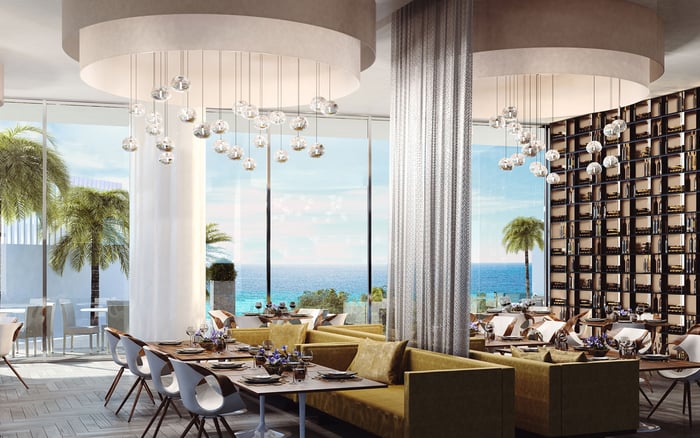
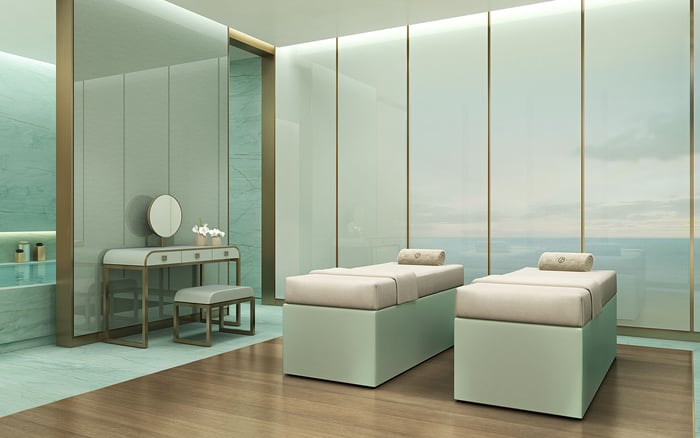
A buyer-focused analysis of Turnberry Ocean Club Sunny Isles and the 2026 privacy test separating residential luxury from hotel-style operation.
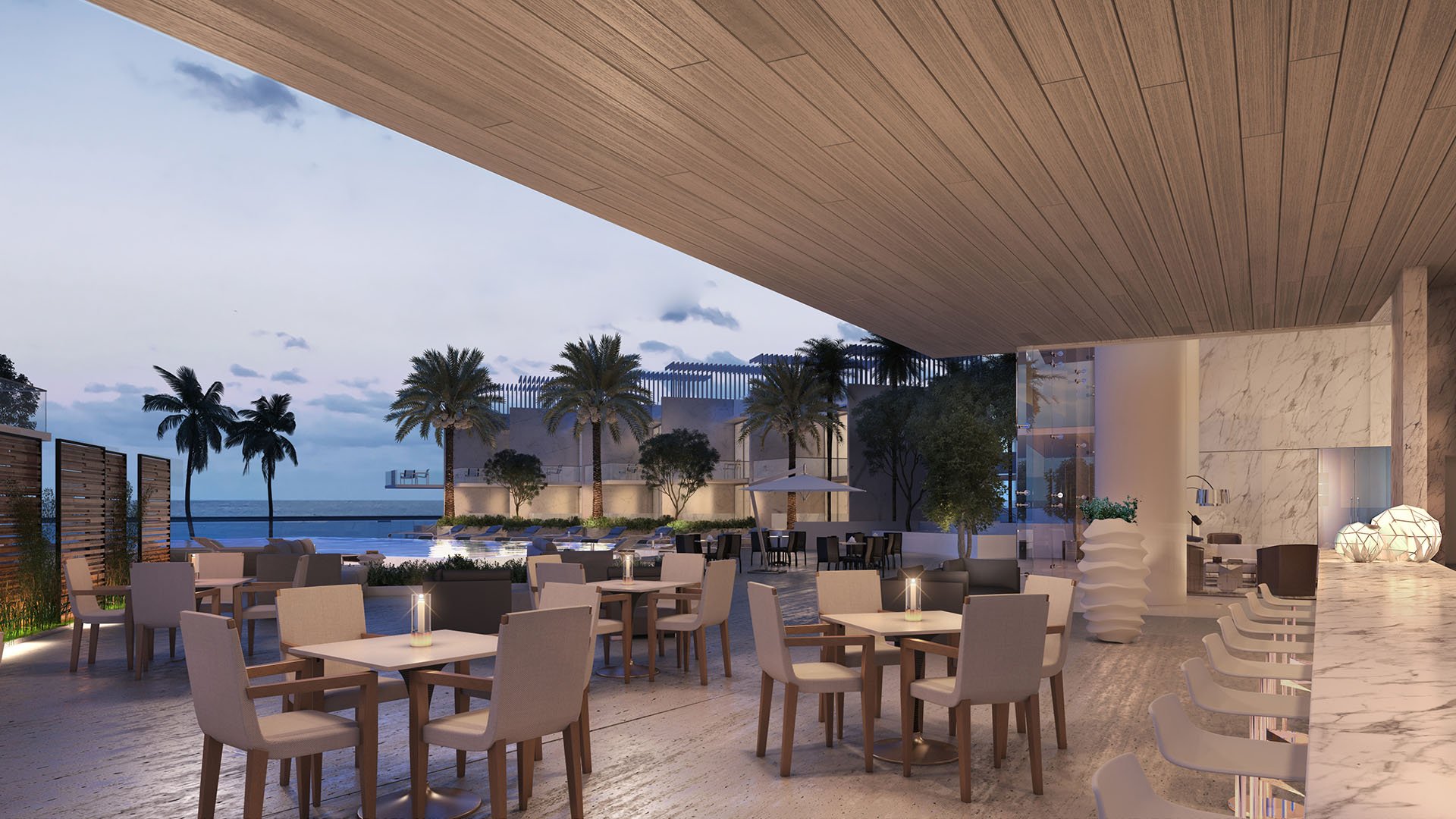
Turnberry Ocean Club Residences sits at the center of a sharper 2026 buyer question in Sunny Isles Beach: does a high-amenity oceanfront tower live like a private residence, or begin to function like a hospitality product?
That distinction matters because today’s ultra-prime buyer is rarely choosing between comfort and service. The more precise question is whether service can remain residential. A buyer may want a polished arrival, attentive staff, and resort-style ease while still rejecting transient traffic, guest-heavy common areas, and the atmosphere of short-stay churn.
The project’s identity is residential. The name uses “Residences,” not hotel or resort language, which makes the private-residence promise central to how sophisticated buyers should evaluate it. In search shorthand, the relevant filters may include Oceanfront, Sunny Isles, Second-home, Short-term-rentals, Condo-hotel, and Turnberry Ocean Club Sunny Isles, but the real decision is not a keyword decision. It is an operational one.
South Florida buyers often conflate two different things: hotel-level service and hotel-like operation. The first is desirable in a luxury condominium. The second can dilute privacy, predictability, and the emotional value of ownership.
Hotel-level service means the resident experience is smooth, staffed, and refined. Hotel-like operation means the building’s rhythm may be shaped by temporary occupants, frequent unfamiliar faces, and shared spaces that feel less controlled. For a buyer considering Turnberry Ocean Club, the question is not whether the tower is luxurious. The question is whether that luxury is delivered within a residential framework that protects owners from the compromises often associated with hospitality-linked models.
This is where the phrase “hotel-guest separation” becomes useful. It is not a formal industry standard. It is a practical buyer lens for separating marketing language from lived experience.
The buyer test begins at the entrance. Who can enter, how are they identified, and what separates residents, invited guests, service providers, and any rental occupants? A lobby can be beautiful and still fail the privacy test if access feels porous.
Elevator control comes next. Private residential calm depends on how vertical movement is managed. Buyers should understand whether elevator access supports resident privacy and whether guest movement is clearly governed.
Amenity access is equally important. In an ultra-luxury building, amenities are not merely lifestyle add-ons. They are part of the value proposition. If amenity spaces feel crowded by non-owner use or lightly supervised guest activity, the experience can shift from residential club to transient venue.
Rental rules require close review. Buyers should not rely on broad impressions or sales language. The condominium declaration, bylaws, house rules, and any rental restrictions should be read carefully. The key questions are direct: what is allowed, what is prohibited, how often can a residence be rented, how are guests registered, and what enforcement tools actually exist?
Finally, buyers should observe the building in person. A quiet weekday afternoon reveals one version of a property. A holiday period, weekend evening, or peak seasonal moment may reveal another. The test is not only what the rules say. It is whether the building culture enforces them.
Sunny Isles Beach is one of South Florida’s most important oceanfront condominium markets, and its buyers are accustomed to comparing different luxury formats. Some towers are understood as pure residential environments. Others may be branded, service-rich, or hospitality-adjacent in feel. The highest-end purchaser is increasingly sensitive to that distinction.
For 2026, this sensitivity is tied to privacy, security, and owner control. A buyer acquiring a primary residence, seasonal home, or legacy asset is not only buying a view or amenity package. They are buying the right to return to a predictable private environment.
Turnberry Ocean Club is useful as a case study because it places the issue in clean focus. It is marketed as a luxury residential project, and that positioning invites a practical verification process. The buyer should ask whether the daily operation supports the residential promise as clearly as the branding does.
A serious buyer should review the governing documents before making assumptions about use, guests, and rentals. The declaration, bylaws, house rules, and rental policies are not technical clutter. They are the operating constitution of the building.
The review should focus on access control, guest registration, amenity privileges, minimum rental terms if stated, enforcement rights, fines or remedies, and the association’s practical authority. Where the documents are clear, the buyer gains confidence. Where they are vague, the buyer should ask sharper questions.
Just as important is a conversation about enforcement culture. Rules without enforcement can feel decorative. The strongest residential buildings tend to have a clear tone: residents are welcomed, invited guests are accommodated, and transient behavior is not allowed to redefine the property.
For resale buyers, this scrutiny is especially important. A resale purchase is not just a transaction with a seller. It is entry into an existing community with established habits. The premium belongs to buildings where those habits reinforce privacy.
The best Sunny Isles residences will not be judged by amenity volume alone. They will be judged by how well they preserve residential calm while delivering polished service. Turnberry Ocean Club’s residential positioning makes it highly relevant to that conversation, but the final answer belongs in documents, building procedures, and on-site experience.
For buyers, the test is simple: does the tower feel like a private home in the sky, or like a beautiful place shared with too many temporary users? In 2026, that difference may define both personal satisfaction and long-term desirability.
Is Turnberry Ocean Club positioned as a residential project? Yes. Its public identity uses “Residences,” which supports a private residential framing rather than hotel or resort language.
What does hotel-guest separation mean for buyers? It means evaluating whether residents are protected from hotel-style traffic, short-term turnover, and uncontrolled guest use of shared spaces.
Is hotel-level service a problem in a condominium? Not necessarily. Many buyers want refined service, but they still want the building to operate as a private residential environment.
What documents should a buyer review? Buyers should review the condominium declaration, bylaws, house rules, rental restrictions, and any written policies governing guest and amenity access.
Should buyers rely on branding alone? No. Branding can signal positioning, but the governing documents and actual building operation are more important.
Why is this issue important in Sunny Isles Beach? Sunny Isles Beach buyers often compare pure residential towers with more hospitality-linked luxury alternatives, making operational privacy a major factor.
What should buyers observe during a visit? They should watch lobby control, guest flow, elevator access, amenity use, and the general rhythm of the building at different times.
Can rental rules affect long-term value? Yes. Clear rental rules and strong enforcement can help preserve residential character and reduce short-term-rentals concerns.
Is this buyer test a formal legal standard? No. It is a practical framework for asking better questions before purchasing in a high-amenity luxury tower.
What is the best way to shortlist comparable options for touring? Start with location fit, delivery status, and daily lifestyle priorities, then compare stacks and elevations to validate views and privacy.
If you'd like a private walkthrough and a curated shortlist, connect with MILLION.
If branded residences are on your mind — as a home or as an allocation — we would be glad to share what we are seeing, privately.
Begin a quiet conversation