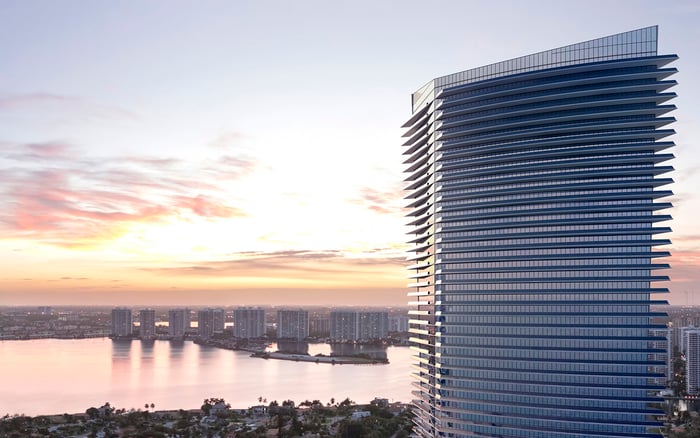
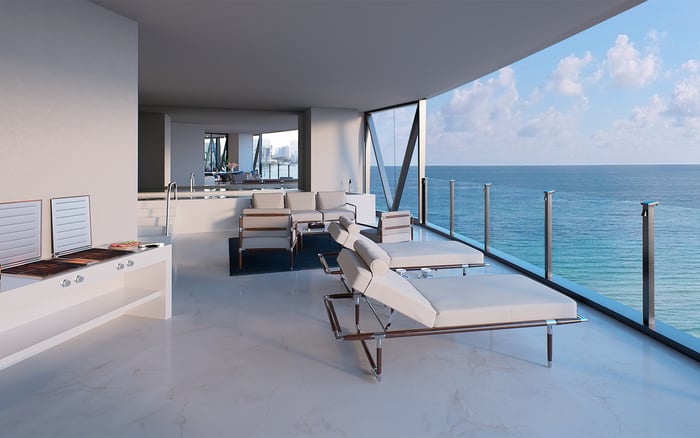
A practical, owner-focused guide to thinking about permitted work hours at Turnberry Ocean Club Sunny Isles, with emphasis on planning, building protocol, contractor coordination, and quiet enjoyment.

At Turnberry Ocean Club Sunny Isles, permitted work hours are not merely administrative. For households, they sit at the intersection of privacy, quiet enjoyment, building operations, and the daily choreography of an oceanfront residence. In a tower where owners may be balancing primary living, seasonal use, visiting family, staff routines, and contractor access, the hours when work may occur can shape the entire ownership experience.
The most useful way to think about permitted work hours is as a coordination framework, not a single answer to memorize. Building rules may distinguish between ordinary maintenance, alterations, deliveries, noisy work, emergency repairs, elevator reservations, and holiday restrictions. A household that understands those layers before starting a project is better positioned to protect its schedule, budget, and relationship with the building.
For owners considering work at Turnberry Ocean Club Sunny Isles, the first step is simple: confirm the current building protocol before engaging any contractor. Rules can evolve, and the practical interpretation of those rules often matters as much as the stated window. A contractor may be available at a particular hour, but the building may still require advance paperwork, insurance certificates, elevator scheduling, security clearance, or approval for materials entering the property.
Permitted work hours become easier to navigate when owners separate projects into categories. A quiet designer walk-through is different from drilling. Touch-up painting is different from stone installation. Appliance troubleshooting is different from a full kitchen intervention. The more precisely a household defines the activity, the easier it becomes to determine whether it belongs within ordinary access, a reserved service window, or a more formal approval process.
This distinction is especially important in a luxury condominium environment because sound and movement travel differently through a residential tower than they do in a single-family home. Even a modest project can affect elevator timing, valet flow, service corridors, neighboring residences, and staff attention. A well-run project respects those shared systems.
For a household using the residence seasonally, the calendar matters as much as the clock. Second-home owners often prefer to schedule disruptive work while they are away, but that approach requires more precision, not less. Someone must be authorized to meet vendors, approve small field decisions, receive deliveries, document completion, and confirm that the residence is secure at the end of each day.
Before scheduling any work, owners should assemble a concise written scope. It does not need to read like a construction manual, but it should identify the rooms involved, the type of work, the expected duration, the trades entering the residence, and whether noise, dust, water shutoffs, or elevator use may be involved. The building team can respond more effectively when the request is specific.
Insurance and licensing should be treated as non-negotiable. Luxury residences involve valuable finishes, complex mechanical systems, and shared building infrastructure. The question is not only whether a contractor is skilled, but whether that contractor is prepared to operate within a condominium environment where access, protection, and cleanup are part of the assignment.
Owners should also ask how the building handles deposits, common-area protection, contractor parking, freight elevator reservations, and end-of-day cleanup. These operational details often determine whether a project feels discreet and efficient or creates unnecessary friction.
In Sunny Isles Beach, oceanfront living is defined by light, views, privacy, and rhythm. At Turnberry Ocean Club Sunny Isles, residents are not simply buying square footage; they are investing in a controlled residential atmosphere. Permitted work hours help preserve that atmosphere by concentrating disruption into predictable windows and limiting the burden on neighbors.
The etiquette is straightforward. Avoid assuming that small work is invisible. Confirm whether a task creates noise or requires service access. Give the building enough notice to coordinate staffing. Keep contractors from arriving early, lingering late, or using resident-facing spaces inappropriately. A refined approach is rarely complicated, but it is deliberate.
This is especially relevant for households with balcony use, pets, staff, or guests in residence during a project. Sunny Isles ownership can combine oceanfront routines with the demands of a second-home lifestyle, and each pattern affects how work hours are felt inside the home.
Many owners focus on contractor labor hours and underestimate delivery logistics. In a high-rise setting, a delivery may require advance notice, a reserved elevator, proof of insurance, a loading plan, packaging removal, and protection for corridors. Large items may need to be measured against elevator dimensions and residence entries before they arrive.
For furnishings, art, appliances, lighting, and millwork, households should avoid treating delivery and installation as ordinary appointments. A luxury tower is a coordinated environment. If the building has a defined service window, a delayed truck can affect not only the owner’s project but also other residents’ reservations.
The safest approach is to build contingency into the schedule. If an item is critical, do not plan its arrival on the same day as a gathering, guest arrival, closing deadline, or travel departure. The more important the installation, the more room it deserves.
Not all work is discretionary. Water intrusion, electrical concerns, air-conditioning failures, and security issues may require urgent attention. Households should know in advance how the building distinguishes emergency service from ordinary permitted work. This is not a reason to bypass protocol; it is a reason to understand protocol before pressure arrives.
Owners who travel frequently should designate authorized contacts and make sure the building knows who may grant access if a time-sensitive issue occurs. A well-prepared household can respond quickly while still respecting security and building procedure.
The most successful approach is to treat permitted work hours as part of stewardship. A residence at Turnberry Ocean Club Sunny Isles deserves careful handling, and so does the building around it. The goal is not to make work feel bureaucratic. The goal is to make work predictable, discreet, and compatible with the standards of the property.
For buyers evaluating future ownership, this is also a useful lens. Ask how renovations are approved. Ask how service access is managed. Ask how the building balances owner improvements with quiet enjoyment. The answers reveal how a property protects both individual residences and the collective experience.
In the ultra-premium segment, time is a luxury amenity. The households that manage permitted work hours well are not merely following rules. They are preserving the calm, order, and privacy that made the residence desirable in the first place.
Are permitted work hours the same for every type of project? Not necessarily. Quiet maintenance, noisy work, deliveries, and alterations may be treated differently by the building.
Should an owner confirm work hours before hiring a contractor? Yes. Confirming the current protocol before hiring helps prevent scheduling conflicts, access issues, and unexpected delays.
Can a contractor arrive early if work starts later? Owners should not assume so. Arrival, parking, check-in, and service access may each be governed by building procedure.
Do deliveries require separate coordination? Often, yes. Large deliveries may involve elevator reservations, insurance paperwork, loading access, and common-area protection.
How should seasonal owners manage work while away? They should designate an authorized representative, use a written scope, and require daily updates or completion photos.
Is small work usually exempt from building rules? Owners should avoid that assumption. Even small tasks can create noise, require access, or affect neighboring residences.
What if a repair is urgent? Urgent repairs should be coordinated through the appropriate building channels so access and safety remain controlled.
Why do luxury buildings restrict work hours? Restrictions protect quiet enjoyment, manage staff resources, coordinate elevators, and preserve the residential atmosphere.
Should buyers ask about renovation protocol before purchasing? Yes. The approval and access process can meaningfully affect future customization, timing, and ownership convenience.
What is the best owner mindset? Treat permitted work hours as part of responsible stewardship, with planning that respects the residence and the building.
For a discreet conversation and a curated building-by-building shortlist, connect with MILLION.
If branded residences are on your mind — as a home or as an allocation — we would be glad to share what we are seeing, privately.
Begin a quiet conversation