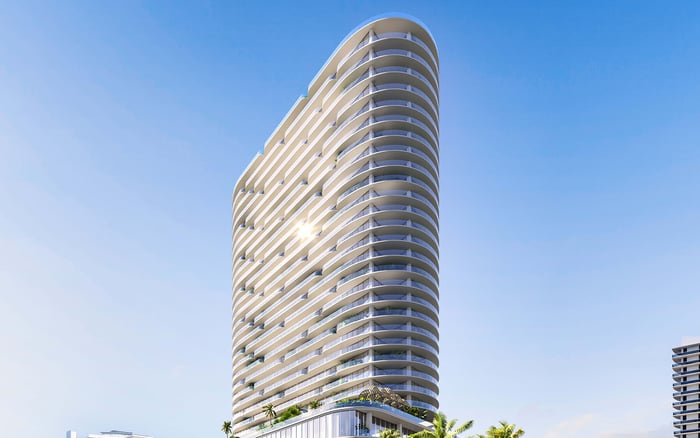
A buyer-focused 2026 due-diligence framework for evaluating Tula Residences North Bay Village through timing, documentation, district momentum, resale logic, and private-use discipline.

Tula Residences North Bay Village sits in a purchase category where timing can feel as consequential as the residence itself. For the private buyer, the essential question is not simply whether a new address feels compelling today. It is whether the surrounding district, the building’s execution path, and the buyer’s own horizon align closely enough to justify a commitment before every market signal is visible.
That is the discipline behind district-momentum timing. A buyer is not trying to predict the future with theatrical certainty. The aim is more precise: identify what must be true for the purchase to perform well as a residence, as a capital allocation, or as both. In 2026, that requires reading the opportunity through documents, delivery risk, lifestyle utility, carrying costs, and eventual exit logic.
The most refined buyers tend to slow the process at exactly the moment the market encourages speed. They request the complete paper trail. They compare promises with enforceable language. They test the premium for view, outdoor space, privacy, parking, and service. They decide whether the district’s momentum is already priced in, still emerging, or being overstated by the sales narrative.
Within a private brief, the relevant filters may include North Bay Village, new construction, pre-construction, waterview, terrace, and investment-not as slogans, but as prompts for verification.
District momentum is often discussed as if it were a mood. In practice, it is a sequence of buyer-relevant conditions: improving residential quality, more sophisticated demand, stronger design expectations, and a deeper pool of comparable transactions over time. For Tula Residences North Bay Village, the buyer’s task is to separate genuine neighborhood evolution from simple enthusiasm.
Start with the holding period. A short-term buyer needs confidence that demand will be visible by the time of resale or lease-up. A longer-term owner can afford more patience, provided the residence has durable attributes that do not depend entirely on surrounding change. The best-positioned purchase is usually one that works on its own merits and gains additional benefit if the district continues to mature.
Next, consider whether the premium is attached to scarcity or sentiment. Scarcity can be durable when it reflects orientation, privacy, outdoor space, ceiling height, or a floor plan that is difficult to replicate. Sentiment is more fragile. It can rise quickly during a launch cycle and fade if the buyer pool becomes more price sensitive.
Finally, look at the competitive set. A developing district can benefit from nearby residential investment, but it can also face new supply. Buyers should ask how Tula’s specific residence lines, exposures, and private-use qualities would compare if another attractive building entered the conversation. Momentum is valuable only if the chosen home remains legible within a broader luxury market.
The first serious checkpoint is documentation. Buyers should review the reservation or purchase agreement, deposit schedule, cancellation rights, assignment language, estimated completion framework, maintenance structure, budget assumptions, and any limitations affecting use. This is not clerical work. It defines the actual purchase.
Pay particular attention to what is guaranteed, what is estimated, and what is illustrative. Renderings, finish palettes, amenity descriptions, and service language can be persuasive, but enforceable documents carry more weight than presentation materials. If a buyer is relying on a specific view, terrace condition, parking arrangement, storage right, or delivery feature, the question is whether that reliance is supported in writing.
The carrying-cost review deserves equal care. Monthly expenses, insurance assumptions, reserve policies, assessments, and association rules shape the long-term ownership experience. Ultra-premium buyers are often less sensitive to cost in absolute terms than to cost surprise. A residence that feels elegant at signing can feel poorly underwritten if recurring obligations are vague or rising faster than expected.
Legal and tax advisers should also evaluate the ownership structure. Some buyers will hold personally, others through entities or trusts. The right answer depends on privacy, estate planning, financing, liability, and future transfer intentions. The checklist should be personal, not generic.
A beautiful building can still contain stronger and weaker buys. The residence-level analysis is where the most value is protected. Begin with orientation and light. A premium exposure should be evaluated not only for drama, but for daily livability. Consider glare, privacy, adjacent sightlines, and whether the view premium is likely to remain meaningful to a future buyer.
Outdoor space deserves its own analysis. A terrace can be a genuine extension of the residence when it is deep, usable, private, and connected naturally to the main living area. It can also be more ornamental than functional if proportions or exposure limit real use. Buyers should examine furniture plans, railing conditions, and the relationship between interior rooms and exterior space.
Floor-plan efficiency is another quiet determinant of value. Large square footage is less persuasive if circulation is wasteful, secondary bedrooms are compromised, or the kitchen and living areas do not support the buyer’s actual routines. A due-diligence tour should include furniture placement, art walls, storage, staff or service needs, pet routines, and guest privacy.
For a waterview residence, do not treat the view as a single feature. Break it into height, angle, permanence, foreground, nighttime character, and privacy. A view that photographs well may not live as well if it is exposed to neighboring windows or dominated by a less appealing foreground. Conversely, a calmer outlook can become more valuable when paired with exceptional privacy and usable outdoor space.
Even cash buyers benefit from underwriting the purchase as if capital had a cost. That discipline clarifies whether the residence is being acquired for personal use, preservation of wealth, optional rental income, or future resale. Each objective produces a different checklist.
If financing is involved, buyers should confirm project eligibility, lender comfort, appraisal sensitivity, deposit treatment, and closing timeline expectations. In new development, lender views can shift as market conditions change. A buyer should know whether the purchase remains comfortable if financing terms are less favorable than initially assumed.
Liquidity is equally important. The future resale audience for a luxury residence is not infinite. It will care about design, building condition, service culture, maintenance discipline, parking, privacy, and the credibility of surrounding comparables. A purchase made only because the district feels exciting can become vulnerable if the individual residence lacks enduring advantages.
Rental optionality should be reviewed through the governing documents, not assumption. Restrictions on duration, frequency, approvals, pets, guests, and leasing procedures can materially alter the investment profile. For some buyers, restrictions protect the residential character of the building. For others, they limit flexibility. The point is to know before signing.
The most elegant timing strategy is rarely the loudest one. Early commitment can secure preferred inventory, but it may also require greater tolerance for uncertainty. Waiting can provide more clarity, but it may reduce selection or expose the buyer to price adjustments. The right answer depends on the residence, not only on the calendar.
A practical 2026 checklist should include five decision gates. First, confirm that the chosen residence would still be desirable if the district story took longer to mature. Second, verify that the legal documents support the buyer’s most important assumptions. Third, underwrite carrying costs with room for variance. Fourth, compare the home against likely future competition. Fifth, decide whether the purchase enhances the buyer’s life immediately, rather than only promising appreciation later.
For Tula Residences North Bay Village, that framework keeps the conversation precise. It allows a buyer to appreciate design ambition and district possibility without surrendering to speculation. In the ultra-premium market, discretion is not hesitation. It is the discipline of committing only when the lifestyle case and the capital case meet.
What is the main due-diligence priority for Tula Residences North Bay Village? The priority is to confirm that the specific residence, documents, costs, and ownership rules support the buyer’s intended use and holding period.
How should buyers think about district momentum? Treat it as potential upside, not as the sole reason to purchase. The residence should make sense even if neighborhood evolution takes longer than expected.
What documents should be reviewed before signing? Buyers should review purchase terms, deposit obligations, association rules, budgets, use restrictions, and any language tied to delivery or specifications.
Is a waterview always worth a premium? Not automatically. The premium should be tested against view angle, privacy, permanence, livability, and likely future resale demand.
Why does a terrace require separate analysis? Outdoor space varies widely in practical value. Depth, privacy, exposure, furniture layout, and connection to interiors determine how well it lives.
Should cash buyers still underwrite the purchase? Yes. Even without financing, buyers should evaluate opportunity cost, carrying expenses, liquidity, and exit assumptions.
How important are leasing rules? They are essential if flexibility matters. Rental duration, approval procedures, guest policies, and frequency limits can change the ownership profile.
What makes new-construction due diligence different? Buyers must distinguish between presentation materials and enforceable obligations. Estimated costs, specifications, and timing should be carefully reviewed.
Is pre-construction timing mainly about getting in early? No. Early access can help with selection, but it must be balanced against uncertainty, delivery assumptions, and market conditions at closing.
When should a buyer move forward? A buyer should proceed when the residence works for daily life, the documents support the key assumptions, and the capital plan remains sound.
For a confidential assessment and a building-by-building shortlist, connect with MILLION.
If branded residences are on your mind — as a home or as an allocation — we would be glad to share what we are seeing, privately.
Begin a quiet conversation