For South Florida penthouse buyers, altitude is only one part of luxury. A private elevator foyer can shape arrival, privacy, circulation, and day-to-day discretion in ways a higher floor alone cannot.
In South Florida luxury real estate, height has long been shorthand for prestige. A penthouse above the city, ocean, bay, or Intracoastal promises light, distance, and the cinematic pleasure of looking over the world rather than through it. Yet for the most discerning buyers, elevation is only one measure of privacy and refinement. Increasingly, the private elevator foyer is where a residence begins to declare its true character.
A high floor can deliver drama. A private elevator foyer delivers control. It is the threshold between shared building life and personal domain, the moment when a guest, owner, family member, stylist, art handler, chef, or security professional moves from public circulation into the residence itself. In a market where many towers compete on views, ceiling heights, amenities, and skyline position, the quality of arrival can be the quieter differentiator.
For a buyer comparing two otherwise compelling homes, the question is not simply which one sits higher. It is which one feels more composed from the instant the elevator doors open.
A private elevator foyer matters because privacy is not binary. It is layered. The most successful residences do not rely on a single locked door to create separation. They build a sequence: lobby, elevator, controlled landing, foyer, gallery, living space. Each stage determines how much of the home is revealed, how visitors are received, and how naturally everyday life can remain unseen.
Without a private foyer, the transition from elevator to residence can feel abrupt. Deliveries may arrive too close to the living room. Guests may step directly into personal space. Service providers may cross paths with family life at inconvenient moments. In contrast, a well-planned private elevator foyer allows the owner to choreograph entry. It creates a pause: a place to greet, wait, orient, or quietly redirect.
This is especially relevant in Brickell, where vertical living, concierge service, and business entertainment often overlap. For buyers who host clients, welcome extended family, or move between residences seasonally, the foyer becomes less of a luxury flourish and more of an operational asset.
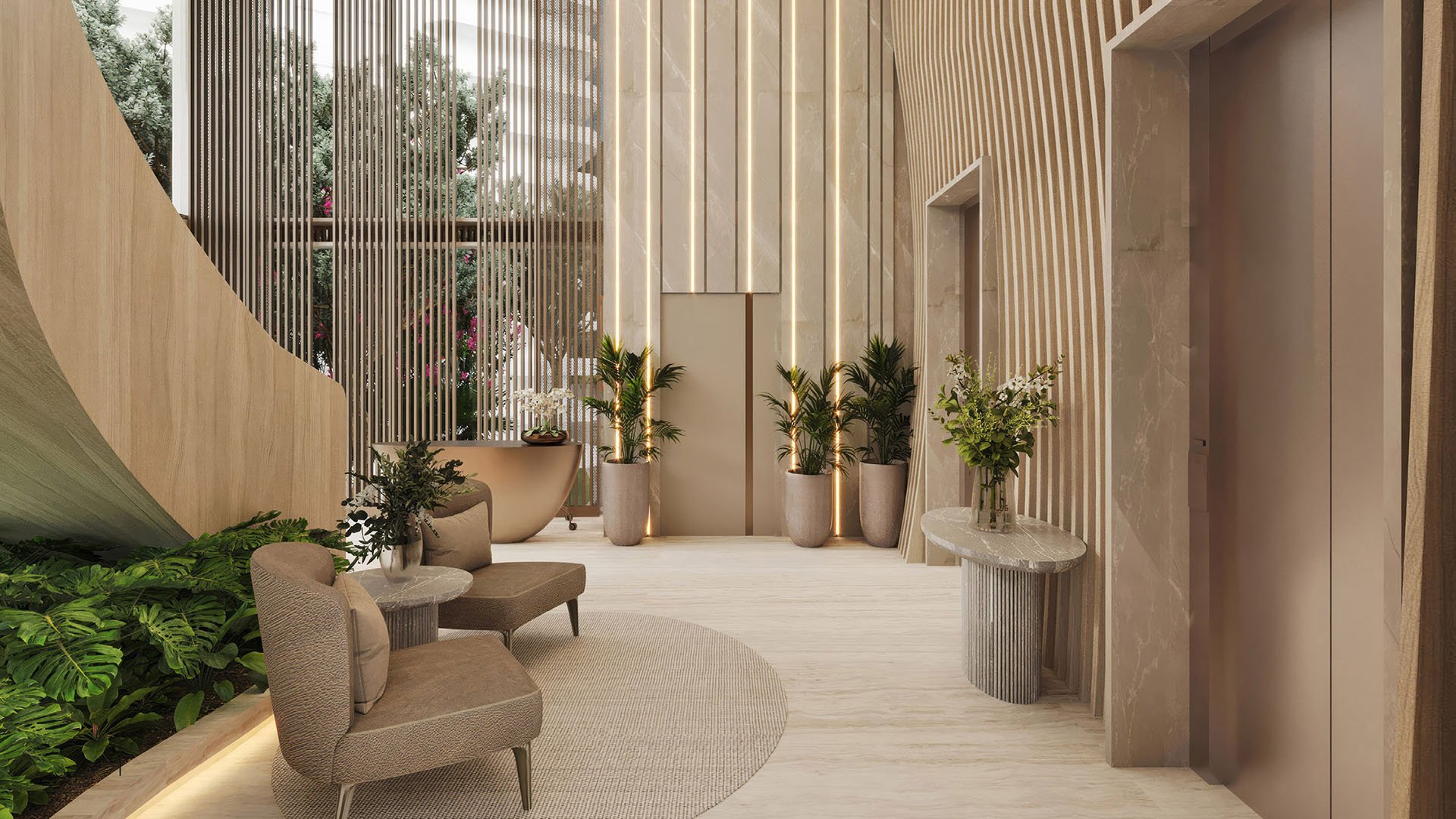
The best private elevator foyers are not oversized vestibules. They are architectural introductions. Proportion, lighting, materiality, door placement, art walls, and sightlines all influence how the residence is perceived before a guest reaches the main entertaining space.
A successful foyer does not necessarily reveal the view immediately. Sometimes it frames a glimpse. Sometimes it leads through a gallery, allowing the water, skyline, or terrace to arrive as a second gesture. That restraint can be powerful. It makes the home feel designed rather than merely exposed.
This is where height alone can disappoint. A residence may sit on a remarkable floor, yet if the elevator opens into an awkward corridor or compressed entry, the first impression can feel transactional. Conversely, a slightly lower home with a graceful private foyer may feel more complete, more residential, and more aligned with how ultra-luxury buyers actually live.
In Miami Beach, where many buyers prize discretion as much as scenery, this sense of measured arrival can be particularly important. The ability to enter quietly, receive guests elegantly, and maintain separation between public and private zones contributes to the feeling of a true home rather than a spectacular apartment.
Entertaining in a penthouse is not only about the main room. It is about flow. How do guests arrive? Where do coats, bags, flowers, gifts, or staff movements go? Can someone step out of the elevator without seeing directly into a bedroom wing, breakfast area, or family lounge? Is there a natural place for a host to greet a dinner party before the evening opens toward the view?
A private elevator foyer gives owners a stage before the stage. It offers a moment of hospitality that feels personal, not public. It can also preserve the reveal of the great room, making the transition into the primary living space feel intentional.
For large residences, this matters even more. A penthouse with generous entertaining rooms but no meaningful arrival point can feel exposed. One with a considered foyer can accommodate more formal entertaining while still feeling calm during ordinary days.
The most sophisticated buyers understand that luxury is not only measured by square footage. It is measured by how square footage behaves.
A private foyer can support discretion in ways that are difficult to appreciate on a first showing but deeply valuable over time. It can buffer sound. It can limit direct visibility into the home. It can create a controlled zone for packages, flowers, luggage, or staff coordination. It can help separate household rhythm from building circulation.
For owners with children, frequent guests, visiting family, or household staff, this separation is not abstract. It affects the daily experience of living in the residence. The private foyer allows people and objects to move in and out with less friction.
Buyers comparing high floors should therefore ask a practical question: does the arrival sequence protect the life inside the home, or does it simply deliver people to a dramatic view? The second may impress immediately. The first tends to age better.
In Sunny Isles, Fisher Island, and other privacy-driven enclaves, the answer can influence how a residence feels after the novelty of height has settled. The most desirable homes often combine outlook, amenity, and threshold into one cohesive experience.
None of this diminishes the appeal of elevation. Height can improve outlook, light, perceived quiet, and emotional distance from the street. In a skyline market, it remains a meaningful component of value and identity.
But height is most persuasive when paired with livability. A remarkable water view loses some of its power if the home feels exposed at entry. A commanding floor can feel less exclusive if the elevator landing lacks distinction. Even the most dramatic vistas benefit from a sense of procession.
For new-construction buyers, reviewing the floor plan is essential. Look beyond the renderings and amenity imagery. Study where the elevator opens, how the foyer is shaped, whether there is a powder room nearby, how service circulation is handled, and whether the primary suite is protected from the arrival path. These details reveal whether the residence was planned as a showpiece or as a home.
Boutique buildings may approach this differently than large towers. Some emphasize intimacy and fewer residences per floor. Others lean on private-entry design to make vertical living feel more like a single-family experience. In either case, the foyer should not be treated as leftover space.
During a showing, stand where the elevator doors open and pause. What do you see first? Is the view revealed too quickly, too narrowly, or with elegance? Can guests orient themselves without intruding? Is there room for art, seating, a console, or lighting that sets a mood? Does the foyer feel proportionate to the scale of the residence?
Then consider the less glamorous questions. Where would luggage go after a long flight? How would a caterer enter? Can deliveries be received without exposing personal rooms? Would a staff member have to pass through the main living area to perform a routine task? These answers can matter more than an extra few floors.
The private elevator foyer is, in many ways, the residence’s handshake. It should be confident, discreet, and composed. In the best penthouses, it tells you that everything beyond it has been considered.
Does a private elevator foyer always make a penthouse more desirable? Not always, but it can significantly improve privacy, arrival quality, and daily function when it is well planned.
Is height still important when buying a penthouse? Yes. Height can enhance outlook, light, and prestige, but it should be weighed against layout, privacy, and flow.
What should buyers look for in a private elevator foyer? Look for proportion, controlled sightlines, lighting, storage potential, and a graceful transition into the home.
Can a lower penthouse be better than a higher one? Yes. A lower residence with stronger planning and a better arrival sequence can feel more luxurious than a higher but awkward layout.
Why does the arrival sequence matter for entertaining? It shapes the guest experience before the main living area is revealed and helps the host manage flow with ease.
Does a private foyer improve security? It can support security by adding a controlled buffer between shared building circulation and the private residence.
Is a private elevator foyer useful for families? Yes. It can help manage children, guests, luggage, deliveries, and staff movement with less disruption.
Should the foyer reveal the view immediately? Not necessarily. A partial or delayed reveal can feel more elegant if the architecture is thoughtfully composed.
Do all luxury condos offer private elevator foyers? No. Buyers should review floor plans carefully because the quality and privacy of elevator arrival can vary widely.
How should I compare two penthouses with similar views? Study the entry, circulation, bedroom privacy, service flow, and how the home feels in ordinary daily use.
To compare the best-fit options with clarity, connect with MILLION.
If branded residences are on your mind — as a home or as an allocation — we would be glad to share what we are seeing, privately.
Begin a quiet conversation