A buyer-oriented guide to what “yoga sanctuary” truly means in ultra-luxury South Florida, from airflow and acoustics to outdoor practice terraces. With limited project specifics available, this editorial focuses on design cues, amenity programming signals, and due-diligence questions that separate a photo-ready deck from a true mind-body campus.
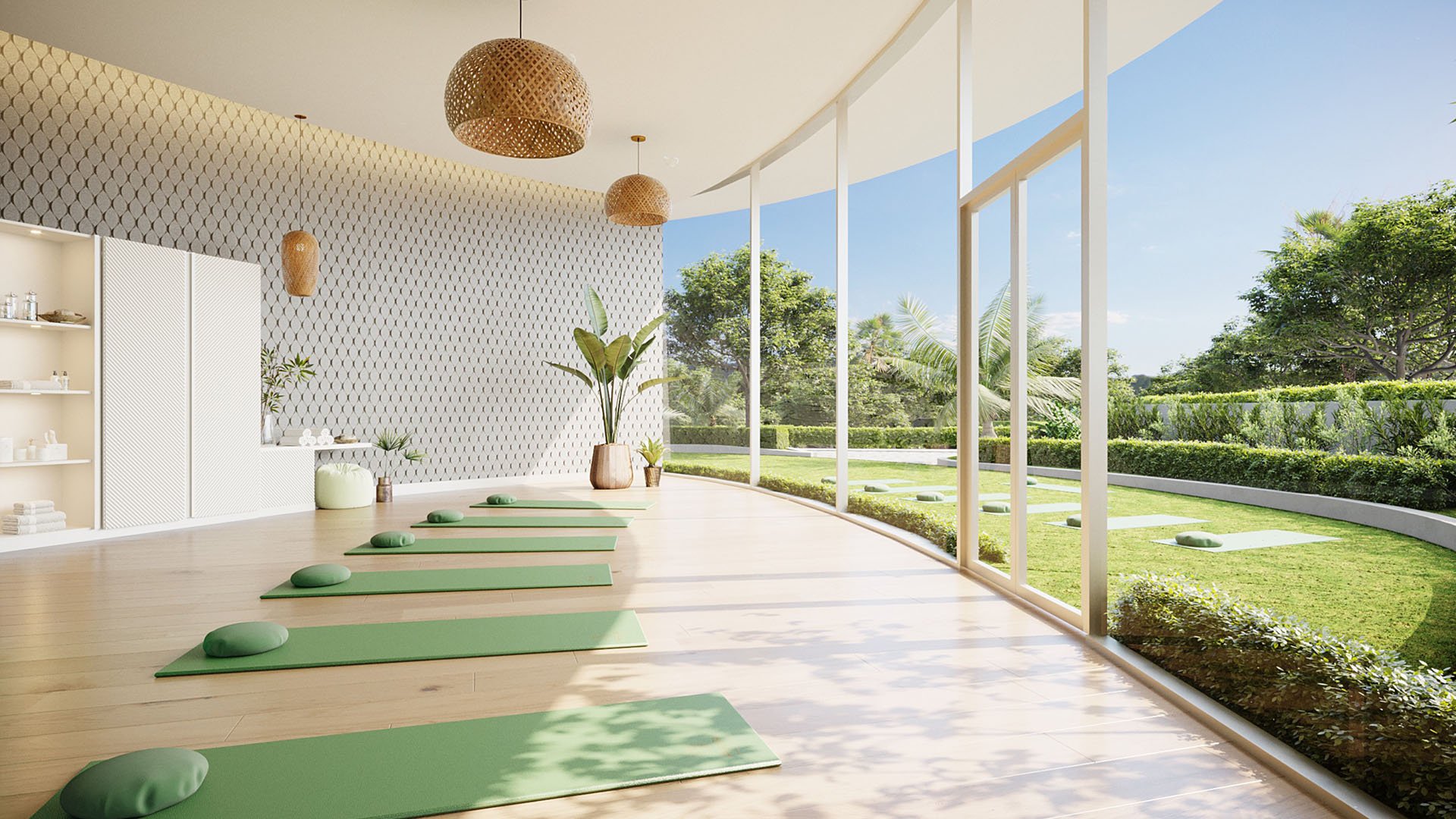
In South Florida’s top tier, wellness is no longer a generic amenity checkbox. Buyers with established routines want environments that make practice feel inevitable: a quiet arrival sequence, intuitive prop storage, natural light that reads as flattering rather than harsh, and outdoor settings protected from wind, noise, and midday glare.
An extensive indoor-outdoor yoga sanctuary is not simply an interior studio plus a lawn. The strongest executions function like a small campus-an interior room calibrated for breath, sound, and temperature, paired with an outdoor counterpart that is genuinely usable in the region’s heat and humidity. Think engineered shade, non-slip surfaces that stay comfortable underfoot, discreet misting or fan strategies, and sightlines that help the nervous system settle.
For the South Florida luxury buyer, the sanctuary’s real value is less about square footage and more about integration: Does it sit adjacent to recovery? Does it feel like a retreat rather than an event space? Does the building’s culture support consistent practice?
A beautiful rendering can mask a space that feels impractical at 6:30 a.m. or unusable at 3:00 p.m. These signals separate a styled deck from a true sanctuary.
1) Climate intelligence.
Outdoor practice areas should offer meaningful shade and a surface that won’t turn slick in humidity. Indoors, look for a dedicated HVAC zone and gentle air movement-not a cold blast.
2) Acoustic privacy.
A sanctuary shouldn’t sit directly above a loud pool scene or beside a high-traffic co-working area. Ask what buffers the studio from music, elevators, and amenity corridors.
3) Light that is calming, not punishing.
Morning light is ideal; afternoon light in South Florida can be uncomfortably bright and hot. The best spaces manage exposure with overhangs, screens, and glazing choices.
4) Ritual and flow.
The experience should begin before the mat: a quiet entry, a place to remove shoes, water access, towel service, and spa-grade restrooms or showers nearby.
5) Programming and etiquette.
A sanctuary is only as strong as its calendar and rules. Ask whether classes are hosted, how residents reserve the room, what happens when private events request the space, and how noise standards are enforced.
This ranking reflects how well a project’s positioning-and typical ultra-luxury amenity expectations-align with an “extensive” indoor-outdoor yoga sanctuary concept, with emphasis on buyer experience rather than marketing language.
1. The Well Coconut Grove - nature-forward wellness living
Coconut Grove’s lifestyle naturally supports a calmer, greener daily rhythm, and a wellness-led concept is advantaged when you want yoga to feel embedded in the architecture. The best indoor-outdoor sanctuaries here take cues from the Grove itself: filtered light, garden adjacency, and an arrival sequence that intentionally slows you down.
For buyers, the tell is whether the outdoor practice zone is truly protected and quiet, and whether the indoor studio has the acoustic and climate tuning needed for breathwork, restorative sessions, and meditation without distraction.
2. The Well Bay Harbor Islands - quiet-luxury sanctuary in a village setting
Bay Harbor Islands can feel purposefully removed from the louder energy of the sand-exactly why many wellness-minded buyers choose it. A strong sanctuary here should prioritize privacy, with an outdoor component that reads as a residents-only garden room rather than a pool-adjacent stage.
If you are evaluating this type of project, focus on whether the studio is positioned away from traffic and whether the outdoor portion includes shade strategies that make midday practice viable.
3. Five Park Miami Beach - a modern, design-led take on wellness
Miami Beach has no shortage of sun and spectacle, but the best buildings create internal calm. A compelling indoor-outdoor yoga concept in this setting requires thoughtful separation from social amenity zones, plus indoor tuning that feels more spa than gym.
Buyers who practice regularly should ask how the building manages sound bleed and scheduling, particularly if the overall lifestyle leans social. The goal is a sanctuary that remains serene even when the rest of the property is active.
4. Una Residences Brickell - high-rise serenity with indoor-outdoor logic
In Brickell, a wellness sanctuary has to work harder. Vertical density, traffic energy, and a faster pace can dilute the sense of retreat. The strongest interpretations compensate with elevated views, protected terraces, and an indoor studio that feels intentionally removed from the building’s busiest circulation routes.
For a buyer, the difference-maker is whether the outdoor practice area is more than decorative. Look for wind mitigation, shade, and a direct, elegant connection between the interior studio and terrace.
5. Continuum on South Beach - established resort sensibility in South-of-fifth
South-of-fifth is prized for walkability and ocean adjacency, and an established luxury environment can support a resident culture that values routine. A yoga sanctuary in this context should feel like part of a larger mind-body circuit: practice, recovery, and reset, all within a coherent sequence.
When touring, pay attention to where the studio sits relative to louder outdoor amenities-and whether the outdoor portion offers the privacy and shade required for daily use.
The word “extensive” should be provable in experience-not just in a brochure. Your goal is to understand capacity, usability, and maintenance.
Tour it at the wrong time on purpose.
Visit when heat, humidity, and building activity are highest. If the outdoor space still feels calm and workable, it’s likely designed correctly.
Ask about the boundary between studio and event venue.
Many buildings quietly repurpose wellness rooms for private events. If the yoga room is frequently booked for parties, it isn’t a sanctuary.
Confirm storage and setup.
A serious studio has organized props, a clean place for mats, and a clear cleaning protocol. If everything is “brought out when needed,” the space likely isn’t used enough to stay pristine.
Understand reservations and recurring classes.
A sanctuary becomes part of your life when access is predictable. Ask how far in advance you can reserve, how many users the space holds comfortably, and whether there are resident-only class times.
A sanctuary shouldn’t feel like two separate worlds. The best indoor-outdoor transitions are nearly imperceptible.
Thresholds.
Wide openings, level flooring transitions, and protected edges matter. A step down or awkward door swing can turn a terrace into a place you only glance at.
Materials.
Outdoor surfaces should be grippy and comfortable; indoor flooring should be stable and forgiving. Notice how surfaces are likely to handle humidity, salt air, and daily cleaning.
Greenery and views.
The outdoor component should quiet the eye. In Coconut-grove settings, this can mean layered planting; in Miami-beach or Brickell contexts, it can mean curated sightlines, privacy screens, and a feeling of remove.
Lighting at sunrise and dusk.
Subtle, warm lighting supports early and evening practice. If the space is flooded with bright white light, it will read like a fitness room rather than a sanctuary.
In the broader South Florida luxury landscape, projects like The Well Coconut Grove and The Well Bay Harbor Islands naturally invite this kind of integrated thinking, while design-forward towers such as Five Park Miami Beach and skyline addresses like Una Residences Brickell can deliver serenity through planning, elevation, and acoustics. For buyers who prefer a more established South-of-fifth rhythm, Continuum on South Beach reflects how a resort-caliber environment can support consistent wellness habits when the spaces are properly protected and managed.
A sanctuary should support your practice on your schedule-not only when the building is quiet.
Where is the outdoor yoga area in relation to the pool and social deck? If it’s adjacent, ask about noise rules and time-of-day usage.
Is the indoor studio a dedicated room or a multi-purpose space? Multi-purpose usually means compromises.
How is the studio ventilated and dehumidified? Comfort and safety depend on it.
What is the policy for private trainers and outside instructors? It impacts both access and culture.
What recovery amenities are nearby? Cold plunge, sauna, steam, and calm lounges turn yoga into a complete circuit.
The most refined luxury wellness experiences feel effortless: you arrive quietly, practice without interruption, transition to recovery without crossing a party scene, and return to your residence feeling reset.
What qualifies as an “indoor-outdoor” yoga sanctuary in a luxury building? It’s a dedicated indoor studio paired with a usable, protected outdoor practice area, connected by an intentional flow.
Why does shade matter more than size for outdoor yoga in South Florida? Without shade and heat management, even a large deck becomes seasonal and rarely used at prime daylight hours.
Should the yoga space be near the pool? Ideally no-unless there are strong acoustic buffers and clear rules that preserve quiet during practice times.
What flooring is best for an outdoor yoga terrace? Look for non-slip, low-glare surfaces that stay comfortable in heat and handle humidity without becoming slick.
How can I tell if the indoor studio will feel calm, not like a gym? Prioritize acoustic privacy, soft lighting, and a dedicated HVAC zone that supports gentle airflow.
Do luxury buildings typically allow private instruction in yoga rooms? Policies vary; ask about outside trainers, resident guests, and whether the studio can be booked privately.
What amenities pair best with yoga for a true wellness circuit? A calm lounge plus sauna, steam, cold plunge, and spa-grade showers creates a complete pre- and post-practice rhythm.
How do reservations usually work for yoga studios? Many buildings use digital booking with time limits; confirm recurring class blocks and resident priority windows.
What’s the biggest red flag during a tour? If the yoga room is treated as an event or overflow space, it will rarely deliver consistent, sanctuary-level calm.
Can a high-rise in Brickell deliver a true indoor-outdoor sanctuary? Yes-when terraces are wind-protected and the studio is acoustically separated from high-traffic amenity zones.
For a confidential assessment and a building-by-building shortlist, connect with MILLION Luxury.
If branded residences are on your mind — as a home or as an allocation — we would be glad to share what we are seeing, privately.
Begin a quiet conversation