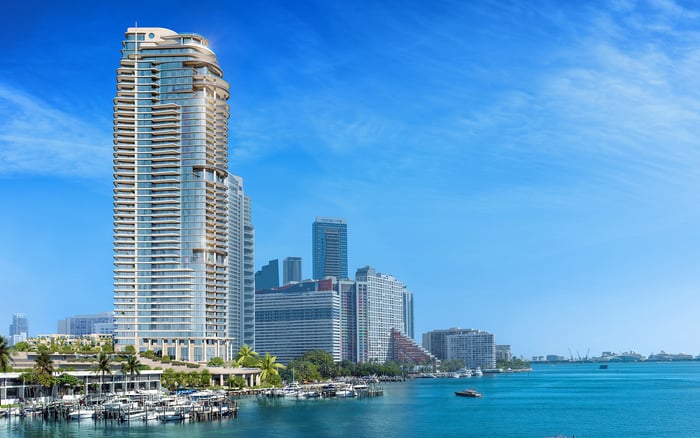
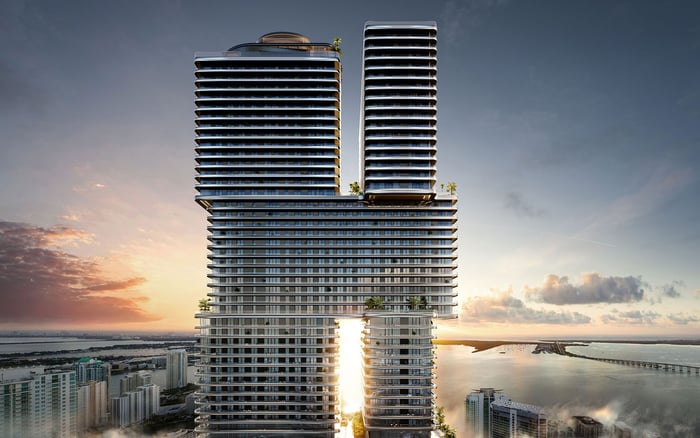
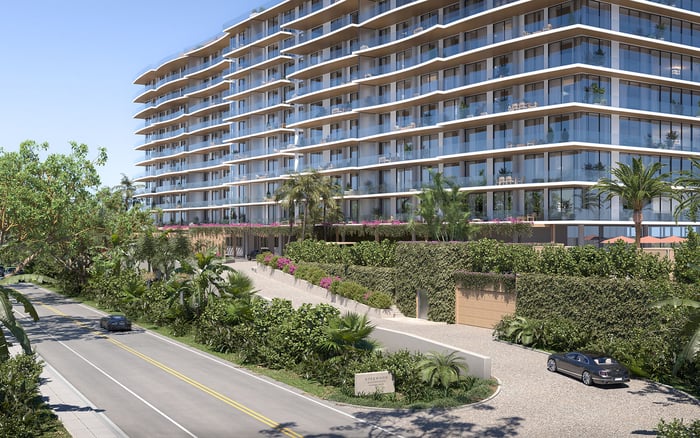
A discreet, buyer-oriented look at how a dedicated valet and porte cochère can shape daily life, privacy, and property value expectations at Mercedes-Benz Places Miami.
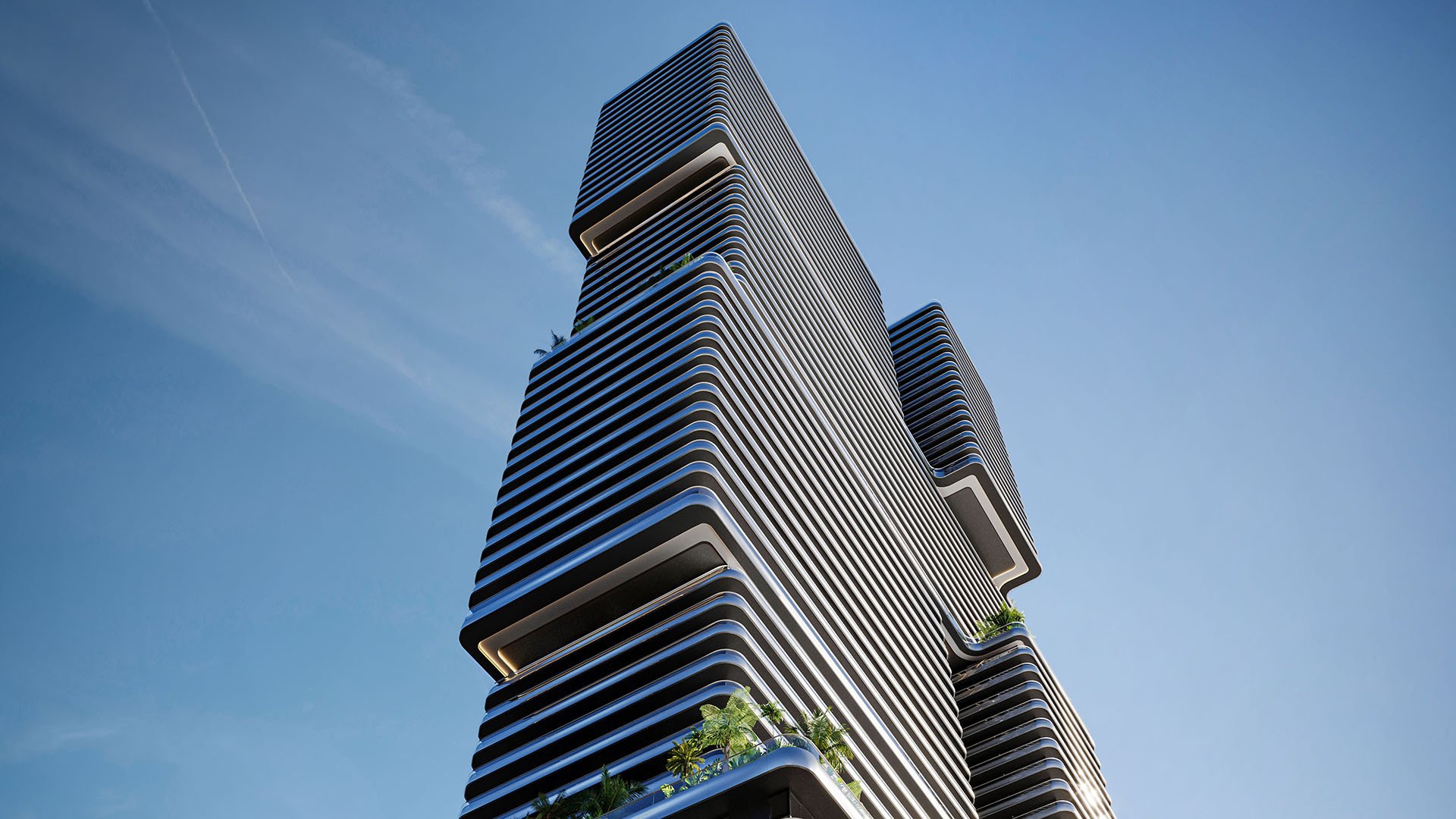
In South Florida, the front door of a tower is rarely the true beginning of the experience. For many buyers, it’s the arrival sequence: the turn into the drive, the moment the vehicle is received, the choreography of doors, luggage, guests, and privacy. A dedicated valet paired with a well-considered porte cochère can be a quiet differentiator-especially for residents who treat their home more like a private club than a conventional condominium.
At Mercedes-Benz Places Miami, the dialogue around valet and the porte cochère isn’t simply about convenience. It’s about the building’s posture: how it manages visibility, how it absorbs traffic, and how it sets service expectations. In markets like Brickell and Downtown, where curb space is contested and peak hours compress quickly, the arrival sequence becomes a daily ritual that either reinforces-or undermines-the promise of luxury.
“Dedicated valet” can describe anything from a staffed podium to a fully managed, resident-prioritized operation. For a buyer assessing real value, that distinction is operational.
A dedicated valet experience should feel consistent across scenarios: a weekday commute, a late-night return, a weekend with guests, or a holiday pickup with luggage. The strongest programs are defined by repeatable standards, not occasional excellence. Residents should be able to anticipate where to stop, how the handoff works, and where they’ll re-enter the building. That predictability supports perceived security.
Key buyer-oriented signals to look for include:
Clear separation between resident and visitor flow, ideally supported by intuitive signage and a doorman-led handoff.
A controlled curb cadence that prevents stacking idling vehicles, which can create exposure and frustration.
A consistent service tone that matches the building’s brand-particularly in how staff manage guests, deliveries, and discreet departures.
In the ultra-premium segment, valet also functions as an extension of household management. Many residents rely on it for coordination: greeting a driver, facilitating a pickup, handling a short stop for packages, or smoothing the edges of a busy schedule. The more considered the system, the less a resident has to think about arrival.
A porte cochère is often described as “covered drop-off.” In true luxury living, it functions more like a buffer zone. It moderates climate, sound, and visibility, and it compresses the transition between the city and the private interior.
Architecturally, a strong porte cochère does several things at once:
It frames the building’s identity without forcing residents into a public display.
It protects arrivals from weather events and harsh sun, which is no small point in South Florida.
It provides enough depth and turning radius so vehicles don’t block the street or create a tense curbside scene.
The most effective porte cochères read as intentional, not theatrical. They’re scaled for real use, not just for photography. When the canopy is too shallow or the approach too tight, even excellent valet staff can’t fully eliminate the friction. When it’s designed around operational reality, everything downstream improves: timing, security, resident mood, and the way guests experience the property.
Luxury security is rarely about making a scene. It’s about reducing the number of moments when a resident can be tracked, approached, or inconvenienced.
The curb is one of those moments. A resident stepping out of a vehicle is briefly exposed-often with a phone in hand and attention divided. A refined arrival system reduces that window through both design and staffing.
When evaluating the valet and porte cochère experience at Mercedes-Benz Places Miami, consider privacy in layers:
Visual privacy: sightlines from the street into the lobby and resident paths.
Physical control: where vehicles can pause, where pedestrians can linger, and how access points are protected.
Social privacy: how staff handle recognition, guest verification, and the subtle art of saying “no” without discomfort.
In Miami’s high-profile environment, discretion matters. A building can feel vibrant while still reading as private when its arrival sequence avoids crowding, discourages loitering, and keeps resident movement calm and direct.
Design intent is only half the story. Valet is a living system, and it performs best when staffing, training, and physical layout align.
Before you purchase, it’s reasonable to ask questions that translate luxury from a rendering into day-to-day life:
What is the resident prioritization policy during peak periods?
How are guests handled, and how are oversized vehicles managed?
Where do ride-share drop-offs occur, and are they separated from resident flow?
How do deliveries interface with the main arrival sequence to avoid clutter?
The most important question isn’t “Do you have valet?” It’s “How does your building prevent the valet line from becoming the lobby line?” In many towers, the breakdown starts when curb congestion spills indoors. A well-run operation keeps the curb moving and the lobby serene.
Across Brickell and Downtown, arrival experiences vary widely. Some buildings prioritize speed and throughput, while others aim for a more “hotel-like” pause and welcome.
If your lifestyle revolves around Brickell dining, finance, and quick access to Miami’s arterial routes, you may prioritize a valet program optimized for pace and predictability. If your routine leans toward entertaining and frequent guest arrivals, the porte cochère becomes a hospitality stage-one where guests should feel oriented immediately, not left wondering where to stand or how to enter.
In this context, buyers often cross-shop newer, lifestyle-forward towers. A point of reference for the broader Brickell conversation is St. Regis® Residences Brickell, where many purchasers focus on service culture and the “arrival-to-elevator” experience as a proxy for long-term operational standards.
For those who want a design-led sensibility in the urban core, Waldorf Astoria Residences Downtown Miami is another lens through which buyers often evaluate curb management, guest handling, and how a tower absorbs traffic without feeling chaotic.
While valuation is never driven by valet alone, the lived experience of arrival can shape owner satisfaction and reputational strength. In the luxury tier, reputation is sticky. If a building becomes known for seamless arrivals, calm lobbies, and discreet guest handling, that narrative tends to support demand.
Conversely, buildings that develop a reputation for curb congestion, inconsistent staffing, or confusing guest flow can feel less luxurious over time-even if interior finishes remain strong. This is particularly true for second-home buyers who want Miami to feel effortless from minute one.
The porte cochère is also a branding asset. It’s the first physical touchpoint many prospective buyers encounter during a showing. If it reads as resolved, protected, and quietly controlled, it can elevate perception before the elevator doors open.
In ultra-premium living, small behaviors add up to a sense of ease: a doorman who remembers your preferred entrance; a valet who understands you want speed on weekdays and discretion on weekends; a team that can manage guests without placing the resident in the role of traffic controller.
This is where “dedicated” becomes meaningful: not just coverage at the curb, but a culture of hospitality that treats residents as regulars. The best teams don’t over-familiarize-they calibrate. They keep things moving while preserving a sense of calm.
For buyers who also consider Miami Beach as part of their lifestyle footprint, the arrival experience becomes even more consequential because it sets the tone for how the property handles visibility. Many compare this sensibility to the South-of-Fifth environment, where the balance of access and privacy is part of the appeal of Continuum on South Beach.
A valet program lands differently depending on how you live.
If you’re a daily driver, you’ll care about retrieval times and the reliability of early-morning departures. If you rely on a driver or car service, you’ll care about how the porte cochère supports staging, waiting, and discreet pickups. If you entertain often, you’ll care about how guests are greeted and how quickly they’re transitioned inside.
Collectors and performance-car owners will also look for careful handling. Even without getting into mechanics, a refined operation signals respect for the vehicle: smooth movements, controlled speeds, and staff who treat the handoff as a professional responsibility.
And then there is Miami itself. Congestion, event nights, and weather shifts can stress any curb. A well-designed porte cochère absorbs that pressure without passing it on to residents.
When you tour, focus on what you can measure with your own senses.
Watch the curb for five minutes. Does it feel calm or frantic?
Observe where people stand. Are there clear, comfortable waiting zones?
Notice whether staff direct traffic proactively or simply react.
Pay attention to transitions. Does the path from car to lobby feel protected and intuitive?
If you can visit at two different times, you’ll learn more than any brochure can convey. Peak periods reveal whether the system is built for reality.
For buyers considering the broader design-forward condo landscape in Brickell, Una Residences Brickell is often viewed through a similar lens: how design, curb flow, and staffing standards combine to create a consistently elevated first impression.
At Mercedes-Benz Places Miami, the dedicated valet and porte cochère conversation is ultimately about lifestyle control. The ideal outcome is straightforward: you arrive, you’re received, you move inside, and the city falls away. When that happens consistently, luxury shows up as time saved, privacy preserved, and stress avoided.
For serious buyers, the best approach is to treat the arrival sequence as a functional amenity with design implications-not a marketing line item. Ask operational questions, observe real-world flow, and decide whether the building’s front-of-house experience aligns with your definition of discretion.
What is a porte cochère, in practical terms? It’s a covered, designed vehicle arrival area that buffers residents from weather, traffic, and visibility.
Does a dedicated valet always mean faster service? Not automatically; speed depends on staffing, layout, and peak-hour policies as much as branding.
How can I evaluate valet quality during a showing? Watch curb flow for several minutes and note how proactively staff manage cars, guests, and transitions.
What should guests experience at the porte cochère? Clear guidance, a welcoming handoff, and an intuitive path inside-without needing to “figure it out.”.
Why does curb congestion matter for luxury living? It increases noise, visibility, and frustration, and it can make even a beautiful lobby feel hectic.
Is separation between resident and visitor drop-off important? Yes; it supports privacy, security, and a calmer arrival rhythm, especially during peak periods.
How do deliveries affect the arrival experience? If not well managed, they can clutter the curb and lobby; stronger operations route them cleanly.
What role does staff discretion play in security? Discretion reduces exposure by handling verification and guest management without drawing attention.
Can the arrival experience influence resale appeal? Yes; consistent ease and calm can strengthen reputation, which tends to support long-term demand.
What is the single best question to ask about valet operations? Ask how the building prevents peak-hour valet lines from becoming an interior lobby problem.
If you'd like a private walkthrough and a curated shortlist, connect with MILLION Luxury.
If branded residences are on your mind — as a home or as an allocation — we would be glad to share what we are seeing, privately.
Begin a quiet conversation