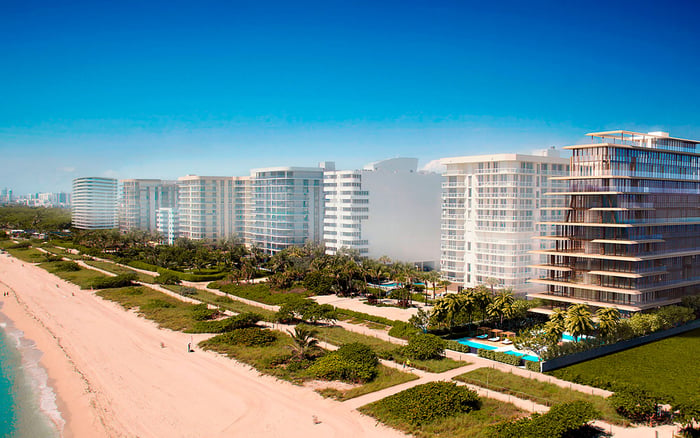
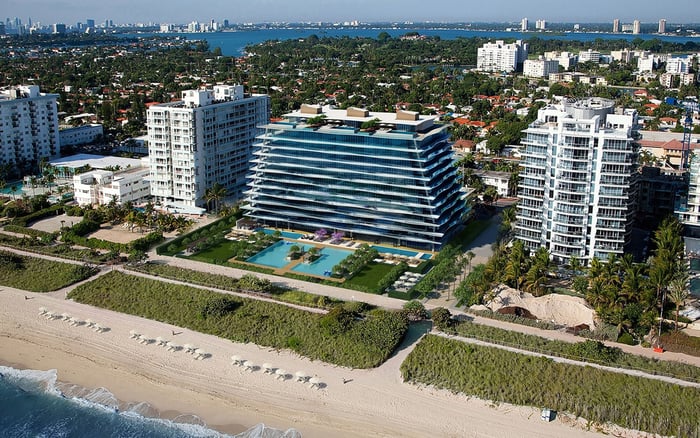
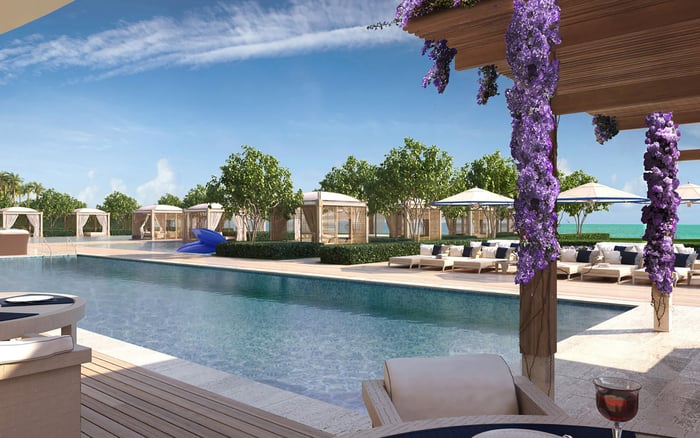
A discreet buyer’s guide to Surfside’s leading luxury residences, focused on beach boardwalk access, privacy planning, controlled arrival, and oceanfront livability.
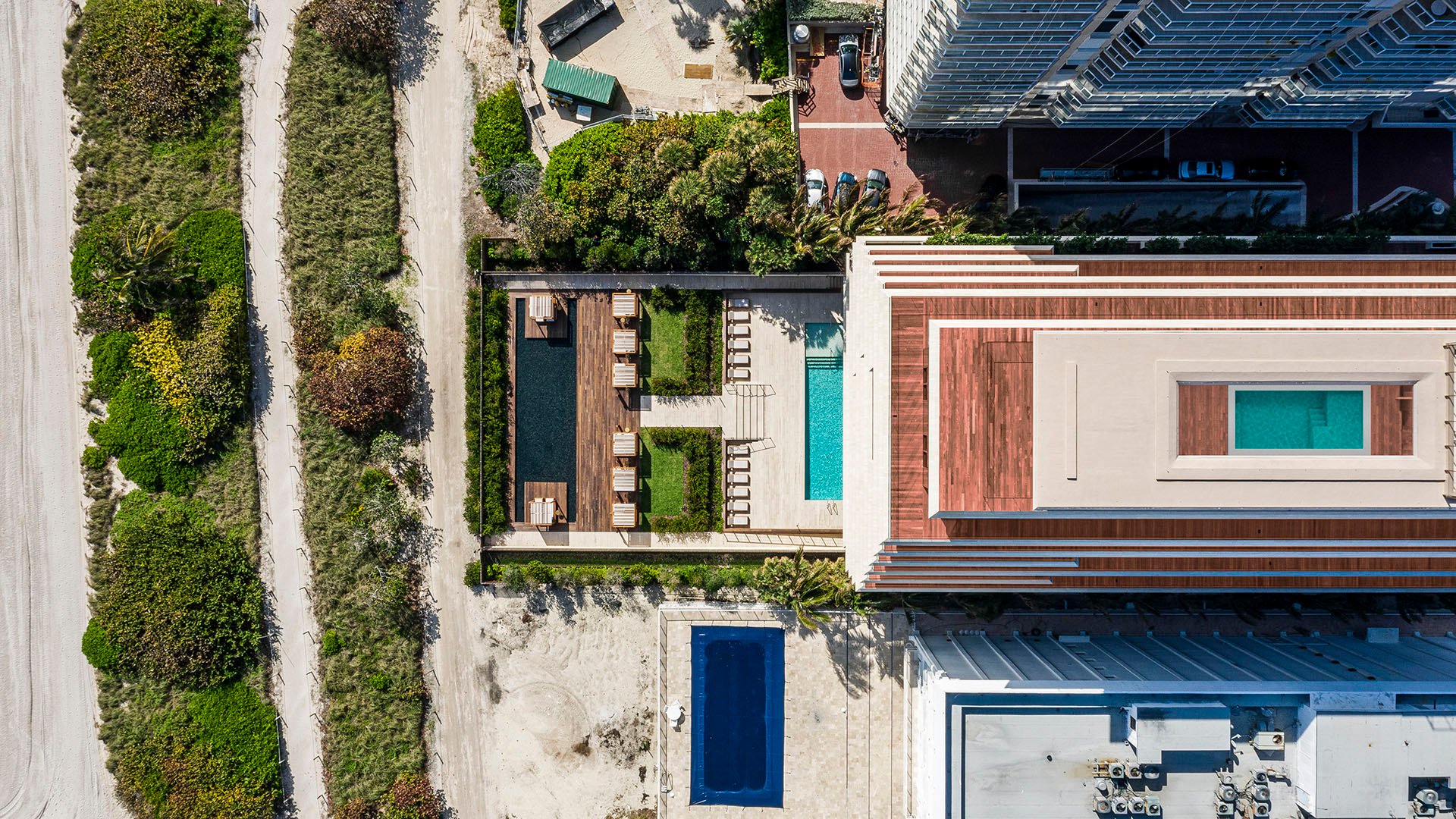
Surfside rewards a particular buyer: one who wants the ocean close, but not public life at the front door. The best addresses along this stretch are judged less by spectacle than by choreography. How does a resident move from car to lobby, from lobby to pool deck, from pool deck to beach path, and back again without feeling exposed? That sequence defines true luxury here.
Direct beach boardwalk access is more than a convenience. It changes the rhythm of ownership. Morning walks, evening swims, and family beach days become part of the residence rather than an excursion. Privacy features matter just as much, because the boardwalk is shared civic space. The most desirable buildings manage that interface with layered thresholds, controlled entry points, and a residential atmosphere that remains composed even during peak season.
Buyers comparing Surfside options often look at names such as Arte Surfside, Fendi Château Residences Surfside, and The Surf Club Four Seasons Surfside because the conversation is no longer only about square footage. It is about how a building handles the meeting point between private life and oceanfront access.
1. The Surf Club Four Seasons Surfside - heritage beachfront setting
For buyers who want a recognized Surfside name with an established luxury identity, The Surf Club Four Seasons Surfside belongs at the front of the conversation. The key evaluation point is how its beach-side circulation, resident arrival, and hospitality environment support discretion while keeping the ocean experience immediate.
This is the type of property where privacy should be assessed as a sequence, not a single amenity. A serious tour should consider lobby flow, staff touchpoints, guest routing, service access, and how residents transition toward the sand and boardwalk without compromising the sense of retreat.
2. Fendi Château Residences Surfside - branded boutique privacy
Fendi Château Residences Surfside appeals to buyers who value a more residential expression of branded luxury. In Surfside, boutique scale can be a meaningful privacy advantage, especially when the building experience feels composed, direct, and managed without unnecessary public energy.
For boardwalk-oriented buyers, the most important questions are practical. Where is the beach-side exit? How are guests identified? Can residents move from amenity spaces to the shoreline without crossing high-traffic public zones? The strongest value lies in a building that makes these transitions feel natural and protected.
3. Arte Surfside - design-forward oceanfront living
Arte Surfside carries a design-conscious profile that suits buyers seeking quiet architectural presence rather than volume. In this context, privacy is closely tied to scale, sightlines, and the way indoor-outdoor living is staged toward the water.
The oceanfront experience should be reviewed from both the residence and the ground plane. Terraces, amenity decks, beach access points, and back-of-house circulation all shape whether a property feels serene on ordinary days, not only during a scheduled showing.
4. Eighty Seven Park Surfside - north-edge calm and park-side sensibility
Eighty Seven Park Surfside is relevant for buyers who want Surfside’s beach culture with a softer residential cadence. Its position in the broader Surfside conversation makes it a natural candidate for those who value calm approaches, open-air living, and careful separation between public movement and private residence life.
The due diligence focus should remain precise: entry control, beach-side access, elevator privacy, amenity density, and the ease of moving to the boardwalk. Buyers should also consider how the building feels at different times of day, since privacy is often most visible during transitions.
5. Ocean House Surfside - intimate residential alternative
Ocean House Surfside is best considered by buyers who place a premium on intimacy and lower-key residential character. In Surfside, smaller-scale living can provide a quieter daily experience, particularly for owners who want the beach close without the feeling of a large resort environment.
The evaluation should concentrate on the essentials: how residents access the sand, how circulation is controlled, how service functions are handled, and how guests are received. For some buyers, the most compelling privacy feature is not grandeur, but a building that feels naturally discreet.
Privacy in Surfside starts before the residence door. It begins with the arrival court, the valet sequence, the lobby sightline, and the elevator experience. It continues through amenity design, staff protocol, and the degree to which residents can enjoy the ocean without passing through social bottlenecks.
The phrase Beach-access is often used casually, but sophisticated buyers should ask for specificity. A path to the beach is not the same as a well-managed boardwalk transition. The best arrangement feels direct, intuitive, and protected, with clear separation between residents, guests, vendors, and the public beach environment.
This is why properties such as Eighty Seven Park Surfside and Ocean House Surfside are often part of the same buyer conversation as larger-name addresses. They represent different expressions of the same priority: controlled access to the shoreline without sacrificing quiet.
A polished sales presentation can make every building feel seamless. The better test is movement. Buyers should physically walk the resident path from arrival to lobby, from lobby to amenity level, and from amenity level toward the beach. The route should feel intentional, not improvised.
Notice where nonresidents might cross the same path. Notice whether beach equipment, towels, service carts, or deliveries share the same circulation as owners. Notice whether staff presence feels discreet or overly visible. In an ultra-premium Surfside setting, the best privacy features often work in the background.
Also consider how the residence itself handles exposure. A broad terrace may be magnificent, but its value depends on sightlines, neighboring buildings, and the relationship between interior rooms and outdoor living areas. Privacy is not merely about being hidden. It is about choosing when to be seen.
Surfside continues to attract buyers who want oceanfront living without the density and pace associated with larger resort corridors. Newer and future-facing projects are part of that conversation, especially when they address privacy, scale, wellness, and residential service with discipline.
For buyers watching the next chapter of the neighborhood, The Delmore Surfside adds another approved Surfside reference point. The broader takeaway is clear: the market is rewarding buildings that treat access and privacy as architecture, not afterthoughts.
The best Surfside property is not necessarily the most visible one. It is the one whose daily experience aligns with the owner’s preferred level of discretion. For a seasonal family, that may mean effortless beach movement and controlled guest access. For a full-time resident, it may mean quiet elevators, intuitive service flow, and a lobby that never feels like a stage.
Surfside remains compelling because it offers a rare balance: immediate ocean access, residential scale, and proximity to the broader Miami Beach and Bal Harbour luxury ecosystem. Within that balance, the winning property is the one that makes private coastal living feel effortless.
What matters most when evaluating direct beach boardwalk access? The key is the resident path from lobby or amenity level to the beach. It should feel direct, controlled, and separate from unnecessary public or service traffic.
Is boardwalk access more valuable than a large amenity package? For many Surfside buyers, yes. Daily access to the beach can shape the ownership experience more meaningfully than amenities used only occasionally.
How should a buyer judge privacy during a showing? Walk the exact routes residents use, including arrival, elevators, amenity spaces, and beach exits. Privacy is best understood through movement.
Are boutique buildings generally more private? Boutique scale can support privacy, but operations matter just as much. Staffing, guest protocols, and circulation design determine the lived experience.
Why is Surfside attractive for oceanfront buyers? Surfside offers a quieter coastal setting with access to the beach and proximity to nearby luxury districts. Its appeal is residential rather than theatrical.
Should buyers ask about guest and vendor circulation? Yes. The separation of residents, guests, service teams, and deliveries is central to privacy in any luxury oceanfront building.
Does an ocean view guarantee privacy? No. Views, terrace exposure, neighboring sightlines, and amenity placement all influence how private a residence actually feels.
Which tags best describe this buyer priority? Surfside, Oceanfront, Beach-access, Boutique, Arte Surfside, and Fendi Château Residences Surfside capture the core search language.
Can privacy features affect resale appeal? They can, especially for buyers seeking a discreet primary residence or second home. The strongest buildings make privacy feel integral to daily life.
What is the best way to shortlist comparable options for touring? Start with location fit, delivery status, and daily lifestyle priorities, then compare stacks and elevations to validate views and privacy.
When you're ready to tour or underwrite the options, connect with MILLION.
If branded residences are on your mind — as a home or as an allocation — we would be glad to share what we are seeing, privately.
Begin a quiet conversation