Race-week entertaining can turn a residence's arrival sequence into a practical test of privacy, discretion and service quality for luxury buyers.
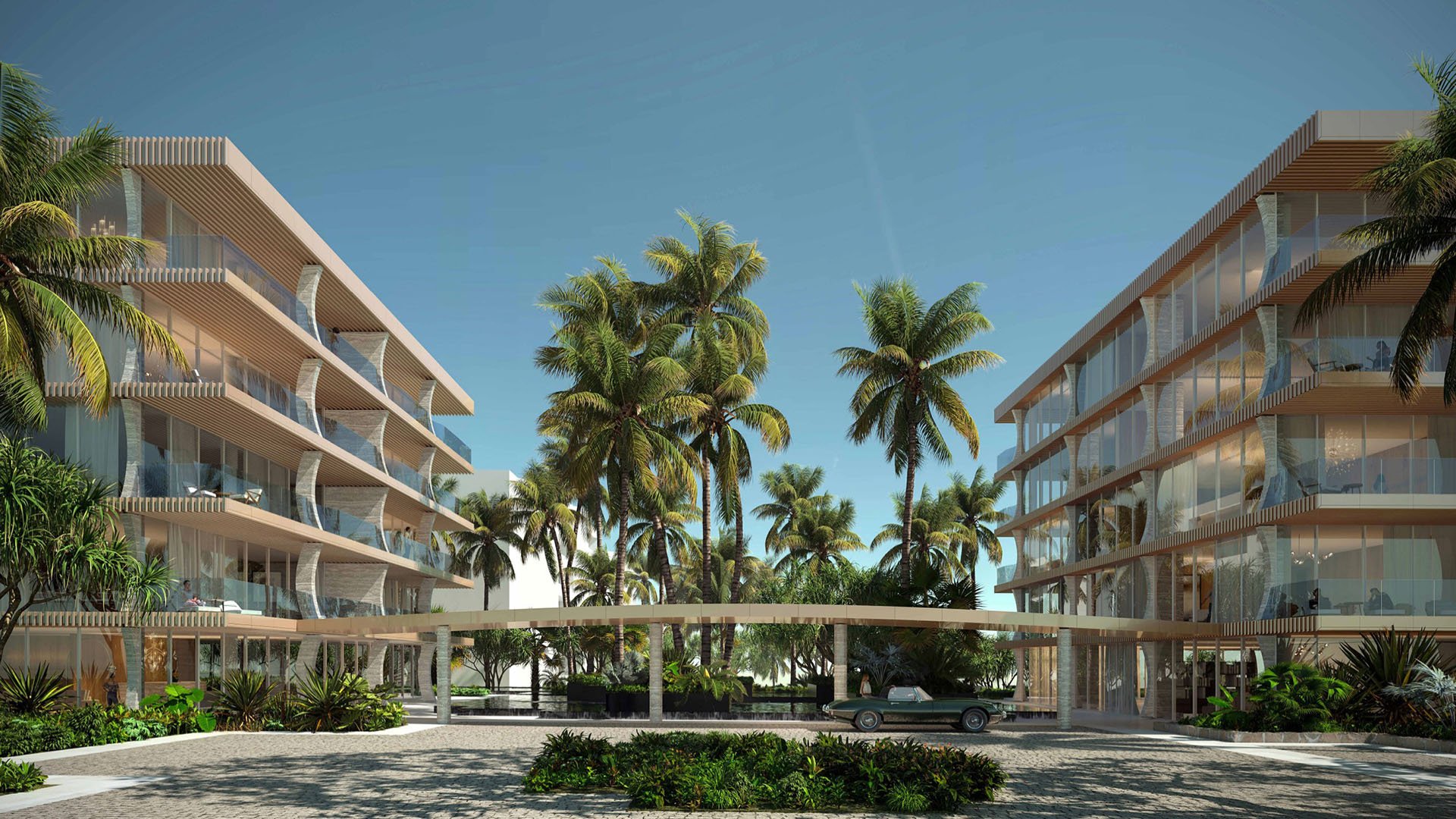
The Miami Grand Prix brings an unusually concentrated social calendar to South Florida. For luxury homeowners, the relevant real-estate lesson is less about spectacle than movement: how elegantly a building receives residents, guests, drivers and vehicles when schedules tighten and discretion matters.
That makes the front door a serious consideration for buyers. A graceful lobby is only one element. The full sequence begins at the street, continues through the porte cochere or garage and ends at the residence. During an F1 weekend, every transition becomes more visible. A property that feels serene under ordinary conditions should remain composed when several households entertain at once.
This does not mean every buyer wants theatrical service. Many prefer the opposite: an entrance that is intuitive for invited guests, difficult for casual observers to read and straightforward for staff to manage. In this context, privacy is an operational quality, not a decorative promise.
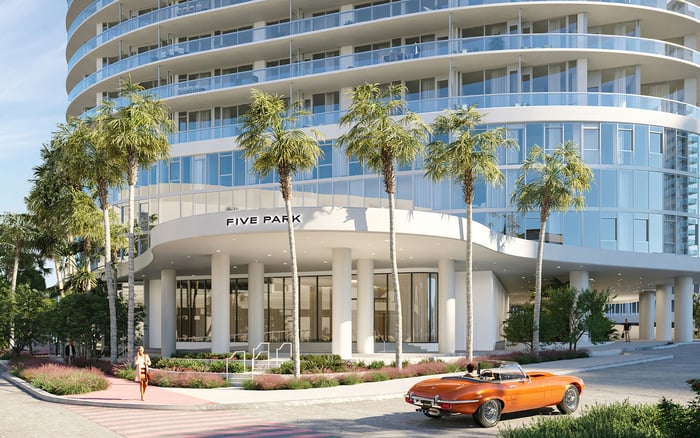
A private arrival should be evaluated as a sequence, not a single amenity. Buyers can begin with the curb approach. Is there enough room for a driver to pause without creating a conspicuous queue? Can residents and visitors be directed separately? Does the geometry allow for an orderly handoff when multiple cars arrive in close succession?
Next comes visual exposure. Sightlines from the street, lobby and neighboring drop-off positions affect how discreetly residents can enter. Covered transitions may provide comfort, but their value also depends on lighting, door placement and the distance between the vehicle and controlled access.
Security should feel calm rather than performative. Buyers may wish to understand how guests are verified, where they wait and whether service personnel can resolve an issue without delaying the entire entrance. Elevator access warrants equal scrutiny. Even the most polished curb experience loses its advantage if residents must cross a crowded common area before reaching a controlled lift.
These questions are useful when comparing urban options such as Cipriani Residences Brickell and The Residences at 1428 Brickell. Rather than inferring a level of service from presentation alone, buyers should ask how each arrival is designed to function at peak demand.
Valet may appear as a simple line on an amenity schedule, but its quality depends on coordination. Staffing, vehicle staging, key control, retrieval communication and contingency planning all shape the resident experience. The relevant standard is not merely whether valet exists, but whether it preserves order without requiring residents to explain themselves repeatedly.
For collectors and enthusiasts, vehicle handling may warrant a more detailed conversation. Buyers can ask about oversized cars, low-clearance models, charging arrangements and protocols for vehicles that owners do not want moved without specific approval. These are due-diligence questions, not assumptions about any particular property.
Guest management matters just as much. A host should be able to communicate an arrival in advance, establish permissions and minimize lobby waiting. When service is well designed, hospitality remains generous while access stays controlled. That balance is especially important for branded residences, where buyers may expect the service language of a hotel alongside the boundaries of a private home.
In Brickell, a buyer's focus may center on the interface between a high-energy district and a controlled residential threshold. The ideal experience creates a clear transition from city movement to domestic calm. Buyers should visit at more than one time of day, observe turning movements and ask how the building manages simultaneous arrivals.
Miami Beach presents a different set of considerations. The relationship among street frontage, landscaping, neighboring properties and guest circulation can influence how exposed an entrance feels. At Shore Club Private Collections Miami Beach, as with any residence under consideration, buyers can treat the approach as a practical design study: what is visible, where vehicles pause and how quickly occupants enter a private realm.
The broader lifestyle question is personal. Some owners want a socially connected base near dinners and events. Others prioritize a residence that can absorb those moments without allowing the public energy outside to define the atmosphere within.
Palm Beach buyers may view arrival privacy through the lens of understatement. The desired impression can be residential, measured and familiar, with service present but never visually dominant. Even so, the same operational questions apply: guest authorization, driver coordination, vehicle storage and controlled movement from the arrival point to the home.
Properties in and around West Palm Beach offer another urban context for comparison. Forté on Flagler West Palm Beach can be considered within a broader tour focused specifically on approach, lobby transition and vertical circulation. The objective is not to declare one arrival style universally superior, but to identify the system that best matches the owner's habits.
For households moving between Miami and Palm Beach, consistency may be the real luxury. Drivers, assistants, family members and guests all benefit when permissions and handoffs are intuitive. A residence should reduce friction, not add another layer of coordination to a full calendar.
Before committing, request a detailed walkthrough beginning outside the property. Arrive by car, enter as a guest would, retrieve the vehicle and repeat the route as a resident. Ask what changes during major events, private functions, severe weather or periods of heavy occupancy.
Review written policies governing valet access, guest parking, deliveries and after-hours procedures. Clarify whether protocols are building rules, service standards or discretionary practices. If privacy is decisive, test communications as carefully as architecture. A discreet entrance still depends on accurate names, timely approvals and trained judgment.
Finally, consider resale logic without treating it as a prediction. A well-resolved arrival can appeal beyond motorsport weekends because it supports dinners, family visits, business schedules and daily departures. The Grand Prix simply offers a vivid lens through which to examine an enduring luxury: moving between public and private life with minimal exposure.
Why does the Miami Grand Prix matter to a residential buyer? It draws attention to how a residence manages concentrated arrivals, guests and vehicles.
Is valet alone evidence of a private arrival? No. Privacy also depends on circulation, sightlines, access control and staff protocols.
What should buyers observe at the curb? Look for orderly turning space, sheltered transitions and limited exposure to waiting vehicles.
Should a buyer tour during a busy period? A peak-time visit can reveal how circulation and service perform under greater pressure.
How important is elevator access? It is central: the route from vehicle to residence should remain controlled and efficient.
What should car collectors ask the valet team? Discuss clearance, charging, key custody, staging and any restrictions on vehicle handling.
Does Miami Beach require a different privacy review? Buyers should closely examine street sightlines, frontage and the transition into controlled space.
What distinguishes a Palm Beach arrival preference? Some buyers may favor an understated residential experience with service discreetly present.
Can guest hospitality coexist with strict security? Yes. Advance permissions and clear hosting protocols can make access both welcoming and controlled.
Is arrival design relevant beyond race week? Yes. It affects daily departures, entertaining, deliveries and the separation of public and private life.
To compare the best-fit options with clarity, connect with MILLION.
If branded residences are on your mind — as a home or as an allocation — we would be glad to share what we are seeing, privately.
Begin a quiet conversation