A discreet buyer’s guide to evaluating security integration in Brickell’s luxury high-rise residences, from access control and visitor management to privacy, cyber resilience and residence-level technology.
In the Brickell Corridor, security is no longer a back-of-house concern reserved for property managers and technology consultants. For a buyer considering a full-floor residence, a penthouse, or a high-floor home with meaningful privacy expectations, the quality of security integration can shape daily life as much as the view, the elevator experience, or the arrival sequence.
The essential question is not whether a luxury tower has cameras, access control, staffed reception, or controlled parking. The more important question is whether those systems work together with architectural restraint, operational clarity, and respect for resident privacy. In a market where buildings compete on service, wellness, and design, the strongest security programs are often the least theatrical. They are calm, layered, and nearly invisible until needed.
That standard matters across the top tier of Brickell. Buyers comparing branded and design-led addresses such as Baccarat Residences Brickell, Cipriani Residences Brickell, and The Residences at 1428 Brickell should evaluate security with the same seriousness they bring to floor plans, ceiling heights, finishes, and private amenities.
A high-rise security system is only as strong as the way its parts communicate. Access credentials, elevator controls, garage entry, visitor management, loading dock protocols, package handling, service access, camera coverage, and emergency communications should operate as a coordinated environment, not a collection of disconnected tools.
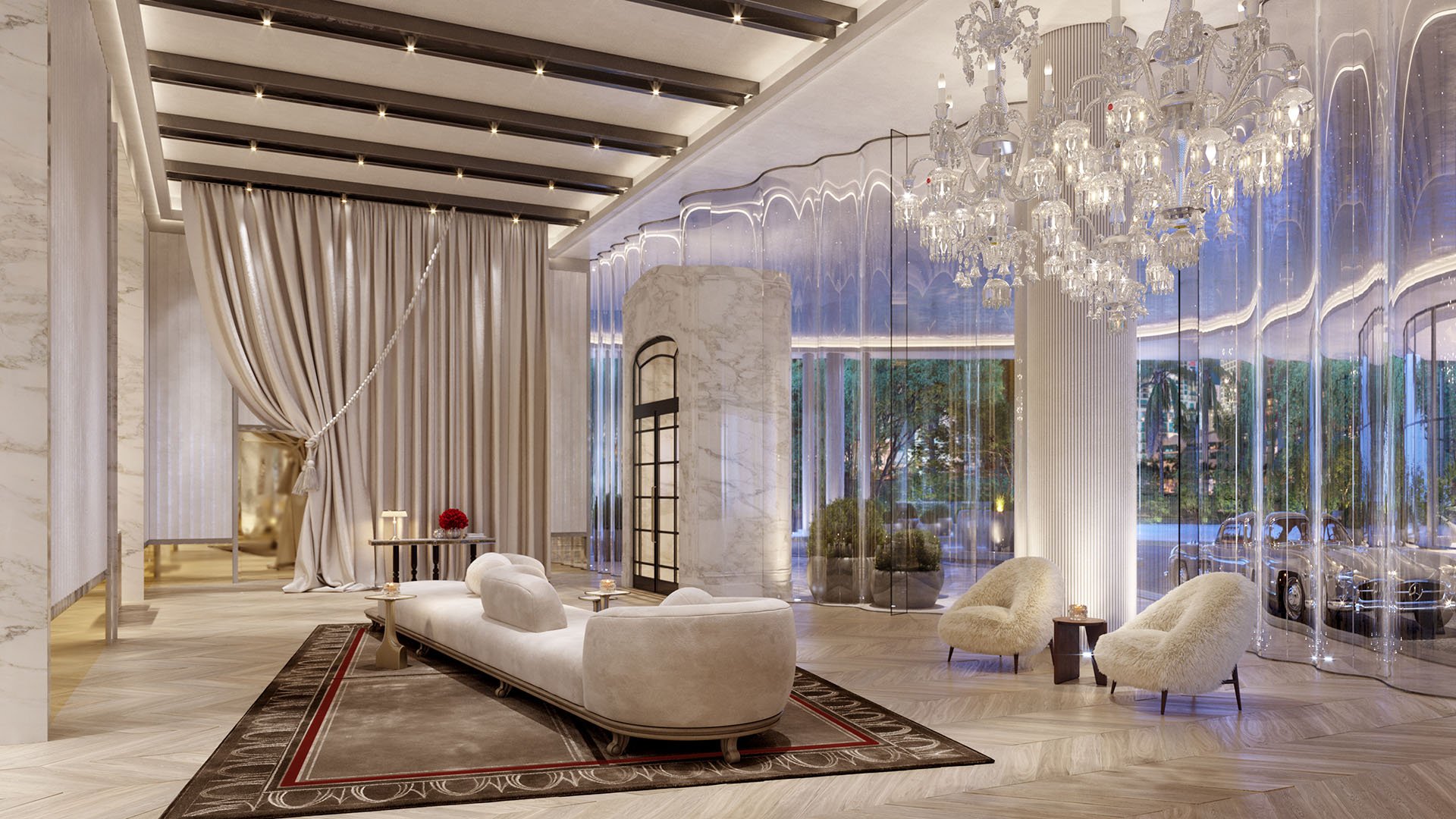
For residents, integration should feel seamless. A properly designed arrival experience may begin before the porte cochere, continue through the lobby and elevator bank, and extend into residence-level access. The goal is not to create friction. The goal is to eliminate ambiguity. Staff should know who is expected, which areas a guest may access, how long authorization remains active, and when exceptions require escalation.
This is particularly important for buyers who prioritize high floors, where elevator programming and private vestibule protocols become part of the security conversation. The value of height is not simply visual. It is also about controlled movement, limited exposure, and a quieter threshold between public and private life.
Luxury buyers should ask direct questions before contract, not after turnover. How is resident access authenticated? Are guest permissions time-limited? Can elevator access be segmented by floor or residence type? How are domestic staff, drivers, vendors, and wellness providers handled? What happens when a phone is lost, a card is misplaced, or a frequent guest is removed from a resident’s approved list?
The best answers are specific without being performative. A polished sales gallery may emphasize lifestyle, but a serious residence should also be able to explain how daily security actually works. Buyers do not need to see sensitive operational details. They do need confidence that the building has coherent rules, trained personnel, and systems that can be updated as technology changes.
In new-construction residences, this conversation is especially important because technology decisions may be embedded early. Retrofitting access control, cabling pathways, surveillance coverage, and residence-level integration after completion can be disruptive. Thoughtful planning during design and construction can preserve both aesthetics and future flexibility.
For ultra-premium residents, security is not only about preventing unauthorized access. It is also about controlling information. A building may collect data through access logs, cameras, license plate systems, visitor platforms, amenity reservations, and package records. The way that data is stored, retained, reviewed, and protected matters.
Discretion should be a core operating principle. Staff protocols should limit unnecessary exposure of resident routines. Digital systems should avoid needless sharing between vendors. Cameras should protect common areas without making private life feel observed. The most sophisticated buildings recognize that privacy and safety are not opposing values. They are mutually reinforcing.
For buyers comparing the atmosphere of St. Regis® Residences Brickell with the more intimate scale of 2200 Brickell, the relevant question is not which brand feels more secure. It is which building demonstrates the clearest governance around access, data, and staff discretion.
A luxury tower is a vertical neighborhood. Residents, guests, staff, contractors, delivery personnel, amenity users, and building employees all move through overlapping spaces. The more amenity-rich the property, the more important separation becomes. A spa, pool deck, private dining room, children’s space, fitness suite, or owners’ lounge can add lifestyle value, but each also introduces movement patterns that must be managed.
Good security planning separates flows without making the building feel defensive. Service elevators should support operational efficiency. Loading areas should be controlled. Package rooms should reduce lobby congestion. Valet and garage systems should distinguish residents from guests. Amenity access should be easy for authorized residents and difficult for everyone else.
In Brickell, where residents may maintain international schedules, host private guests, travel frequently, and rely on personal staff, the building must perform consistently whether the owner is in residence or away. Security should not depend on one exceptional employee remembering every preference. It should be embedded in the systems, training, and culture of the property.
Inside the residence, buyers often focus on lighting, shades, audio, climate, and wellness systems. Security should be considered within the same technology ecosystem, but with careful boundaries. Door monitoring, private elevator arrival alerts, safe room planning, alarm integration, and camera interfaces may be relevant to some owners, yet every layer should be designed for ease of use and cyber hygiene.
The private residence should not become a patchwork of apps and passwords. A refined solution should allow the owner to control access intelligently, grant limited permissions when needed, and remove them instantly. For seasonal owners and second-home users, remote visibility can be useful, but it must be balanced against the risk of overexposure through poorly managed connected devices.
The most elegant systems are those that support human judgment. Technology should help staff, residents, and management act quickly and consistently. It should not create confusion during a guest arrival, vendor visit, or urgent building event.
In the highest segment of Brickell, the distinction is discipline. Expensive hardware alone is not a standard. A true luxury security program combines architecture, staffing, software, training, maintenance, and privacy governance into one operating philosophy.
Buyers should look for quiet confidence: doors that align with the arrival choreography, cameras placed with intention, staff who communicate clearly, elevators that support privacy, and management that can describe procedures without revealing sensitive vulnerabilities. When security is integrated well, it preserves the feeling that drew residents to the building in the first place: ease, privacy, and control.
The Brickell buyer should treat security as part of long-term asset quality. A residence can be beautifully finished, but if the building’s access protocols are weak or its technology is difficult to manage, the ownership experience may feel less refined over time. The best towers make security feel like service. Not a warning. Not a spectacle. A quiet promise kept every day.
What should a luxury buyer ask first about high-rise security? Ask how access control, visitor management, elevators, parking, and staff protocols work together as one system.
Is visible security always better? Not necessarily. In luxury buildings, the strongest systems are often discreet, layered, and supported by trained staff.
Why does elevator control matter in Brickell towers? Elevator programming can help manage floor access, guest movement, and private arrival experiences in dense vertical buildings.
Should buyers review cybersecurity when purchasing a residence? Yes. Connected access systems, resident apps, and in-unit technology should be evaluated for privacy and secure management.
How important is staff training? It is essential. Technology can support security, but consistent human judgment is what makes protocols reliable.
Do amenities create security considerations? Yes. Amenity-rich buildings need clear access rules so residents, guests, staff, and vendors move through appropriate areas.
What is the role of privacy in security planning? Privacy governs how resident information, access records, camera footage, and daily routines are protected from unnecessary exposure.
Are new-construction towers easier to integrate? Often, early planning allows security, wiring, access control, and residence technology to be coordinated with the building design.
Should second-home owners have different priorities? They should focus on remote visibility, trusted staff access, vendor permissions, and easy revocation of credentials when plans change.
What signals a well-run security program? Clear procedures, discreet staff, controlled access points, thoughtful technology, and a calm arrival experience are strong indicators.
To compare the best-fit options with clarity, connect with MILLION.
If branded residences are on your mind — as a home or as an allocation — we would be glad to share what we are seeing, privately.
Begin a quiet conversation