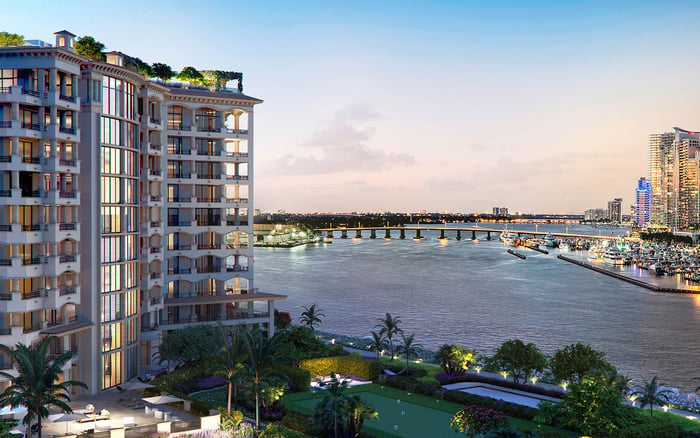
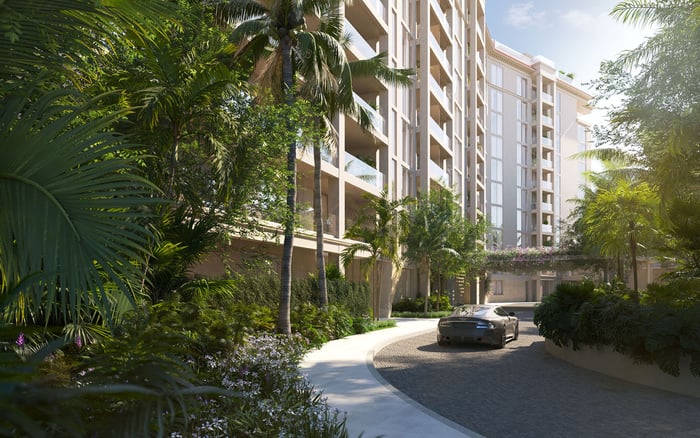
Palazzo del Sol rewards buyers who treat ferry access as an operating variable, not a footnote. The strongest acquisition case aligns privacy, utilization, carrying costs and a realistic exit horizon.

For the 2026 buyer, Palazzo del Sol presents a proposition that is easy to admire but more demanding to underwrite. Its prominent design pedigree, extensive amenities, and private island setting establish the emotional appeal. Ownership discipline begins with a less glamorous question: How comfortably will the household organize life around maritime access?
That question does not diminish the residence; it clarifies the buyer fit. Fisher Island separates the home from mainland Miami in a way that can reinforce privacy, security, and exclusivity while reducing spontaneous mobility. The relevant issue is whether that exchange supports the owner’s actual lifestyle, schedule, and reasons for acquiring the property.
A rigorous analysis should translate access friction into explicit assumptions. Buyers can model the time allocated to departures and arrivals, the operational cost of coordinating transportation, and the effects on staff, guests, service providers, and deliveries. These variables belong alongside association obligations and property operations in the carrying-cost analysis.
Current ferry operating details, access rules, association budgets, reserve information, and insurance terms should be obtained during due diligence. The objective is not to rely on a generalized impression of island life, but to test the household’s actual patterns against current operating conditions.
This is especially important for a second-home buyer whose visits may be frequent but compressed. A residence used for shorter stays can feel highly efficient when arrivals, provisioning, and guest access are planned in advance. It can feel less coherent when the owner expects mainland spontaneity to remain unchanged.
Ferry dependence becomes more manageable when treated as a system. Planned departures, coordinated deliveries, organized guest access, and clear staff routines can turn a recurring inconvenience into a predictable operating rhythm. The buyer should examine not only personal tolerance, but also the expectations of family members and those who support the residence.
A useful test is to map several ordinary days rather than an ideal holiday. Consider appointments, dining plans, airport transfers, household maintenance, visiting guests, and last-minute changes. The resulting schedule reveals whether the island’s restricted access feels protective or constraining.
For context within the same geography, buyers may also examine Palazzo della Luna. The purpose is not a mechanical comparison, but a clearer understanding of how different Fisher Island options align with one household’s priorities.
Palazzo del Sol should be evaluated within Fisher Island’s distinct micro-market rather than compared mechanically with mainland Miami towers. A mainland residence offers a different relationship with roads, neighborhoods, and spontaneous movement. Those distinctions make simple price comparisons less informative unless access and personal-use value are adjusted as well.
The island comparison set may include The Residences at Six Fisher Island and The Links Estates at Fisher Island. Each should be assessed through the same ownership lens: expected utilization, operational complexity, privacy preference, carrying obligations, and exit horizon.
This is the essence of a disciplined buyer’s guide. The buyer is not simply choosing finishes or amenities, but selecting a framework for daily movement and deciding how much planning is acceptable in exchange for separation from the mainland.
The residence may deliver substantial personal-use value to a well-capitalized owner who places a premium on privacy. That utility should be identified separately from investment performance. Combining the two can obscure whether the acquisition remains persuasive under conservative financial assumptions.
Limited accessibility may narrow the resale audience because some purchasers will prioritize effortless mainland mobility. The same constraint may support scarcity by discouraging buyers who do not value privacy enough to accept additional planning. Neither effect should be assumed to guarantee pricing resilience or appreciation.
A credible exit model therefore uses a realistic holding period and acknowledges liquidity constraints. Portfolio review should also account for concentration in South Florida luxury real estate and the risks associated with coastal property. Waterfront desirability does not remove the need for insurance review, reserve analysis, and careful assessment of ongoing obligations.
The coherent Palazzo del Sol buyer values privacy enough to institutionalize access planning. Before closing, that buyer should have a current operating budget, a tested household schedule, and a clear view of how often the residence will be used.
If those elements align, ferry logistics can become part of the ownership protocol rather than a recurring surprise. If they do not, design and amenities alone may not compensate for the mismatch. The 2026 lens is therefore disciplined but not austere: understand the trade, price it honestly, and decide whether the island’s separation is the feature you truly intend to own.
What is the central ownership issue at Palazzo del Sol? Ferry-dependent access shapes daily schedules, staffing, guest arrivals, deliveries, and service visits.
Does restricted access offer an ownership benefit? Yes. Reduced convenience can reinforce privacy, security, and exclusivity for an owner who values separation.
How should buyers model ferry dependence? Assign explicit time and cost assumptions to arrivals, departures, transportation coordination, and household operations.
Which documents deserve attention during due diligence? Review current association budgets, reserve information, insurance terms, access rules, and ferry operating details.
Is Palazzo del Sol directly comparable with mainland towers? Not mechanically. It belongs within Fisher Island’s distinct micro-market and presents a different access proposition.
Who is the most coherent buyer for this residence? A well-capitalized owner who prioritizes privacy and accepts the planning required by island access.
How should a buyer evaluate expected use? Test intended occupancy against the household’s willingness to organize transportation, guests, staff, and deliveries.
Could access constraints affect resale? Limited accessibility may narrow the audience, making conservative liquidity and holding-period assumptions essential.
Can ferry dependence become manageable? Yes. Planned departures, coordinated deliveries, and organized guest access can establish a reliable operating routine.
Should personal enjoyment be included in the return analysis? It should be recognized separately so personal-use value does not obscure financial performance or portfolio risk.
For a confidential assessment and a building-by-building shortlist, connect with MILLION.
If branded residences are on your mind — as a home or as an allocation — we would be glad to share what we are seeing, privately.
Begin a quiet conversation