A buyer-focused guide to evaluating South Florida luxury residences where service circulation, staff access, deliveries, privacy, and daily household logistics matter as much as views and finishes.
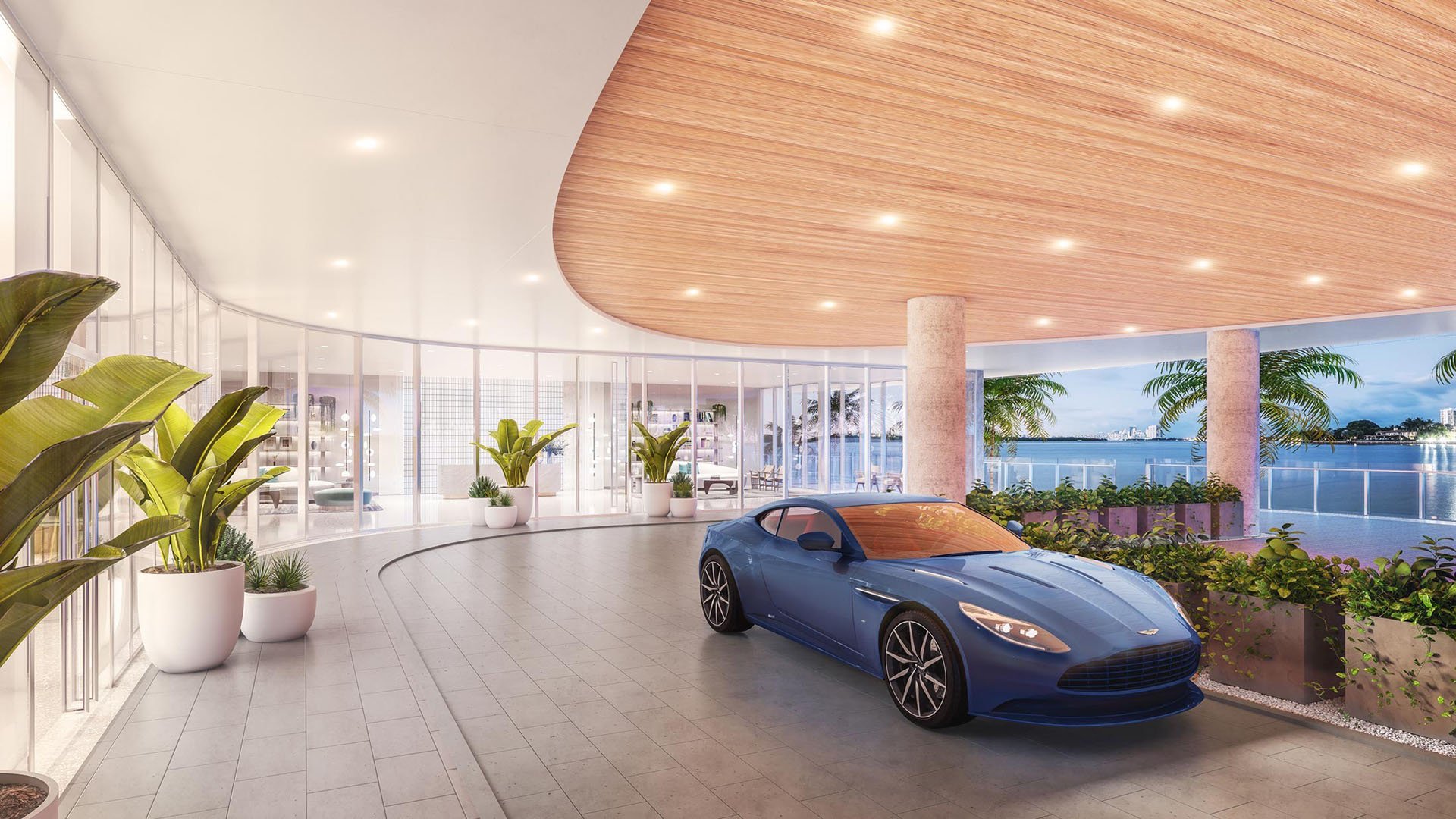
In South Florida’s luxury condominium market, “private elevator” has become familiar language. It usually means an elevator that opens directly, or nearly directly, into a residence. For many buyers, that feels like the ultimate expression of arrival. Yet for households with staff, art handlers, wardrobe teams, chefs, pet care, medical support, security personnel, frequent deliveries, or seasonal turnover, the more consequential question is different: does the residence have access to a true service elevator?
A private elevator is about personal arrival. A service elevator is about everything that should not pass through that arrival sequence. It protects the front-door moment, reduces friction for staff, keeps deliveries out of the entertaining path, and allows a home to function at scale without feeling operational. In a large residence, the wrong elevator configuration can turn daily life into choreography. The right one makes the home feel calm, even when many things are happening behind the scenes.
This is why sophisticated buyers now ask to see more than renderings of the lobby. They ask how groceries arrive, where a housekeeper enters, how furniture is moved, whether a catering team can work without crossing the living room, and whether the elevator plan supports the way the household actually lives.
1. Full-floor penthouse residence - staff and delivery separation
For buyers at the top of the market, the most compelling residence is often the one where private arrival and service arrival are clearly separated. A full-floor or near full-floor plan can support grand entertaining, but only when service movement is treated as part of the architecture rather than an afterthought.
The key identifier is not simply a private elevator foyer. It is a documented path for staff, deliveries, luggage, catering, floral installation, and maintenance that does not compromise the owner’s arrival sequence or principal rooms.
2. Large waterfront condominium residence - household-scale logistics
Waterfront living often means larger terraces, frequent guests, marine-oriented weekends, and a more active rhythm of service. In these homes, a true service elevator helps preserve the resort-like feeling by keeping operational traffic discreet.
The strongest configuration allows staff and vendors to move between parking, loading, storage, and the residence with minimal exposure to primary owner spaces. For buyers who entertain often, this can matter as much as ceiling height or water views.
3. Boutique low-density residence - privacy through controlled access
A boutique building can feel deeply private, but low density alone does not guarantee functional discretion. If every delivery, housekeeping visit, and furniture movement depends on the same elevator path used by owners and guests, the building may feel less private than its unit count suggests.
The best boutique candidates combine intimacy with clear back-of-house circulation. Buyers should look for a service strategy that supports privacy without relying solely on staff timing or concierge coordination.
4. Branded hospitality residence - hotel-grade operating expectations
Residences associated with hospitality or service-rich living often attract buyers who expect seamless support. That expectation requires infrastructure. A residence may offer refined amenities and polished service culture, but the elevator plan still needs to support real household operations.
The key identifier is whether the service experience can happen without intruding on the residential experience. A true service elevator helps separate the visible rituals of luxury from the invisible labor that sustains them.
5. Family-sized primary residence - everyday household management
For families living full time in South Florida, service elevators are not only for formal entertaining. They shape school-day routines, pet movement, grocery volume, sports equipment, luggage, maintenance access, and the practical life of a large home.
The right residence makes daily service feel normal and unobtrusive. The wrong one asks the family to share its front-of-house sequence with every operational need, which can diminish the privacy luxury buyers are paying to secure.
Start with language. “Private elevator” and “service elevator” should not be treated as interchangeable. Ask whether the elevator is dedicated, shared, staff-oriented, freight-capable, or simply a secondary passenger elevator. Then ask how it connects to the loading area, mail and package handling, storage, parking, service corridors, and the residence itself.
Plans matter, but operations matter more. A service elevator that exists on paper may still be limited by access rules, hours, reservation requirements, cab dimensions, or building policy. For a buyer planning frequent staff use, the question is not whether a second elevator exists. The question is whether it works naturally for the household’s daily pattern.
In internal buyer shorthand, this search often crosses Brickell, Miami Beach, Sunny Isles, Fisher Island, new-construction, and penthouse categories. Each market has a different rhythm, but the priority is consistent: protect the owner’s arrival and preserve the home’s sense of calm.
In Brickell, vertical living is often defined by dramatic skyline views, private foyers, and a dense urban lifestyle. Buyers comparing projects such as The Residences at 1428 Brickell should treat elevator circulation as part of the residence’s livability, especially when staff, deliveries, and entertaining overlap with a busy workweek.
On Miami Beach, the issue becomes more intimate. A buyer may be drawn to the cultural address, the beach setting, and a more relaxed cadence, but the best residences still need operational discipline. In that context, Shore Club Private Collections Miami Beach belongs in conversations where privacy, guest arrival, and service discretion are weighed together.
Sunny Isles brings a different scale, with tall oceanfront living and expansive residences that can function like elevated estates. Buyers looking at St. Regis® Residences Sunny Isles should consider how service movement supports the experience of a large beachfront home, not merely how the owner arrives from the elevator.
Fisher Island and its peer set are perhaps the purest expression of controlled-access living. For buyers considering The Residences at Six Fisher Island, the elevator question is part of a broader privacy calculus that includes arrival, staffing, security, storage, and the quiet management of daily life.
A serious service-elevator review should be practical. Confirm whether the elevator opens to a service vestibule, corridor, utility zone, or kitchen-adjacent area. Ask how large furniture is moved. Review whether housekeepers, caterers, maintenance teams, and dog walkers can enter without passing through the principal foyer. Understand whether reservations are required for moves and deliveries. Clarify whether staff access can be permissioned separately from owner access.
The most elegant residence is often the one where guests never sense the logistics. Flowers appear, luggage disappears, the chef’s team arrives quietly, the terrace is reset, and the home returns to order without drama. That is not just service. It is architecture, policy, and operations working together.
For the buyer who lives with staff or entertains at scale, a true service elevator is not a luxury extra. It is a daily privacy instrument.
Is a private elevator the same as a service elevator? No. A private elevator is typically about owner arrival, while a service elevator is designed to support staff, deliveries, moves, and back-of-house access.
Why do luxury buyers care about service elevators? They preserve privacy and keep household operations away from formal arrival, entertaining areas, and principal living spaces.
Should I rely on marketing language alone? No. Ask to review floor plans, access routes, building rules, and operational procedures before treating any elevator as a true service elevator.
What should staff access connect to? Ideally, it should connect logically to loading, parking, storage, service corridors, and a discreet entry point within or near the residence.
Does a second elevator always solve the problem? Not necessarily. A second elevator may still function like a passenger elevator if it lacks service access, policy support, or practical routing.
Is this more important for penthouses? It is often especially important for larger penthouse residences because entertaining, staffing, deliveries, and maintenance needs are more frequent.
Do boutique buildings need service elevators? Yes, if the buyer expects true discretion. Low unit count can enhance privacy, but only when operations are also separated.
How does this affect resale value? For sophisticated buyers, functional privacy can strengthen appeal because it supports the way large residences are actually used.
What should I ask during a showing? Ask how groceries, luggage, furniture, catering teams, staff, and maintenance personnel enter the residence on a normal day.
Can this be evaluated before contract? Yes. The elevator plan, rules, and operating assumptions should be reviewed before a buyer commits to a residence.
For a tailored shortlist and next-step guidance, connect with MILLION.
If branded residences are on your mind — as a home or as an allocation — we would be glad to share what we are seeing, privately.
Begin a quiet conversation