A buyer-focused guide to assessing discreet, design-integrated residential security in South Florida luxury buildings without sacrificing elegance, privacy, or ease of living.
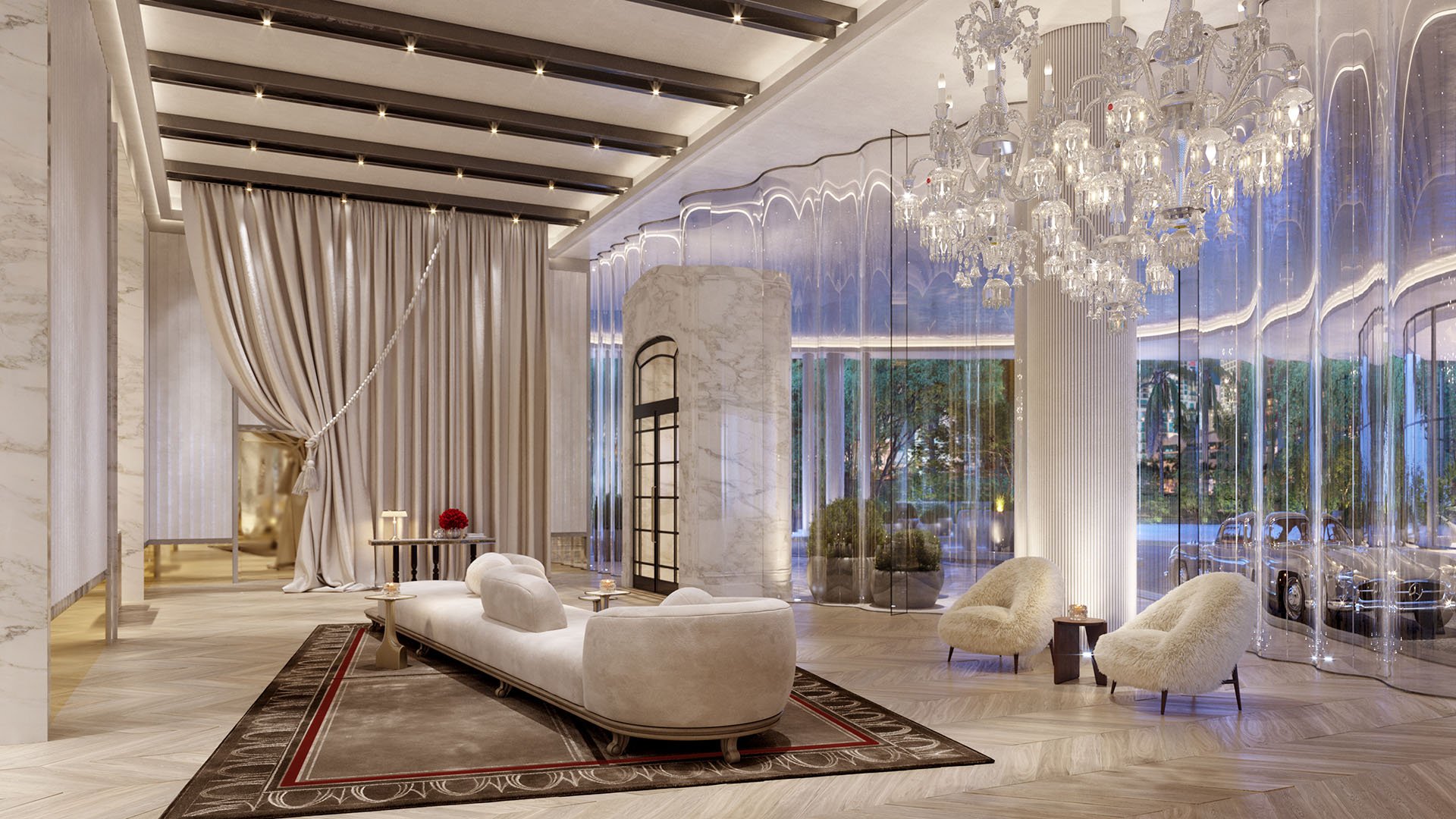
In South Florida’s luxury residential market, security is no longer measured by how imposing a building appears. The more sophisticated question is whether protection is built into the experience so naturally that residents feel at ease rather than observed. A well-run residence should welcome owners, screen visitors, manage service flow, protect privacy, and preserve architectural grace without creating the mood of a checkpoint.
For buyers, the goal is not to find the most visible security posture. It is to understand the quality of the system behind the calm. That means looking beyond entrance cameras and asking how the entire building performs from curb to residence, from garage to elevator, from front desk to private terrace. The best buildings create layers of control while maintaining a sense of discretion.
This matters across very different South Florida lifestyles. A buyer comparing Brickell, Miami Beach, Sunny Isles, Fisher Island, gated-community options, or new-construction residences may have different expectations, but the principle is the same: security should support the way one lives, not dominate it.
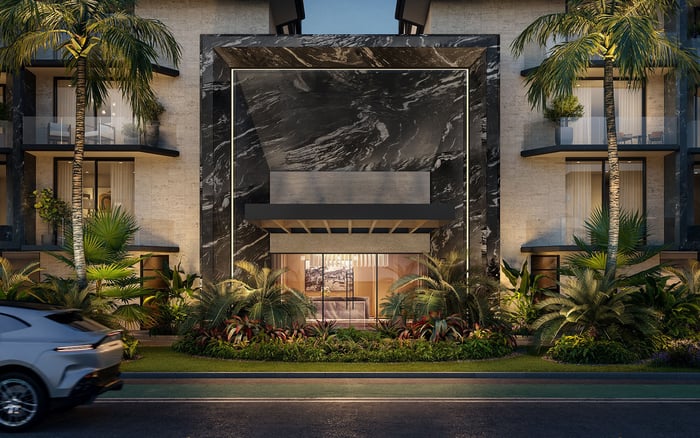
Every serious evaluation begins before the lobby. Observe the curb, porte cochère, valet rhythm, garage entry, pedestrian approach, and any side or service access. A refined arrival sequence should not feel chaotic, exposed, or improvised. It should give residents a clear path while naturally separating guests, vendors, staff, rideshare vehicles, and deliveries.
In dense urban settings, buildings such as The Residences at 1428 Brickell invite buyers to think carefully about how privacy and movement are managed in a high-energy district. The issue is not simply whether a lobby has personnel. It is whether the transition from public street to private residence feels controlled, legible, and composed.
Ask practical questions during a tour. Where does a guest wait before authorization? How does a driver know where to stop? Can a delivery person drift into resident areas, or is there a controlled route? Are the garage and lobby treated as equally important security points? A beautiful entrance loses value if the back-of-house path is casual.
Technology is only as effective as the human protocol around it. Cameras, access systems, fobs, license-plate controls, and visitor logs matter, but residents experience security through staff judgment. A polished front desk team should be calm, observant, consistent, and discreet. Overly theatrical security can feel intrusive, while overly casual staffing can feel porous.
During showings, notice whether staff members acknowledge residents without broadcasting their names, whether visitors are handled with confidence, and whether service personnel appear to follow a defined process. In luxury buildings, tone is part of protection. The best personnel create quiet authority.
Buyers should also ask how the building handles peak moments: weekend arrivals, dinner-hour visitors, storms, holidays, event nights, and contractor-heavy periods. A system that works only on a quiet weekday morning is not enough. Security should remain gracious under pressure.
A fortress relies on a single visual message. A well-designed residence relies on layers. Those layers may include controlled vehicle access, staffed reception, private elevator protocols, monitored common areas, package handling, service corridors, amenity access controls, and residence-level privacy measures. None needs to feel aggressive. Together, they create confidence.
In coastal and resort-style settings, the question becomes even more nuanced. At a property search that includes The Perigon Miami Beach, a buyer may prioritize discretion around beach access, pool areas, wellness spaces, and private dining or entertaining moments. Security is not only about keeping strangers out. It is also about preventing friction between residents, guests, staff, and public-adjacent amenities.
Ask how residents move from home to amenities. Does access feel intuitive? Are nonresident guests guided without confusion? Are private and shared spaces clearly defined? Ambiguity creates both inconvenience and risk.
Ultra-premium buyers often focus on physical access, but privacy is equally important. Consider sightlines, registration procedures, elevator exposure, package visibility, staff discretion, valet practices, and how information is handled during daily life. A building can be physically secure yet socially indiscreet if names, routines, guest patterns, or service details are too visible.
For prominent residents, family offices, frequent travelers, and owners with staff, privacy protocols should be discussed early. Who can authorize guests? How are recurring vendors managed? Can household staff enter through a designated route? How are deliveries held? How are private events handled? These questions are not excessive. They are part of protecting a household’s rhythm.
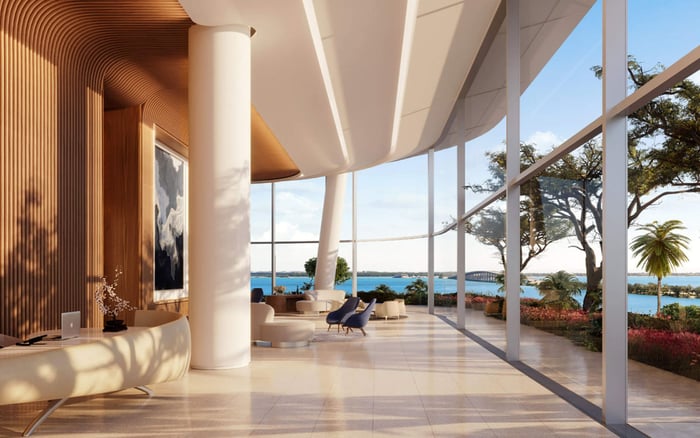
At the highest level, privacy also has an architectural component. Elevator banks, garage-to-residence circulation, lobby scale, amenity placement, and terrace exposure all influence how visible residents feel. Security is strongest when architecture, operations, and etiquette work together.
The right security profile should make daily life smoother. Imagine a normal week. Children arrive from school. A chef or trainer checks in. Friends come for dinner. Packages arrive while the owner is away. A car returns late. A guest forgets the residence number. A contractor needs limited access. Each moment should have a clear, dignified process.
In vertical oceanfront markets, residences such as Bentley Residences Sunny Isles can prompt buyers to examine how vehicle movement, arrival privacy, and elevator access align with the lifestyle they expect. In island-oriented searches, The Residences at Six Fisher Island may raise a different set of questions around layered entry, guest movement, and service coordination.
A smart buyer does not ask only whether the building is secure. The better question is whether security supports the owner’s actual habits. The answer should be clear before closing, not discovered after move-in.
Some weaknesses are subtle. A lobby crowded with unscreened visitors may indicate loose procedures. A garage with unclear access points may deserve closer review. Staff who seem uncertain about guest authorization may signal inconsistent training. Amenity areas that allow easy wandering can weaken the resident experience. A package room that appears improvised may become a daily source of exposure.
Also beware the opposite problem: security that overwhelms the residence. Heavy-handed barriers, excessive visible equipment, or interactions that feel suspicious by default can erode the sense of home. Luxury security should be serious, but it should not make residents feel as though they are living inside an institution.
The ideal balance is quiet confidence. Residents should feel known, protected, and respected. Guests should feel welcomed but properly guided. Staff should feel empowered to enforce rules without drama. Architecture should do part of the work before anyone says a word.
Before committing to a building, ask for a clear explanation of access control, staffing coverage, visitor procedures, vendor protocols, package handling, garage controls, elevator access, amenity access, emergency procedures, and privacy policies. The answer should be specific enough to inspire confidence but discreet enough to reflect a culture of confidentiality.
For buyers working across multiple neighborhoods, it is useful to compare buildings by lived experience rather than by visible hardware. Walk the arrival path. Watch a guest check in. Ask how a private dinner would be handled. Consider whether the system feels elegant at noon, at midnight, and during a busy weekend.
A residence should never need to announce that it is protected. In the luxury segment, the most compelling security is often the least theatrical: layered, consistent, courteous, and integrated into the architecture of everyday life.
What is the first thing to assess when evaluating building security? Start with the arrival sequence, including curb access, garage entry, lobby control, and guest authorization.
Should luxury security be highly visible? Not necessarily. The best systems are often layered and discreet, creating confidence without a defensive atmosphere.
How important is building staff? Staff quality is central because protocols only work when people apply them calmly, consistently, and discreetly.
What should I ask about guest access? Ask how guests are identified, approved, directed, and monitored from arrival to the residence or amenity space.
Why does garage access matter? Garages can be a major point of entry, so vehicle controls and elevator access should be reviewed carefully.
How should deliveries be handled? Deliveries should move through a controlled process that protects resident privacy and limits unnecessary access.
Can too much security reduce livability? Yes. If controls feel intrusive, confusing, or hostile, they can undermine the comfort expected in a private residence.
What makes privacy part of security? Privacy protects names, routines, visitors, staff patterns, and daily movements from unnecessary exposure.
Should I evaluate amenities as part of security? Yes. Pools, wellness areas, lounges, and private dining spaces should have clear access rules and discreet oversight.
When should security questions be raised in the buying process? Raise them early, ideally during initial tours and before final negotiation, so expectations are clear.
When you're ready to tour or underwrite the options, connect with MILLION.
If branded residences are on your mind — as a home or as an allocation — we would be glad to share what we are seeing, privately.
Begin a quiet conversation