A buyer-focused look at the amenities most likely to make luxury condo living feel calmer, more private, and less congested in South Florida.
In South Florida luxury condominiums, the amenity conversation has matured. Buyers still care about the spa, the pool, the fitness center, the club room, the wine lounge, children’s areas, and the arrival sequence. Yet the sharper question is no longer whether a building offers an impressive checklist. It is whether those spaces will feel composed when residents actually use them.
For owners in Brickell, Miami Beach, Palm Beach, Fort Lauderdale, Sunny Isles, Boca Raton, and the quieter waterfront enclaves between them, amenity crowding is not a minor lifestyle detail. It affects privacy, morning routines, weekend guests, elevator rhythm, staff interaction, resale perception, and the emotional temperature of a building. A beautiful room that is always occupied can become decorative rather than useful.
The best amenity design supports lower crowding in two ways. First, it divides demand across multiple environments instead of forcing everyone into a single showcase space. Second, it gives residents choices that match different schedules, social preferences, wellness habits, family needs, and service patterns. Scale matters, but choreography matters more.
1. Private wellness suites - controlled peak use
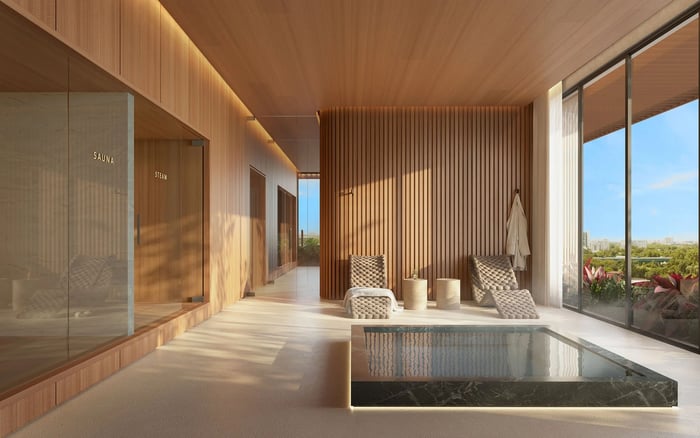
A spa can become crowded when every treatment, sauna session, recovery ritual, and post-workout routine depends on the same shared zone. Private or semi-private wellness suites help soften that pressure by giving residents a quieter path for massage, stretching, recovery, grooming, or meditation.
The advantage is not merely privacy. It is scheduling. When wellness areas are designed around reservable rooms, discreet circulation, and multiple smaller settings, residents are less likely to compete for the same lounge chair, changing area, or recovery bench. In a market where wellness has become a daily habit rather than an occasional indulgence, this type of amenity supports more graceful use.
2. Zoned pool environments - separate reasons to gather
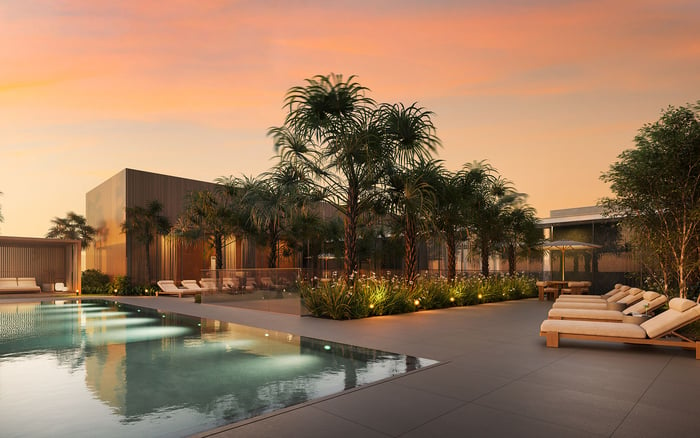
A single dramatic pool can photograph beautifully, but it may not solve daily crowding. The stronger plan separates the water experience into distinct moods: a social deck, a quiet sun area, a family-friendly zone, shaded seating, private cabanas, and, where appropriate, a lap pool for residents who swim for exercise rather than leisure.
This matters in South Florida because pool use is not seasonal in the way it is in colder markets. A resident seeking a calm weekday swim, a couple hosting guests, and a family spending Saturday outside are all using the same broad amenity category for different reasons. The less those uses collide, the more refined the building feels.
3. Distributed lounges and work rooms - multiple rooms for multiple tempos
One large club room can become a bottleneck when residents use it for morning calls, informal meetings, reading, entertaining, and evening gatherings. A better solution is a sequence of smaller lounges with distinct identities: a library-like room, a private dining salon, a work lounge, a screening room, and a casual social space.
Distributed spaces create choice. They also make a building feel more residential and less hotel-like at peak hours. A quiet work setting can be as important as a panoramic terrace. The amenity succeeds when residents can find the right room without turning every common space into a negotiation.
4. Pet, service, and arrival design - fewer conflicts in daily circulation
Crowding is not limited to glamorous spaces. It often appears in the practical parts of the building: lobby entrances, valet areas, package rooms, pet relief areas, elevators, and service corridors. A thoughtful dog park or pet wash can reduce friction when it is placed and managed so residents with pets are not competing with formal arrivals, deliveries, or pool traffic.
The same principle applies to back-of-house planning. Separate service routes, clear package handling, and intuitive guest arrival can make a building feel calmer even when occupancy is high. Luxury is often experienced in these small transitions. If residents can leave for dinner, receive deliveries, walk a dog, and welcome guests without congestion, the building’s daily performance improves.
5. Waterfront and outdoor amenity dispersion - more places to be outside
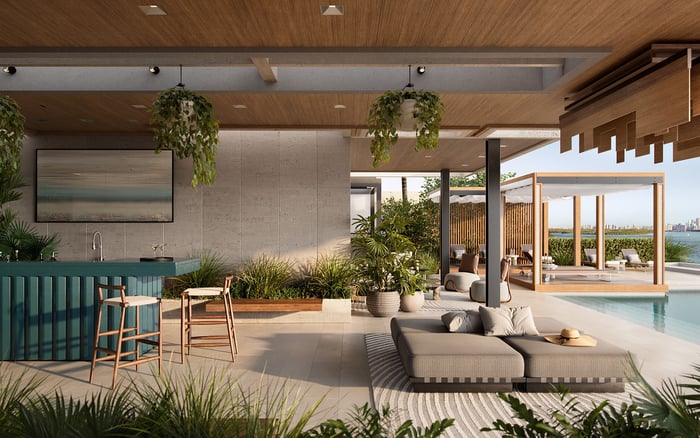
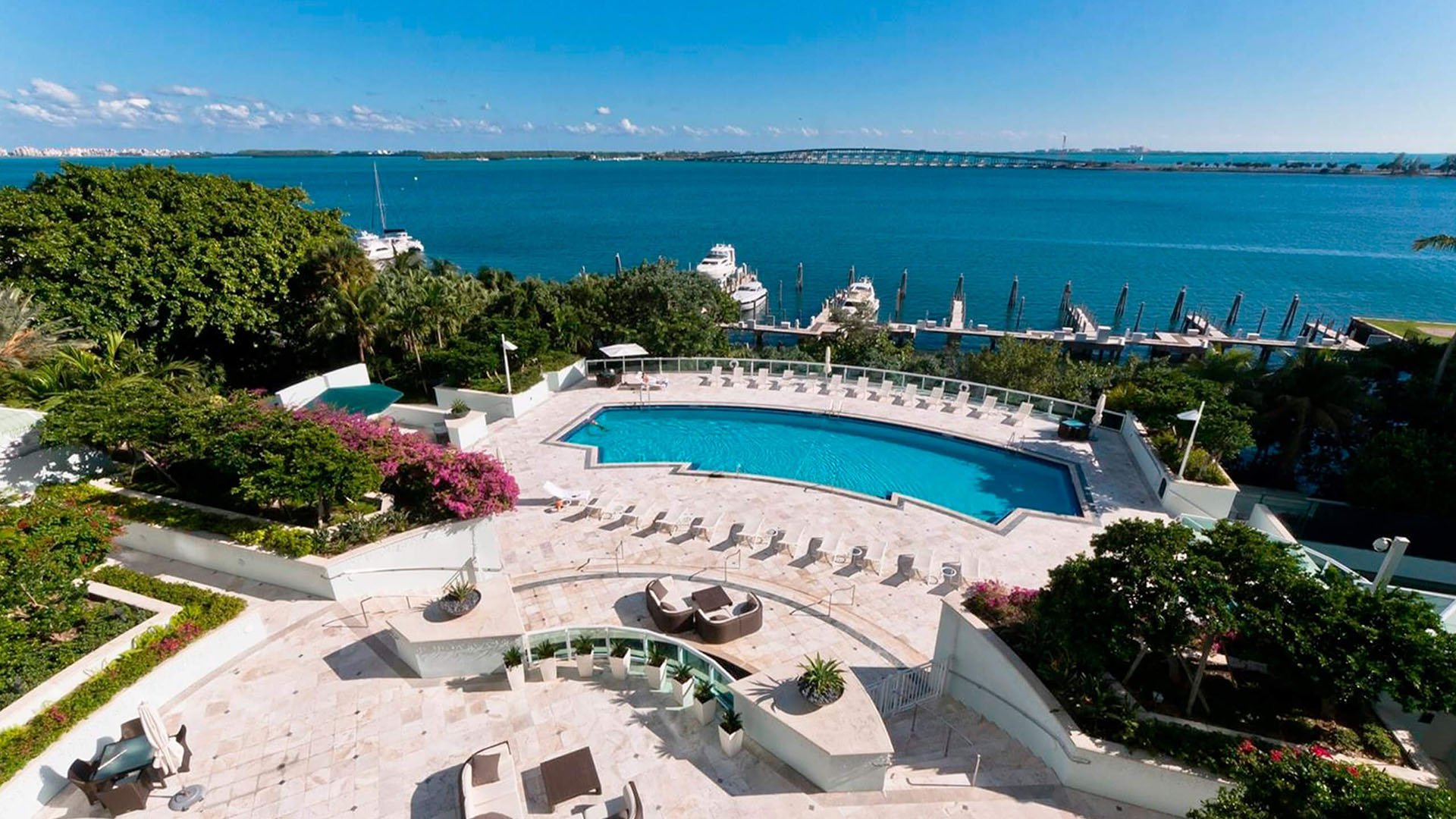
In waterfront settings, a marina, bayfront lawn, shaded terrace, garden walk, outdoor dining area, or quiet overlook can help distribute residents beyond the central pool deck. The point is not to add outdoor space for its own sake. It is to create multiple legitimate destinations so the building does not depend on one terrace to carry every social and recreational use.
This is especially relevant for owners who value a second-home rhythm. Morning coffee, sunset conversations, reading in shade, and waterfront arrivals do not need the same setting. When outdoor amenities are layered rather than concentrated, the property feels more private even before one enters the residence.
A buyer can often sense amenity crowding before seeing a single resident use the building. Look at thresholds. Are there several ways to enter, circulate, and settle, or does every resident move through the same sequence? Does the fitness area have enough adjacency to recovery spaces, or does it push everyone toward one locker room? Are social rooms isolated enough to host private gatherings without dominating the amenity floor?
Also study whether the amenity plan is performative or practical. A room that exists only for presentation may not reduce crowding. A smaller space with doors, storage, sound control, reservation logic, and proximity to service may perform far better. In luxury real estate, operational intelligence can be as valuable as visual drama.
The finest buildings tend to think in layers. Public-facing arrival is one layer. Resident-only wellness is another. Outdoor leisure, work, pets, children, guests, staff, and service each need their own rhythm. When those rhythms are respected, the building feels composed rather than busy.
Amenity crowding affects more than convenience. It shapes whether owners actually use the building they paid for. If the fitness center is regularly congested, residents find private trainers elsewhere. If the pool deck feels crowded, they retreat to their terraces or clubs. If the work lounge is noisy, it becomes ornamental. Over time, underused amenities weaken the emotional value of ownership.
The reverse is powerful. A building where residents can find quiet, host elegantly, exercise without waiting, and move through service moments with discretion feels better managed and more enduring. For South Florida’s ultra-premium buyer, the most desirable amenity is often not the most photographed one. It is the one that still feels available on a beautiful Saturday.
For Miami Beach and bayfront owners in particular, the relationship between private residence and shared amenity is delicate. Expansive terraces, views, and indoor-outdoor living already deliver a personal resort experience. Common amenities must complement that privacy rather than compete with it. The strongest buildings give owners a reason to leave the residence without making them feel they have entered a crowd.
Does a larger amenity floor always mean less crowding? Not necessarily. Layout, circulation, reservation options, and the number of distinct spaces often matter more than total size.
Which amenity is most important for reducing crowding? Private wellness suites are especially valuable because they convert high-demand spa and recovery use into scheduled, controlled experiences.
Can a pool deck be designed to feel less crowded? Yes. Separate zones for swimming, lounging, shade, family use, and quiet relaxation can reduce overlap between different resident needs.
Is a lap pool different from a leisure pool in crowding terms? Yes. A lap pool gives fitness-focused residents a dedicated purpose, which can reduce pressure on the main leisure pool.
Do work lounges help reduce amenity crowding? They can, especially when there are multiple rooms for calls, reading, meetings, and quiet work instead of one shared lounge.
Why does pet planning matter in a luxury building? A well-placed dog park or pet wash can reduce conflicts between pet routines, guest arrivals, deliveries, and lobby traffic.
Does a marina help with amenity dispersion? It can, when the waterfront plan creates an additional outdoor destination rather than concentrating all activity at the pool deck.
What should buyers observe during a tour? Watch how residents would move between elevators, amenities, service areas, and outdoor spaces at peak times.
Are private cabanas useful beyond aesthetics? Yes. They can create semi-private destinations that reduce demand for the same open lounge seating.
What is the simplest sign of a well-planned amenity program? The building offers several appealing places to be, so residents are not all drawn to the same room at the same time.
If you'd like a private walkthrough and a curated shortlist, connect with MILLION.
If branded residences are on your mind — as a home or as an allocation — we would be glad to share what we are seeing, privately.
Begin a quiet conversation