A practical guide for full-time South Florida owners evaluating sauna traffic, privacy, etiquette and long-term livability in luxury residential buildings.
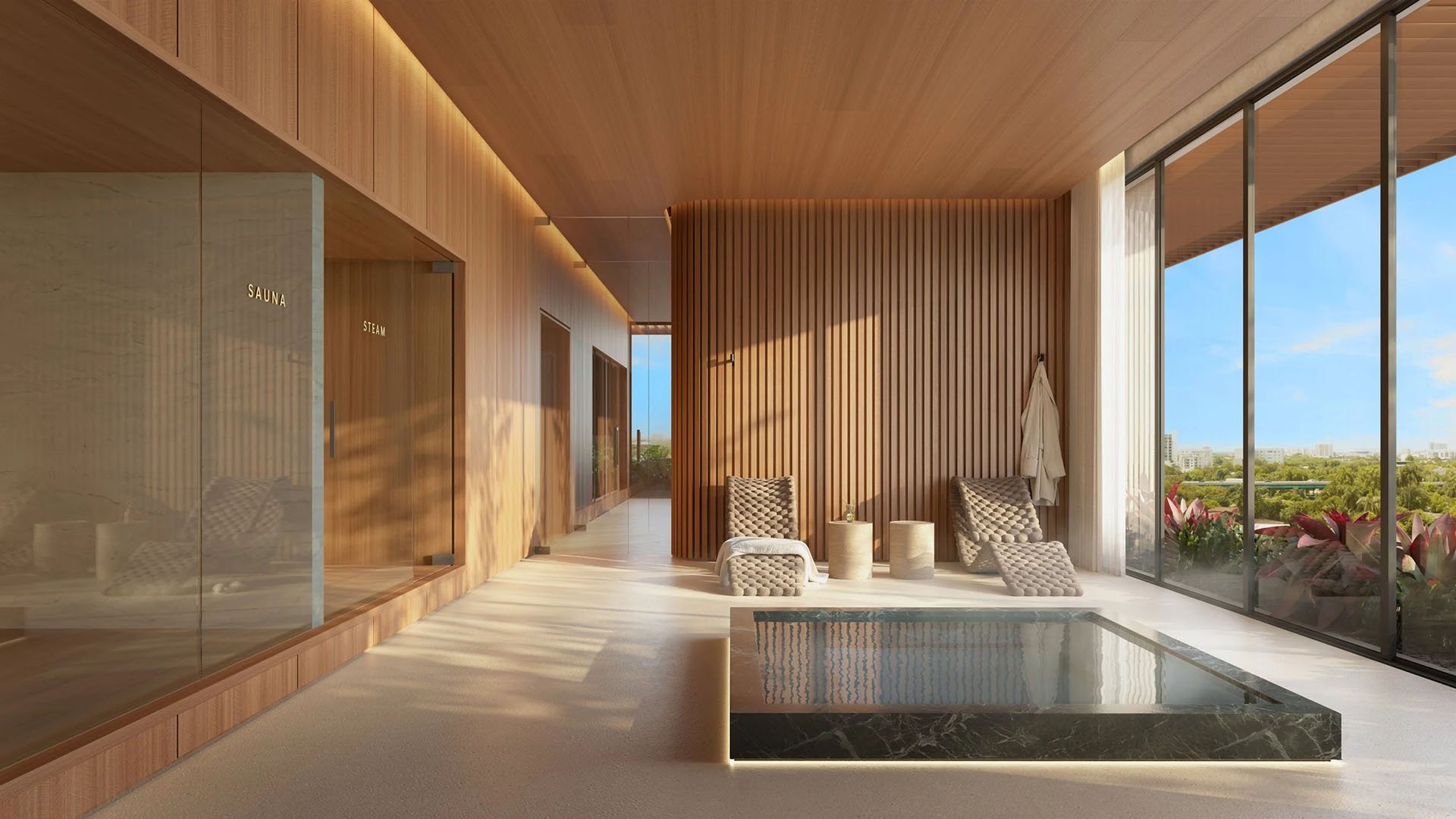
In a South Florida luxury building, a sauna is not merely a wellness detail. For full-time owners, it is a daily-use room, a quiet retreat, and a revealing measure of how a residence functions once the brochure is set aside. Sauna traffic tells a discerning buyer more than many glossy amenity renderings: who uses the building, when they use it, how management controls shared spaces, and whether the property feels residential or transient.
The issue is especially important for owners who intend to live in the residence year-round rather than visit seasonally. A busy sauna is not inherently a problem. Measured use can signal a healthy, engaged community. The concern is uncontrolled use: crowded peak hours, guests who do not understand etiquette, wet circulation areas, noise drifting into spa lounges, and unclear reservation rules. A sauna should feel restorative, not like a queue.
For buyers comparing Miami Beach, Brickell, Sunny Isles and other waterfront markets, sauna traffic belongs in the same conversation as elevator flow, valet pacing and pool deck density. It is part of the building’s private operating system.
A single tour rarely shows the truth. Visit a wellness level at different times if possible: early morning, late afternoon, weekend evenings and holiday periods. Full-time residents often discover that the sauna’s busiest moments align with gym traffic, post-beach routines, family guest visits and pre-dinner grooming windows.
Observe the transitions around the sauna, not just the room itself. Are towels replenished without prompting? Is the door constantly opening? Are loungers treated as quiet recovery spaces or as social seating? Does the steam room, shower corridor or cold plunge create congestion near the sauna entry? These details reveal whether the spa level was designed for practical circulation or simply arranged for visual appeal.
Privacy also depends on placement. A sauna tucked within an adult-focused wellness suite will feel very different from one adjacent to a family pool route or a high-traffic fitness corridor. Owners who value routine should ask whether the layout supports calm use at the same time every day.
Luxury buyers often compare buildings by the number of amenities, yet full-time livability depends on proportion. A sauna that serves a modest resident population may feel exceptional. A more dramatic wellness area can feel strained if it supports too many uses, too many guests or too many short-stay patterns.
The best buildings separate energy levels. Fitness, spa, lap pool, social lounge and outdoor terrace use should not collide unnecessarily. A sauna experience benefits from a quiet threshold: changing area, shower, thermal room and recovery seating that flow naturally. If a resident must move through a crowded lounge or children’s route to reach the sauna, the amenity may look impressive but feel compromised.
Ask how management handles peak demand. Some buildings rely on etiquette. Others use reservation windows, occupancy limits or staff monitoring. Neither approach is automatically better, but ambiguity is rarely ideal. Owners should know whether the rules are written, enforced and understood.
Sauna traffic often changes when guests enter the picture. A full-time owner may be comfortable sharing the spa with neighbors but less comfortable when the space becomes an extension of visiting friends, seasonal family members or tenants. Guest access is one of the most important questions to raise before purchase.
Consider how many guests are permitted, whether residents must accompany them, whether guest use is limited by time of day, and whether renters receive the same access as owners. In buildings with a strong second-home profile, guest behavior can shape the character of the wellness amenities during holidays and school breaks.
The tone of enforcement matters. A discreetly managed building can preserve warmth while maintaining standards. A building that posts rules but rarely enforces them may place the burden on residents to tolerate crowding or confront misuse. For full-time owners, that is not a minor inconvenience; it affects the daily pleasure of living there.
Sauna traffic also has a physical dimension. More use means more towel volume, more moisture, more door swings and more demand on cleaning schedules. A beautiful sauna can decline quickly if the building does not treat it as a high-performance space.
On a tour, look for subtle signs: dry benches, fresh air, clean floors, intact wood, orderly towel stations and a room that feels consistently warm rather than uneven. The surrounding showers and relaxation areas should feel as maintained as the sauna itself. A luxury building’s wellness promise is credible only when upkeep matches design.
Owners should ask about cleaning frequency, service protocols and who monitors the space during peak periods. These are not impolite questions. They are the same caliber of due diligence one would apply to mechanical systems, security and building staffing. In premium real estate, maintenance is not backstage; it is part of the value proposition.
The most useful questions are practical. What are the sauna hours? Is access owner-only, resident-only or open to guests? Are reservations required? Are there separate facilities by gender, shared facilities, or private-use options? How is etiquette communicated? What happens when the room reaches capacity? How frequently is the space cleaned during active hours?
Ask, too, about the resident culture. A building with many year-round owners may develop predictable use patterns and neighborly norms. A building with high seasonal turnover may require more active management. Neither is inherently superior, but the buyer should understand the lived rhythm.
For Brickell buyers, weekday work patterns can influence evening wellness traffic. In beach markets, post-sun and weekend guest use may shape demand. In Sunny Isles, where large residences and family use often intersect with resort-style amenities, the difference between calm and crowded can come down to governance. The word “luxury” does not answer these questions. Management does.
If the sauna will be part of your health ritual, treat it as seriously as your kitchen, primary suite or terrace. During due diligence, request governing documents that address amenity access. Review house rules. Ask the building team how often conflicts arise and how they are resolved. If you can, speak with residents who actually use the wellness areas.
Then define your own threshold. Some owners enjoy a social spa atmosphere and do not mind sharing space. Others want silence, ritual and predictability. The right purchase is not the building with the most amenities; it is the building whose amenity rhythm matches your life.
Sauna traffic is ultimately a proxy for stewardship. It shows whether a property can balance hospitality with residence, indulgence with order, and beauty with daily function. For full-time owners, that balance is the difference between admiring an amenity and truly living with it.
Why should full-time owners care about sauna traffic? Because it affects daily privacy, comfort, cleanliness and the overall residential feel of the building.
Is a busy sauna always a negative sign? No. Consistent use can reflect an engaged community, but crowding without management can reduce livability.
When is the best time to evaluate sauna use? Visit during early mornings, evenings, weekends and holiday periods, when resident patterns are most visible.
What policies should buyers review? Review hours, guest access, reservation rules, occupancy limits, renter access and enforcement procedures.
Do guest rules matter for sauna privacy? Yes. Guest volume can turn a quiet wellness amenity into a high-traffic shared space.
Can sauna traffic affect maintenance quality? Yes. Heavy use requires stronger cleaning schedules, towel service and moisture management.
What design details reduce sauna congestion? Clear circulation, nearby showers, proper recovery seating and separation from louder amenities all help.
Should buyers ask residents about the sauna? Yes. Current residents can often describe real use patterns more accurately than a brief tour.
How does a second-home building profile affect sauna use? Seasonal peaks and visiting guests may create busier periods, especially around holidays and weekends.
What is the main takeaway for luxury buyers? The best sauna is not just beautifully finished; it is well governed, well maintained and easy to use.
For a tailored shortlist and next-step guidance, connect with MILLION.
If branded residences are on your mind — as a home or as an allocation — we would be glad to share what we are seeing, privately.
Begin a quiet conversation