A discreet buyer guide to using Muse Residences as a long-stay family base, with emphasis on privacy, arrivals, terraces, bedroom programming, storage, and daily routines.
Muse Residences Sunny Isles Beach is best understood as a private oceanfront home in the sky, not a transient vacation platform. For owners who want to host parents, adult children, young children, and rotating guests, the strongest strategy treats the residence like a private suite system: defined rooms, predictable arrival protocols, sufficient storage, and clear social zones that let everyone feel hosted without feeling managed.
That distinction matters during extended family stays. A weekender can tolerate improvisation. A longer visit requires order, especially when different generations keep different schedules. The goal is not to make the home feel formal. It is to make daily life feel calm.
Muse’s appeal for this use case is residential in spirit. Privacy, generous interior planning, terrace living, and controlled arrivals all point toward a quieter model of ownership. This is not about consuming amenities as quickly as possible. It is about creating a gracious family base in Sunny Isles Beach.
Oceanfront living is often described through views, but for host families, privacy is the more durable luxury. When relatives stay for weeks, the daily pressure points are rarely theatrical. They are simple: who wakes early, who needs quiet, who works remotely, who wants coffee outside, who returns from the beach with children, and who prefers dinner at home.
The ocean side of the residence can become the ceremonial side of the home, suited to breakfast, relaxed lunches, and evening conversation. Quieter interior or secondary zones can absorb practical routines: reading, calls, children’s downtime, or moments of rest for older guests. In nearby Sunny Isles comparisons, buyers may also look at Bentley Residences Sunny Isles or St. Regis® Residences Sunny Isles, while Muse’s case for extended family use begins with privacy and a more residential rhythm.
The aim is not to isolate guests. It is to give them permission to retreat. In a long stay, the best host is not always present. The best host has already shaped the residence so quiet, independence, and togetherness can coexist.
Expansive flow-through planning can make a residence function less like one large apartment and more like a sequence of zones. Ocean-facing areas can carry the social life of the home, while other areas can support sleeping, remote work, children’s play, or private rest, depending on the layout.
This is especially relevant for multi-generational groups. Grandparents may prefer a bedroom zone with minimal circulation and a predictable path to the kitchen or terrace. Adult children may need flexible space for laptops, calls, and late-night returns. Younger children need an area that can be supervised without dominating the entire residence. Rotating guests need a room that feels complete without requiring the household to reorganize around each arrival.
The practical phrase is flow-through units, but the real value is behavioral. A flow-through residence can separate quiet from social, early risers from late sleepers, and family rituals from individual routines. That separation is one reason low-density oceanfront living in Sunny Isles Beach remains compelling for long-stay ownership.
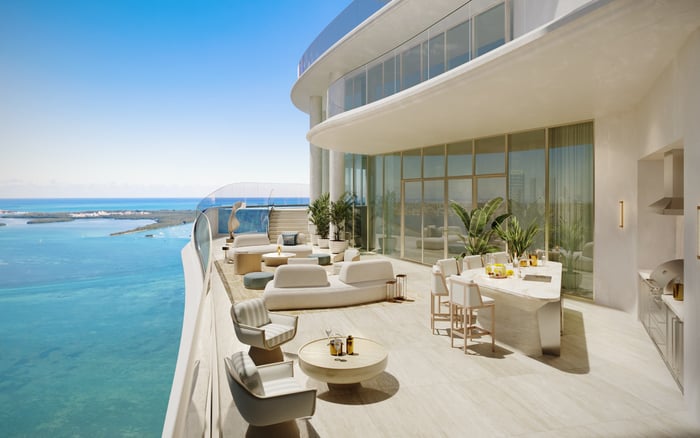
A deep terrace is not an accessory during an extended stay. It is a second living room, a dining room, a reading room, and sometimes the neutral territory where different generations naturally meet. At Muse, terraces are a major planning asset because they can reduce pressure on the interior living room and let the household spread out without losing connection.
For a long-stay strategy, owners should think beyond beautiful furniture. The terrace should have an assigned daily role. Morning coffee for early risers. A shaded lunch table for family meals. A quiet chair for an older relative. A low-maintenance setup for children after the beach. A separate evening seating area if the plan allows.
Waterfront residences often fall short when every outdoor space is treated as a showpiece. The better approach is softer and more practical. If a terrace will be used every day, it should be easy to access, easy to maintain, and comfortable enough that guests choose it over the sofa.
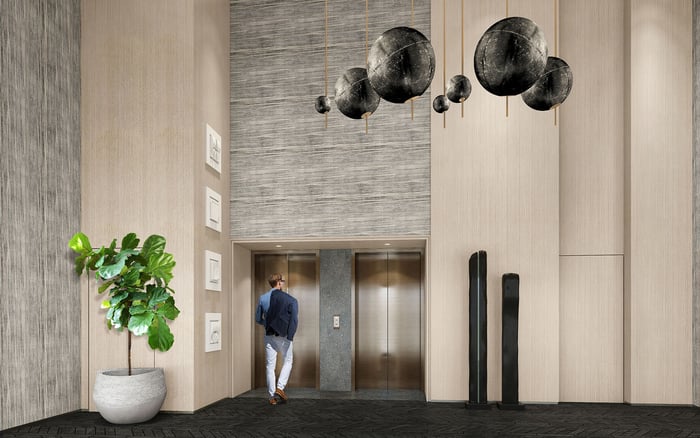
Private elevator access can be one of the most important guest-management features in an extended-stay residence. It reduces shared circulation, makes arrivals feel controlled, and helps visiting relatives enter the home with a sense of calm. For an owner hosting family for weeks or months, that matters more than spectacle.
Before guests arrive, the household should have a simple access plan. Who has entry permissions. Who greets first-time visitors. How luggage is handled. Where beach items go. When housekeeping or staff support may enter. Which areas are private to the owner. These rules are not inhospitable. They are what allow hospitality to feel effortless.
Long stays magnify small ambiguities. A residence that begins with controlled access and clear circulation reduces friction before it begins. Buyers comparing the broader Sunny Isles Beach oceanfront corridor, including The Ritz-Carlton Residences® Sunny Isles and Turnberry Ocean Club Sunny Isles, should pay close attention to how each building handles the transition from arrival to residence.
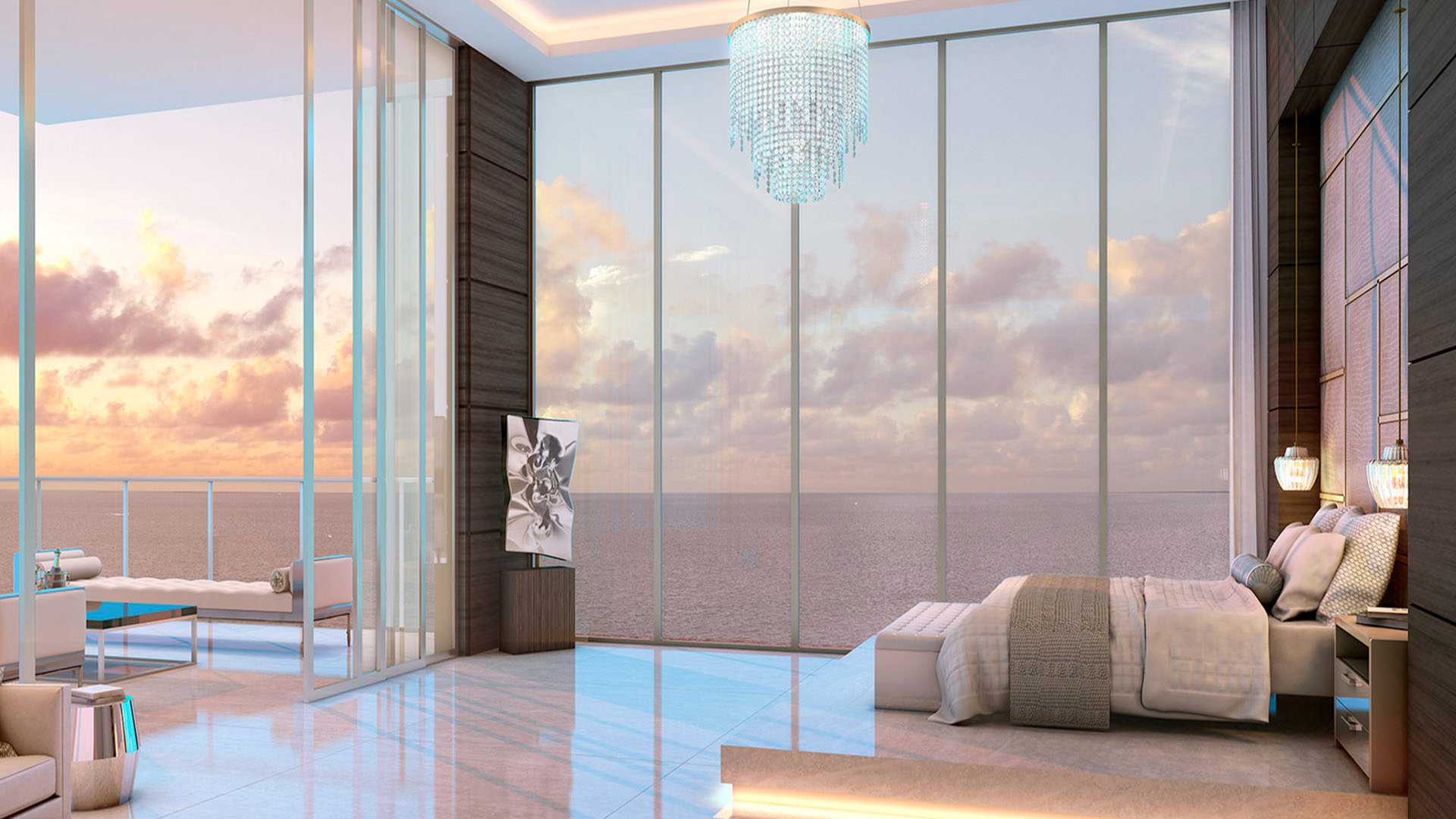
The most successful extended stays begin with honest bedroom programming. Do not assign rooms only by hierarchy or view. Assign them by behavior. Grandparents may need quiet, proximity, and easy routines. Adult children may value independence, storage, and a desk-like surface. Young children need flexibility, sleep control, and a place for toys that does not overtake the living room. Rotating visitors need a simple, hotel-like setup with drawers, charging, linens, and privacy.
Large bedrooms and flexible living areas make this possible. Generous interior volumes also matter because they make the residence feel less compressed when the household expands. During a short visit, inconvenience can be charming. During a longer stay, it becomes architecture’s responsibility.
Owners should plan storage as carefully as seating. Each guest category should have a place for luggage, medication, beachwear, laundry, devices, and personal items. The more the residence can absorb belongings, the more serene it will feel.
The lifestyle advantage at Muse is not simply the beach. It is the ability to use the residence as a recurring family headquarters in South Florida. A second home that hosts long visits must support routine, not just escape. Breakfasts repeat. Children develop preferences. Older relatives establish habits. Friends come and go. The home has to remain elegant while also becoming familiar.
This is where Muse’s combination of oceanfront living, private access, terraces, and service-minded planning becomes meaningful. The ownership question is not only whether the residence is beautiful. It is whether it can remain calm when fully occupied.
For buyers, that is the difference between a trophy condominium and a family asset. The former is admired. The latter is used, remembered, and returned to season after season.
Is Muse Residences Sunny Isles Beach suitable for extended family stays? Yes. Its privacy focus, terrace living, controlled arrivals, and residence-style planning can support a quieter long-stay family model.
Should owners treat Muse like a vacation rental platform? No. This strategy is about a private family base with routine, storage, privacy, and clear household expectations.
Why do flow-through layouts matter for guests? They help separate social areas from quiet sleeping or work zones, which is valuable when family members keep different schedules.
How should owners use the terraces during long stays? Treat them as daily outdoor rooms for coffee, dining, reading, and family gathering rather than as purely decorative spaces.
Are private elevators important for hosting relatives? Yes. Private access can make arrivals more controlled and reduce shared circulation, which can make longer visits feel more private.
What should be planned before guests arrive? Owners should establish access rules, staff coordination, luggage handling, storage expectations, and private owner areas.
Which guests need the most careful room assignment? Grandparents, young children, adult children working remotely, and rotating visitors all benefit from rooms planned around routines.
Does the oceanfront setting change daily family life? Yes. Oceanfront living can create a natural gathering side of the home while quieter areas support rest, calls, and independent routines.
What is the biggest mistake in long-stay hosting? Treating the residence like a short vacation condo rather than a private suite system with storage, privacy, and routine.
What is the best way to shortlist comparable options for touring? Start with location fit, delivery status, and daily lifestyle priorities, then compare stacks and elevations to validate views and privacy.
To compare the best-fit options with clarity, connect with MILLION.
If branded residences are on your mind — as a home or as an allocation — we would be glad to share what we are seeing, privately.
Begin a quiet conversation