A discreet buyer-focused guide to the Miami residence types best aligned with private marina logistics, from dockage strategy and privacy to valet circulation and service access.
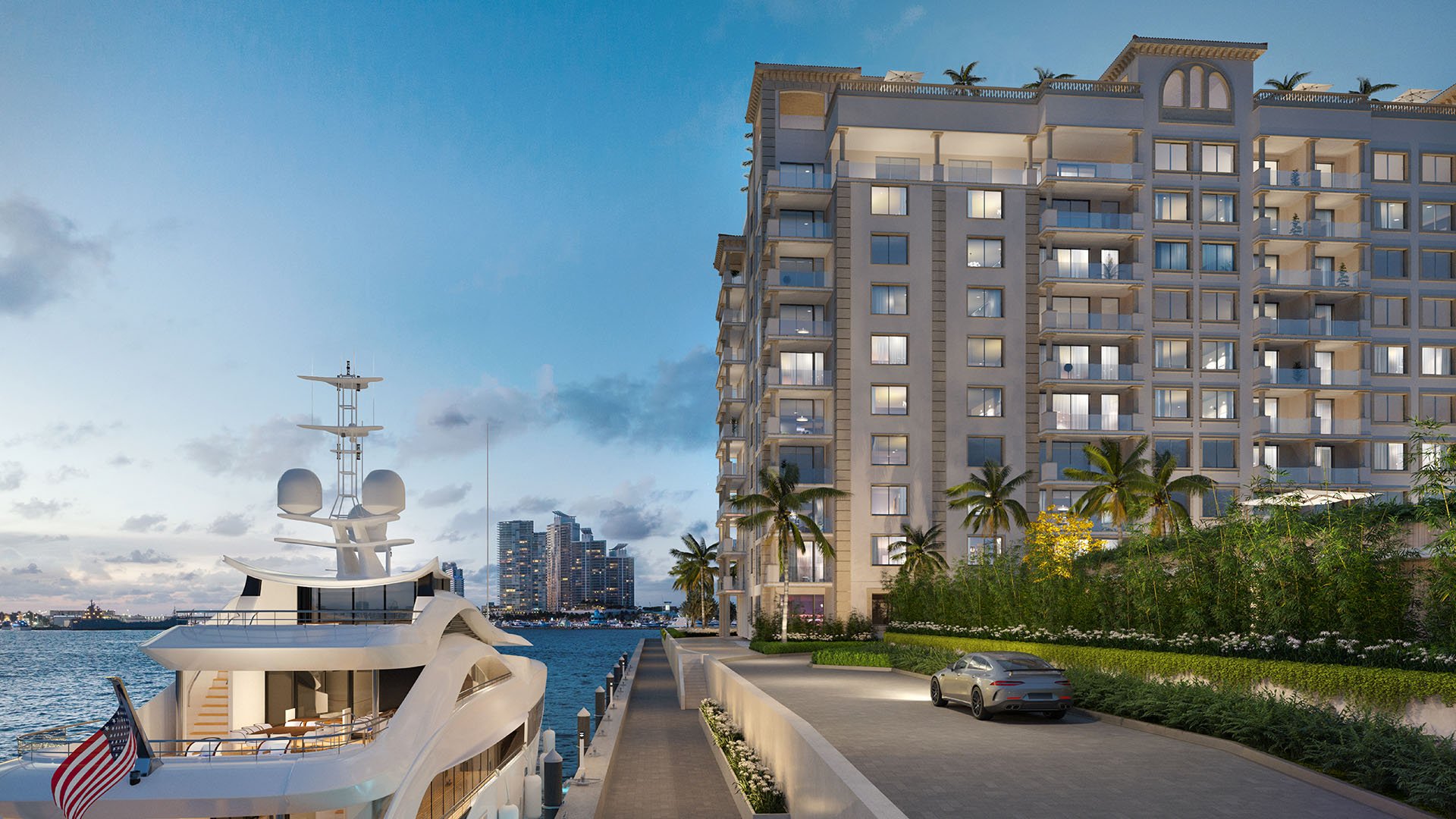
For the Miami buyer who measures time in tides, tenders, and late arrivals by water, a beautiful view is only the beginning. True luxury is logistical ease: moving from residence to vessel, from car to dock, and from guest arrival to private entertaining without friction. In this segment, the residence is not simply a home with a water-facing aspect. It is a base of operations.
Private marina logistics require a different lens from the traditional waterfront search. The question is not only whether a residence faces the bay, canal, river, or ocean. It is whether the property supports the owner’s rhythm. How are guests received? Where does crew coordinate? Is dock access discreet? Can provisions be managed without turning the lobby, driveway, or terrace into a service corridor? These details are rarely glamorous, but they are often decisive.
For search shorthand, the vocabulary is precise: Marina, Boat-slip, Waterview, privacy, circulation, and service access. A buyer may compare Miami Beach, Brickell, Fisher-island, and Coconut-grove, but the best choice is the one that makes ownership feel calm rather than complicated.
1. Bayfront Condominium Residence - direct water orientation
A bayfront condominium residence is often the natural starting point for buyers who want a lock-and-leave home with a strong waterfront identity. The appeal is visual, but the evaluation should be operational. A buyer should focus on how the residence connects to the water, how arrivals are staged, and whether the building environment supports a private boating lifestyle without exposing every movement to the public realm.
The best version of this profile creates an immediate relationship to the bay while preserving residential quiet. For many owners, the goal is not spectacle. It is the ability to return from the water, transition into the residence, and continue the evening with minimal interruption.
2. Private Island Residence - controlled approach
A private island residence speaks to buyers who value separation as much as access. The principal advantage is the controlled nature of arrival. Whether by car, tender, or guest transfer, the journey can feel more deliberate, less exposed, and more aligned with a household that entertains selectively.
This profile is especially compelling for owners who want a residence to function like a private compound. The marina or dock component is only one part of the equation. Security posture, guest management, household staff access, and the ability to keep leisure activity separate from daily residential life all matter.
3. Canal-Front Single-Family Residence - doorstep boating
For some buyers, the ideal private marina experience is not attached to a building at all. It is the simplicity of a single-family waterfront residence where boating begins at home. Canal-front living can create a highly personal connection between residence and vessel, especially for owners who prefer independent control over schedules, access, and storage decisions.
The discipline is in the due diligence. A buyer should examine approach, turning room, dock configuration, bridge considerations where applicable, and how the home’s outdoor areas relate to marine activity. The most successful properties make dockside movement feel integrated rather than appended.
4. Urban Waterfront Tower Residence - city access with marine rhythm
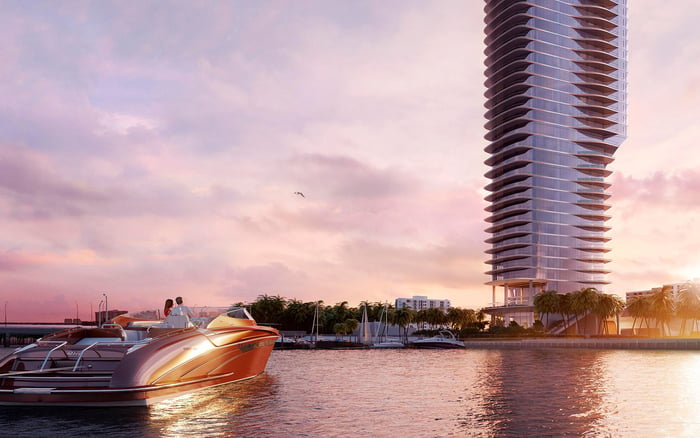
An urban waterfront tower residence appeals to the buyer who wants boating culture alongside immediate proximity to dining, offices, arts, and social life. In Brickell and other central waterfront settings, the value proposition is not seclusion in the traditional sense. It is compression of time. The right residence can keep a yacht-oriented owner close to the city’s daily energy while still supporting a water-focused lifestyle.
The tradeoff is operational scrutiny. Valet flow, loading access, guest arrival, ride-share staging, and building rules all become part of the ownership experience. For buyers who entertain frequently, these details can matter as much as ceiling height or kitchen finish.
5. Low-Density Boutique Waterfront Residence - discretion at human scale
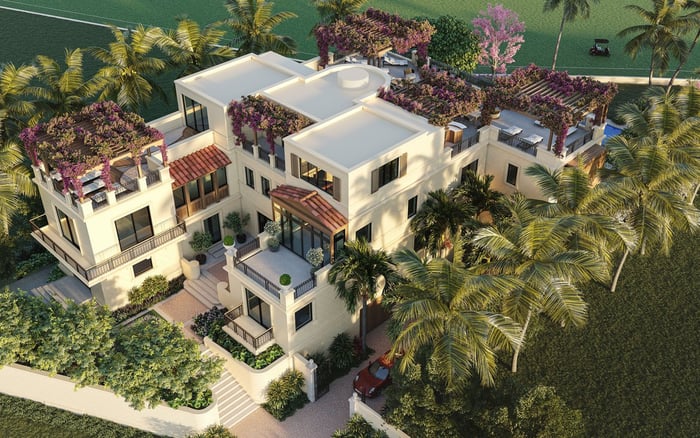
A low-density boutique waterfront residence suits buyers who want fewer layers between private life and the water. Smaller residential settings can feel calmer, with a more intuitive relationship among lobby, elevator, terrace, and waterfront edge. For owners who dislike the choreography of large buildings, this scale can be persuasive.
The key is balance. Boutique should not mean under-serviced, and waterfront should not mean exposed. The most desirable version offers enough management depth to support a sophisticated owner while retaining the intimacy that makes private marina logistics feel personal.
The first inspection should be practical. A residence that photographs beautifully may still create complications every time the owner moves between home and water. Buyers should ask how boating days actually unfold. Where do guests wait? How are bags, provisions, and equipment handled? Can staff reach the relevant areas without crossing formal entertaining spaces? Is there a natural place for wet gear, coolers, towels, and last-minute deliveries?
Privacy should be evaluated in motion, not only in plan. A protected terrace is valuable, but so is a discreet path from vehicle to residence and from residence to dock. In a high-service building, the question becomes whether staff can anticipate needs without overexposing the owner’s routine. In a single-family setting, the question becomes whether the property itself can absorb the operational demands of boating without feeling like a working dock.
Buyers should also distinguish between amenity and utility. A waterfront feature may sound compelling in conversation, but its practical value depends on rules, access, maintenance, and the way the property is governed. For the serious boating buyer, the fine print is not an afterthought. It is part of the architecture of ownership.
At the top of the market, private marina logistics are about control. Control over arrival. Control over who sees the owner’s movements. Control over how guests transition from land to water. Control over whether a last-minute dinner aboard feels seamless or improvised.
This is why the best waterfront residences are judged by more than finishes. Stone, millwork, lighting, and terrace proportions matter, but they cannot compensate for poor circulation. A grand residence with awkward marine access may feel less luxurious than a quieter home where every movement has been thoughtfully resolved.
The most refined buyers tend to look for a residence that reduces decisions. They want a place where the car arrives, the elevator sequence feels private, the dock or marina interface is intuitive, and the household can operate without explanation. In this context, restraint is an asset. The best properties do not announce their logistics. They simply work.
Miami’s waterfront is not one market. It is a collection of lifestyles. Miami Beach suggests proximity to sand, culture, restaurants, and a rhythm that can feel both international and residential. Brickell brings urban convenience and skyline energy, particularly for buyers who want the city close at hand. Fisher-island prioritizes privacy and separation, appealing to owners who want controlled access and a resort-like residential envelope. Coconut-grove offers a more gardened, established mood, with a softer relationship to bayfront living.
The right choice depends on how the buyer uses the water. A frequent host may prioritize guest circulation. A second-home owner may value management depth and lock-and-leave ease. A family may care about daily convenience, privacy, and storage. A collector of experiences may want the residence to serve as a platform for spontaneous weekends, sunset cruising, and understated entertaining.
The most successful marina-oriented purchase is rarely the loudest one. It is the residence that aligns place, privacy, service, and water access into a single calm sequence. For ultra-premium buyers, the difference between waterfront and water-ready is substantial. One is a view. The other is lifestyle infrastructure.
A disciplined buyer will resist the temptation to treat marina logistics as a secondary amenity. In Miami, where water shapes both identity and value, these details deserve to be studied early. The residence should not merely frame the bay. It should make every movement around the bay feel effortless.
What makes a residence suitable for private marina logistics? The strongest residences combine water access, privacy, service circulation, and clear rules for dock or marina use.
Is a Waterview enough for a boating-focused buyer? No. A Waterview can be beautiful, but marina logistics depend on access, movement, governance, and service support.
Should I prioritize a Marina or a Boat-slip? It depends on how you use your vessel. A private Boat-slip may suit direct access, while a Marina can offer broader operational support.
Are condominiums practical for yacht owners? They can be, provided the building’s access, valet, loading, and waterfront rules support the owner’s boating routine.
Why do privacy and circulation matter so much? They determine whether arrivals, guest transfers, and provisions feel discreet or disruptive.
Is Fisher-island better for privacy-focused buyers? Fisher-island is often considered by buyers who prioritize controlled access and a more separated residential environment.
Can Brickell work for a marine lifestyle? Brickell can suit buyers who want urban convenience with waterfront orientation, provided building logistics are carefully reviewed.
What should a buyer inspect first? Start with the path from car to residence to water, then review rules, access, service areas, and guest handling.
Is Coconut-grove a fit for understated waterfront living? Coconut-grove can appeal to buyers who prefer a more established, gardened atmosphere near the bay.
How should I compare waterfront options across Miami? Compare the full ownership sequence, not just the view: arrival, privacy, water access, service, and daily ease.
For a confidential assessment and a building-by-building shortlist, connect with MILLION.
If branded residences are on your mind — as a home or as an allocation — we would be glad to share what we are seeing, privately.
Begin a quiet conversation