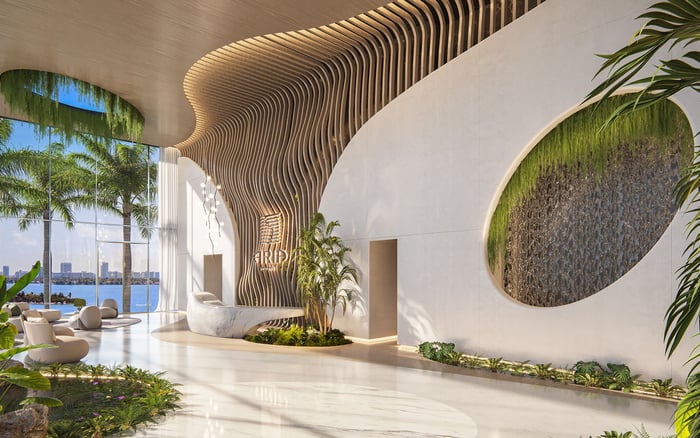
Riva Residenze Fort Lauderdale reframes bayfront ownership as a more practical, professionally managed alternative to the standalone waterfront estate, with shared infrastructure, amenity programming, and reduced day-to-day property oversight for buyers who want the water without the full operational load.

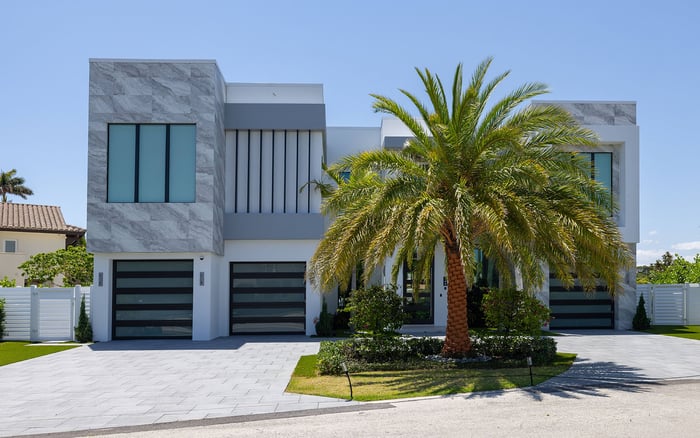
For many buyers, Fort Lauderdale waterfront ownership has long meant a private home with a private dock, private pool, private landscape plan, and a private roster of specialists on call. That model can be deeply rewarding, but it is also operationally demanding. The estate becomes a personal resort, and the owner becomes, directly or indirectly, its manager.
Riva Residenze Fort Lauderdale speaks to a different interpretation of the same desire. The proposition is not to dilute the bayfront dream, but to reorganize it. Rather than assigning every seawall, exterior system, amenity, and maintenance rhythm to one household, the condominium model places many of those responsibilities within a shared, professionally managed residential structure.
That distinction matters in Fort Lauderdale, where water is not a decorative backdrop. It is central to the city’s identity, weekend culture, social geography, and real estate premium. For a buyer who wants the waterfront lifestyle without personally coordinating every property system, Riva’s relevance lies in practical consolidation.
A standalone waterfront estate offers autonomy. It also requires judgment, time, and continuous coordination. Owners often carry separate responsibility for docks, seawalls, pools, landscaping, exterior upkeep, specialized home systems, and the succession of vendors required to keep each element functioning at a high level.
For some buyers, that is part of the pleasure. For others, especially those dividing time among multiple residences or managing demanding professional lives, the operational burden can erode the ease the property was meant to create. A waterfront estate can begin to feel less like a retreat and more like an ongoing capital project.
This is where the Riva argument becomes more nuanced than a simple condo-versus-house comparison. It is not claiming that condominium ownership is free of obligations. It is saying that many obligations are redistributed. Governance, infrastructure, and amenity programming become shared responsibilities rather than individual household tasks. The owner still participates in a residential system, but the system is structured to absorb complexity.
In South Florida luxury real estate, value rarely means inexpensive. More often, it means density of benefit. A property can be more value-dense when it places location, services, amenities, and lifestyle access inside one coherent ownership package.
That is the practical lens for Riva Residenze Fort Lauderdale. The bayfront setting is only one layer. The broader proposition is a lifestyle stack: water access, shared amenities, urban proximity, and reduced day-to-day property management compared with a private waterfront estate. For the right buyer, that stack may be more compelling than owning every element separately.
This shift is visible across Broward and the wider South Florida market. Buyers are increasingly receptive to service-rich, systems-based condominiums when the product delivers a lifestyle that once required a large single-family property. In Fort Lauderdale, projects such as Four Seasons Hotel & Private Residences Fort Lauderdale illustrate the appeal of residential platforms where amenities, services, and professional operations are part of the ownership calculation.
Waterfront property is uniquely sensitive to infrastructure. The elements that make it desirable are often the same elements that make it operationally intensive. Salt air, exposure, marine access, exterior maintenance, water-facing common areas, and amenity spaces all require ongoing attention.
In a private estate, those concerns sit squarely with one owner. In a bayfront condominium, they are typically handled through shared governance and professional management. That does not eliminate cost or responsibility, but it can make the experience more predictable. It can also create a clearer framework for maintenance planning, capital allocation, and daily oversight.
For high-net-worth buyers, predictability is a luxury in its own right. The most valuable asset may not be another amenity, but the ability to enjoy the water without becoming the chief operating officer of a private mini-resort. Riva’s practical appeal is grounded in that kind of bayfront pragmatism.
Fort Lauderdale’s boating culture gives the conversation its local specificity. Buyers are not simply purchasing views. They are buying into a city shaped by canals, marinas, bridges, yacht traffic, and a social calendar that often tilts toward the water. Marina culture and daily proximity to the bay carry both emotional and practical value.
Riva Residenze Fort Lauderdale fits into this context as a condominium answer to a traditionally estate-driven aspiration. It allows the buyer to remain close to the nautical identity of the city while moving many of the property’s operating needs into a managed environment.
That same logic helps explain why Fort Lauderdale’s luxury condominium landscape is becoming more varied. St. Regis® Residences Bahia Mar Fort Lauderdale speaks to buyers comparing prominent waterfront-oriented residences, while Sixth & Rio Fort Lauderdale points to the city’s appetite for residential convenience near urban lifestyle corridors. Riva’s role is specifically bayfront, but it participates in a broader move toward convenience as a luxury metric.
The Riva buyer is not necessarily choosing less. In many cases, the buyer is choosing less fragmentation. Instead of assembling the waterfront lifestyle piece by piece, the condominium owner enters a platform where much of that lifestyle is bundled.
That can be attractive for a second-home owner who wants arrival to feel immediate, not administrative. It can also appeal to a primary resident who values efficiency as much as square footage. The common thread is not a retreat from luxury. It is a preference for structured ease.
This is especially relevant in South Florida, where luxury buyers often compare multiple submarkets before committing. A buyer considering Fort Lauderdale may also be aware of waterfront or water-oriented condominium offerings elsewhere, from Aria Reserve Miami in Edgewater to bayfront residences in the island communities. The common question is no longer simply, “How much private space can I acquire?” It is increasingly, “How efficiently does this residence deliver the life I actually want to live?”
The danger in discussing practicality is making it sound modest. In the ultra-premium market, practical does not mean plain. It means the ownership structure is aligned with the buyer’s real priorities.
For Riva Residenze Fort Lauderdale, the priority is bayfront living without unnecessary friction. The condominium model can make waterfront ownership more predictable by shifting many responsibilities into shared systems, professional oversight, and programmed amenities. The result is not maintenance-free ownership, but it can be a more coherent way to live on the water.
That is the central insight. Riva does not ask buyers to abandon the Fort Lauderdale waterfront ideal. It asks whether the ideal is better served by owning every component individually, or by joining a residential platform designed to manage the complexity around it.
What is the core ownership idea behind Riva Residenze Fort Lauderdale? It presents bayfront condominium ownership as a more practical alternative to managing a standalone waterfront estate.
Does condominium ownership mean maintenance-free living? No. The stronger point is that many responsibilities shift into a shared, professionally managed structure.
Why is Fort Lauderdale an important setting for this concept? Fort Lauderdale’s identity is closely tied to boating, water access, marina culture, and waterfront living.
How does Riva differ from a private waterfront estate? A private estate often leaves docks, pools, landscaping, seawalls, and systems to the individual owner.
Who is the likely buyer for this kind of proposition? A high-net-worth buyer who values the water, but also wants efficiency, predictability, and convenience.
Is the value proposition mainly about amenities? Amenities matter, but the larger value is the bundling of waterfront positioning, services, and oversight.
Why are shared systems important in luxury real estate? They can make complex ownership easier to plan, operate, and enjoy over time.
Does Riva replace the appeal of single-family waterfront homes? No. It offers a different path for buyers who prefer managed convenience over fully individualized control.
How does this fit into the Broward luxury market? Broward buyers are seeing more ways to combine lifestyle priorities with professional residential management.
Why is waterfront living still central to the Riva story? The practical model matters because it protects the core desire: living close to Fort Lauderdale’s water.
When you're ready to tour or underwrite the options, connect with MILLION.
If branded residences are on your mind — as a home or as an allocation — we would be glad to share what we are seeing, privately.
Begin a quiet conversation