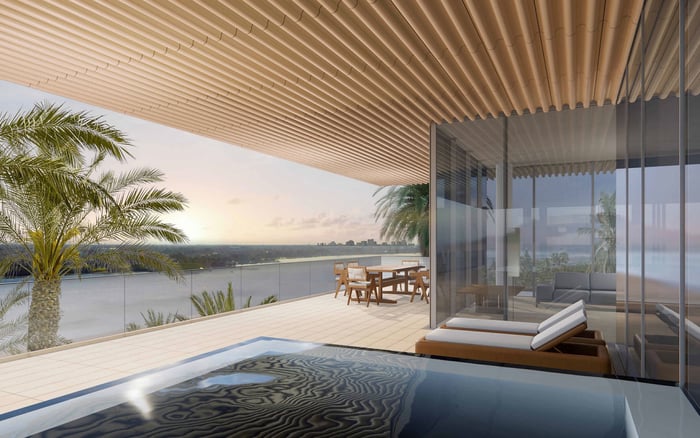
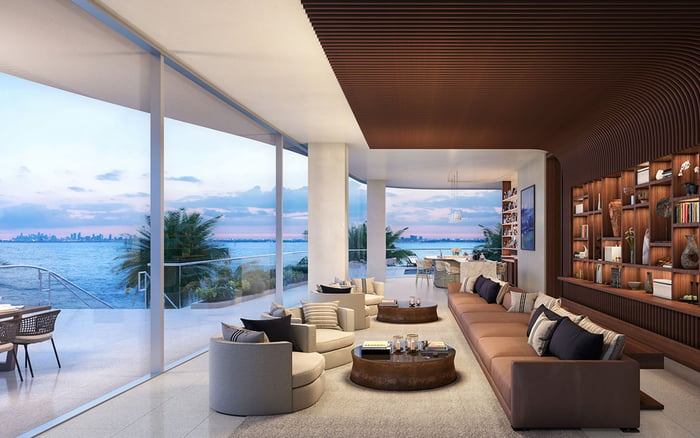
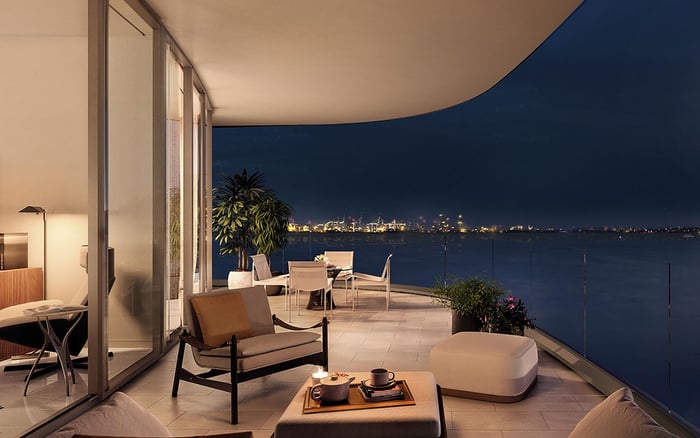
A private sky pool can define a Miami penthouse, but it also raises contract, engineering, maintenance, insurance, privacy, and resale questions that should be addressed before signature.

A private sky pool is one of South Florida real estate’s most seductive features. It can turn a penthouse into a private resort, give a terrace architectural purpose, and allow a buyer to entertain above the city with a sense of separation few amenities can match. Yet before contract, the question is less about drama than definition.
The pool must be understood as a legal, technical, and operational asset. Is it part of the unit, an exclusive-use limited common element, or a feature maintained under another structure? Does the purchase agreement describe it with enough specificity? Do the condominium documents align with the marketing language? A buyer should not rely on lifestyle vocabulary when ownership, access, maintenance, and repair rights depend on governing documents.
For buyers considering Brickell, Miami Beach, Sunny Isles, or other high-floor settings, the conversation should begin early. A private pool on an upper level can be a signature amenity, but it also introduces questions about structure, waterproofing, equipment access, noise, privacy, and future cost. The strongest negotiating position comes before the contract is signed, when clarifications can still be documented.
The most important pre-contract question is deceptively simple: what exactly is included? The answer should be more precise than “private pool.” Buyers should ask whether the water basin, pool shell, mechanical equipment, deck area, railings, planters, lighting, and adjacent terrace areas are included within the unit boundaries or governed separately.
This matters because responsibility usually follows definition. If the pool is part of the unit, the owner may carry broader obligations for maintenance and repair. If it is an exclusive-use area, the association may retain certain rights or obligations, while the owner may still be responsible for costs. If equipment sits outside the residence, access rights become critical. Who can enter, when, and for what purpose?
A buyer should request that the contract, condominium documents, plans, and disclosure materials be reviewed together. If the documents use different language for the same feature, that inconsistency should be resolved before deposit money becomes harder to recover.
A sky pool is not simply a pool placed in the air. It is a load, a waterproofing condition, a mechanical system, and a maintenance obligation. Before contract, buyers should ask what documentation exists for the pool structure, waterproofing assembly, drainage strategy, and equipment location. The answer does not need to turn the buyer into an engineer, but it should give the buyer’s advisers enough information to assess risk.
Access is equally important. If a pump, heater, filter, drain, or control system requires service, can technicians reach it without crossing private entertaining areas or interior living spaces? Is there a dedicated service route? Are there limits on service hours? If the residence is intended as a lock-and-leave second home, can routine maintenance occur without the owner present?
In new-construction purchases, buyers should ask how completion, punch-list work, commissioning, and warranty claims will be handled. The pool should be tested, delivered, and documented with the same seriousness as glazing, elevators, appliances, and building systems.
Private pools invite assumptions. One buyer imagines morning laps, another imagines evening cocktails, and another imagines a sculptural water feature that is rarely used. The association and building rules may be more specific than any of those expectations.
Before contract, ask whether there are rules covering water levels, chemical treatment, heating, filtration, draining, coverings, lighting, noise, music, furniture, plants, and glassware. Ask who approves vendors. Ask whether the owner must use a building-approved maintenance provider or may select an independent pool service. Ask whether chemicals, equipment, or supplies can be stored near the pool and whether those areas are ventilated or restricted.
The best luxury ownership experience is quiet because the details have been solved. If maintenance standards are vague, the buyer should seek clarity in writing. A pool that is visually private may still be operationally connected to the building.
A private sky pool concentrates several forms of risk: water intrusion, mechanical failure, wind exposure, finish wear, and potential damage to adjacent areas. Buyers should ask how the feature is treated for insurance purposes and whether the owner, association, or both must carry coverage related to it.
Warranty language also deserves attention. Which parts are covered, for how long, and by whom? Are finishes treated differently from mechanical components? Is waterproofing subject to separate terms? What happens if a repair requires demolition of deck finishes, planters, or built-in seating?
For resale residences, the buyer should ask for service history, repair history, open claims, and any prior leaks or disputes involving the pool or surrounding terrace. For new residences, the buyer should ask how future common-area access, defect claims, and cost allocation will be handled if a problem affects more than one unit or building area.
A sky pool feels private, but privacy is a design condition, not a promise. Buyers should study sightlines from neighboring towers, amenity decks, adjacent terraces, and higher residences. The most elegant penthouse environments are not only elevated; they are shielded, proportioned, and oriented with intent.
Sound deserves the same scrutiny. Water features, guests, outdoor speakers, equipment vibration, and late-night use may all interact with building rules. Ask whether the residence has restrictions on music, parties, occupancy, pool hours, or exterior lighting. Ask whether any neighboring owner or association rights can affect future use.
Privacy is especially important for buyers who value discretion. A beautiful skyline exposure can become less compelling if the most active parts of the pool deck are visible from surrounding buildings.
A private sky pool can strengthen a penthouse’s identity, but sophisticated future buyers will ask the same questions. They will want to know what is owned, what is maintained, what is insured, what has been repaired, and what it costs to operate. If those answers are organized before the first purchase, the future sale is easier to underwrite.
Documentation is part of the asset. Keep plans, manuals, warranties, service records, approvals, inspection notes, and correspondence. A buyer who can demonstrate careful stewardship of a complex feature can separate the residence from more ambiguous offerings.
For MILLION clients, the guiding principle is simple: the rarest properties deserve the most exacting questions. A private sky pool should feel effortless after closing because the obligations were made explicit before contract.
Is a private sky pool always part of the penthouse unit? Not always. Buyers should confirm whether it is part of the unit, an exclusive-use area, or governed through common element language.
What documents should be reviewed before contract? The purchase agreement, condominium declaration, plans, rules, disclosures, and any pool-specific warranty or maintenance materials should be reviewed together.
Who usually maintains a private sky pool? The answer depends on the documents. The owner, association, approved vendor, or a combination of parties may have responsibilities.
Why does equipment access matter? Pumps, filters, heaters, and controls need service. Access rights determine whether maintenance can happen efficiently and without disrupting the residence.
Should buyers ask about waterproofing? Yes. Waterproofing is central to any elevated pool, and buyers should understand how it is documented, warranted, and repaired.
Can building rules limit pool use? Yes. Rules may address hours, guests, noise, lighting, vendors, furnishings, and other exterior conditions.
What should resale buyers request? They should request service records, repair history, warranty information, vendor details, and any known issue involving the pool or deck.
Does a private pool affect insurance needs? It can. Buyers should ask how coverage is allocated between the owner and association before signing.
Are private sky pools best for every luxury buyer? No. They suit buyers who value outdoor living and accept the operational responsibilities that come with a complex amenity.
What is the smartest pre-contract move? Put every key question in writing and resolve ownership, maintenance, access, warranty, and insurance language before the agreement is final.
For a tailored shortlist and next-step guidance, connect with MILLION.
If branded residences are on your mind — as a home or as an allocation — we would be glad to share what we are seeing, privately.
Begin a quiet conversation