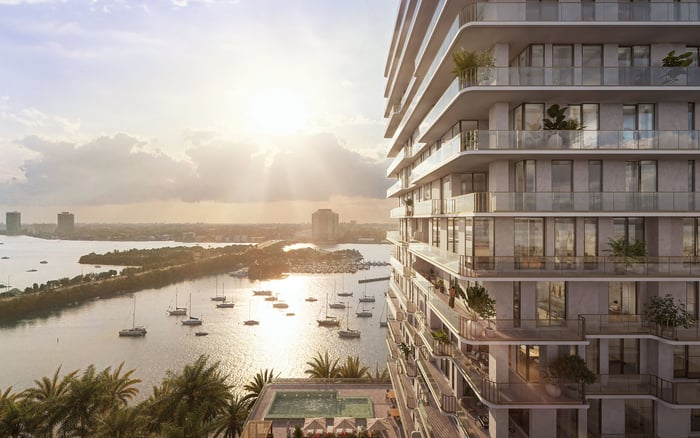
A discreet 2026 buyer framework for comparing Bay Harbor Towers and Tula Residences North Bay Village through brand promise, service staffing, household autonomy, privacy, governance, and long-term fit.

Bay Harbor Towers or Tula Residences North Bay Village is not simply a choice between two names. For a 2026 buyer, it is a test of how a building will perform after the sales language fades and daily life begins. The most sophisticated purchasers are no longer asking only about views, finishes, or arrival sequence. They are asking whether the brand promise is operationally real, whether the staffing model can sustain the lifestyle being marketed, and whether the residence gives a household enough autonomy to travel, entertain, work privately, and maintain frictionless control.
That is the sharper lens. A residence may feel serene during a presentation, but the owner experience is shaped by less visible factors: lobby coverage, package handling, guest protocol, vendor access, elevator choreography, maintenance responsiveness, board culture, rental controls, pet rules, and the level of discretion preserved when a household is in motion. In shorthand, this may read as Bay Harbor calm versus North Bay Village openness, but the stronger buyer does not stop at geography. The stronger buyer studies operating temperament.
A luxury brand promise matters only when it translates into repeatable service. Buyers should treat every polished phrase as a prompt for a practical question. If the promise is privacy, how are visitors managed? If the promise is hospitality, who is on duty, at what times, and with what authority? If the promise is wellness, how will shared spaces be reserved, maintained, and protected from overcrowding?
Bay Harbor Towers may appeal to a buyer who prioritizes quiet identity, discretion, and a more composed residential rhythm. Tula Residences North Bay Village may speak to a buyer studying a different kind of waterfront future, one tied to movement, views, and a broader island-market narrative. Those are positioning impressions, not substitutes for diligence. The true comparison is whether each property can support the way a household actually lives on Tuesday morning, Friday evening, and during peak seasonal occupancy.
Boutique is often treated as a luxury word, but boutique living can cut two ways. Fewer residences may support intimacy and recognition, yet smaller buildings can require sharper scrutiny of staffing depth, reserve planning, and owner participation. Larger-service ambition can be appealing, but only if governance, staffing, and financial discipline keep pace.
In 2026, service is not an amenity. It is infrastructure. A buyer should ask for clarity on the intended staffing chart, not merely the amenity menu. Who receives guests? Who manages deliveries? Who coordinates maintenance access when the owner is overseas? Who handles after-hours incidents? Who has authority to resolve a problem without pushing every issue into a slow chain of approvals?
The most valuable residences often feel effortless because labor, systems, and protocol are carefully aligned. That alignment has cost. It appears in assessments, staffing schedules, vendor contracts, insurance realities, and the operating budget. A buyer comparing Bay Harbor Towers and Tula Residences North Bay Village should not treat monthly cost as a simple negative. The more relevant question is whether the cost is buying competence, consistency, and a level of service that protects both lifestyle and asset quality.
New-construction buyers should be especially deliberate. New construction can offer current design expectations, cleaner systems, and fresh common areas, but early ownership may involve evolving procedures as a building matures. The first years can define resident culture. Policies that sound minor at purchase, such as guest registration, storage rules, amenity bookings, and contractor access, can later determine whether a home feels liberating or constrained.
Household autonomy is the ability to live beautifully without repeatedly asking permission. It is not the same as informality. In a well-run luxury condominium, autonomy is structured, elegant, and predictable. Owners should know how family members, staff, assistants, trainers, drivers, chefs, pet caregivers, and vendors can move through the building without creating security gaps or social exposure.
This is where a buyer should look beyond brochure-level privacy. A residence with strong autonomy allows a household to function while preserving discretion. It anticipates deliveries, travel patterns, visiting family, seasonal occupancy, and remote ownership. It also respects that ultra-premium buyers often have complex support systems behind the scenes.
Waterview value remains central in South Florida, but waterview alone cannot compensate for operational friction. A beautiful horizon is less compelling if service access is awkward, guest handling is inconsistent, or renovation rules make future customization difficult. The buyer who plans to hold for years should underwrite use, not just outlook.
The next test is governance. Luxury buyers often focus on the private residence first, then discover that the governing documents shape daily life almost as much as the floor plan. Pet policies, leasing restrictions, alteration approvals, insurance responsibilities, move-in rules, and amenity access are not administrative details. They are part of the asset.
For Bay Harbor Towers, the relevant questions may center on how established expectations, privacy, and owner culture align with a buyer's household. For Tula Residences North Bay Village, the questions may center on how a developing residential identity will be managed as owners arrive and routines become permanent. Neither position is automatically superior. The stronger choice is the one whose rules support the buyer's actual life.
Resale confidence also follows clarity. Future buyers will evaluate whether the building feels well governed, adequately staffed, financially disciplined, and consistent with its promise. A residence with excellent finishes but uncertain operating standards may be harder to explain later. A residence with coherent rules, reliable service, and a defensible lifestyle proposition tends to be easier to understand in any market cycle.
The disciplined buyer should compare both options across five practical categories. First, service coverage: staffing levels, hours, escalation authority, and hospitality standards. Second, autonomy: guest, vendor, family, pet, and travel-related procedures. Third, privacy: sightlines, arrival experience, elevator flow, amenity density, and discretion. Fourth, governance: rules, reserves, insurance posture, owner culture, and decision-making. Fifth, long-term fit: whether the building can serve the household in three, five, or ten years.
This framework is intentionally sober. It does not reduce the decision to price, view, or novelty. It asks whether the residence can absorb the complexity of real luxury life. The right answer may be different for a seasonal owner, a relocating family, a collector of waterfront homes, or a buyer seeking a quieter primary base. What matters is that the chosen building feels less like a compromise and more like an operating system designed around the household.
Is Bay Harbor Towers or Tula Residences North Bay Village the better 2026 buy? The better choice depends on the buyer's service expectations, desired autonomy, privacy needs, and tolerance for evolving building culture.
Why does service staffing matter so much in a luxury condominium? Staffing determines whether the promised lifestyle is actually delivered through guest handling, maintenance support, security flow, and daily responsiveness.
What does household autonomy mean for condo buyers? It means the owner can manage family, guests, staff, vendors, travel, and personal routines with clear rules and minimal friction.
Should a buyer prioritize views or operating quality? Views are important, but operating quality often determines whether the residence remains pleasant, private, and defensible over time.
How should buyers evaluate boutique buildings? Buyers should study staffing depth, reserves, governance, and owner culture, because intimacy must be supported by strong operations.
Is new construction always easier to own? Not always. New buildings can offer fresh systems and design, but early policies and resident culture may still be forming.
What documents should be reviewed before contract commitment? Buyers should review condominium documents, budgets, rules, insurance responsibilities, leasing policies, and alteration procedures with qualified advisers.
How does governance affect resale value? Clear rules, disciplined finances, and consistent service can make a building easier for future buyers to understand and trust.
Why compare Bay Harbor and North Bay Village lifestyles carefully? Each setting can imply different rhythms, privacy expectations, access patterns, and long-term neighborhood identity.
What is the smartest first question for a serious buyer? Ask how the building will support the household's real weekly routine, not just how it presents during a sales appointment.
For a tailored shortlist and next-step guidance, connect with MILLION.
If branded residences are on your mind — as a home or as an allocation — we would be glad to share what we are seeing, privately.
Begin a quiet conversation