A discreet buyer’s guide to the low-rise Miami residence profiles that best suit high-service expectations, from boutique waterfront condominiums to townhouse-style homes.
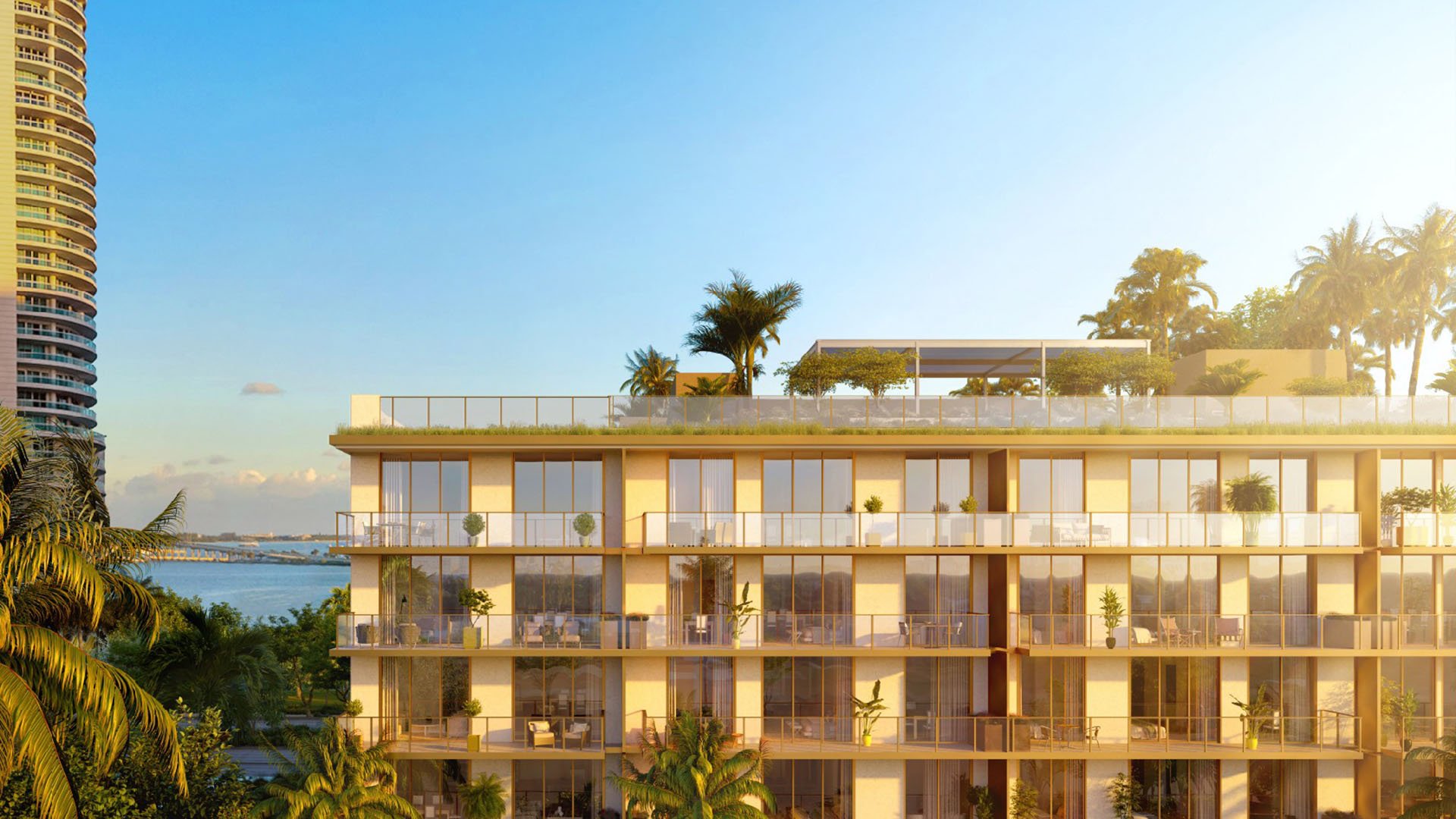
For many Miami buyers, low-rise living is not a retreat from service. It is a more exacting expression of it. The appeal lies in a quieter arrival, fewer corridors, more intuitive access to outdoor space, and a building culture that feels residential rather than performative. Expectations remain high: attentive management, polished common areas, privacy-minded circulation, secure parking, and a service team fluent in discretion.
This is where the search becomes more nuanced. A tall tower can impress immediately, but a low-rise residence must persuade through proportion, touch, and ease. The strongest candidates feel composed from the first threshold: a calm lobby, a short route from car to residence, thoughtful package handling, and amenities scaled for owners who use them rather than simply admire them. In that context, boutique is not a compromise. It can be the point.
1. Boutique waterfront condominium - private arrival and managed calm
A boutique waterfront condominium is often the cleanest fit for buyers who want the atmosphere of a private home with the support of a managed building. The defining advantage is not simply proximity to the water. It is the possibility of a more controlled daily rhythm: fewer neighbors, quieter amenity use, and a staff that can recognize residents without turning the building into a stage.
This profile suits owners who value privacy but do not want the maintenance burden of a standalone property. Due diligence should focus on service coverage, guest protocol, parking sequence, storage, and how the building handles deliveries, contractors, and after-hours needs.
2. Garden-level residence - outdoor living without estate maintenance
A garden-level residence is compelling for buyers who want the emotional ease of a house: greenery, direct outdoor space, and a more grounded relationship to the property. The key is distinguishing a true private outdoor experience from a decorative patio. Scale, privacy screening, lighting, drainage, and access from principal rooms all matter.
For high-service expectations, the question is how the building supports that outdoor lifestyle. Landscaping, security, exterior upkeep, and service access should feel integrated. A terrace can be beautiful, but the better test is whether it functions elegantly for morning coffee, pets, entertaining, and quiet evenings.
3. Townhouse-style condominium - house feeling with building support
The townhouse-style condominium is for buyers who want separation, volume, and a residential cadence without accepting the full obligations of a single-family home. It can offer a stronger sense of entry, more natural division between public and private rooms, and a day-to-day experience that feels less vertical and less communal.
Service expectations are especially important here because the format can sit between categories. Buyers should examine whether the residence benefits from the building’s full management structure, how maintenance responsibilities are divided, and whether private entries receive the same care as primary common areas.
4. Low-floor bay-view residence - convenience over spectacle
Low-floor residences are often overlooked by buyers trained to equate height with prestige. Yet for a certain Miami owner, a lower position can be more practical and more intimate. The experience may feel closer to the landscape and water, with easier movement through the building and less reliance on long elevator rides.
This profile works best when the plan preserves privacy and the view corridor feels open rather than exposed. Buyers should study sightlines, sound, lobby proximity, and whether the elevator sequence supports the level of discretion expected at this price point.
5. Small-building penthouse - privacy without tower living
A small-building penthouse offers the psychological reward of being at the top without the scale of a major tower. It can pair greater privacy with a more residential building culture, especially when access, terraces, and service areas are resolved with care.
The strongest versions are not defined by size alone. They are defined by how they live: separation between entertaining and sleeping areas, intuitive outdoor access, well-placed service entries where applicable, and a management team capable of supporting a more customized residence.
Location changes the meaning of service. In Brickell, the challenge is often balancing urban convenience with a calmer residential experience. A buyer drawn to a low-rise or lower-density setting near a dense commercial core should pay close attention to arrival, traffic flow, valet structure, and how the building protects daily privacy.
In Miami Beach, the conversation becomes more atmospheric. Light, outdoor space, beach access, walkability, and quiet circulation tend to carry more weight. The best low-rise choices here should feel relaxed without becoming informal, with service that can support seasonal rhythms and visiting guests.
In Coconut Grove, buyers often prioritize shade, greenery, village-like movement, and a softer relationship between indoors and outdoors. Here, a low-rise residence should feel natural rather than compressed, with thoughtful terraces, parking, and staff responsiveness that match the area’s quieter residential character.
The first inspection is emotional, but the second should be operational. How does the building receive you at night? How far is the route from parking to residence? Is the lobby elegant because it is grand, or because it is calm and properly maintained? Are elevators limited, direct, or shared in a way that affects privacy? These details shape daily life more than many brochure amenities.
Service culture is equally important. A high-service low-rise building should not feel understaffed simply because it is intimate. The expectation is not theatrical hospitality. It is competence: clean transitions, reliable communication, orderly amenity scheduling, discreet security, and management that solves problems before they become visible.
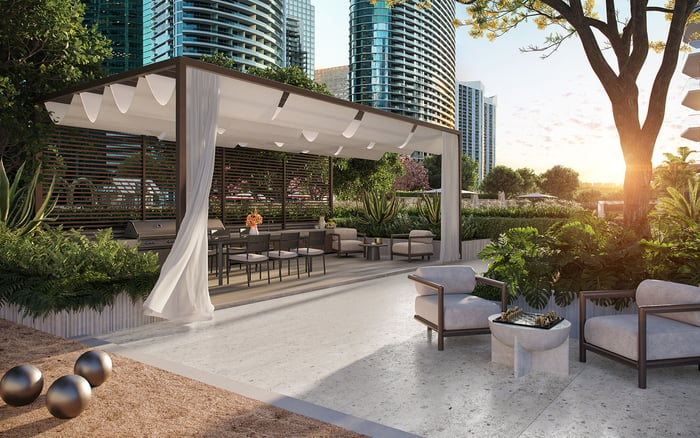
Buyers should also look closely at outdoor areas. A terrace or garden is only valuable if it is usable. Privacy, shade, furniture depth, irrigation, lighting, and adjacency to living spaces should be considered together. In Miami, outdoor space is not an accessory. For many owners, it is a principal room.
The low-rise premium is ultimately a quiet premium. It is paid for ease, privacy, and control. It is paid for a building where the owner can move comfortably from car to elevator, host without friction, receive services without spectacle, and live close to Miami’s energy without being consumed by it.
That is why the best search is not simply for the newest, tallest, or most amenitized address. It is for the residence that choreographs daily life with the fewest interruptions. For the right buyer, that can be the most luxurious proposition in the city.
What defines a low-rise residence in a luxury Miami search? It generally refers to a building or residence experience with a more intimate scale, calmer circulation, and less tower-like density.
Can a low-rise building still offer high service? Yes. The strongest examples pair smaller scale with attentive management, refined common areas, and reliable daily operations.
Is boutique living better than a large amenity tower? It depends on the buyer. Boutique living favors privacy and calm, while larger towers may offer broader amenity menus.
Why do low-floor residences appeal to some luxury buyers? They can offer easier movement, a closer connection to landscape, and a less vertical daily routine.
What should buyers ask about service before purchasing? They should ask about staffing, security, deliveries, guest access, maintenance response, parking, and after-hours procedures.
Is outdoor space essential in this category? It is not mandatory, but a well-designed terrace or garden can significantly improve the low-rise living experience.
Which area is best for a quieter low-rise lifestyle? The right area depends on whether the buyer prioritizes urban access, beach atmosphere, or a greener residential setting.
Are townhouse-style condominiums a good compromise? They can be ideal for buyers who want a house-like layout with the support of professional building management.
What is the biggest mistake in this search? Focusing on finishes while overlooking circulation, privacy, service culture, and the practical rhythm of daily arrival.
Should buyers compare low-rise residences differently from towers? Yes. The evaluation should place more weight on intimacy, operations, outdoor usability, and discreet service.
If you'd like a private walkthrough and a curated shortlist, connect with MILLION.
If branded residences are on your mind — as a home or as an allocation — we would be glad to share what we are seeing, privately.
Begin a quiet conversation