A discreet Miami Beach buyer guide for evaluating residences where arrival flow, privacy, vertical circulation, service access, and guest management matter as much as views and finishes.
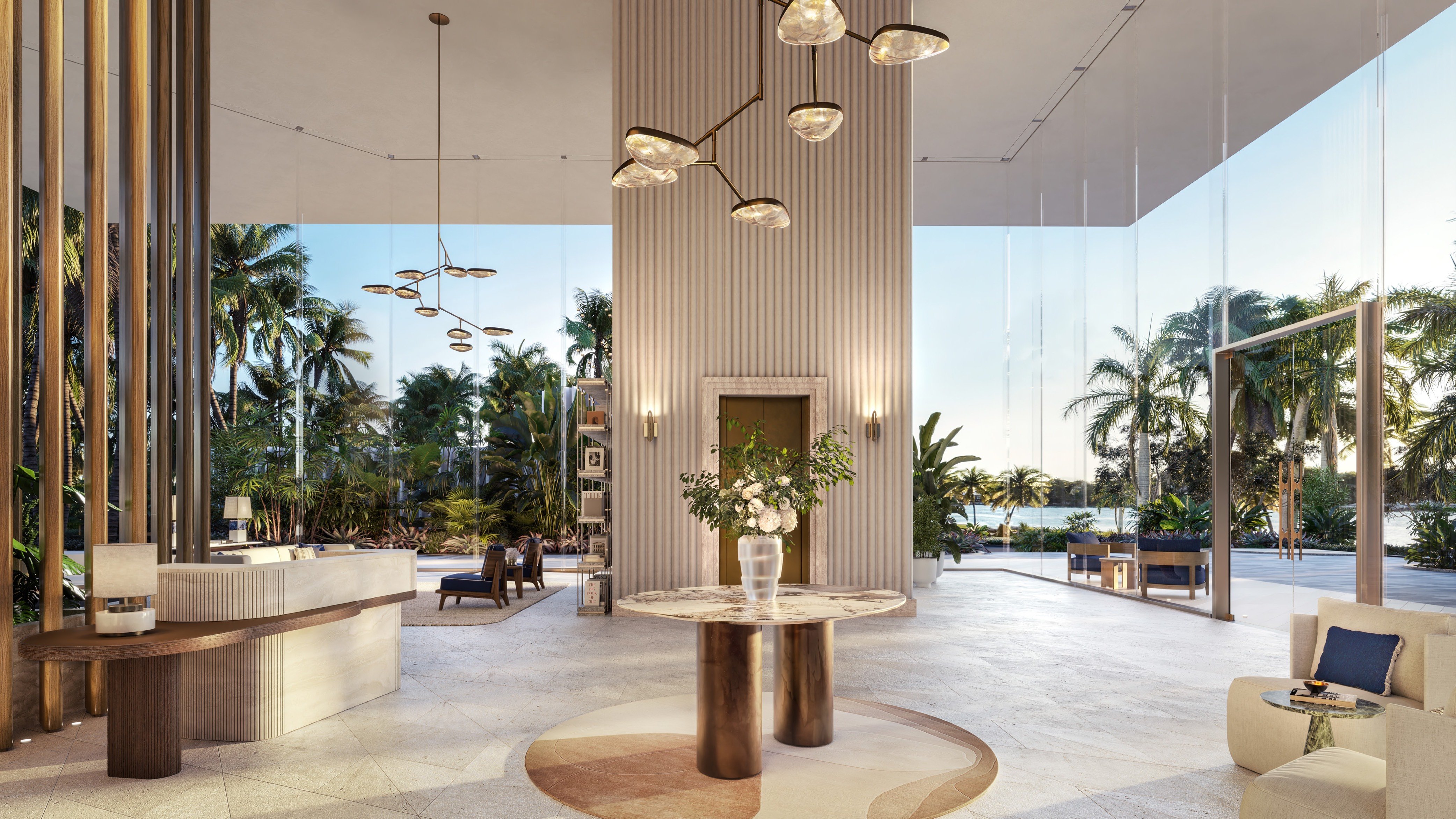
For a certain Miami Beach buyer, the question is no longer simply whether a residence is beautiful. It is whether the building allows daily life to unfold without constant crossings, lobby theater, elevator congestion, or the feeling that every arrival is a public moment. The most valuable privacy is not always expressed through marble, art, or branded service. It is felt in the first thirty seconds after the car door opens.
That makes “less lobby traffic” a practical luxury criterion. Buyers should study how residents, guests, staff, deliveries, valet, wellness amenities, beach access, and parking interact. The right building may still have a handsome lobby, attentive personnel, and a social rhythm. What matters is whether circulation feels composed rather than crowded, and whether the residence supports quiet repetition: morning walks, school runs, late dinners, visiting family, and spontaneous weekends.
This Miami Beach shortlist is written for buyers who value discretion over spectacle. It does not assume that any residence is automatically low-traffic. Instead, it ranks the candidates that warrant careful private touring when the brief is calm arrival, controlled access, and a more residential daily cadence.
1. The Perigon Miami Beach - privacy-led coastal candidate
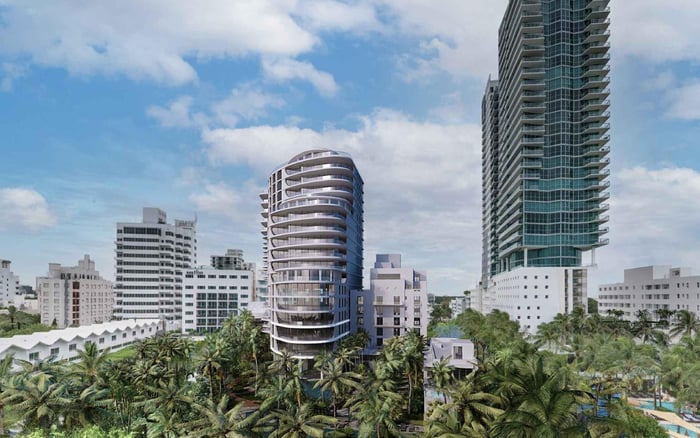
The Perigon Miami Beach belongs at the top of a privacy-focused tour because it gives buyers a clear framework for asking the right questions: how residents arrive, how guests are announced, where service functions occur, and how amenity traffic is separated from daily residential movement. A buyer should treat the showing as an operational interview, not only a design preview.
Its value for this brief is not a claim about measured traffic, but its relevance to a refined Miami Beach search. Ask to experience the arrival sequence at different times of day, then compare the elevator path, garage or valet relationship, and staff protocols with your own routine.
2. Shore Club Private Collections Miami Beach - private-collection candidate
Shore Club Private Collections Miami Beach is an intuitive name for buyers who want the feeling of a curated residence rather than an anonymous tower experience. The key is to separate atmosphere from function. A polished entry can still feel busy if resident and nonresident movement collide.
Tour with direct questions about guest flow, beach or amenity access, package handling, vendor entry, and whether residents have predictable, protected circulation. Less lobby traffic is often created by decisions that are nearly invisible during a first walk-through.
3. 57 Ocean Miami Beach - coastal-shortlist candidate
57 Ocean Miami Beach should be evaluated by buyers who want a serene daily rhythm without turning every return home into a lobby encounter. The name naturally places it in the Miami Beach conversation, but the privacy test must be specific.
During a private showing, ask how resident arrivals, visitors, service providers, and amenity use are organized. A residence can feel quieter when these patterns are separated cleanly and when staff can maintain hospitality without creating a sense of public performance.
4. Setai Residences Miami Beach - established-luxury candidate
Setai Residences Miami Beach enters the list for buyers who want a composed luxury environment and are prepared to inspect how that environment works in real life. The question is not whether the building feels prestigious. The question is whether it feels effortless on an ordinary Tuesday.
A privacy-minded buyer should test the full sequence from curb to residence. Notice whether the lobby invites lingering or efficiently supports arrival, whether elevators feel intuitive, and whether the building’s service culture can be present without becoming conspicuous.
5. The Ritz-Carlton Residences® Miami Beach - branded-residence candidate
The Ritz-Carlton Residences® Miami Beach is relevant for buyers who appreciate a service-forward residential setting but still want separation from unnecessary activity. Brand recognition can be appealing, yet the quieter-lobby buyer should focus on mechanics rather than reputation.
Ask how resident privacy is protected during peak service periods, how staff manage visitors, and whether amenities create extra lobby crossings. The ideal answer is not simply more service. It is service that reduces friction without adding visibility.
A privacy-focused tour should feel almost investigative. When comparing The Perigon Miami Beach with 57 Ocean Miami Beach, buyers should walk the actual path from arrival to elevator, not merely admire the lobby from its best angle. Ask where a driver waits, how visitors are cleared, how residents reach wellness spaces, and whether service teams have their own circulation.
The same discipline applies to Shore Club Private Collections Miami Beach and Setai Residences Miami Beach. A calm building is not necessarily a silent building. It is one where movement is legible, staff presence is measured, and residents do not have to negotiate the lobby every time they live normally.
For buyers considering The Ritz-Carlton Residences® Miami Beach, the touring lens should be especially precise: how does the building preserve the residential mood while delivering high-touch service? The best answers usually appear in the details, including private elevator behavior, back-of-house planning, parking rhythm, and guest management.
Less lobby traffic does not always mean smaller, quieter, or less serviced. It means fewer unnecessary intersections. A grand building can feel calm if its circulation is intelligent. A more intimate property can feel busy if everyone enters, waits, greets, collects, and passes through the same compact zone.
Buyers should separate design beauty from daily logistics. Ask whether deliveries share the same entry experience as residents. Ask whether amenity guests create lobby volume. Ask whether valet patterns affect privacy. Ask how many steps exist between arrival and the residence door, and how many of those steps require interaction.
This is where a sophisticated advisor adds value. The right purchase conversation should include views, finishes, and price, but it should also include operational privacy: who sees you, when they see you, and how often that moment repeats.
The best Miami Beach residence for a quiet-lobby buyer is not necessarily the most hidden or the least social. It is the one whose design and operations make daily life feel controlled, elegant, and lightly observed. Buyers should tour slowly, ask practical questions, and return at more than one time of day before deciding whether a building’s public spaces truly support private living.
For this brief, the ranking is best read as a disciplined shortlist. Each candidate deserves a private showing with attention to arrivals, elevators, amenities, staff protocol, and the subtle architecture of discretion.
What does less lobby traffic mean in a Miami Beach residence? It means fewer unnecessary crossings among residents, guests, staff, vendors, amenities, and service activity during everyday life.
Is a smaller building always better for lobby privacy? Not always. Circulation design, staffing, access control, and amenity placement can matter as much as size.
Should buyers tour at different times of day? Yes. Morning, late afternoon, and evening visits can reveal different arrival, valet, amenity, and guest patterns.
What should I ask during a private showing? Ask how residents, visitors, deliveries, staff, parking, beach access, and amenities are routed through the property.
Can a branded residence still feel discreet? Yes, if service is designed to reduce friction and protect privacy rather than create visible activity.
Are oceanfront buildings automatically busier? Not automatically. The key is how beach movement, amenities, and residential access are organized.
Why is elevator planning important? Elevator routing shapes how often residents encounter others between arrival, amenities, parking, and home.
Should lobby design influence the purchase decision? Yes, but function matters more than ornament for buyers seeking a calm daily experience.
How can buyers compare two similar residences? Walk the full arrival sequence in each and note where privacy feels protected or interrupted.
What is the most overlooked privacy factor? Service circulation is often overlooked, yet it can strongly affect how public or private a residence feels.
For a confidential assessment and a building-by-building shortlist, connect with MILLION.
If branded residences are on your mind — as a home or as an allocation — we would be glad to share what we are seeing, privately.
Begin a quiet conversation