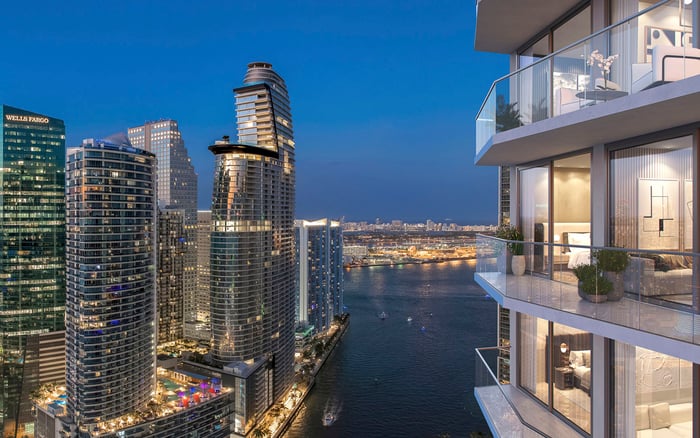
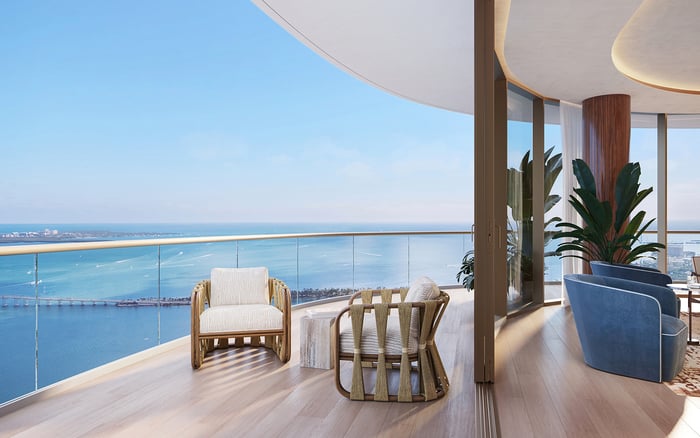
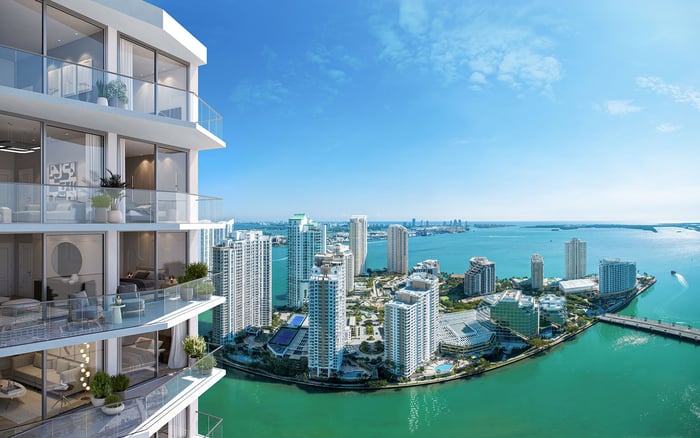
A buyer-focused guide to evaluating lower-floor residences across South Florida oceanfront, bayfront, and city settings, with attention to view quality, privacy, lifestyle, and long-term usability.
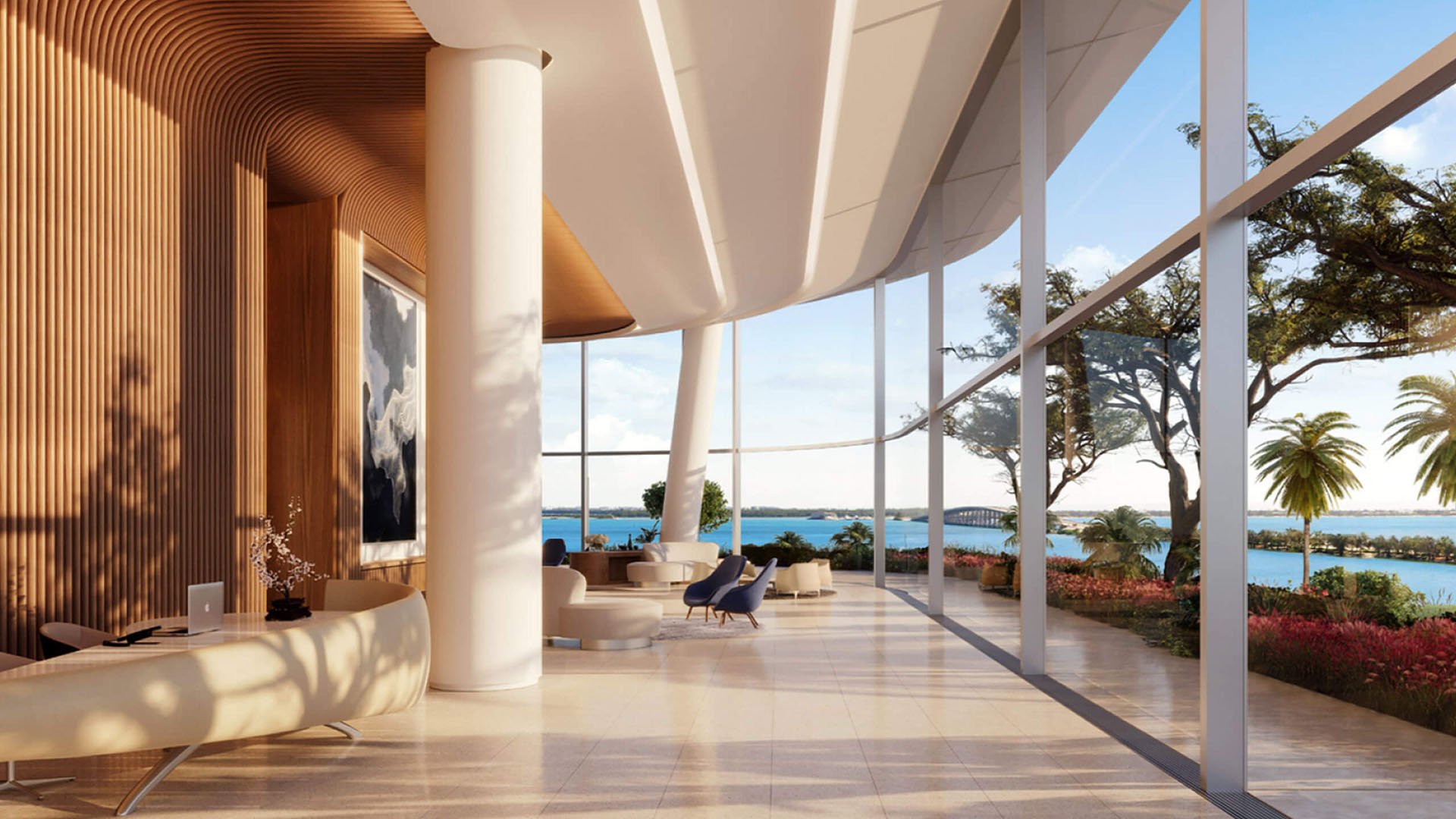
In South Florida luxury real estate, height has long served as shorthand for prestige. Yet a lower-floor residence can be the more intelligent acquisition when a buyer values daily ease, generous layouts, terrace connection, and a grounded relationship to water, gardens, or the city. The question is not whether a lower floor is inherently better or worse. The question is whether its value is properly priced against the lifestyle it delivers.
For buyers comparing oceanfront, bayfront, and city living, the lower-floor decision is especially nuanced. A lower oceanfront home may trade expansive horizon views for a closer sensory connection to sand, palms, and surf. A bayfront residence may offer luminous water movement at a calmer scale. A city residence may place the owner closer to amenities, dining, and cultural energy, while requiring sharper attention to sound, privacy, and sightlines.
The most successful buyers approach lower floors with the same rigor usually reserved for penthouses. They study what can be seen, what can be heard, how the residence receives light, how the balcony will actually be used, and how the home will feel at breakfast, at sunset, and when guests arrive.
A lower floor should never be evaluated by elevation alone. The more important test is view composition. A tenth-floor residence blocked by a neighboring tower may feel less compelling than a lower home with an uninterrupted garden, pool, marina, or water perspective. In luxury real estate, the eye is not simply measuring distance. It is reading proportion, movement, privacy, and atmosphere.
For waterview homes, ask whether the water is the primary view or a partial accent. A direct, beautifully framed lower-floor water view can be more emotionally satisfying than a higher but fragmented outlook. Consider the angle of the residence, the width of the glazing, the depth of the terrace, and whether the outdoor space feels private enough to use throughout the day.
The best lower-floor values often appear where the view is layered. Water in the foreground, landscaping below, and skyline beyond can create a richer daily experience than a single distant panorama. This is particularly relevant in South Florida, where light, reflection, and outdoor living shape the way a residence is experienced.
Oceanfront lower floors can be deeply appealing because they bring the resident closer to the rhythm of the beach. The sound of the water, the movement of palms, and immediate visual access to the shoreline can create a resort-like intimacy that higher floors sometimes lose. For buyers who want to feel connected to the coast rather than suspended above it, this can be a meaningful advantage.
The tradeoffs are equally important. Lower oceanfront residences require careful attention to privacy from beach paths, pool decks, neighboring terraces, and amenity areas. A buyer should visit at different times of day, especially when the building’s outdoor spaces are active. Morning light, afternoon glare, and evening visibility from common areas can each change the perceived value of the home.
Outdoor space deserves particular scrutiny. A deep terrace may be far more usable than a narrow balcony, especially if it allows for dining, reading, and entertaining without feeling exposed. In this category, value is strongest when the residence offers coastal immersion without sacrificing seclusion.
Bayfront lower floors often attract buyers who want water without the intensity of the open ocean. The experience can feel more residential, more sheltered, and more visually varied. Boats, bridges, islands, and evening reflections can create a changing scene that rewards daily observation.
In bayfront settings, orientation matters. A lower floor may benefit from softer light and reduced wind exposure, making terraces comfortable for longer periods. Buyers should pay attention to marina activity, nearby docks, and the relationship between private interiors and public or semi-private waterfront areas.
Bayfront value is often about balance. The right residence offers enough elevation to protect privacy while staying close enough to the water to feel connected. For many second-home buyers and full-time residents, that balance can be more practical than a higher residence with stronger views but less convenient access to amenities and outdoor spaces.
In urban neighborhoods such as Brickell, lower-floor value is shaped by a different set of priorities. The draw is not just the view. It is the convenience of vertical living near restaurants, offices, wellness spaces, and cultural destinations. A lower-floor city residence may offer faster elevator access, a stronger connection to the neighborhood, and a more practical daily rhythm.
The city test is privacy and sound. Buyers should study the relationship between the residence and adjacent towers, parking structures, amenity decks, and active streets. A beautifully finished home can lose its appeal if the primary bedroom faces a bright façade or if the terrace feels too exposed to neighboring residents.
Still, city lower floors can be compelling when the architecture protects the interior. Recessed terraces, thoughtful screening, high-quality glazing, and strong building services can make a lower city residence feel composed and luxurious. In this context, value is found where convenience is high and compromise is low.
The lower-floor decision should be made through lived scenarios, not abstract pricing. Imagine arriving with luggage, hosting dinner, working from home, taking a morning coffee outside, or returning from the pool. A lower floor can simplify many of these moments, particularly for owners who prioritize ease over symbolic height.
Access to amenities can also matter. If the residence sits near a spa level, pool deck, garden, or private lounge, proximity may enhance the lifestyle. But proximity should never mean exposure. The ideal condition is convenient access without noise transfer, foot traffic, or visual intrusion.
For buyers focused on Miami Beach or waterfront enclaves, the most persuasive lower-floor homes often feel connected to landscape. They may look into mature trees, over a pool, toward water, or across a quiet residential fabric. The result is a form of luxury that feels immediate rather than distant.
A lower-floor residence often begins with a pricing advantage relative to higher floors in the same building. The critical question is whether that discount is sufficient for the specific tradeoffs. A modest discount may not justify a compromised outlook, while a larger discount can be attractive if the home still offers privacy, light, and a desirable plan.
Resale flexibility should be part of the analysis. Some future buyers will insist on height, but others will prioritize floor plan, terrace size, access, and overall price position within a prestigious building. Lower-floor homes with clear strengths tend to perform better than those purchased solely because they were less expensive.
The best value gap appears when a lower residence has a genuine lifestyle advantage that is not fully reflected in the price. This may be a larger outdoor area, a more usable terrace, easier access, protected views, or a calmer relationship to the waterfront.
Start with privacy. Stand in every major room and ask who can see in during the day and at night. Then examine light. South Florida brightness can be beautiful, but glare and heat gain affect comfort. Next, listen. Sound from pools, streets, loading areas, mechanical equipment, or nearby venues can matter more on lower floors.
Study the terrace as carefully as the interior. Can it hold real furniture? Is it protected from wind and rain? Does it feel private enough for breakfast in a robe or dinner with guests? The usable outdoor area is often where lower-floor value is won or lost.
Finally, compare the residence against three alternatives: a higher floor in the same building, a similar floor in a different waterfront setting, and a city residence with stronger convenience. This reveals whether the lower-floor opportunity is truly a value or simply a lower price.
Are lower-floor luxury residences always less valuable? No. They may command less than higher floors, but the right lower-floor home can offer stronger usability, terrace comfort, and access.
Is an oceanfront lower floor a good choice? It can be excellent if privacy is protected and the residence captures the sensory benefits of beach proximity without excessive exposure.
What matters most in bayfront lower-floor living? Orientation, privacy from waterfront activity, terrace comfort, and the quality of the water view are the central considerations.
Are lower floors in Brickell too noisy? Not necessarily. The answer depends on glazing, building design, street orientation, and proximity to active amenity or traffic areas.
Should I prioritize view or floor plan? In many cases, a superior floor plan with a strong but lower view can be more livable than a higher residence with awkward proportions.
Does a balcony add more value on a lower floor? Yes, when it is private, deep enough for real use, and connected to a desirable view or landscape setting.
How should I compare oceanfront and bayfront lower floors? Oceanfront tends to feel more dramatic, while bayfront can feel calmer and more residential. The better choice depends on daily lifestyle.
Can lower floors be attractive for resale? They can, particularly when the price position, layout, privacy, and outdoor living experience are clearly compelling.
What is the biggest risk with a lower-floor city residence? The main risk is exposure to neighboring buildings, sound, or street activity, so site orientation must be studied carefully.
How many times should I visit before deciding? Visit at different times of day if possible, since light, sound, privacy, and amenity activity can change the character of the home.
For a discreet conversation and a curated building-by-building shortlist, connect with MILLION.
If branded residences are on your mind — as a home or as an allocation — we would be glad to share what we are seeing, privately.
Begin a quiet conversation