A buyer-focused guide to Fort Lauderdale residence positions where durable view corridors, thoughtful exposure, and practical protection shape long-term luxury value.
In Fort Lauderdale, the most sophisticated residential purchases are rarely defined by the view alone. They are defined by the durability of that view, the clarity of the corridor in front of it, and the practical protections that help a residence perform through changing weather, ownership cycles, and neighborhood evolution. A glittering waterline can impress during a showing, but the deeper value lies in how that outlook is framed, how vulnerable it is to obstruction, and how well the home is designed for coastal living.
For the discerning buyer, view corridors are not decoration. They are part of the asset. A protected outlook can enhance daily living, preserve privacy, and support resale positioning in a market where waterfront identity remains central. Yet not every water view carries the same resilience. A high-floor ocean exposure, an Intracoastal panorama, a riverfront perspective, and a quiet canal outlook each behave differently. Each deserves its own due diligence.
This is where practical protection becomes as important as beauty. Buyers should look beyond the postcard moment and study glazing, terrace usability, water management, access points, building systems, and the relationship between the residence and the parcels around it. The strongest opportunities pair visual permanence with livability. In search shorthand, this is a Fort Lauderdale, Broward, waterview, oceanfront, high-floor, and balcony conversation, but the real analysis is more nuanced.
1. Direct oceanfront high-floor residences - Atlantic horizon corridor
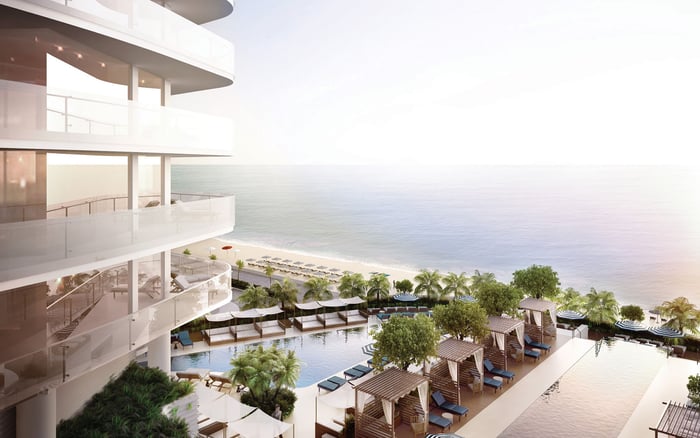
The most classic Fort Lauderdale view corridor is the direct ocean horizon, especially from elevated residences where the eye clears immediate streetscape, beach activity, and lower neighboring structures. The attraction is clear: a long blue plane, shifting morning light, and a sense of openness that is difficult to replicate inland.
The practical question is whether the view is both broad and usable. Buyers should study the angle from primary rooms, not only from the terrace, and consider how glare, wind, privacy, and balcony depth affect daily life. Protection also means asking how the building addresses coastal exposure through envelope design, impact-rated openings, drainage, and access planning.
2. Intracoastal-facing residences - layered water and yachting corridor
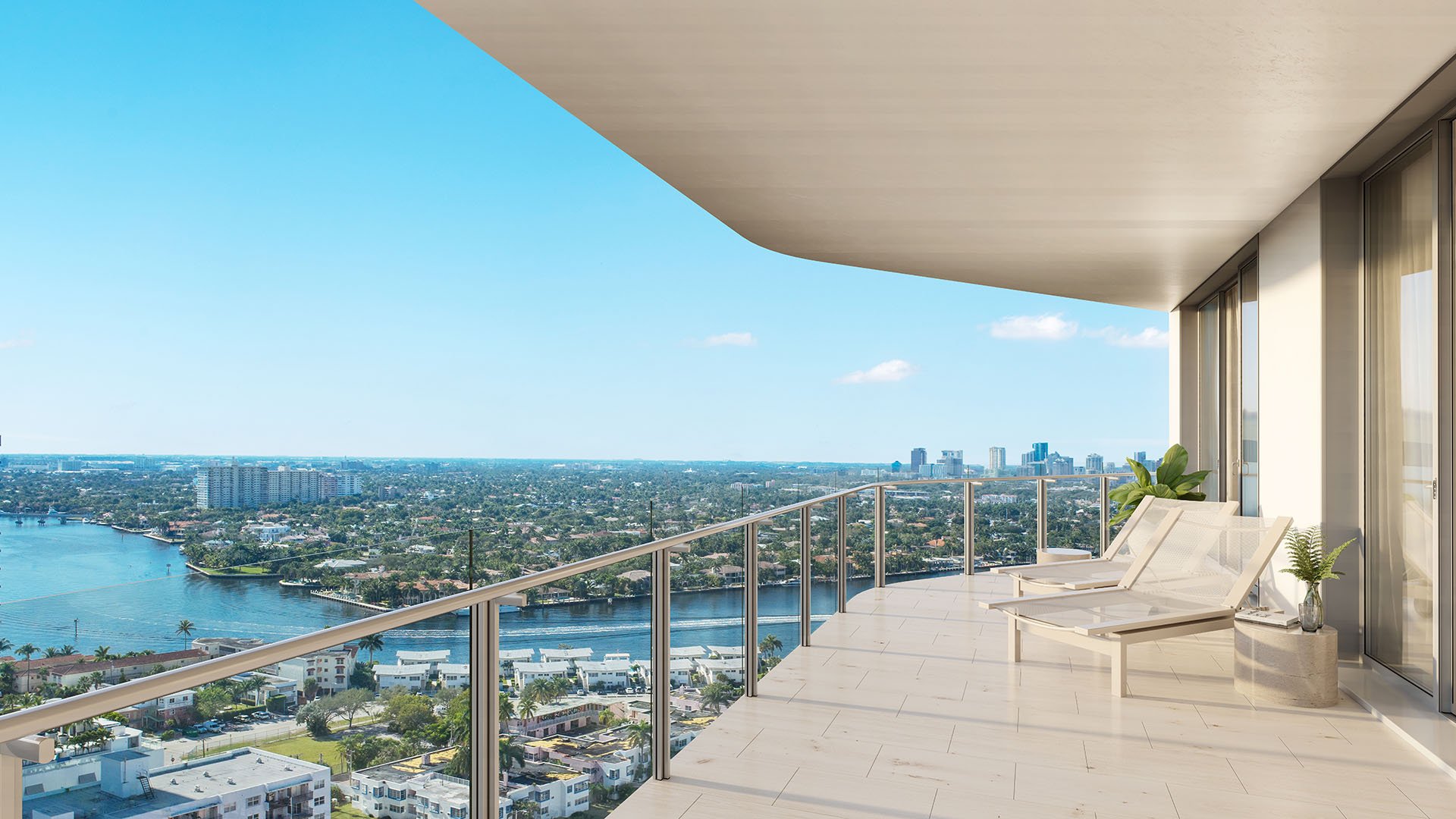
Intracoastal-facing homes offer a different kind of value: movement, scale, and layered depth. Instead of a single horizon, the view may include water traffic, dockage, bridges, and the silhouettes of low-rise waterfront neighborhoods. For many buyers, this feels more connected to Fort Lauderdale’s boating culture than a pure ocean outlook.
The key is corridor width. A narrow slice of water can feel persuasive in photography but constrained in person. A stronger residence captures a sustained angle across the waterway from the living room, principal suite, and outdoor space. Practical protection includes assessing exposure to traffic noise, bridge activity, nighttime light, and the privacy relationship with residences across the water.
3. Riverfront and downtown-edge residences - skyline and water movement corridor
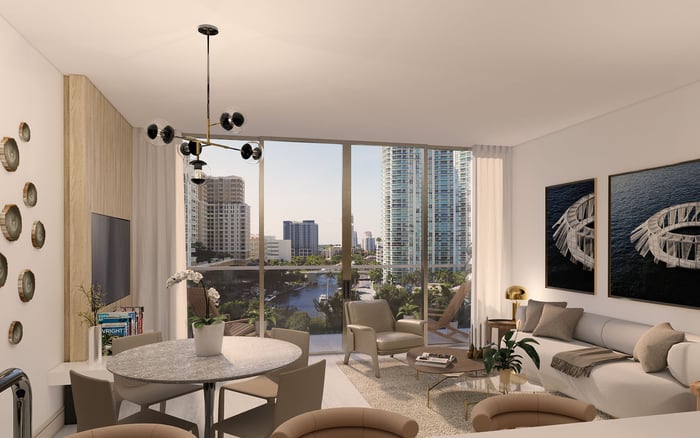
The New River and downtown-edge settings can be compelling for buyers who want a more urban Fort Lauderdale rhythm. These residences often trade the quiet vastness of the ocean for a cinematic sequence of water, city lights, passing vessels, and architectural texture. The best versions feel animated rather than crowded.
For practical protection, buyers should consider how future nearby activity could affect the corridor. The goal is not simply height, but the right line of sight over or between surrounding structures. Interior planning matters as well. A residence with a view concentrated in one room may not carry the same long-term appeal as one where the corridor supports the main living experience throughout the day.
4. Marina-oriented residences - controlled foreground corridor
A marina view can be one of the most satisfying perspectives in Fort Lauderdale because the foreground is inherently active and legible. Masts, slips, water reflections, and vessel movement give the outlook a composed quality. For buyers who value boating culture, the view is not incidental. It is part of the lifestyle logic.
The strongest marina-oriented residences balance access and separation. Too close, and the foreground may feel busy. Too removed, and the identity can become diluted. Practical protection includes considering access during storms, garage and lobby convenience, generator planning, and how the residence functions if waterfront activity is temporarily restricted.
5. Quiet canal and low-density waterfront residences - private framed corridor
Not every buyer wants the grandest view. Some prefer a quieter, more residential water corridor where privacy, scale, and calm are the luxury. Canal-facing residences and boutique waterfront settings can deliver a framed perspective that feels personal rather than public. The water may be narrower, but the emotional value can be high.
Here, the risk is overpaying for a view that lacks depth or permanence. Buyers should inspect the full sightline from seated positions, standing positions, and nighttime conditions. A practical protection review should include elevation, drainage, seawall context where relevant, parking access, and how outdoor areas perform during heavy rain or wind.
A protected view begins with geometry. The most reliable outlooks are not merely pretty. They are supported by a corridor that is difficult to interrupt, whether because of water, beach, roadway width, civic space, or established low-scale surroundings. Buyers should stand in each principal room and ask what actually controls the view: height, distance, setback, neighboring parcels, or the building’s own orientation.
The second consideration is depth. A view that stretches across multiple visual layers often feels more durable than a narrow opening between buildings. Ocean, Intracoastal, river, marina, and canal perspectives can all be valuable, but the best corridors have enough breadth to remain satisfying even if one element changes.
The third consideration is use. A spectacular terrace that is uncomfortable in wind, heat, or glare may have less daily value than a slightly more restrained balcony with better proportions and shade. Interior glass lines, ceiling heights, and room placement can also determine whether the view is experienced naturally or only from a single showcase angle.
In coastal South Florida, protection is not a secondary technical matter. It is part of the luxury experience because it shapes confidence. Buyers should understand how a residence handles impact protection, water movement, building access, parking, lobby elevation, mechanical resilience, and post-storm functionality. None of these details should be treated as glamorous, but they can materially influence ownership comfort.
This is especially important for buyers choosing between a dramatic high-floor residence and a more grounded waterfront home. Height may improve a corridor, but it does not answer every operational question. Conversely, a lower residence may feel closer to the water and more intimate, but it requires careful study of elevation, drainage, and privacy. The strongest acquisition is the one where the visual premium and the protection profile are aligned.
When two residences appear to offer similar water exposure, the better choice often reveals itself through small distinctions. Which one has the wider angle from the living room? Which terrace is deep enough for real seating? Which primary suite wakes to the stronger view? Which outlook is less dependent on a neighboring parcel remaining unchanged?
Buyers should also compare daytime and evening conditions. The Atlantic horizon is most powerful in morning light, while Intracoastal and riverfront views can become more theatrical after sunset. Marina and canal outlooks may depend on foreground activity, lighting, and privacy. The right answer is not universal. It depends on how the buyer actually lives.
A disciplined buyer does not pay for the word “view” in the abstract. They pay for the specific corridor, its likely durability, and the quality of the residence wrapped around it.
What is a view corridor in a Fort Lauderdale residence? It is the line of sight from the home toward water, skyline, marina, or landscape, especially where that outlook has meaningful depth and continuity.
Is an ocean view always the most valuable option? Not always. A broad Intracoastal, riverfront, marina, or canal view can be more usable or more private depending on the residence and buyer priorities.
Why do high-floor residences often attract view-focused buyers? Height can clear nearby obstructions and create a longer sightline, but buyers should still examine wind, glare, terrace function, and access.
How can a buyer judge whether a view is protected? Study the parcels, roadways, waterways, setbacks, and building orientation that shape the corridor rather than relying only on photography.
What practical protection should matter most near the water? Impact-rated openings, drainage, access planning, parking convenience, and building-system resilience should all be part of the review.
Are balcony dimensions important for view value? Yes. A balcony must be deep and comfortable enough to support real use, not simply provide an exterior photo angle.
Should buyers visit at different times of day? Yes. Morning light, afternoon glare, sunset conditions, and nighttime privacy can change how a residence feels.
Can a canal view be considered luxury? Yes. A quiet canal outlook can offer privacy and calm, especially when the sightline is well framed and the outdoor space is usable.
What is the biggest mistake when buying for a view? The biggest mistake is paying for a named exposure without testing the actual corridor from the rooms used every day.
What is the best way to shortlist comparable options for touring? Start with location fit, delivery status, and daily lifestyle priorities, then compare stacks and elevations to validate views and privacy.
If you'd like a private walkthrough and a curated shortlist, connect with MILLION.
If branded residences are on your mind — as a home or as an allocation — we would be glad to share what we are seeing, privately.
Begin a quiet conversation