A buyer-focused editorial guide to evaluating child safety window features with discretion, precision, and a luxury residential lens.
In South Florida’s high-end residential market, child safety is no longer a secondary checklist item. For families considering residences such as 321 Ocean Drive and 1 Waterplace Fort Lauderdale, the window conversation is especially important: glass, views, ventilation, and access all intersect with daily life. The most refined homes are not merely beautiful from a distance. They are calm, measured, and thoughtfully controlled from within.
Window safety is a design discipline. It asks whether a residence can welcome light without inviting avoidable risk, whether a bedroom can be ventilated without becoming vulnerable, and whether a living room with a dramatic view also supports the practical rhythm of children, guests, caregivers, and pets. In the ultra-premium segment, the question is not simply whether a home feels secure at a glance. It is whether its safety architecture has been considered with the same seriousness as its finishes.
This is especially relevant in homes where the view is central to the value proposition. A Miami Beach residence may frame the Atlantic with cinematic glass, while a Fort Lauderdale home may place daily life near waterways, terraces, and elevated exposures. In each setting, window safety deserves quiet rigor.
The first point of review is operability. A window that opens, tilts, slides, or pivots requires a different safety conversation than fixed glass. Families should ask how far a window can open, whether that opening can be limited, whether the limiting device is integrated or added after installation, and whether adults can still use the system comfortably in ordinary circumstances.
The second point is access. A window may be technically safe on its own, yet become problematic when paired with a low sill, movable furniture, a bench, a console, or a child’s bed. In luxury interiors, built-ins and seating arrangements often sit close to glass because the view is the room’s strongest asset. That placement should be intentional, not incidental.
The third point is consistency. A residence may have one window system in the primary suite, another in secondary bedrooms, and another in common areas. Families should not assume every opening behaves the same way. Each window deserves its own review, particularly in rooms where children spend unsupervised time.
Window restrictors, locks, stops, and child-resistant latches are among the most familiar tools in this category. Their purpose is direct: to limit access or opening distance while preserving the elegance of the home. In a luxury residence, the best solutions tend to feel integrated. They should not compromise the architectural language of the room, nor should they require daily improvisation by parents or staff.
Buyers should look for hardware that is intuitive for adults but difficult for small children to defeat. A device that is too visible, too cumbersome, or too easy to bypass may not perform well in real life. The ideal solution respects both safety and routine. It supports a morning of open shades and softened air without turning every window into a negotiation.
It is also important to distinguish between a visual sense of security and actual controlled access. Heavy glass can feel reassuring, but the essential questions remain: whether it opens, how it opens, and what prevents a child from extending that opening beyond a safe limit.
In high-end coastal residences, windows are often part of a larger envelope that includes impact glass, framing systems, and terrace doors. Families should understand that strength and child safety are related but not identical. A pane may be robust and still be paired with an opening configuration that requires careful review.
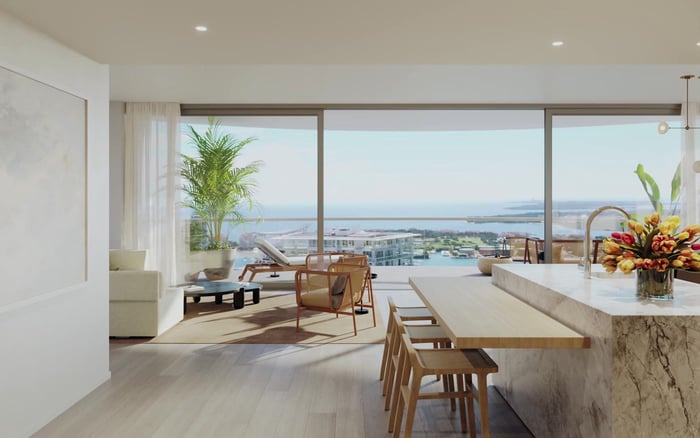
Sill height matters as well. A higher sill can provide a degree of passive protection, while a low sill or full-height glass requires closer attention to furniture placement and supervision. Where glass meets a seating area, media wall, play zone, or bedroom layout, the risk profile changes.
This is where interior design and safety planning should work together. A beautiful room should not depend on fragile rules such as “do not climb here” or “do not move that chair.” Instead, the layout should reduce temptation. Tables, ottomans, stools, and toy storage should be placed with the window line in mind.
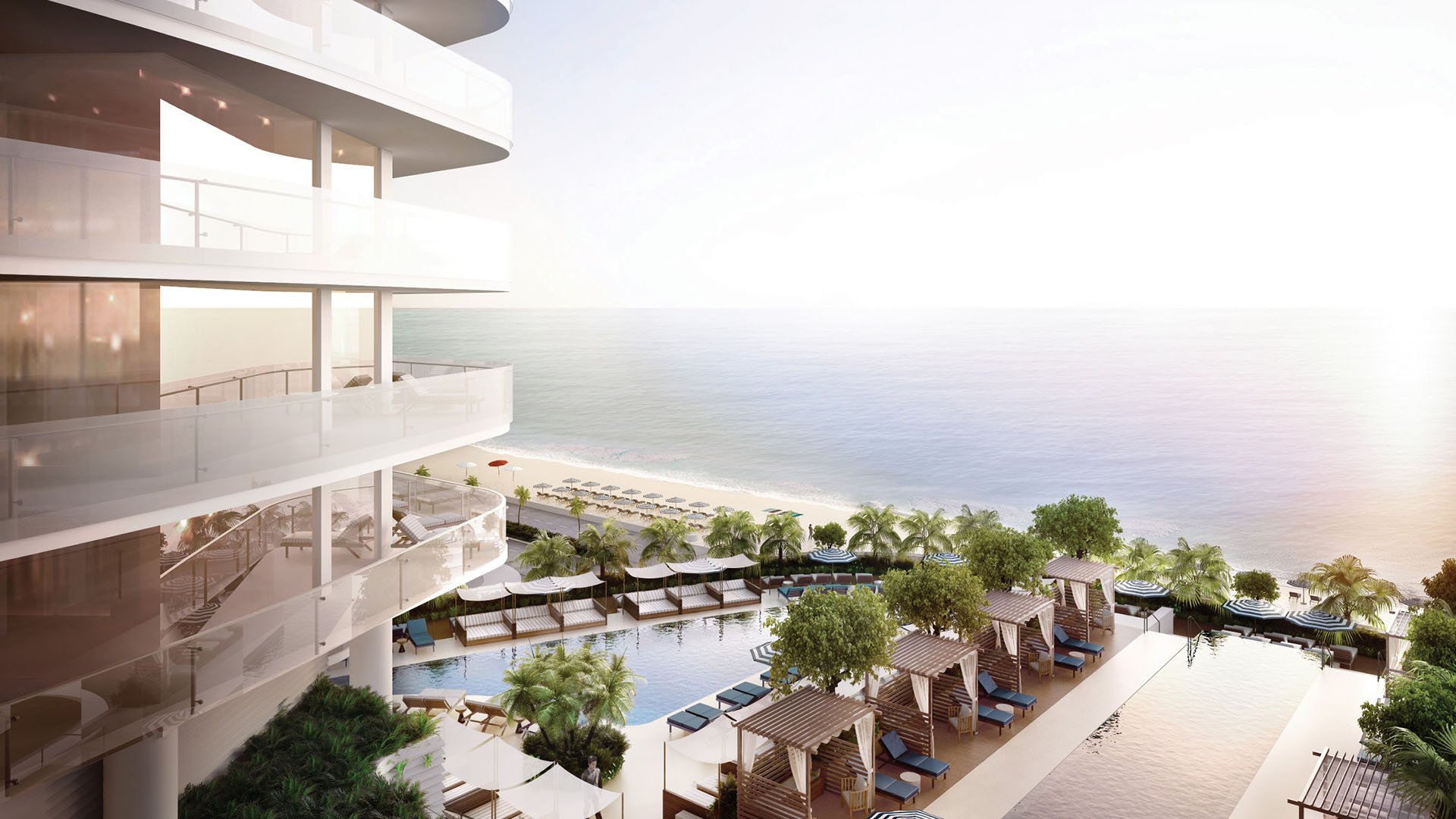
South Florida buyers often prioritize light, water, and horizon. Oceanfront homes and water-view residences deliver the emotional clarity that draws families to the region in the first place. Yet the same architectural choices that create the drama of a view can require a more exacting safety review.
A family considering an elevated residence should examine every room from a child’s perspective. Can a child reach the latch? Can a chair be dragged to the sill? Does a screen create a false sense of protection? Is the opening restricted in a way that remains reliable over time? These questions are practical, not alarmist. They are part of intelligent ownership.
In Broward and along the broader coastal corridor, buyers may also compare different waterfront lifestyles. A balcony may be central to one residence, while a fixed-glass panorama may define another. Each demands its own strategy. The safety review should be tailored to the exact residence, not borrowed from another property category.
A private showing is not only a moment to admire millwork, stone, views, and ceiling heights. It is also the right time to slow down at the windows. Ask which windows open, which are fixed, which have limiters, and which rooms use different hardware. Open and close them where appropriate. Observe whether the operation feels deliberate, loose, intuitive, or complex.
Families should also ask whether any existing child safety devices are permanent, removable, concealed, or aftermarket. If modifications are being considered, they should be reviewed before purchase expectations are finalized. In many luxury buildings and communities, exterior appearance, window systems, and alterations may be subject to approvals. The earlier this is discussed, the more elegant the outcome can be.
For buyers balancing design and protection, the best result is rarely the most visible one. It is the solution that disappears into the architecture while remaining dependable.
Child safety window planning benefits from expert eyes. A qualified inspector, window specialist, contractor, or childproofing professional can identify conditions that a buyer may overlook during an emotional tour. Their review can also help distinguish between simple operational adjustments and more involved hardware changes.
This is particularly valuable in furnished or staged homes, where furniture placement may not reflect how a family will actually live. A nursery, homework area, guest room, or playroom can change the meaning of a window entirely. The intended use of each room should be part of the safety analysis.
For ultra-premium buyers, this process should feel discreet and aligned with the broader acquisition strategy. It is not a sign of hesitation. It is a sign of serious ownership.
The best family residences in South Florida share a certain duality. They offer openness without carelessness, beauty without fragility, and views without unnecessary exposure. Child safety window features are part of that balance. They do not diminish luxury. They deepen it.
When evaluating 321 Ocean Drive and 1 Waterplace Fort Lauderdale, the most sophisticated approach is to treat window safety as an integral part of value. It belongs beside privacy, sound control, service access, parking, amenities, and finish quality. A residence that anticipates the needs of children, parents, and guests is not merely safer. It is more livable.
For families, the goal is simple: a home where the view can be enjoyed fully, where children can move naturally, and where the architecture supports confidence rather than constant correction.
What window feature matters most in a family residence? Controlled opening is often the starting point. Buyers should understand how each window opens and whether that opening can be reliably limited.
Are window screens considered child safety devices? Screens should not be treated as fall-prevention systems. Their purpose is generally comfort and insect control, not child restraint.
Should families inspect every window individually? Yes. Different rooms may have different window types, sill heights, hardware, and access conditions.
Can child safety features be discreet in a luxury home? They can be highly discreet when planned carefully. The strongest solutions often integrate with the window system and interior design.
Do fixed windows still need review? Yes. Fixed glass should be reviewed for surrounding furniture placement, impact with daily use, and how the room will function for children.
What should buyers ask during a showing? Ask which windows open, how far they open, whether restrictors are present, and whether any safety devices are removable or integrated.
Does furniture placement affect window safety? Very much. Beds, benches, chairs, consoles, and toy storage can create climbable access to windows.
Should a specialist review windows before purchase? A specialist review is prudent for family buyers. It can clarify risks and identify elegant options before move-in.
Are waterfront views and child safety in conflict? Not necessarily. The right hardware, room planning, and supervision strategy can preserve both the view and peace of mind.
How should buyers compare two residences on window safety? Compare the actual window operation, room layouts, sill conditions, and ability to add approved safety measures where needed.
For a discreet conversation and a curated building-by-building shortlist, connect with MILLION.
If branded residences are on your mind — as a home or as an allocation — we would be glad to share what we are seeing, privately.
Begin a quiet conversation