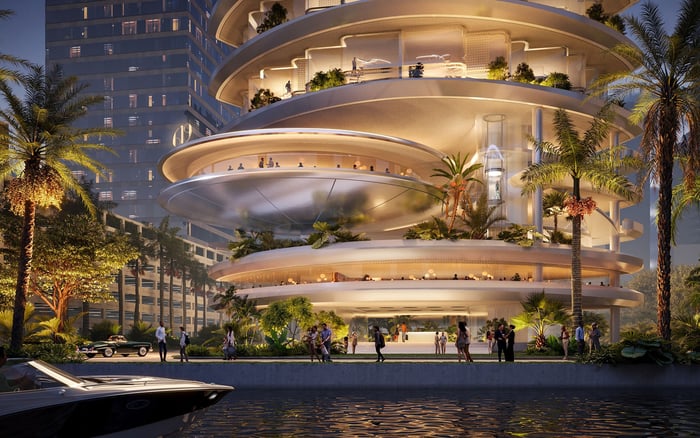
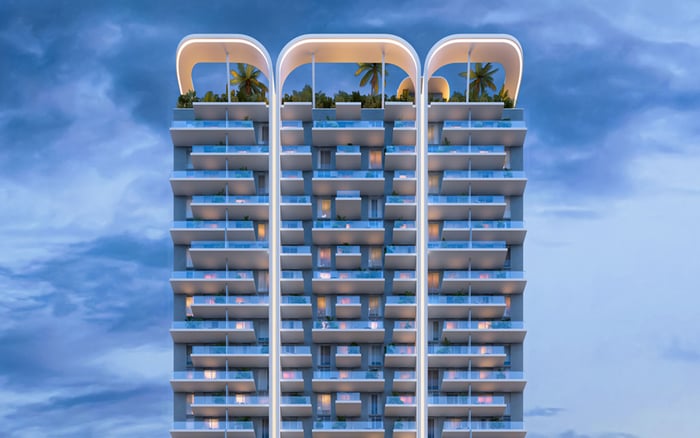
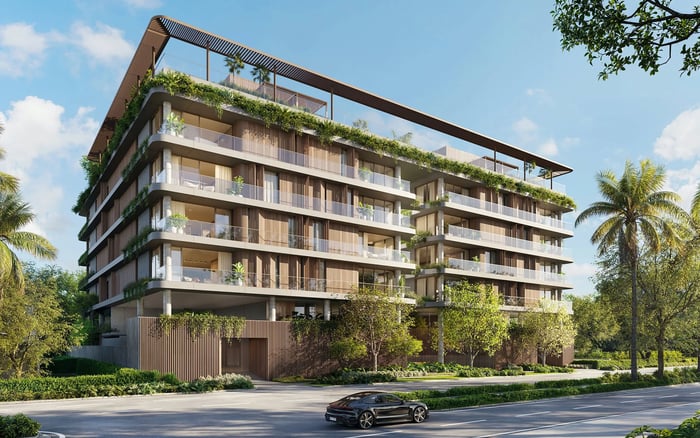
A buyer-focused comparison of House of Wellness Brickell and Kempinski Residences Miami Design District through terrace function, view quality, and long-term ownership exposure.
For a buyer comparing House of Wellness Brickell with Kempinski Residences Miami Design District, the disciplined move is to separate the emotional pull of branding from the physical realities of ownership. A residence can carry a compelling name, but daily value is shaped by how the terrace functions, how protected or compromised the views feel, and how much exterior exposure may translate into maintenance over time.
That distinction matters in Miami, where a balcony or deep terrace is not merely decorative. It is part of the home’s usable living program. Morning coffee, evening entertaining, privacy from neighboring towers, sun orientation, wind, shade, and acoustic comfort all carry real weight. The question is not simply which address sounds more prestigious. It is which residence will feel more livable after the first season of ownership.
Brickell tends to attract buyers who want an urban rhythm defined by financial-district energy, vertical density, walkability, restaurants, and immediate access to the Miami River and bayfront corridors. The appeal is metropolitan and efficient. A Brickell buyer often values convenience, elevation, skyline presence, and the ability to move between work, dining, wellness, and social commitments without a car-dependent routine.
The Miami Design District, by contrast, has a more gallery-like sensibility. It is associated with fashion, art, design, dining, and a lower-slung neighborhood texture than the central Brickell core. For some buyers, that makes daily life feel more curated and less corporate. For others, the absence of a classic waterfront tower setting may change how they evaluate view premiums and outdoor space.
The practical comparison is therefore personal. A buyer drawn to 2200 Brickell or The Residences at 1428 Brickell may be prioritizing a Brickell-centric routine, while someone also studying Miami Design Residences Midtown Miami may be more receptive to a design-led neighborhood with cultural adjacency.
Terrace square footage can be seductive on a plan, but serious buyers should evaluate usable geometry rather than headline size. A long, narrow exterior strip may photograph beautifully yet function poorly for dining. A deeper terrace can create meaningful outdoor rooms, provided the layout supports furniture, circulation, shade, and privacy.
In South Florida, terrace usability also depends on orientation. A west-facing outdoor area can deliver dramatic light, but it may demand greater attention to heat and afternoon sun. An east-facing terrace can feel calmer in the morning and more forgiving later in the day. South and north exposures bring their own nuances, depending on tower placement, neighboring structures, and seasonal sun movement.
Wind should not be an afterthought. At higher elevations, a terrace can become less usable if wind loads make everyday seating uncomfortable. Buyers should ask how the building design handles corners, railing height, balcony depth, and protected recesses. A terrace that works three hundred days a year is far more valuable than one that only works in perfect conditions.
View quality is one of the most expensive assumptions in luxury real estate. A waterview, skyline view, or open urban outlook can carry a meaningful premium, but the strength of that premium depends on permanence, breadth, privacy, and emotional impact from the primary rooms.
In Brickell, a buyer should study not only what is visible today, but also how adjacent towers, corridors, and elevation shape the feeling of openness. A high floor can help, yet height alone does not guarantee serenity. A view framed by neighboring glass towers can feel energetic but exposed. A lower floor with a compelling perspective may feel more connected to the city and less dependent on distant water.
In the Design District, the view conversation can be different. Instead of judging only by water or skyline drama, a buyer may place more emphasis on architectural outlooks, district texture, light, and privacy. That can be highly appealing, but it requires clarity about what type of visual luxury matters most. Some buyers want cinematic distance. Others prefer a more intimate, design-oriented urban scene.
Terraces, exterior glazing, railings, drains, planters, pool-adjacent areas, and rooftop or amenity interfaces all contribute to the maintenance profile of a residence. The more a home depends on outdoor living, the more a buyer should understand who maintains what, how waterproofing is handled, and where association responsibility ends.
This does not mean avoiding outdoor space. In Miami, the best residences often integrate exterior living beautifully. It means asking sharper questions before committing. How is drainage designed? Are terrace finishes owner-maintained or association-controlled? Are planters permitted? What restrictions apply to furniture, grills, umbrellas, or privacy screens? How are storm conditions addressed? These questions are not glamorous, but they protect the ownership experience.
Pre-construction and new-construction buyers should pay particular attention because renderings tend to emphasize lifestyle and atmosphere. The actual condominium documents, budgets, rules, specifications, and maintenance responsibilities tell the more durable story. A buyer comparing House of Wellness Brickell and Kempinski Residences Miami Design District should review these items with the same seriousness applied to pricing and floor plan selection.
The strongest decision framework is simple: identify the home you would still choose if the brand name were removed from the presentation. Start with the floor plan. Then test terrace depth, view exposure, privacy, acoustics, elevator access, parking flow, amenity location, and the likely rhythm of daily life.
If Brickell is the right answer, it should be because the location, tower setting, access, and residence configuration support the way you intend to live. If the Design District is the right answer, it should be because its cultural setting, design character, and neighborhood scale feel more aligned with your identity. In either case, the best purchase is not the one with the loudest identity. It is the one with the most enduring fit.
Is branding enough to justify choosing one residence over another? No. Branding may add confidence and atmosphere, but buyers should first evaluate layout, terrace function, view quality, and ownership obligations.
Why is terrace usability so important in Miami luxury condos? Outdoor space is part of the living experience. Depth, shade, wind comfort, and furniture practicality can matter more than raw square footage.
Should I prioritize Brickell if I want a more urban lifestyle? Brickell often suits buyers who want a dense, walkable, high-energy setting with strong access to dining, work, and city conveniences.
Is the Design District better for a quieter luxury experience? It may appeal to buyers who prefer a design-led neighborhood, cultural adjacency, and a setting that feels less purely financial-district driven.
How should I evaluate view premiums? Look at permanence, privacy, elevation, neighboring structures, and how the view feels from primary rooms rather than only from the terrace.
Can a smaller terrace be better than a larger one? Yes. A smaller terrace with usable depth, shade, and privacy can outperform a larger but narrow or wind-exposed space.
What maintenance questions should buyers ask early? Ask about waterproofing, drainage, railing upkeep, finish responsibility, rules for furnishings, and what the association controls.
Does new-construction eliminate maintenance risk? No. Newness can be attractive, but long-term maintenance still depends on materials, design, governance, and reserve planning.
Is a waterview always the strongest choice? Not always. Some buyers prefer skyline energy, privacy, or architectural outlooks over a partial or compromised water view.
What is the best way to shortlist comparable options for touring? Start with location fit, delivery status, and daily lifestyle priorities, then compare stacks and elevations to validate views and privacy.
To compare the best-fit options with clarity, connect with MILLION.
If branded residences are on your mind — as a home or as an allocation — we would be glad to share what we are seeing, privately.
Begin a quiet conversation