A buyer-focused editorial guide to the five beachfront residence profiles that best serve owners seeking private wellness amenities, discreet daily rituals, and resort-level calm without public-facing intensity.
For South Florida’s most discerning buyers, beachfront living is no longer defined solely by frontage, views, and a polished arrival sequence. The more revealing question is what happens beyond the lobby, once the resident leaves the building’s social theater and enters a private rhythm of recovery, movement, quiet, and care.
Owner-only wellness amenities now sit at the center of that shift. The best examples are not simply attractive spa rooms or fitness centers with ocean views. They are controlled environments for residents who expect privacy, daily usability, and a sense of personal continuity. A beachfront residence can be visually spectacular, but if the wellness experience feels crowded, performative, or shared with transient traffic, it may not satisfy the buyer who treats health as part of the home itself.
This is especially important in South Florida, where the luxury buyer may divide time among multiple residences, arrive after long-haul travel, host family for extended stays, or use the property as a seasonal reset. In that context, the amenity floor becomes a private club, a treatment suite, a quiet training environment, and a restorative threshold between the ocean and the residence.
Within this niche, the brief often begins with terms such as Oceanfront, Beach-access, Pool, Lap-pool, Miami Beach, and Sunny Isles. Those are useful starting points, but the real evaluation is more refined: who can use the wellness areas, how they are managed, how they feel at peak times, and whether the programming supports an owner’s life without making the building feel like a hotel.
1. The private spa residence - owner-only recovery
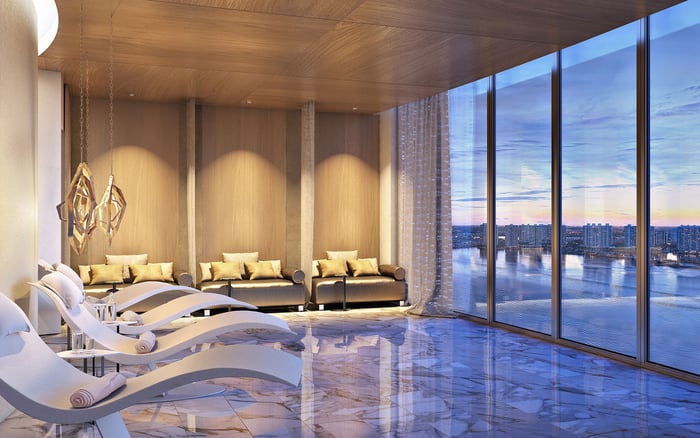
This is the purest expression of the wellness-first beachfront brief. The priority is not a dramatic amenity list, but quiet treatment rooms, steam or heat experiences, relaxation lounges, and spaces that allow residents to recover without feeling observed. For the right buyer, the value is in discretion: fewer interruptions, greater privacy, and a residential atmosphere that does not depend on outside energy.
The private spa residence suits buyers who want the ocean to become part of a daily ritual. Morning water, treatment, rest, and return to the residence should feel seamless. The strongest examples separate wellness from entertainment areas, reducing crossover between social guests and owners seeking calm.
2. The performance fitness residence - training without compromise
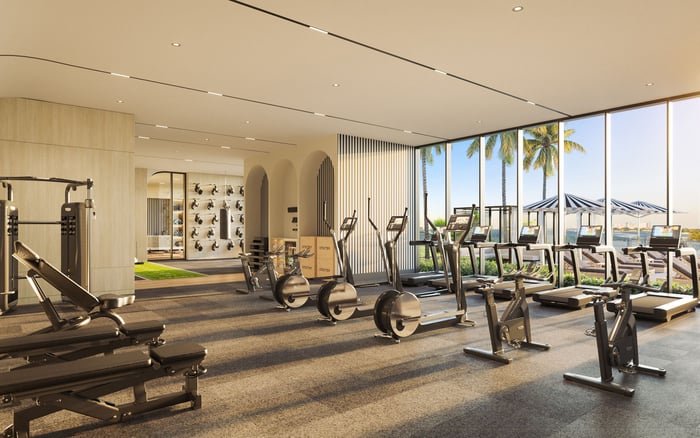
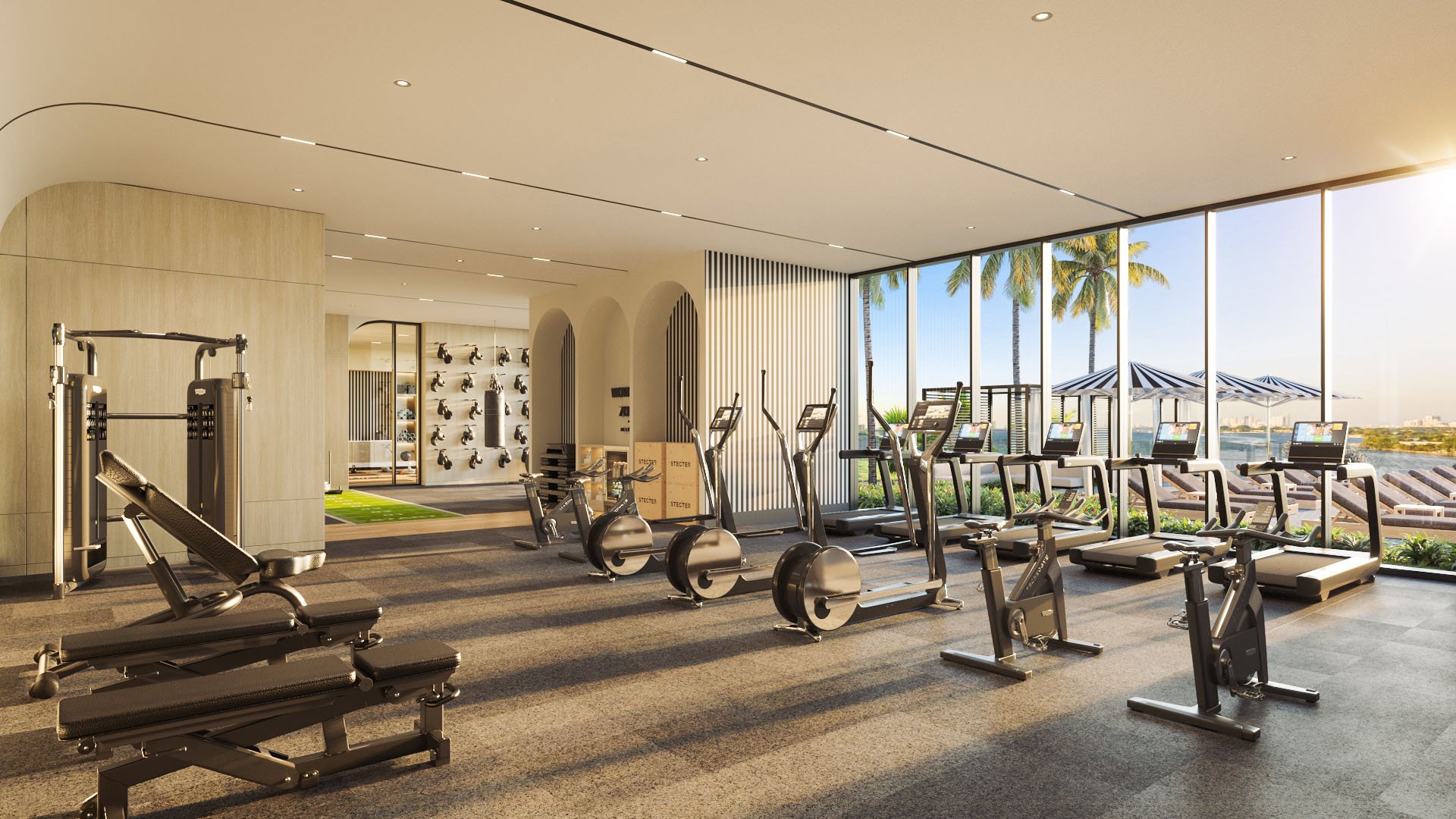
For buyers who train consistently, the fitness environment must be more than a glass-walled gym. The performance fitness residence is defined by equipment quality, circulation, ceiling height, ventilation, stretching zones, and a layout that supports serious use at different times of day. A beachfront address adds emotional value, but the room still needs to function like a private training studio.
This profile is particularly compelling for owners who work with trainers, travel with wellness staff, or prefer structured routines. The building should make movement convenient enough to become habitual, with a clear path between the residence, training area, pool deck, and beach access.
3. The aquatic wellness residence - lap-pool discipline and ocean ease
Not every beachfront buyer wants a resort-style pool scene. Some want water as discipline, therapy, and quiet repetition. The aquatic wellness residence gives particular weight to a true swimming environment, ideally one that supports measured exercise rather than lounging alone. A lap-pool can matter as much as a cinematic infinity edge when the buyer’s priority is health.
The surrounding design is equally important. Shade, towel service, rest areas, and proximity to the beach all shape whether aquatic wellness feels practical or ornamental. The best profile balances the energy of the coast with the privacy of a controlled residential pool environment.
4. The mindful retreat residence - quiet as the luxury amenity
This residence profile is for the buyer who values silence, soft transitions, and architecture that lowers the pulse. Meditation rooms, yoga lawns, low-sensory lounges, and calm garden moments can be more meaningful than oversized recreational spaces. In a market where spectacle is common, quiet becomes a form of scarcity.
The mindful retreat residence is often best judged in person. Buyers should notice acoustics, lighting, scent, elevator flow, and whether the amenity spaces encourage lingering without demanding performance. The goal is not to impress guests; it is to give owners an everyday refuge.
5. The integrated beach club residence - wellness with controlled sociability
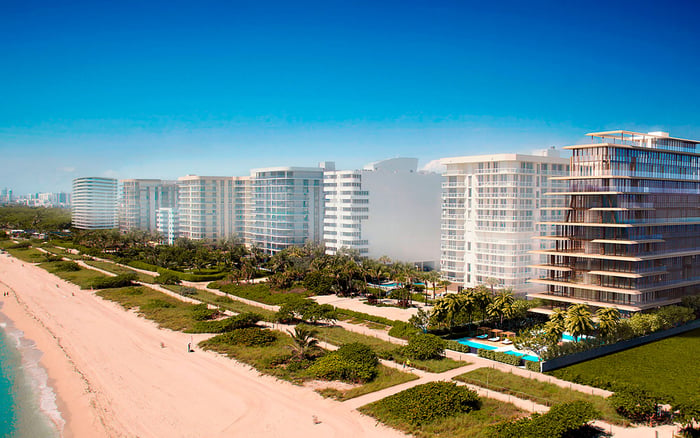
Some buyers want wellness to connect to a broader beachfront lifestyle. This profile offers fitness, pool, beach, and lounge experiences that remain residential in tone while still allowing measured sociability. It is ideal for owners who want family and guests to enjoy the water without making the wellness areas feel public.
The key is governance. Clear access rules, thoughtful staffing, and separation between active and quiet zones protect the owner experience. When done well, this residence type gives buyers the pleasure of a private coastal club without sacrificing the calm expected at home.
The phrase “owner-only” deserves close attention. Buyers should understand whether wellness spaces are reserved exclusively for residents, whether guests may use them, whether outside service providers are permitted, and how access is controlled. A beautiful amenity can lose its value if it is difficult to book, crowded at predictable hours, or managed as a social venue rather than a residential sanctuary.
Scale also matters. A large wellness program can be excellent, but only if the building’s resident count, staff model, and rules support it. Conversely, a smaller building can deliver a more rarefied experience if the amenities are intelligently designed and genuinely private. The most successful choice is not always the largest one; it is the one whose rhythm matches the owner’s life.
Buyers should also consider adjacency. A spa beside a busy entertainment lounge may feel compromised. A fitness center with direct light may outperform a larger room with poor air and awkward layout. A pool deck that looks impressive in renderings may feel less serene if circulation routes are not controlled. In luxury real estate, wellness is not a room count. It is choreography.
Wellness amenities are now part of how sophisticated buyers interpret beachfront value. The view may win attention, but the private wellness environment can determine long-term satisfaction. A residence that supports sleep, movement, recovery, and outdoor ritual can feel more livable over years of ownership than one whose amenities are designed mainly for first impressions.
For second-home buyers, the stakes are even higher. A South Florida residence is often expected to reset the body quickly. That means immediate access to light, water, training, and restoration. If the building makes those rituals effortless, the property becomes more than a seasonal escape. It becomes an operating base for well-being.
The best buyer strategy is to tour amenities as if living there, not visiting. Arrive at the hours you would actually use them. Observe the sound, privacy, and staff presence. Ask how spaces are reserved and maintained. Notice whether the wellness areas feel residential, theatrical, or genuinely restorative. The answer will often clarify the purchase faster than another view comparison.
What does owner-only wellness mean in a beachfront residence? It means wellness areas are intended for residents rather than public or transient use, with access rules that protect privacy and daily usability.
Why is owner-only access important for luxury buyers? It preserves calm, reduces crowding, and makes the wellness program feel like an extension of the private home rather than a shared venue.
Is a larger amenity program always better? No. Design, privacy, staffing, and resident density can matter more than the size or number of amenity spaces.
What should buyers look for in a private spa area? Look for quiet treatment rooms, controlled access, comfortable recovery spaces, and separation from high-traffic social areas.
Does a lap-pool add meaningful value? For buyers who swim or use water therapeutically, a lap-pool can be one of the most practical wellness amenities in the building.
How does beach access affect wellness? Direct beach access supports walking, swimming, morning light, and a stronger connection between the residence and daily outdoor rituals.
Are wellness amenities more important in a second home? Often, yes. A second home is frequently used for recovery, family time, and seasonal reset, making convenient wellness access highly valuable.
Should buyers evaluate amenities during peak hours? Yes. Touring when residents are most likely to use the spaces helps reveal privacy, crowding, acoustics, and overall comfort.
What makes a pool environment feel more private? Controlled access, thoughtful seating, shade, service, and separation from event-style areas can make a pool feel residential.
What is the best way to shortlist comparable options for touring? Start with location fit, delivery status, and daily lifestyle priorities, then compare stacks and elevations to validate views and privacy.
To compare the best-fit options with clarity, connect with MILLION.
If branded residences are on your mind — as a home or as an allocation — we would be glad to share what we are seeing, privately.
Begin a quiet conversation