A buyer-focused comparison of Sunny Isles Beach and Miami Beach through the lens of private clubs, wellness routines, beach access, dining, and daily luxury living.
For the South Florida buyer, Sunny Isles Beach and Miami Beach can seem to answer the same desire: ocean, service, privacy, and a polished residential life organized around the water. Yet club-centric living functions very differently in each place. The decision is less about which destination is more luxurious and more about where a private club, residential amenity suite, beach program, or social rhythm will meaningfully shape daily life.
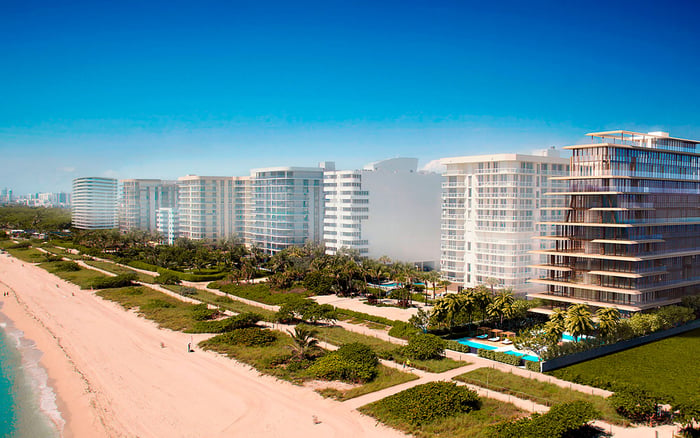
Sunny Isles tends to make the building the center of gravity. The experience is vertical, residential, and highly controlled. At its best, the lifestyle is a morning swim, a quiet elevator ride, a staffed lobby, a spa appointment, and an effortless return to a private residence without having to negotiate the city around it.
Miami Beach is more layered. The club experience can extend beyond the building into hotels, members’ spaces, restaurants, fitness studios, cultural events, and beachside rituals. It is not always quieter, but it can be more socially dynamic. For buyers who want their address to serve as a gateway to a wider social circuit, Miami Beach often carries greater practical weight.
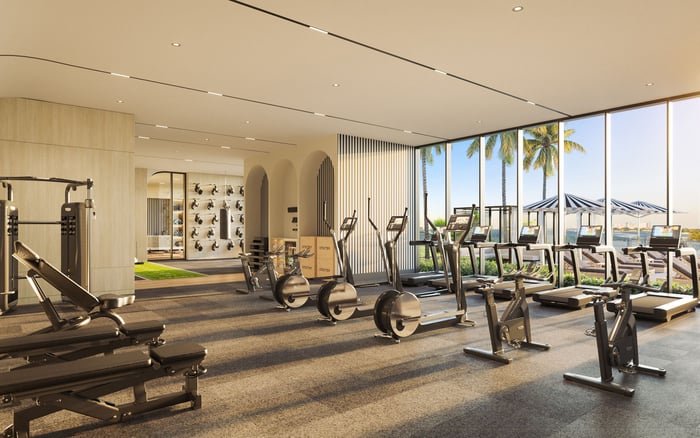
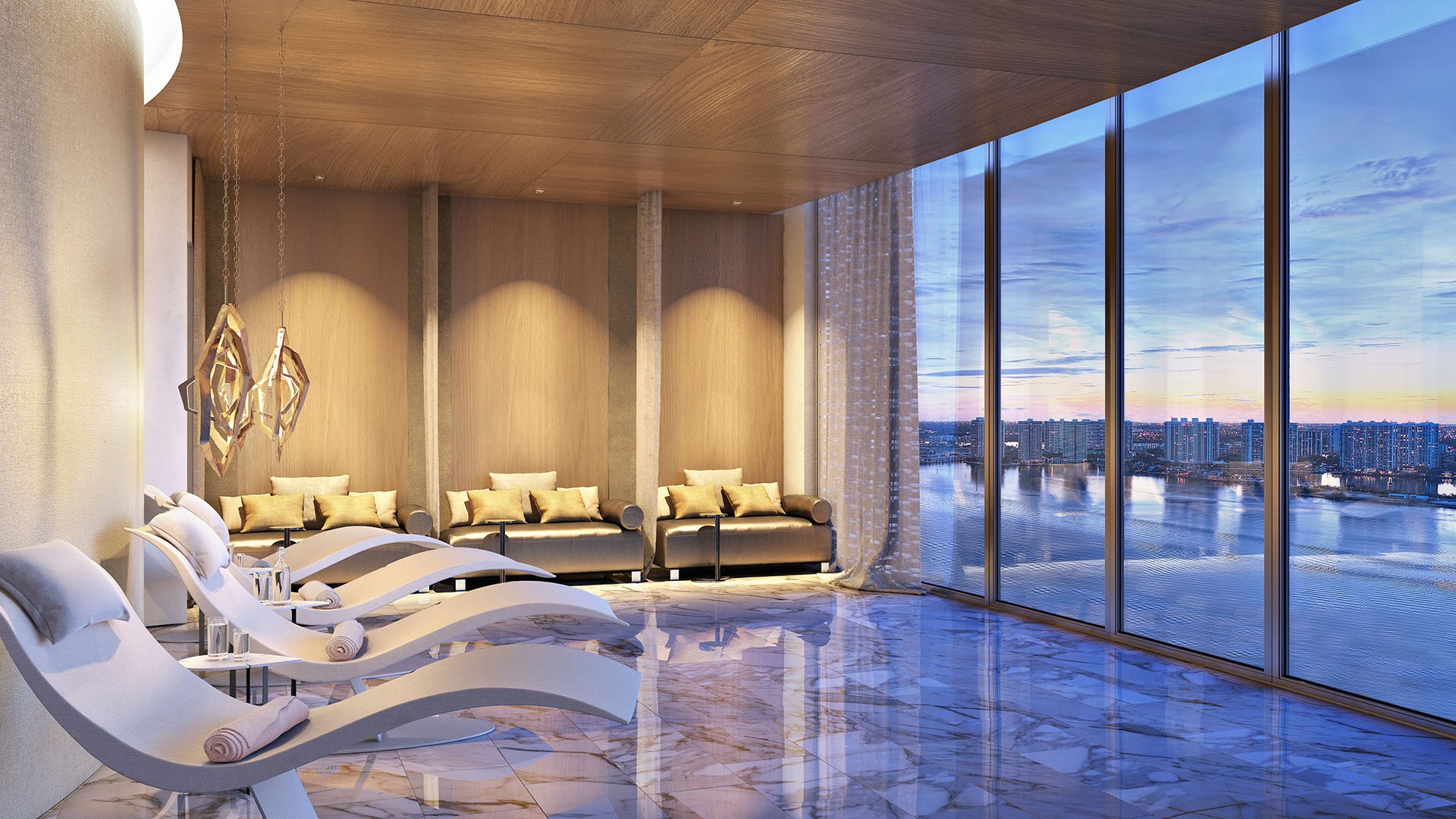
Sunny Isles Beach is strongest when the buyer wants the club feeling embedded within the residence itself. The appeal is not simply a pool deck or a fitness center. It is the ease of moving from private space to curated amenity space with minimal friction. For many owners, that is the point: the building functions like a private resort, but with the discretion and consistency of home.
This matters for families, seasonal owners, and buyers who value predictability. A club-centric building in Sunny Isles can reduce the need to leave for wellness, recreation, beach service, children’s routines, or relaxed entertaining. The lifestyle is efficient in a distinctly luxury sense. It saves energy, attention, and time.
Sunny Isles also suits owners who prefer a quieter public profile. The social life may exist, but it is often more contained. The building, the beach, and the residence remain closely connected. If the buyer imagines club living as a refined extension of privacy, Sunny Isles makes a persuasive case.
The potential limitation is just as clear. If a buyer defines club-centric living as constant access to restaurants, cultural programming, nightlife, and a visible social scene, the residential calm of Sunny Isles may feel too self-contained. It is ideal for those who want the club to protect the home environment, not necessarily replace the city.
Miami Beach matters more when club living is not confined to the tower. Here, club-centric living can expand into a network of dining rooms, wellness destinations, beach rituals, art moments, hotel energy, and informal social overlap. Buyers who thrive on proximity often find this environment more valuable than a longer in-building amenity menu.
The advantage is texture. Miami Beach offers a broader range of moods within a compact coastal setting. A buyer can pursue quiet residential living and still remain near a more animated social landscape. That duality is difficult to replicate. It is also why some owners accept more intensity in exchange for access.
For the right buyer, Miami Beach makes the club feel less like a facility and more like a lifestyle ecosystem. The residence is one piece of a larger circuit. Morning wellness, lunch by the water, evening dining, and spontaneous social plans can all occur without making the day feel logistically heavy.
The tradeoff is that Miami Beach demands more discernment. Not every address offers the same ease, privacy, or arrival experience. Some buyers will find the energy invigorating. Others will find it distracting. Club-centric living in Miami Beach matters most when the buyer wants both residence and city to participate in the experience.
Club-centric living matters most when it changes what a buyer will actually do five days a week. A private dining room that is rarely used is ornamental. A wellness suite that replaces a daily commute is meaningful. A beach program that becomes part of a family’s routine has more value than a feature mentioned only during a showing.
In Sunny Isles, the decisive factor is usually the quality and completeness of the residential environment. Buyers should ask whether the building can support their daily needs without feeling repetitive. If the answer is yes, the club component becomes a core asset. If the answer is no, even a beautiful amenity program may feel limited.
In Miami Beach, the question shifts. The buyer should evaluate whether the neighborhood’s external club landscape improves the residence. Does nearby dining matter? Does cultural proximity matter? Is social visibility an asset or a cost? If the buyer will use the broader setting constantly, Miami Beach can justify a premium of attention, not just price.
The most sophisticated buyers are not seduced by amenity counts. They understand that club living is behavioral. It is about how the week is structured, who visits, where one decompresses, and how often the owner wants the city to enter the frame.
Sunny Isles often wins on the feeling of retreat. The arrival sequence is generally more residential in spirit: drive in, ascend, exhale. For many buyers, that simplicity can be the luxury. The beach is close, the building is controlled, and the home remains the primary stage.
Miami Beach wins when arrival is meant to feel connected. The buyer may want to step from residence to restaurant, from beach to club, from fitness to dinner, from home to event. The arrival experience can be more public, but that may be exactly the attraction.
Privacy is not always about seclusion. Sometimes it is about choosing when to participate. Sunny Isles gives buyers the comfort of withdrawal. Miami Beach gives buyers the option of engagement. For club-centric households, that distinction is central.
Sunny Isles Beach is the stronger fit for the buyer who wants club living to simplify life. This buyer prizes space, water views, wellness routines, beach service, and calm. The residence is not merely a place to sleep after the city. It is the center of the owner’s South Florida identity.
Miami Beach is the stronger fit for the buyer who wants club living to expand life. This buyer wants the property to connect with restaurants, culture, fitness, events, and a wider social map. The home still matters deeply, but it is not the only stage.
Neither choice is secondary. They simply reward different temperaments. Sunny Isles is more compelling when the buyer wants a private resort atmosphere anchored by the building. Miami Beach is more compelling when the buyer wants a residential address that plugs into a larger coastal society.
For couples or families split between the two, the deciding question should be practical: where would you use the club most often without planning around it? The best luxury is the one that becomes effortless.
Club-centric living matters more in Miami Beach for buyers who define the club as social access, cultural proximity, and a flexible coastal network. It matters more in Sunny Isles Beach for buyers who define the club as privacy, service, wellness, and a self-contained resort routine.
If forced into a single conclusion, Miami Beach may carry the broader club-centric argument because its lifestyle extends beyond the building. But for residential purity, Sunny Isles can be more satisfying. The better answer depends on whether the buyer wants the club to open doors outward or preserve a world inward.
The wisest purchase is not the one with the longest amenity description. It is the one whose club life is used, felt, and missed when the owner is away.
Is Sunny Isles Beach more private than Miami Beach? It often feels more residential and contained, especially for buyers who want the building to anchor most of the lifestyle.
Is Miami Beach better for social club living? Yes, for buyers who value restaurants, wellness circuits, cultural energy, and a broader social environment near home.
Which market is better for a seasonal residence? Sunny Isles can be especially practical for seasonal owners who want resort-style ease without constant planning.
Which is better for full-time living? It depends on temperament. Miami Beach suits buyers who want daily variety, while Sunny Isles suits buyers who want calm consistency.
Do amenities matter more in Sunny Isles? They often carry more daily importance because the residential building is usually the center of the lifestyle.
Do amenities matter less in Miami Beach? Not less, but differently. External access to dining, wellness, and culture can be as important as in-building amenities.
Which is better for families? Sunny Isles may appeal to families seeking controlled routines, while Miami Beach may appeal to families wanting more urban texture.
Which is better for entertaining guests? Miami Beach can offer more variety outside the residence, while Sunny Isles can offer a more private resort-style guest experience.
Should buyers prioritize beach service or social access? They should prioritize whichever they will use weekly. The most valuable club feature is the one that becomes routine.
What is the simplest way to choose between them? Choose Sunny Isles if you want the club to protect privacy, and Miami Beach if you want it to expand your social world.
For a confidential assessment and a building-by-building shortlist, connect with MILLION.
If branded residences are on your mind — as a home or as an allocation — we would be glad to share what we are seeing, privately.
Begin a quiet conversation