A buyer-focused guide to selecting bayfront residences with terraces designed for South Florida’s heat, wind, salt air, privacy, and daily livability.
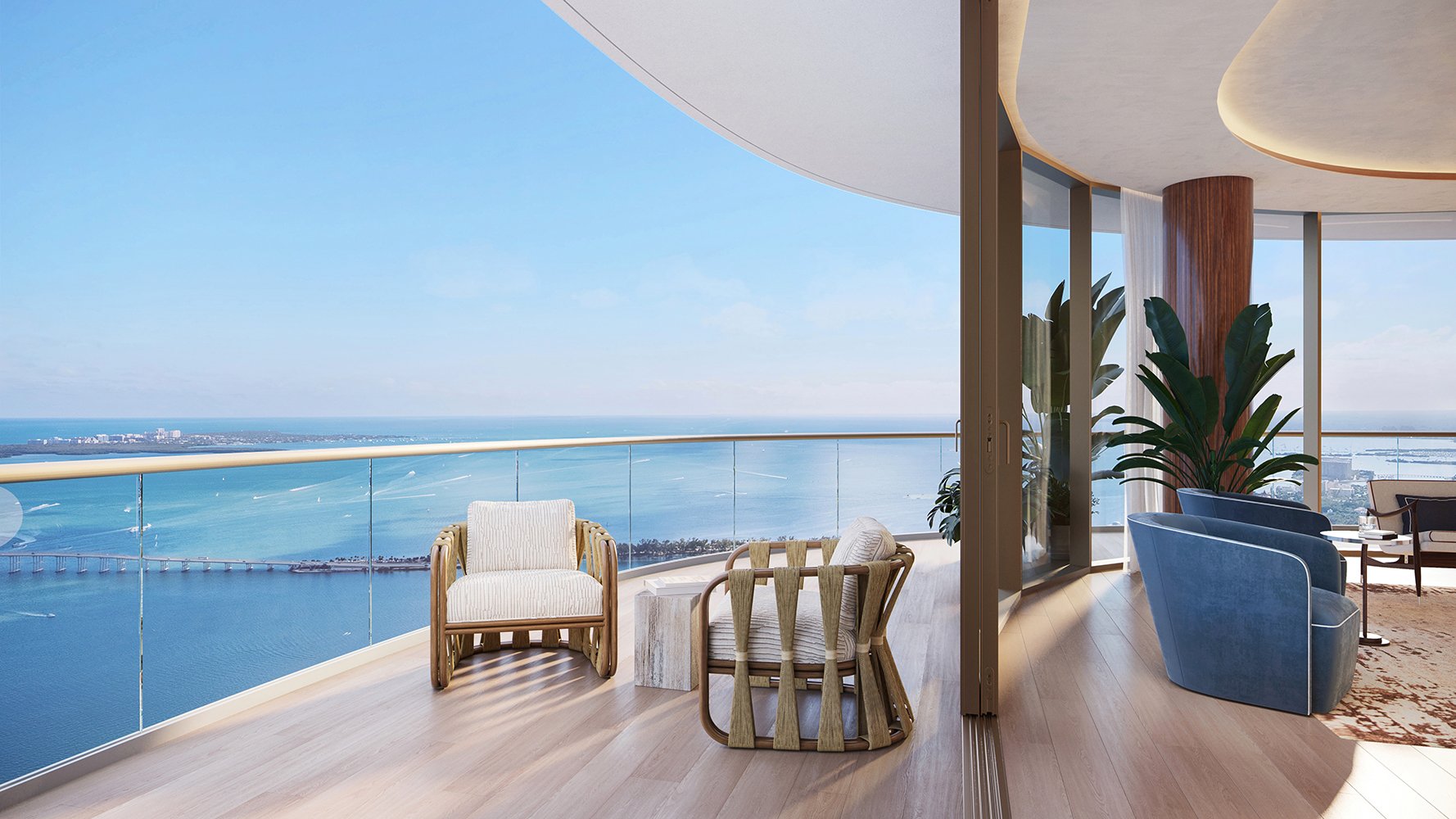
In South Florida, a bayfront terrace is one of residential life’s great luxuries, and one of its most technically demanding. Heat, wind, reflected light, salt air, privacy, drainage, furniture weight, and orientation all determine whether an outdoor room becomes part of daily living or remains a ceremonial backdrop for sunset.
For the ultra-premium buyer, the question is no longer whether a residence has outdoor space. The sharper question is whether that outdoor space performs. A terrace that looks spectacular in photography may be too exposed at midday, too windy for dining, or too delicate for the realities of coastal maintenance. A balcony may frame the view beautifully, yet still require close study of depth, overhang, and usable furniture zones.
Bayfront living differs from oceanfront living in one important way: the water view often pairs with a more urban, yacht-club, or skyline-facing rhythm. A waterview can feel softer and more layered than an open Atlantic exposure, especially in neighborhoods such as Brickell or Miami Beach, where light, breeze, and adjacency vary from block to block.
1. Recessed bayfront residence - shade-first terrace
A recessed terrace is the most dependable choice for buyers who expect to use outdoor space throughout the day, not only before breakfast or after dusk. The ceiling plane above reduces direct exposure, gives seating areas a more room-like feel, and can soften the glare that comes off the bay.
This profile is especially compelling for buyers who imagine the terrace as a true living room: morning coffee, shaded reading, protected dining, and low-key entertaining. The key is depth. A shallow ledge can be visually pleasing, but a deeper recessed terrace is more likely to accommodate dining chairs, side tables, planters, and circulation without feeling staged.
2. Corner bayfront residence - cross-breeze terrace
A corner residence can create a more dynamic outdoor experience because the terrace may capture air movement from more than one direction. For buyers who prize natural ventilation, the best corner layouts feel open without becoming overly exposed.
The caution is wind behavior. A corner terrace can be invigorating one day and difficult the next, depending on height, orientation, and surrounding tower geometry. Buyers should stand outside at more than one time of day if possible, noting whether doors are easy to operate, cushions remain settled, and conversation feels comfortable without strain.
3. Low-to-mid bayfront residence - intimacy and calmer scale
Not every premium terrace lives best from the highest floor. A lower or mid-level bayfront residence can create a stronger connection to water, gardens, marina activity, or the promenade below. The view may feel less aerial and more immersive.
This profile suits buyers who value atmosphere over altitude. Wind can be less aggressive than on very high exposures, and the terrace may feel more like a private pavilion. The tradeoff is privacy, so screening, railing design, sightlines, and adjacent amenity decks deserve careful review.
4. Flow-through bayfront residence - indoor-outdoor circulation
A flow-through residence gives the terrace a stronger role in daily life because interior rooms can open toward different exposures. When planned well, this profile allows the bayfront terrace to function as one part of a larger climate strategy rather than an isolated outdoor platform.
For entertaining, circulation is the advantage. Guests can move from kitchen to living area to terrace without bottlenecks, and owners can stage outdoor dining without making the space feel like an afterthought. The best examples maintain clear thresholds, durable flooring transitions, and enough wall space for art and furniture inside.
5. Garden-level or amenity-adjacent bayfront residence - outdoor living with support
Some buyers want private terrace life while also valuing immediate access to shared outdoor amenities. A garden-level or amenity-adjacent residence can offer a rare blend: the privacy of home with the convenience of nearby pool, lounge, wellness, or waterfront areas.
The buyer should study privacy first. A terrace close to communal zones must be shielded by thoughtful landscaping, elevation changes, or architectural separation. When handled well, this profile can feel quietly resort-like, with less reliance on elevator trips and more spontaneity in daily outdoor routines.
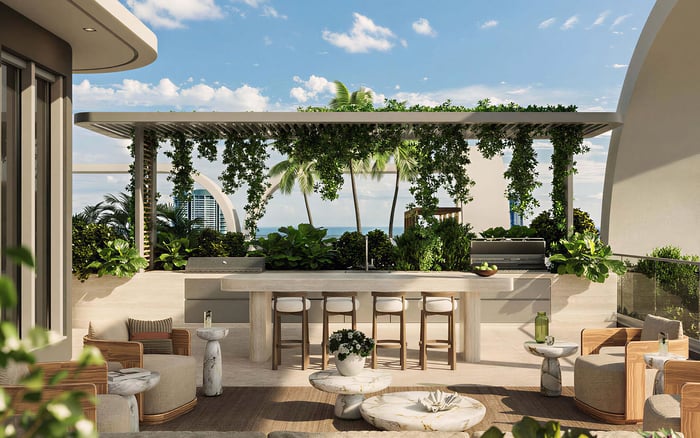
Heat is the first test of any bayfront terrace. South Florida buyers often fall in love with open exposure, but the most livable terraces include a plan for shade. Overhangs, recessed architecture, pergola-style elements where permitted, exterior-rated shades, and strategic landscaping can transform the experience.
Orientation matters. Western exposures can deliver cinematic sunsets but may require stronger heat management. Eastern exposures can be more forgiving during afternoons, while southern and northern orientations vary in their relationship to seasonal sun. The goal is not to avoid sunlight entirely. It is to shape it, control it, and decide where it belongs at different times of day.
Furniture selection is also part of the heat equation. Dark metal, delicate fabrics, and lightweight pieces may look refined but perform poorly when exposed to sun, salt, and breeze. Heavier frames, marine-grade finishes, quick-dry cushions, and pale surfaces often serve the terrace better over time.
Wind is the second test. On bayfront sites, it is not enough to ask whether a terrace is large. Buyers should ask whether it is comfortable for dining, whether candles stay lit, whether umbrellas are permitted or practical, and whether sliding doors can be handled easily.
Salt air is the third test, and it rewards discipline. Hardware, railings, exterior lighting, planters, grills where allowed, and furniture frames all need coastal resilience. Stainless steel must be appropriate for marine conditions, fabrics should resist fading and mildew, and storage should be considered early rather than improvised after closing.
A well-designed terrace also needs a maintenance philosophy. Owners who travel frequently may prefer simpler outdoor schemes with fewer fragile objects and less frequent upkeep. Full-time residents may accept a more layered terrace with planters, dining, and lounge zones, provided there is a clear plan for cleaning and seasonal care.
The most successful bayfront terraces balance spectacle with discretion. A grand view loses some of its pleasure if the terrace feels visible from neighboring towers or busy amenity decks. Buyers should study diagonal sightlines, not just the view straight ahead.
Acoustics deserve equal attention. Water views can be serene, but nearby traffic, marine activity, restaurants, bridges, or event spaces may shape the soundscape. A terrace that feels quiet at noon may feel different in the evening. The most refined outdoor rooms are not silent; they are composed.
View quality should be evaluated from a seated position as well as standing. Many buyers admire a panorama while walking through a residence, then later realize the railing interrupts the horizon from the dining table or lounge chair. For a terrace intended for daily use, the seated view is the real view.
Touring a bayfront residence requires more than a quick step outside. Open the doors, stand at the dining zone, sit where the main sofa would sit, and imagine the terrace at noon, sunset, and after a rainstorm. Study drainage, thresholds, power access, lighting placement, and the practical route from kitchen to outdoor dining.
Ask what can be changed. Some buildings restrict exterior shades, planters, flooring, grills, or furniture types. Others may have wind-related rules that affect umbrellas and loose accessories. These details are not secondary. They determine how fully the terrace can become part of the home.
For buyers comparing Brickell, Miami Beach, and other bayfront settings, the winning residence is rarely the one with the biggest outdoor number on a floor plan. It is the one where architecture, exposure, privacy, and maintenance come together with restraint.
What is the most important terrace feature for South Florida heat? Shade is usually the first priority. A recessed or protected terrace is often more usable than a larger but fully exposed one.
Is a higher floor always better for bayfront terrace living? Not necessarily. Higher floors may offer broader views, but they can also bring stronger wind and a less intimate connection to the water.
How should buyers think about wind on a bayfront terrace? They should evaluate comfort while standing and sitting outside. Dining, door operation, and furniture stability are practical indicators.
Are bayfront terraces harder to maintain because of salt air? They can be. Marine-appropriate materials, regular cleaning, and durable outdoor furnishings help preserve the space.
What terrace depth is most useful? The best depth depends on the intended use. Dining, lounging, and circulation all require more space than a decorative overlook.
Do corner residences make better terrace homes? They can, especially when they capture cross-breezes and multiple views. Buyers should also test wind intensity and privacy.
Should buyers prioritize view or usability? The strongest residences offer both, but usability should lead. A terrace that cannot be used comfortably has limited daily value.
Can exterior shades or pergolas usually be added? Rules vary by building. Buyers should confirm restrictions before assuming any exterior modification is possible.
What should frequent travelers consider? They may prefer simpler terrace designs with resilient furniture and minimal maintenance. Storage and storm readiness also matter.
What defines a truly luxury bayfront terrace? It feels natural to use, not merely admire. Comfort, privacy, materials, and view quality all need to work together.
When you're ready to tour or underwrite the options, connect with MILLION.
If branded residences are on your mind — as a home or as an allocation — we would be glad to share what we are seeing, privately.
Begin a quiet conversation