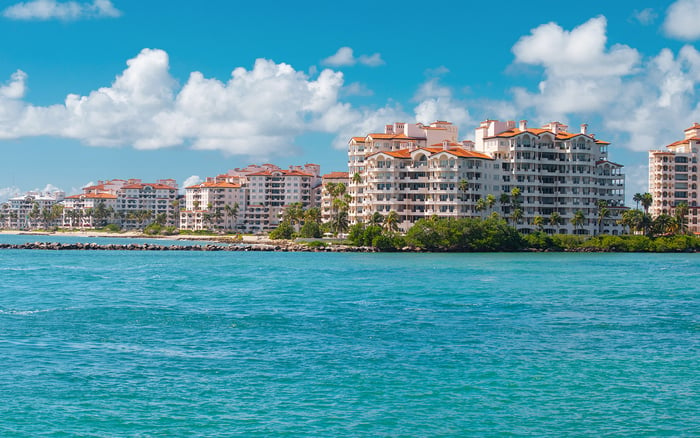
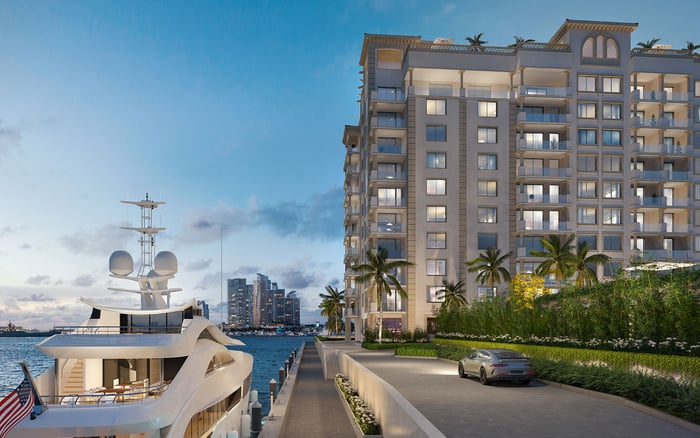
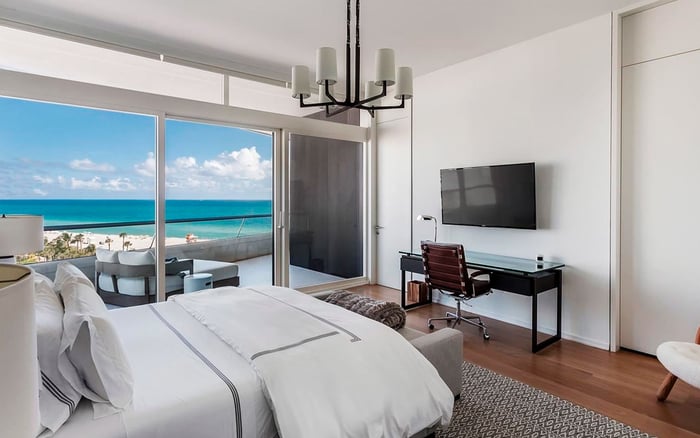
A discreet guide to bayfront residence types where service elevator function, staff circulation, delivery staging, and privacy matter as much as the view.
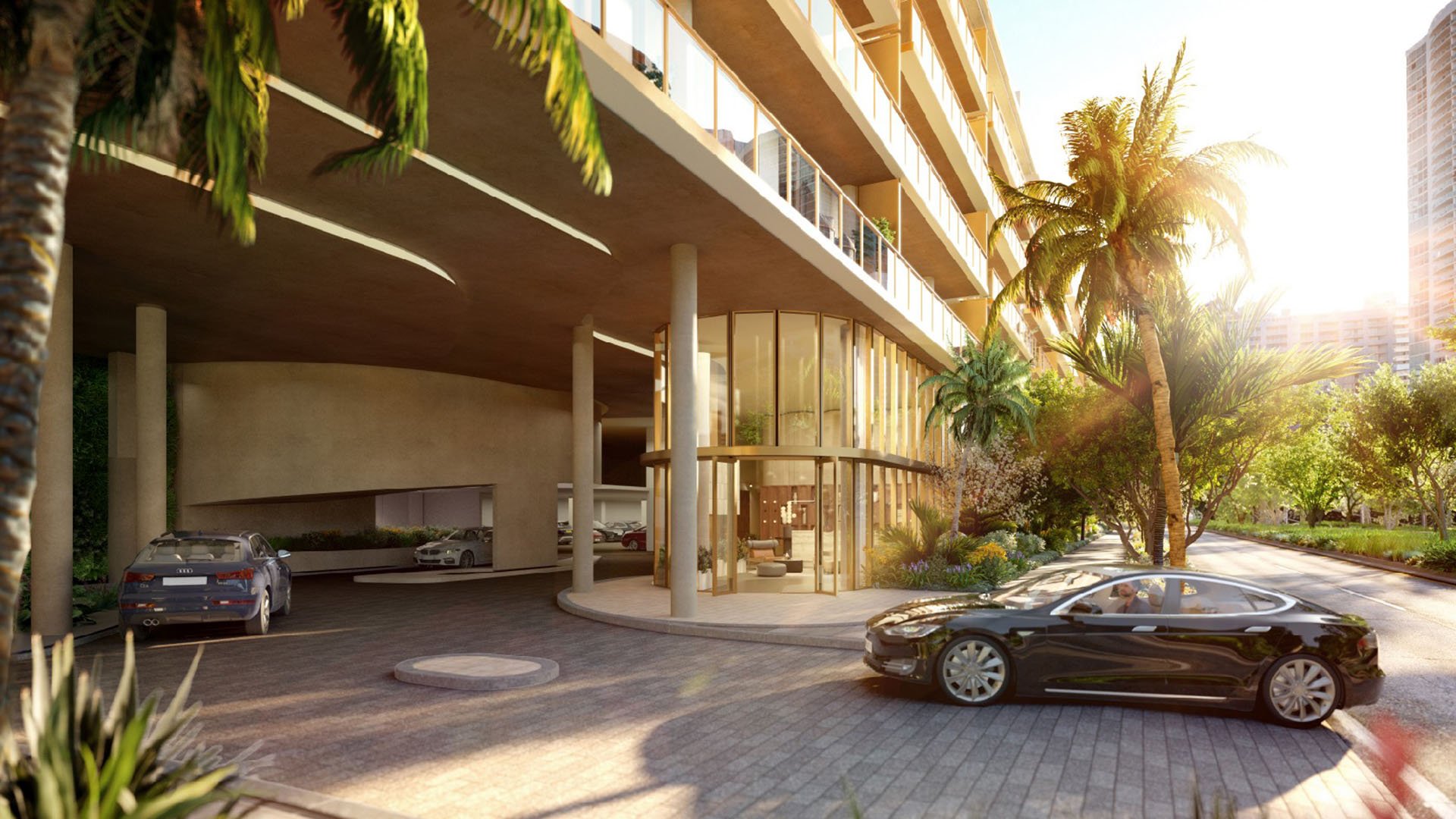
For the most sophisticated South Florida buyer, the service elevator is not a secondary detail. It is part of the residence’s operating system. A bayfront home may offer cinematic water views, deep terraces, and dramatic entertaining rooms, but daily life depends on how quietly the household functions behind the scenes. Staff arrivals, floral deliveries, chef provisions, luggage, art handling, pet care, maintenance teams, and last-minute wardrobe pulls all need a route that does not interrupt the primary living experience.
This is especially important in vertical residences where the front door is part of the architectural performance. A private elevator lobby creates ceremony. A service elevator preserves it. When the two work in concert, the home feels composed, even on a busy day. When they do not, the friction is immediate: carts waiting near the formal entry, deliveries crossing the living room, or staff navigating the same arrival sequence as guests.
Within a single search, a buyer may compare Brickell and Edgewater with Coconut Grove, Sunny Isles, Bal Harbour, and waterview opportunities. Each setting has its own rhythm, but the highest-functioning residences share one principle: the back of house must be as intentional as the view.
1. The private-lobby bayfront residence - separated arrival path
This is the most elegant model for buyers who entertain frequently or maintain a staffed home. The primary arrival sequence remains formal, while staff, service providers, and deliveries move through a separate circulation route. The goal is not simply privacy. It is the preservation of atmosphere.
The best version allows household operations to continue without forcing a choice between discretion and efficiency. Groceries, wardrobe trunks, catering equipment, and routine maintenance can enter with minimal visual overlap, leaving the social spaces ready for guests and family.
2. The estate-scale residence - internal staging capacity
Large bayfront residences need more than a service elevator. They need a place for things to land. The most functional layouts include a secondary entry zone, back hall, utility space, staff-adjacent storage, or a direct route toward kitchen and support areas.
This matters because high-value homes often receive multiple deliveries in a day. Without a practical staging point, even the best elevator becomes a bottleneck. The stronger residence is the one where a delivery can arrive, be checked, sorted, and moved into place without touching the formal rooms.
3. The upper-floor residence near service cores - efficient vertical movement
High-floor living can be exceptional, but it places more pressure on elevator performance and building circulation. Buyers who prioritize smooth staffing and delivery logistics should study how service elevators connect to the residence level, loading area, and household support spaces.
The most desirable arrangement minimizes unnecessary turns, shared waiting points, and long corridors. In daily use, small planning decisions become major quality-of-life factors. A residence that shortens the journey from loading to pantry, wardrobe, laundry, or staff zone will often feel calmer and more controlled.
4. The boutique bayfront residence - fewer competing movements
A smaller building can be compelling for buyers who want privacy and fewer overlapping service demands. The appeal is not merely intimacy. It is operational simplicity. Fewer residences can mean fewer simultaneous move-ins, deliveries, vendors, and household teams using the same back-of-house infrastructure.
For buyers with a low-key lifestyle, this model can be especially attractive. The right boutique residence supports daily service without the feeling of living inside a highly trafficked resort environment. The question is whether the building’s smaller scale is matched by sufficient elevator capacity, storage planning, and delivery protocol.
5. The lock-and-leave bayfront residence - predictable support for part-time use
Many bayfront buyers divide time between homes. For them, the service elevator becomes part of the arrival and departure ritual. Luggage, seasonal wardrobe, wine, art, and household provisions need to move efficiently, sometimes after the residence has been closed for weeks.
The strongest lock-and-leave residence offers practical support without sacrificing discretion. Staff can prepare the home before arrival, receive deliveries, and manage closing tasks after departure. The luxury is not visible, but it is deeply felt: the home is ready when the owner is ready.
The right questions are practical and revealing. Where is the loading area in relation to the residence? Can staff reach the home without crossing the main lobby experience? Is there a separate elevator bank or a dedicated service car? How are carts, furniture, catering, and large-format deliveries handled? What happens when multiple residences schedule service at the same time?
A polished sales presentation may focus on finishes, views, and amenities, but a serious buyer studies operations. The daily choreography of a high-end residence is made up of repeated movements. If those movements are graceful, the home feels effortless. If they are constrained, even a trophy view can lose some of its ease.
It is also important to distinguish between a building that technically has a service elevator and a residence where the service elevator truly works. The difference is in adjacency, access, rules, scheduling, and space planning. A service elevator that opens far from the household support zone may still create visible traffic. A well-placed one can make the entire home feel more private.
Privacy in South Florida luxury real estate is often discussed through frontage, setback, security, and private elevators. Service access deserves equal attention. A home with a clear back-of-house route allows owners to host, work, recover, and live without constant interruption.
This is particularly relevant for households with chefs, house managers, assistants, nannies, drivers, personal trainers, stylists, or rotating vendors. The more complex the household, the more valuable the hidden infrastructure becomes. In the best residences, staff can perform at a high level without entering the visual field.
The same logic applies to deliveries. Bayfront living often involves elevated entertaining, boating weekends, seasonal wardrobe changes, wellness equipment, and design installations. A residence that handles movement quietly will always feel more refined than one that asks the owner to improvise.
This topic is most relevant for buyers who think like residents, not spectators. They may value a sunset terrace and a sculptural great room, but they also understand that the home must function on a Tuesday morning. They want flowers delivered before breakfast, catering staged before guests arrive, luggage moved without ceremony, and maintenance completed without disrupting the household.
For these buyers, the service elevator is a proxy for discipline. It signals whether the building has considered the full life of the residence, not just its presentation. It also helps separate homes that photograph well from homes that live well.
The decision is ultimately personal. A seasonal couple may prioritize lock-and-leave support. A family with staff may need separate circulation and staging. A frequent host may care most about keeping the formal arrival immaculate. The best bayfront residence is the one whose invisible systems match the owner’s real pattern of living.
Why does a service elevator matter in a luxury bayfront residence? It protects the main arrival experience while allowing staff, deliveries, and maintenance to move discreetly through the home.
Is a private elevator the same as a service elevator? No. A private elevator is usually part of the owner or guest arrival sequence, while a service elevator supports back-of-house movement.
What should buyers inspect beyond the elevator itself? Study the loading route, corridor path, delivery rules, staging areas, and the distance between the service elevator and household support spaces.
Are service elevators more important in larger residences? Generally, larger homes create more movement, from catering to wardrobe to maintenance, so functional service access becomes more valuable.
Can a boutique building offer strong service logistics? Yes, if its smaller scale is matched by thoughtful delivery procedures, adequate elevator capacity, and practical back-of-house planning.
Do part-time residents need this feature? Often, yes. Lock-and-leave owners benefit when staff can prepare, stock, and close the residence without disturbing the main living areas.
What is the most common mistake buyers make? They confirm that a service elevator exists but do not study whether its route is efficient, discreet, and useful in daily life.
Should entertaining buyers prioritize service access? Yes. Catering, florals, rentals, and event staff all require circulation that does not compromise the formal guest experience.
Does service access affect resale appeal? For operationally minded luxury buyers, discreet and efficient staff circulation can strengthen the residence’s practical appeal.
How should a buyer compare two similar bayfront homes? If views and finishes are comparable, compare how each home handles staff arrival, deliveries, storage, and private daily circulation.
For a tailored shortlist and next-step guidance, connect with MILLION.
If branded residences are on your mind — as a home or as an allocation — we would be glad to share what we are seeing, privately.
Begin a quiet conversation