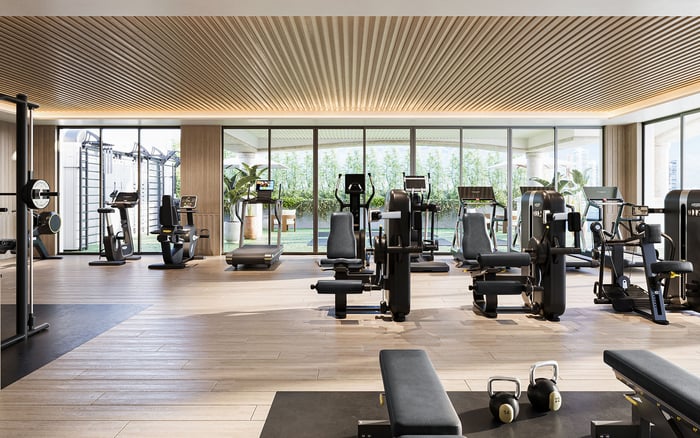
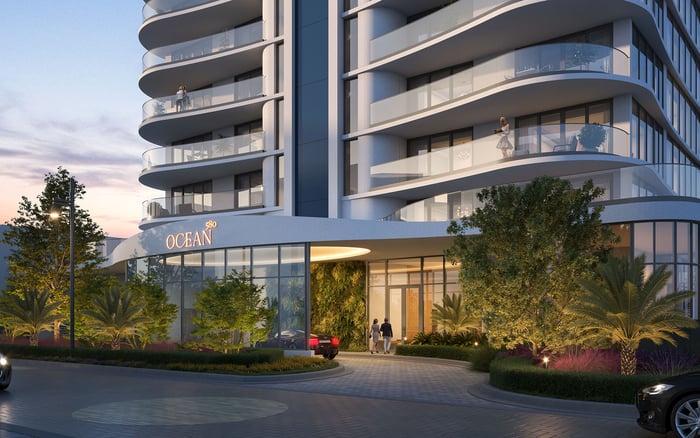
A buyer-focused comparison of building-managed protection at Armani Casa Residences Pompano Beach and enclave-managed privacy at The Links Estates at Fisher Island.
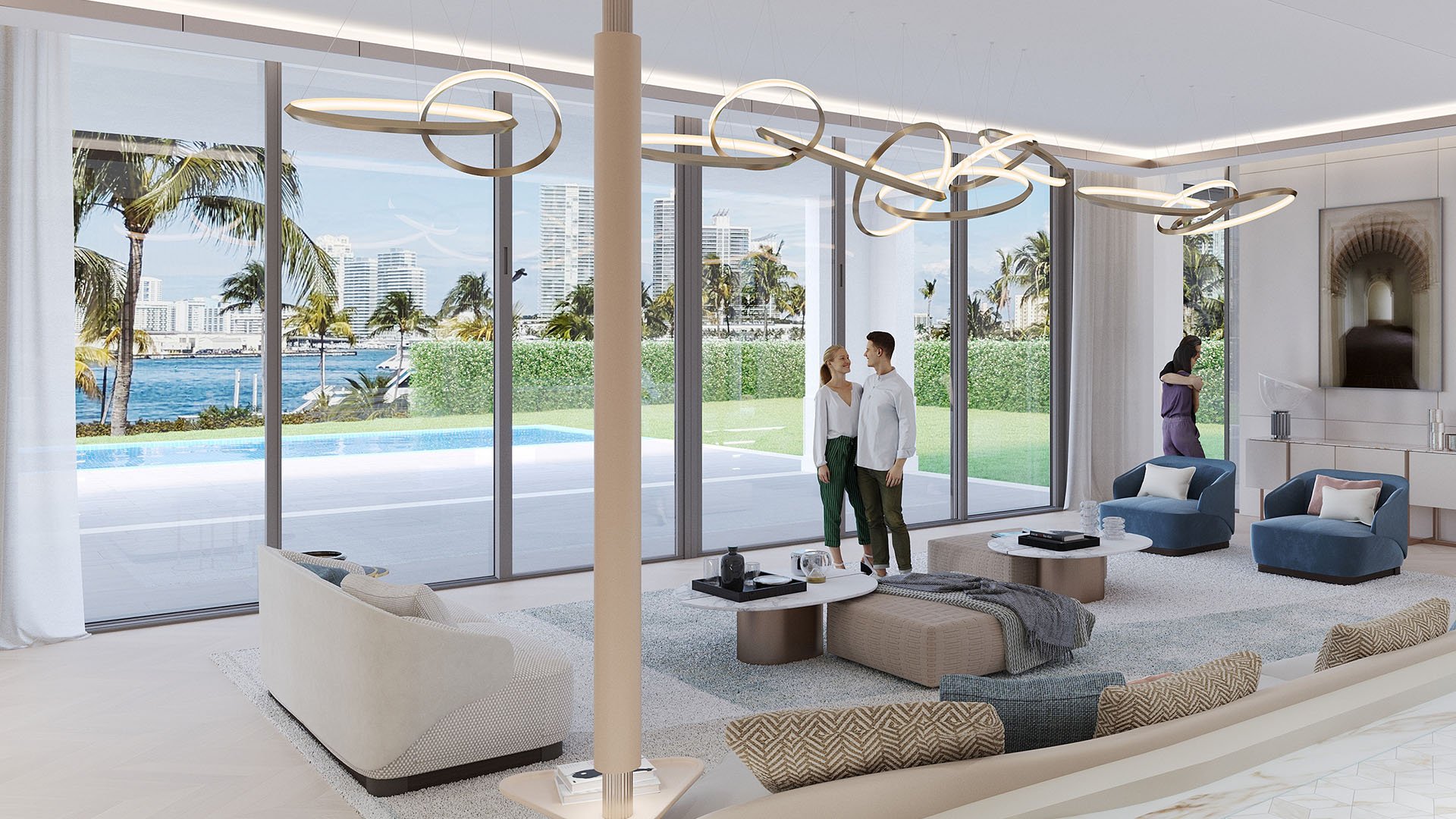
For a certain South Florida buyer, protected does not mean withdrawn from life. It means controlled arrival, discreet service, screened guests, predictable staff movement, and the ability to live beautifully without turning the household into a daily management exercise. That is where Armani Casa Residences Pompano Beach and The Links Estates at Fisher Island diverge less by style than by operating logic.
Armani Casa Residences Pompano Beach belongs to the city-residence side of the conversation. It is best understood as a luxury residential tower, where privacy and convenience are shaped by building systems, front-desk coordination, amenity scheduling, maintenance protocols, and the choreography of vertical living. The Links Estates at Fisher Island, by contrast, sits within a more secluded private-island frame, where protection is created through layered separation: island access, community controls, and residence-level privacy.
This is not simply a condo-versus-estate comparison. It is building-managed protection in a mainland city setting versus enclave-managed protection in a private-island setting. For buyers comparing Pompano Beach and Fisher Island lifestyles, the practical question is not which is more glamorous. It is which one makes the household feel calmer.
At Armani Casa Residences Pompano Beach, the appeal is the ability to feel protected while remaining connected to ordinary city logistics. For buyers who want the structure of a professionally managed residential tower, the household experience often begins before the elevator ride: guest arrival, package handling, valet or parking coordination, vendor intake, and communication with the front desk or concierge team.
In a vertical residence, protection tends to be centralized. A guest does not simply arrive at the door without passing through the building’s access sequence. A vendor appointment can be coordinated through building procedures. Maintenance requests, deliveries, amenity reservations, and visitor flow can move through a shared operational framework rather than through a private household manager alone.
That model can be especially attractive for a second-home buyer who wants a South Florida residence that does not require estate-style supervision every time the family is away. The residence may still require careful planning, but the owner is relying on a building ecosystem rather than creating an independent operating platform from scratch.
The tradeoff is that building-managed privacy is not the same as geographic seclusion. Armani Casa offers the city-residence proposition: controlled points of contact, service convenience, and comparatively direct ingress and egress on the mainland. It is not an island enclave, and for many buyers that is precisely the point.
The Links Estates at Fisher Island represents a more protective-feeling residential model. The household does not simply sit inside a building with front-desk systems. It exists within a controlled island setting, where arrival itself is part of the privacy proposition.
For buyers who value separation, that distinction matters. Fisher Island’s appeal comes from layers: the move from mainland to island, community-level controls, then the privacy of the individual residence or estate environment. The effect is less about quick city movement and more about creating distance between the household and the public realm.
That deeper privacy can be compelling for principals who entertain selectively, travel with staff, or want a residence where household rhythms are buffered from the mainland. It can also appeal to families who treat privacy as a daily condition rather than an occasional preference. In buyer shorthand, this is the exclusive-area option, not because it needs spectacle, but because it makes access itself part of the lifestyle.
The operational tradeoff is equally clear. Island-style living can ask more of the household calendar. Vendors, staff, guests, deliveries, and time-sensitive appointments must be considered through the lens of controlled access. For some owners, that is a welcome filter. For others, it may feel like an extra layer between the residence and the day.
The most revealing comparison is often not the view, the finish palette, or the entertaining rooms. It is what happens at 9:15 on a Tuesday when the housekeeper arrives, a caterer is scheduled, a package is expected, a service technician needs access, and a guest is coming for lunch.
At Armani Casa, the buyer should think in terms of tower choreography. Where do vendors check in? How are service elevators or loading areas handled? How does the building distinguish a personal guest from a tradesperson? How are deliveries stored, announced, or released? How does the front desk communicate with residents when several moving parts are active at once?
At The Links Estates, the same questions become more estate-oriented. How does a vendor reach the island environment? What advance notice is expected for guests or service providers? How does household staff circulate within the community and the residence? How does the owner coordinate multiple arrivals when access is more intentionally controlled?
Neither model is inherently better. Armani Casa concentrates operational control inside the tower. The Links Estates distributes it across the island, community, and residence. One prioritizes the efficiency of a building platform. The other prioritizes the calm that can come from separation.
Parking is a useful proxy for lifestyle. In a mainland tower, buyers often focus on the ease of daily movement: how quickly one can leave, return, receive a guest, or coordinate a driver without turning each outing into a production. Armani Casa’s strongest practical argument is this directness. It is for the buyer who wants protection without giving up the tempo of city life.
At The Links Estates, parking and arrivals are part of a broader access sequence. The buyer is not just asking where a car goes. The buyer is asking how movement is filtered before it reaches the household. That can be deeply reassuring when privacy is the priority, particularly for families or principals who prefer fewer casual points of contact.
Package handling is another subtle dividing line. In a tower, centralized receiving can simplify day-to-day life, assuming the building’s procedures match the household’s expectations. In an island estate setting, package and delivery planning may require more anticipation, especially when timing, access, and household staff coordination matter.
Emergency access belongs in the conversation as well. Buyers should understand how each setting handles urgent arrivals, building coordination, community access, and communication with household staff. The goal is not alarm. It is fluency. A protected residence should feel graceful on ordinary days and legible on complicated ones.
Armani Casa Residences Pompano Beach is the more practical fit for the buyer who wants a protected city residence with comparatively simple everyday movement. It suits the owner who values building-managed privacy, concierge-style coordination, and a residential tower’s service logic. The household can feel buffered without becoming geographically removed.
The Links Estates at Fisher Island is the more natural fit for the buyer who places maximum privacy and controlled access at the center of the brief. It suits the household that accepts island-style logistics as part of the promise. The reward is deeper separation and a more enclave-driven sense of calm.
For some buyers, the decision will come down to frequency of use. A full-time household with staff, family routines, and regular entertaining may evaluate The Links Estates differently from an owner seeking a lock-and-leave city base. A frequent traveler may prefer Armani Casa’s centralized systems. A privacy-first principal may prefer the Fisher Island model precisely because it introduces more deliberate access control.
The strongest reading is simple: Armani Casa offers protected urban convenience, while The Links Estates offers deeper seclusion with more enclave-style operational planning. One asks, how efficiently can a refined city residence be managed? The other asks, how completely can the household be buffered from the outside world?
The right answer depends on the buyer’s tolerance for friction. If every minute between residence, dining, airport, office, and marina matters, a mainland tower can feel liberating. If privacy is the luxury that matters most, a controlled island environment can make the additional planning feel not like inconvenience, but like value.
Is Armani Casa Residences Pompano Beach the more convenient option? It is better framed as the protected city-residence option, with mainland access and building-managed systems supporting daily convenience.
Is The Links Estates at Fisher Island more private? It is better framed as the more secluded option because its protection model includes island access, community controls, and residence-level privacy.
Is this mainly a condo versus estate comparison? No. The better lens is building-managed protection in a city setting versus enclave-managed protection in a private-island setting.
Which option is better for frequent guests? Armani Casa may suit buyers who want guest flow coordinated through a tower environment, while The Links Estates favors more controlled and deliberate arrival planning.
Which option is better for vendors and household staff? Armani Casa centers vendor flow through building systems, while The Links Estates requires thinking through estate operations within a controlled island setting.
Does The Links Estates require more planning? It can, because island-style access and community controls are part of the privacy proposition rather than incidental details.
Does Armani Casa offer full geographic seclusion? No. Its strength is protected urban convenience, not the deeper physical separation associated with a private-island environment.
What should buyers ask before choosing either property? They should ask how guests, staff, vendors, packages, parking, maintenance, and emergency access are handled in daily practice.
Which is better for a lock-and-leave owner? Armani Casa may appeal to buyers who want centralized building coordination, while The Links Estates may suit those who prioritize seclusion above simplicity.
What is the simplest way to decide? Choose Armani Casa for protected city convenience and The Links Estates for deeper privacy with more enclave-style planning.
For a tailored shortlist and next-step guidance, connect with MILLION.
If branded residences are on your mind — as a home or as an allocation — we would be glad to share what we are seeing, privately.
Begin a quiet conversation