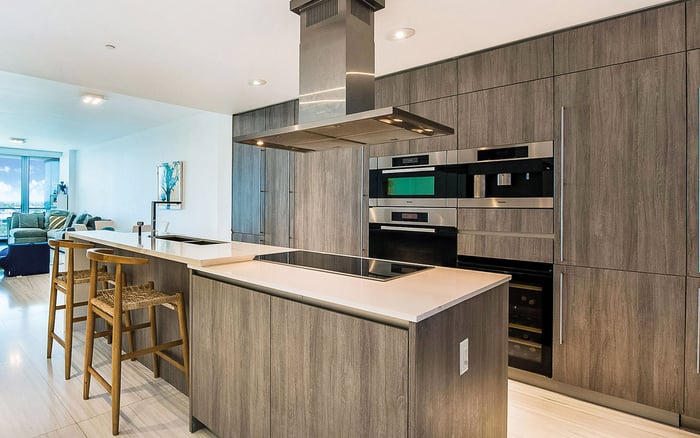
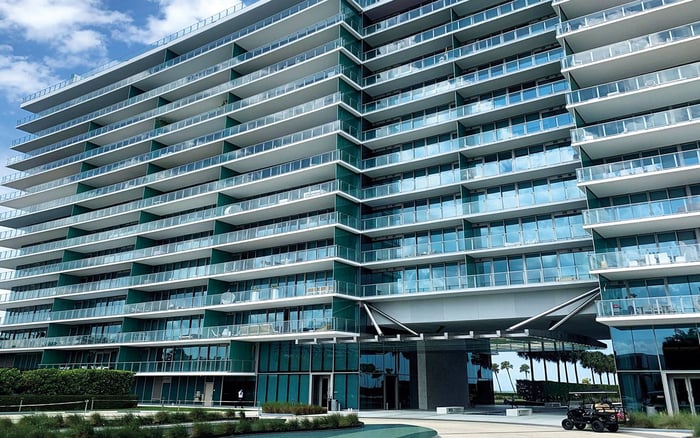
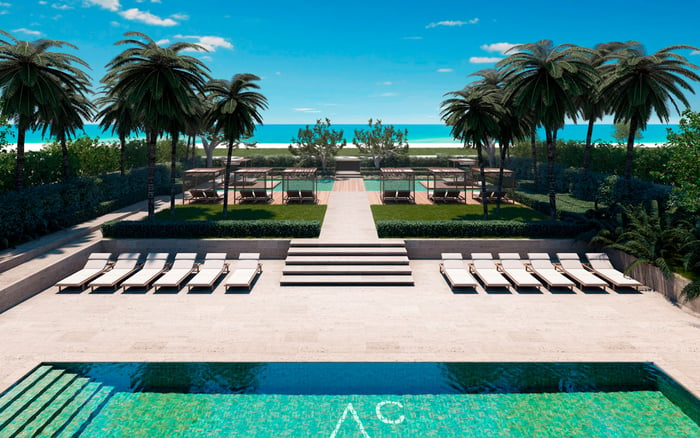
A buyer-oriented look at how culture, arrival choreography, marina expectations, and back-of-house discipline shape daily life at Oceana Key Biscayne and The Surf Club Four Seasons Surfside.
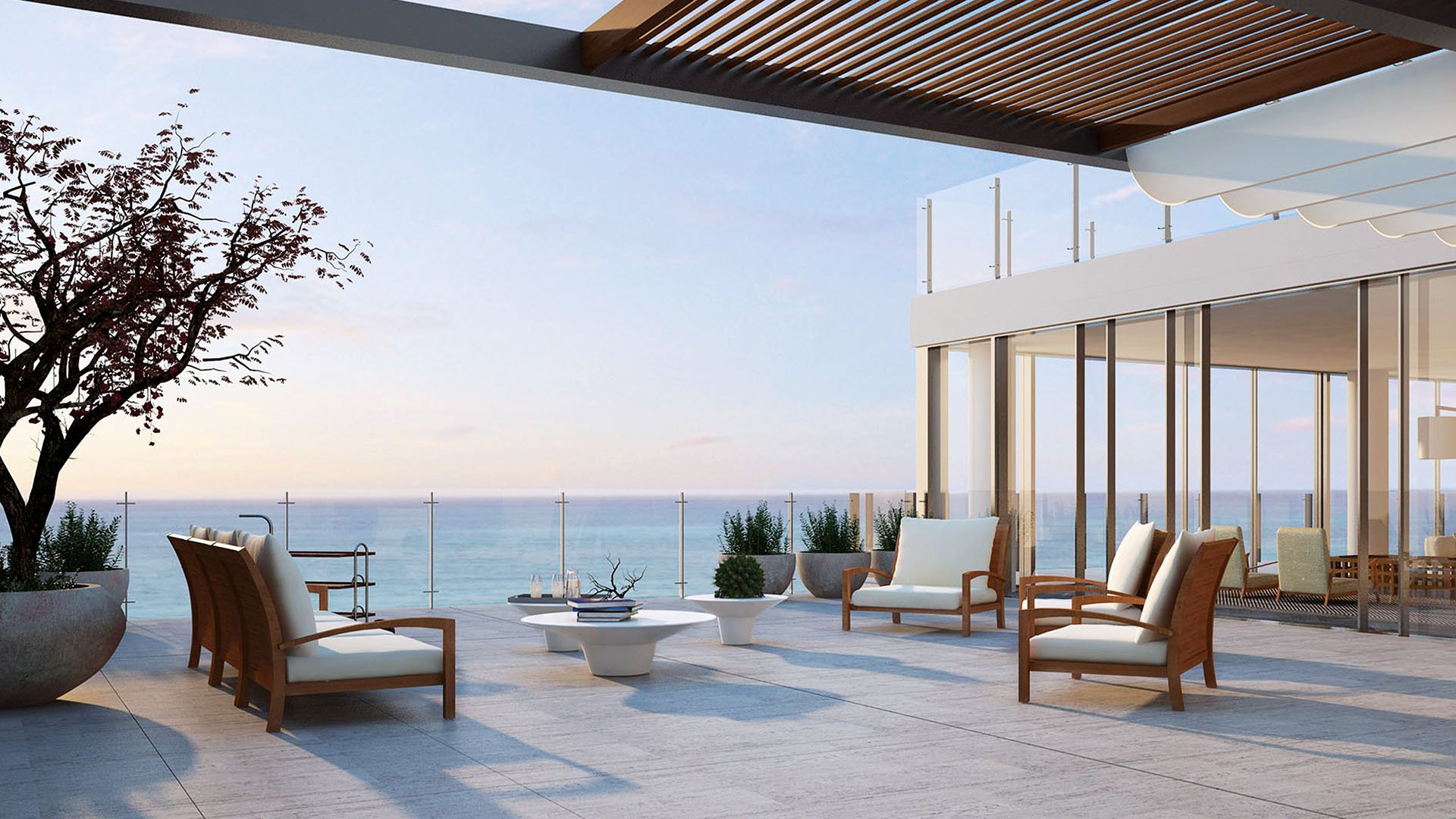
At the upper end of South Florida real estate, buyers often begin with what is visible: views, finishes, terraces, beach proximity, and the emotional pull of arrival. The more durable question is quieter. How does the building behave on an ordinary Thursday morning, on a holiday weekend, when guests arrive, deliveries stack up, residents return from the water, and staff must keep every movement composed?
That is where the comparison between Oceana Key Biscayne and The Surf Club Four Seasons Surfside becomes more revealing than a conventional amenity discussion. Both names belong in the vocabulary of South Florida luxury, but the buyer’s real evaluation should focus on building culture: the unwritten rhythm shaped by resident expectations, service protocol, architectural sequencing, management style, and the way public-facing elegance is protected by unseen logistics.
For a primary residence, that culture can shape daily life more than any brochure feature. For a second home, it can determine whether arrival feels effortless after months away. For long-term ownership, it can decide whether privacy, hospitality, and operational order remain consistent as seasons change.
A refined arrival is not simply a porte cochere or a lobby. It is a social system. The best buildings separate recognition from exposure. A resident should feel known without feeling watched. A guest should be welcomed without drifting into private residential life. Service providers should be directed with clarity, not improvised through the same path as family and friends.
In Surfside, the phrase The Surf Club Four Seasons Surfside carries an association with hospitality culture. For buyers, the relevant question is how that sense of hospitality translates into residential boundaries. Hotel-level polish can be highly attractive, but only when privacy remains disciplined. The arrival sequence should clearly distinguish residents, guests, and those operating in a service capacity.
At Oceana Key Biscayne, the arrival conversation naturally leans toward residential calm and island rhythm. The Key Biscayne buyer often prioritizes a different tempo: less spectacle, more continuity, and a sense that the building understands repeated daily patterns. In that context, guest arrival should feel gracious without becoming ceremonial. The ideal is ease, not performance.
Marina expectations require their own lens. Even when a buyer is not acquiring a boat slip, the presence or possibility of water-oriented living changes the building’s operational questions. The issue is not only access to the water. It is how the building absorbs the routines that come with it: gear, guests, captains, provisioning, towels, luggage, weather delays, and return traffic at peak hours.
A serious marina conversation should include rules, scheduling, access paths, guest registration, storage expectations, and the separation between recreational flow and residential quiet. Buyers should ask how arrivals from the water are managed relative to arrivals by car, and whether staff procedures preserve the same discretion in both directions.
This is especially important for oceanfront or near-water buildings, where leisure can easily become logistical theater. The most successful properties make movement disappear. Residents come and go, boats are prepared, guests are handled, and the building never feels as if it is working too hard.
Back-of-house flow is one of the least glamorous phrases in real estate, but it is also one of the most important. It describes the hidden infrastructure of comfort: service elevators, staff paths, package handling, housekeeping movement, catering access, maintenance staging, refuse removal, and the protocols that keep private spaces serene.
In a building with a polished front-of-house identity, weak back-of-house planning creates friction. Residents may encounter delivery congestion, staff may compete with guests for elevator timing, or peak service moments may become visible in ways that diminish the atmosphere. Conversely, a building with disciplined service flow can feel calm even when the property is active.
For Oceana Key Biscayne, the buyer should read back-of-house performance through the lens of residential permanence. Does the property support daily domestic life with enough quiet structure? Are the practical parts of ownership handled with restraint? Does the building make family, staff, guests, and vendors easy to coordinate without overcomplicating life?
For The Surf Club Four Seasons Surfside, the question is slightly different. When a building’s identity is connected to a high-touch service culture, back-of-house flow must be especially precise. The more refined the visible experience, the more disciplined the invisible system must be.
A property tour should include more than the residence itself. Watch the arrival court for timing and demeanor. Notice whether staff appear calm, rushed, or reactive. Observe whether guests are guided with confidence. Ask how vendors enter, how packages are handled, and how food, flowers, luggage, and maintenance are routed.
If boating or water access is part of the decision, ask practical questions before emotional ones. How are guests cleared? Where does gear move? What happens during bad weather or high-traffic weekends? How does the building protect residents who are not participating in the boating lifestyle from the operational intensity of those who are?
The answers do not need to be theatrical. In fact, the best answers are usually simple, specific, and practiced. Luxury buyers should listen for consistency. A building that knows its own culture can explain its routines without defensiveness.
Rules are not the opposite of luxury. At the best properties, they are what protect it. The right protocols allow a building to feel generous without becoming loose. They keep privacy intact, reduce social ambiguity, and make high service standards repeatable.
Still, buyers should distinguish between formality and stiffness. Some buildings rely on ceremony. Others rely on discretion. Some communities are socially visible, while others are deliberately quiet. Neither style is inherently better. The important question is whether the culture matches the owner’s life.
A buyer choosing between Oceana Key Biscayne and The Surf Club Four Seasons Surfside is not merely comparing two addresses. The buyer is comparing two ways a building can choreograph daily living. One may feel more residentially insulated. The other may feel more hospitality-inflected. The right answer depends on how the owner wants privacy, service, water, guests, and routine to intersect.
Why does building culture matter in a luxury condo purchase? Building culture shapes how privacy, service, guests, and daily routines feel after closing. It is often the difference between attractive design and effortless ownership.
How should buyers compare Oceana Key Biscayne and The Surf Club Four Seasons Surfside? Buyers should compare not only residences and amenities, but also arrival protocol, service flow, privacy expectations, and the building’s social rhythm.
What should I observe during a guest arrival? Watch how quickly guests are recognized, directed, and separated from resident-only circulation. A confident system feels warm but controlled.
Why is back-of-house flow important? Back-of-house flow determines whether deliveries, staff, maintenance, and service providers remain discreet. Poor flow makes operational activity visible.
What questions should boat-oriented buyers ask? Ask how water arrivals, guest access, provisioning, storage, and peak weekend movement are managed. The goal is to understand the building’s marina discipline.
Is a hospitality-style building always better for service? Not necessarily. Hospitality polish is valuable when residential privacy remains clearly protected and service systems are well separated.
Can a quieter residential culture be more luxurious? Yes. For many owners, luxury is defined by calm, predictability, and the absence of unnecessary social performance.
Should rules be viewed as a drawback? Well-designed rules usually protect the value of the building experience. They create consistency for residents, guests, and staff.
What is the biggest mistake buyers make in this category? Many buyers focus only on the residence and under-evaluate the systems that shape everyday life. Arrival, service, and access are part of the asset.
What is the best way to shortlist comparable options for touring? Start with location fit, delivery status, and daily lifestyle priorities, then compare stacks and elevations to validate views and privacy.
When you're ready to tour or underwrite the options, connect with MILLION.
If branded residences are on your mind — as a home or as an allocation — we would be glad to share what we are seeing, privately.
Begin a quiet conversation