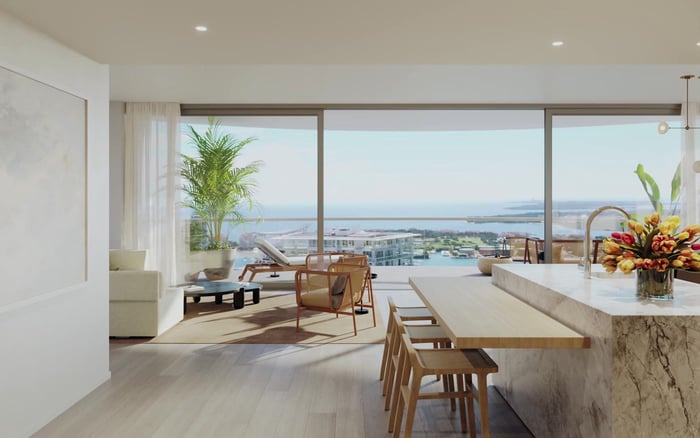
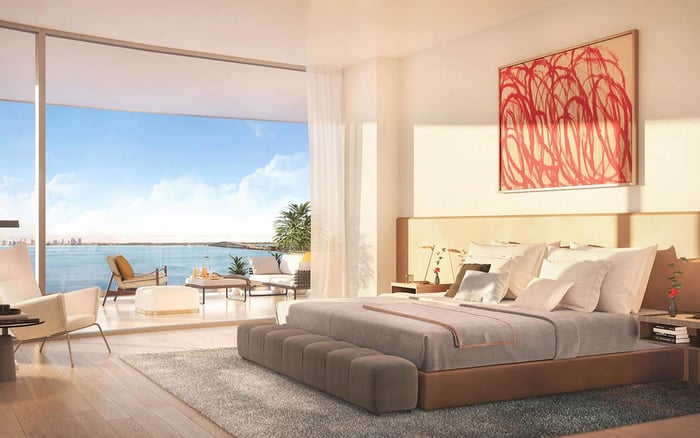
A refined buyer’s guide to the Miami Beach residence profiles best suited for collectors who require meaningful wine storage rather than purely decorative bottle display.

For the serious collector, wine storage is not a lifestyle vignette. It is domestic infrastructure. A decorative wall may be beautiful at dinner, but the buyer with mature Burgundy, first-growth Bordeaux, allocation-only Champagne, or large-format bottles needs more than glass, backlighting, and a few handsome labels facing the room. The residence must be evaluated for preservation, discretion, service access, and the ability to support a collection as it grows.
Miami Beach adds another layer of discipline. Residences here are often chosen for light, water, terraces, and entertaining flow, while wine requires restraint. The right home for a collector reconciles those opposing instincts: generous hospitality in the public rooms and a quieter, controlled environment for bottles that should not become part of the architecture’s spectacle.
This is where buyer priorities become more exacting. A wine wall can sell a mood. A serious storage strategy protects provenance, simplifies inventory, and keeps entertaining elegant rather than improvised. The following ranking focuses on residence profiles that serve collectors who have moved beyond display and now need storage with intention.
1. Full-floor penthouse residence - private cellar-ready plan
A full-floor penthouse is the strongest profile for buyers who want wine storage integrated without compromising privacy. The appeal is not scale alone. It is the ability to separate arrival, entertaining, service, and private areas so the collection can be accessed discreetly during a dinner without turning the wine room into a public performance.
For the collector, the ideal penthouse plan has enough back-of-house logic to support a dedicated conditioned room, professional racking, inventory management, and secure access. The wine should feel close to the dining experience, but not exposed to the same light, heat, traffic, or theatre as the formal living space.
2. Large-format waterfront residence - service-core separation
A large-format waterfront residence can be especially effective when its plan includes a service core, secondary circulation, or support spaces that can absorb the practical demands of storage. The value is separation. Guests can move from terrace to dining room to lounge, while staff or the owner can access bottles through a less visible route.
This profile suits buyers who host frequently and want the collection to function as part of hospitality without being reduced to decoration. The best layouts make it possible to decant, stage, serve, and return bottles gracefully, preserving the calm expected in a high-level Miami Beach residence.
3. Boutique low-density residence - quiet control and privacy
A boutique low-density residence can appeal to the collector who values discretion over spectacle. Smaller buildings often attract buyers who prefer a more private rhythm, and that sensibility aligns with serious wine ownership. The residence does not need to announce the collection; it needs to protect it.
The buyer should focus on whether the floor plan allows a dedicated room or professionally built storage zone that feels intentional rather than retrofitted. A compact, properly planned cellar can be more useful than a large display wall if it supports access, order, and preservation.
4. Renovated resale residence - custom cellar potential
A renovated resale residence can be attractive when the buyer wants to shape the interior around a known collection. Existing homes may offer opportunities to rethink underused rooms, former service spaces, or transitional areas that can become cellar-grade storage with the right design team.
This profile is less about immediate visual impact and more about control. A buyer with established collecting habits may prefer the flexibility to customize racking, security, lighting, and access rather than inherit a decorative feature designed for staging rather than stewardship.
5. Secondary Miami Beach residence - compact professional preservation
Not every collector needs a trophy cellar in a second home. For a buyer who keeps a primary collection elsewhere, the better Miami Beach residence may be one that supports a smaller, highly curated selection for seasonal living and entertaining. The objective is precision, not volume.
In this profile, the storage solution should match the cadence of use. A compact professional-grade room or integrated storage zone can preserve bottles selected for the season while avoiding the burden of overbuilding for a collection that does not live in the residence year-round.
The most important questions should be asked before the first showing. Is there a plausible location for wine storage that avoids direct sun and public circulation? Can the residence accommodate the desired capacity without forcing the collection into a decorative corridor? Is there a practical route for deliveries, inventory, and service during dinner? Will the plan allow the wine component to feel designed rather than added?
Collectors should also consider how they actually drink. A buyer who opens bottles nightly needs different access than a buyer who hosts formal dinners twice a month. A Champagne collector may prioritize formats and rapid service. A collector of older reds may care more about calm handling, decanting space, and a nearby service surface. A residence should reflect these habits rather than impose a generic showroom solution.
In a private search brief, labels such as Miami Beach, oceanfront, penthouse, terrace, resale, and second home can help organize priorities, but they are only shorthand. The real test is whether the plan can protect bottles while still supporting the lifestyle that brought the buyer to Miami Beach in the first place.
The most refined wine storage is often the least obvious. In a Miami Beach residence, restraint can be more luxurious than display. A room behind discreet millwork, a cellar integrated near the dining sequence, or a controlled storage area accessed through a service passage can signal sophistication more convincingly than a brightly lit wall of labels.
That does not mean the collection should disappear. It means the residence should decide when the wine is revealed. A great bottle can enter the evening at the right moment, with the right glassware, temperature, and ceremony. The architecture should support that experience, not compete with it.
For buyers at the upper end of the market, this is where advisory work becomes personal. The right residence is not merely the one with the most dramatic wine feature. It is the one that can absorb a collector’s standards with ease, allowing the home to remain serene, functional, and quietly exacting.
What makes wine storage different from a decorative wall? A decorative wall displays bottles, while serious storage is planned around preservation, access, and long-term care.
Should wine storage be visible from the main living room? It can be, but collectors often benefit from a more discreet location that avoids turning valuable bottles into room decor.
Is a penthouse always best for wine collectors? Not always, but penthouses can offer scale, privacy, and flexible planning that suit dedicated wine storage.
Can a resale residence work for a serious collection? Yes, especially when the layout allows a storage area to be customized rather than treated as an afterthought.
What should buyers inspect during a private showing? Buyers should look for plausible cellar locations, service access, low-light areas, and room for secure storage systems.
Is a wine wall enough for valuable bottles? A wine wall may suit short-term display, but valuable or mature bottles usually require a more controlled solution.
How should second-home buyers think about wine storage? They should match storage to seasonal use, entertaining habits, and the size of the collection kept in residence.
Does entertaining style matter? Yes. Frequent hosts should consider staging, decanting, service circulation, and proximity to dining areas.
Should wine storage be planned before making an offer? It is wise to evaluate feasibility early, because storage can affect layout, design scope, and long-term usability.
What is the best way to shortlist comparable options for touring? Start with location fit, delivery status, and daily lifestyle priorities, then compare stacks and elevations to validate views and privacy.
For a discreet conversation and a curated building-by-building shortlist, connect with MILLION.
If branded residences are on your mind — as a home or as an allocation — we would be glad to share what we are seeing, privately.
Begin a quiet conversation