A discreet guide to bayfront residence layouts where guest suites help preserve privacy, rhythm and hospitality for South Florida luxury buyers.

In South Florida’s most considered bayfront homes, a guest suite is not simply a courteous extra bedroom. It is a pressure valve. It allows visiting family, adult children, household staff, weekend guests and long-stay friends to participate in the home without overtaking its center of gravity. For buyers who entertain often, or who divide time between multiple residences, that distinction can determine whether a waterfront property feels serene or constantly negotiated.
The best bayfront layouts understand that privacy is not the opposite of hospitality. It is what makes hospitality sustainable. A well-positioned guest suite protects morning routines, late arrivals, different sleep schedules and the subtle rituals of waterfront ownership, from sunrise coffee to evening cocktails facing the bay. It also gives the primary household a way to welcome people generously without surrendering the primary suite, main living room or kitchen to overlapping needs.
For search language, terms such as Waterview, Balcony, Terrace and Flow-Through-units can help describe what buyers are trying to preserve: light, air, outdoor access and separation. Area cues such as Brickell and Miami Beach may also frame lifestyle expectations, but the floor plan remains the quiet arbiter of daily comfort.
1. Full guest wing - best for extended family
A full guest wing is the most elegant answer for buyers who host parents, adult children or relatives for more than a few days at a time. Its defining feature is separation: guest quarters should sit away from the primary suite and, ideally, away from the most active entertaining zones.
This type of residence works especially well when the guest area has its own bath, ample storage and a nearby sitting space. The goal is not isolation, but independence. Guests can wake, dress, work or rest without crossing the main bedroom corridor or reshaping the household’s morning routine.
2. Dual-suite plan - best for multigenerational households
A dual-suite plan treats the secondary suite with nearly the same seriousness as the primary suite. This is useful for households where guests are not occasional visitors, but recurring participants in family life. The second suite should feel dignified, not secondary in spirit.
Buyers should look for a layout that gives each suite a clear identity. If both suites compete for the same view corridor or depend on the same hallway, friction can emerge. When each has a distinct zone, the residence can accommodate multigenerational use without making anyone feel displaced.
3. Convertible guest suite - best for flexible ownership
A convertible guest suite is ideal for buyers who do not host constantly but want a residence that can expand gracefully. In its everyday mode, the room may function as a library, wellness room or office. When guests arrive, it becomes a proper sleeping suite rather than a compromise.
The success of this type depends on infrastructure. A nearby full bath, doors that close properly, blackout capability and acoustic distance all matter. A room that photographs as flexible but functions as a pass-through will not reduce household friction when visitors actually arrive.
4. Service-adjacent suite - best for staffed or highly hosted homes
Some bayfront residences operate with a higher level of service, whether through a house manager, chef, nanny or visiting support staff. In those homes, a service-adjacent suite can preserve privacy for everyone. It should be convenient to back-of-house functions without feeling tucked into an afterthought space.
The key is discretion. A guest or staff suite near utility areas, secondary entries or kitchen support zones can keep the primary living spaces calm during arrivals, deliveries and preparations. For owners who entertain often, this can make large gatherings feel composed rather than improvised.
5. Lockable guest zone - best for frequent travelers
A lockable guest zone suits buyers who travel often, lend the residence to trusted family or receive rotating visitors throughout the season. This type is less about physical distance and more about controlled access. The best version allows part of the home to operate independently while the owner’s private areas remain secure.
For bayfront properties, this approach can be particularly compelling when guest areas still enjoy a sense of arrival, natural light and outdoor connection. A guest zone should never feel like a leftover corridor. It should feel intentionally framed, even if it is used only part of the year.
The most successful guest-suite residences share a few quiet characteristics. First, they create acoustic distance. A beautiful bedroom beside the media room, kitchen or elevator landing may create more conflict than comfort. Second, they offer bathroom privacy. Guests should not have to cross public entertaining space in the middle of the night.
Third, they respect circulation. If every guest movement runs through the heart of the home, the layout will feel busy even when the square footage is generous. A secondary corridor, vestibule or subtle separation between public and private zones can transform the lived experience.
Fourth, they support different clocks. Waterfront homes often host people with different rhythms: early risers, late diners, remote workers, children, grandparents and friends arriving from other time zones. A guest suite that allows someone to be present without being constantly visible is a luxury far beyond marble or millwork.
A bayfront address can seduce buyers into focusing almost entirely on the view. Yet the guest-suite question often depends on what happens behind the glass. Does the suite have enough wall space for real storage? Can luggage disappear? Is there a desk or quiet surface for a laptop? Can guests access outdoor air without passing through the primary living area?
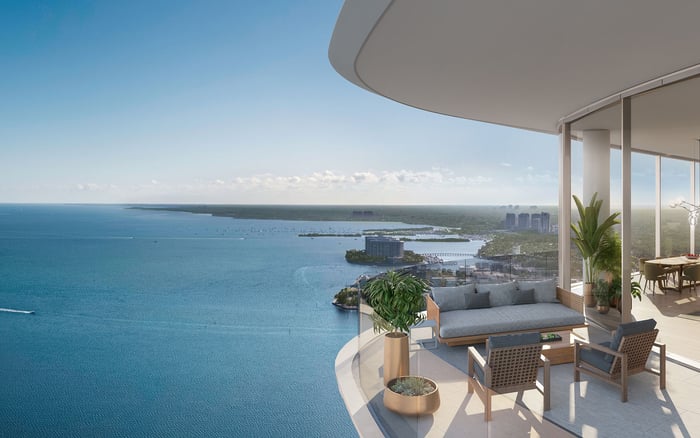
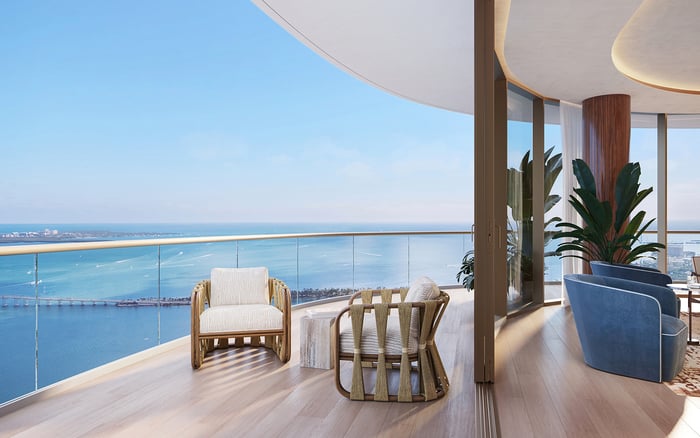
Outdoor adjacency is especially powerful. A suite with a small terrace, balcony access or proximity to a calmer outdoor corner gives visitors a place to retreat without occupying the main entertaining terrace. This is one reason the language of Terrace and Balcony matters in evaluating plans, not merely in describing amenities.
Flow is equally important. Flow-Through-units may suggest cross-breezes and dual exposures, but buyers should still ask how those exposures are allocated. If the primary suite, living room and guest suite all fight for the same frontage, the home may feel visually impressive but functionally unresolved.
Before falling in love with a sunset, trace a guest’s path through the home. Where do they enter? Where do they place luggage? How do they reach their bathroom? Can they take a call at 7 a.m. without waking the household? Can the owner host dinner while another guest rests privately?
Then test the reverse. Can the owner move from the primary suite to the kitchen, terrace or study without passing a guest’s door every time? Can housekeeping refresh linens without entering the primary zone? Can a child, parent or staff member occupy the suite for a longer period without turning public rooms into overflow storage?
These questions are not unromantic. They are the difference between a bayfront residence that is admired and one that is easy to inhabit. The most refined properties do not merely stage togetherness. They allow people to gather, withdraw and rejoin with grace.
Why are guest suites so important in bayfront residences? They help preserve privacy, sleep routines and daily household flow while still allowing owners to host generously.
Is a guest suite different from a spare bedroom? Yes. A true guest suite usually includes privacy, an en-suite bath, storage and a sense of separation from the home’s busiest areas.
What is the best guest-suite layout for extended family? A full guest wing is often the strongest option because it gives longer-stay visitors independence without removing them from the home.
Should the guest suite have water views? A water view is desirable, but privacy, access and acoustic separation can be more important for daily comfort.
Are convertible guest suites practical? They can be highly practical when supported by a full bath, doors, storage and enough quiet to function as a real bedroom.
What should buyers avoid? Avoid guest rooms that sit directly off loud living areas, require shared public bathrooms or force guests through the primary bedroom zone.
Do bayfront terraces help guest-suite function? Yes. Outdoor access gives guests a retreat and reduces pressure on the main living and entertaining spaces.
How does Brickell affect the guest-suite decision? Brickell buyers may prioritize flexible plans that support work, guests and entertaining within a more urban waterfront rhythm.
How does Miami Beach affect the guest-suite decision? Miami Beach buyers may place added value on privacy between social zones, outdoor areas and bedrooms used by visiting friends or family.
What is the best way to shortlist comparable options for touring? Start with location fit, delivery status, and daily lifestyle priorities, then compare stacks and elevations to validate views and privacy.
If you'd like a private walkthrough and a curated shortlist, connect with MILLION.
If branded residences are on your mind — as a home or as an allocation — we would be glad to share what we are seeing, privately.
Begin a quiet conversation