South Florida’s next luxury cycle is taking shape now, with a pipeline of lifestyle-led towers and ultra-boutique beachfront collections targeting 2027 through 2030. Below, MILLION Luxury ranks 10 projects and explains how to evaluate timelines, neighborhoods, and pricing leverage as inventory normalizes.
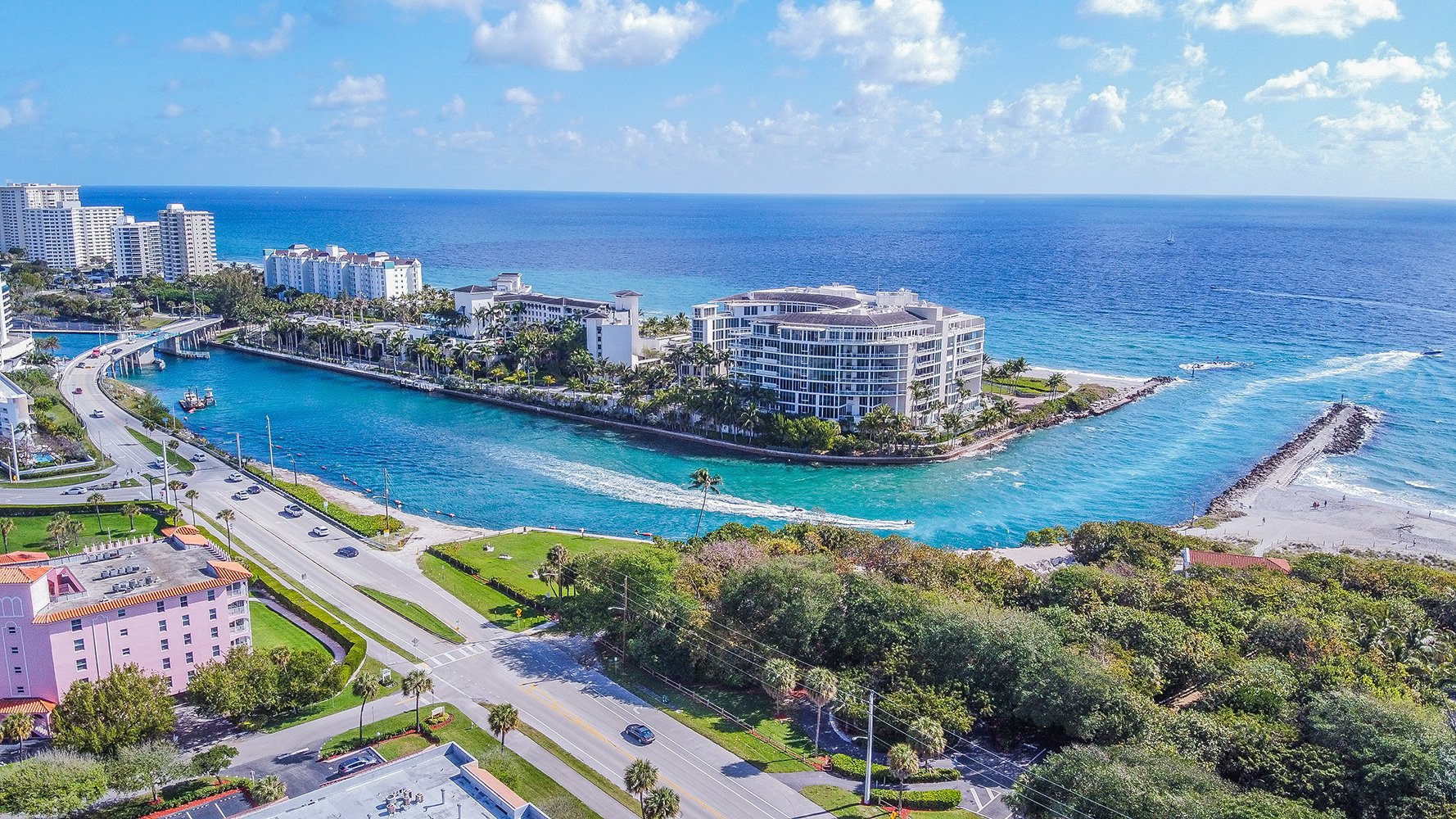
South Florida is moving into a new chapter of new-construction: a clearly visible pipeline of luxury residential projects projected to deliver from 2027 through 2030 and beyond. The common thread is lifestyle-led product, frequently branded, with amenity programs that read less like a list and more like a private-services platform. For many buyers, the residence is no longer just a home, it is a daily operating system for wellness, dining, work, and social life.
Demand at the very top has stayed resilient. In 2025, there were 262 sales of $10M+ properties in the first nine months of the year, a level that indicates ongoing confidence among high-net-worth buyers even as the broader market normalizes. The conclusion is not that every new tower will behave the same. It is that scarcity, true differentiation, and brand equity continue to attract capital and attention.
This is also a pre-construction market again in the traditional sense: buyers are underwriting a delivery window, not a move-in date. Marketing targets such as “2027 to 2028” can shift with permitting, financing conditions, labor, materials, and design refinements. Sophisticated buyers treat timelines as a range, then focus on what is harder to replicate: site quality, views, service culture, and the rarity of what is being offered.
Below is a buyer-oriented ranking based on publicly disclosed positioning, scale, and the kind of long-term desirability that typically outlasts market noise.
1. Waldorf Astoria Miami - ~100-story branded icon Planned at roughly 100 stories and about 1,049 feet, this Downtown concept pairs a Waldorf Astoria hotel with branded private residences. In Miami, skyline presence matters, but the stronger investment thesis is the hospitality backbone that can reinforce the resident experience over time.
For buyers, the draw is durable brand recognition plus the potential for uncommon view corridors at true altitude.
2. The Residences at Mandarin Oriental, Miami - Brickell Key campus redevelopment This Brickell Key redevelopment is planned as a two-tower waterfront concept, with a large South Tower residential component and a North Tower mix of hotel and residences. It has been discussed with a longer timeline, often cited around 2030, reflecting the complexity of a campus-like plan.
A longer runway can be a feature when it signals a master plan rather than a single standalone tower.
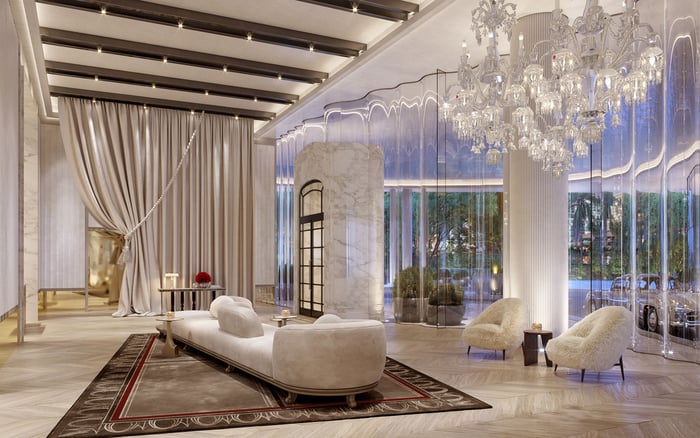
3. Baccarat Residences Brickell - 75-story waterfront statement Baccarat Residences Brickell is planned as a 75-story waterfront project with 324 condo residences, plus penthouses and riverfront flats and duplexes. The brand positioning is inherently social and design-forward, a fit for Brickell’s global luxury audience.
Buyers prioritizing finish, service, and arrival as part of value will view this as a standout entry.
4. Mercedes-Benz Places Miami - 67-story mixed-use with park component Planned as a 67-story mixed-use tower at 1133 SW 2nd Ave in Brickell, Mercedes-Benz Places Miami is marketed with 791 residences and pricing promoted from about $750K to $3.3M. The project has been marketed with a 2027 to 2028 delivery window.
The differentiator is the scale of amenities plus a park component connected to The Underline, signaling lifestyle integration beyond the unit.
5. Villa Miami - ultra-luxury, low-density Edgewater tower Villa Miami in Edgewater is planned as a 55-story ultra-luxury tower with approximately 70 full- and half-floor residences and a rooftop helipad. It has been targeting completion in Q4 2027.
In a market defined by tall, high-count buildings, low density reads as a luxury feature: fewer neighbors, more discretion, and a service model that can feel personal.
6. Rosewood Residences at The Raleigh - 44-residence Miami Beach rarity Planned as a highly limited collection of 44 residences and penthouses, this project is tied to the restoration of the historic Raleigh Hotel. For many buyers, the story is Rosewood-level service paired with the lasting cachet of a landmark setting.
Scarcity here is simple math: 44 residences is a supply profile that rarely repeats.
7. Aman Residences Miami Beach - 22-residence ultra-boutique offering Aman Residences Miami Beach has been planned as an ultra-boutique project with 22 residences, paired with Aman-branded services. This kind of inventory tends to attract buyers who prefer quiet prestige over visibility.
For second-home owners, an intimate building can feel closer to a private club than a traditional condo tower.
8. South Flagler House - West Palm Beach waterfront ultra-luxury South Flagler House is planned as a two-tower, ultra-luxury waterfront condo project with 108 residences and a targeted 2027 move-in timeframe. Marketing has cited pricing starting around $6M and reaching into the $70M+ range for top residences and penthouses.
The West Palm Beach ultra-luxury segment has been absorbing meaningful new product, and this project is a clear signal of that market’s ambition.
9. Pagani Residences - North Bay Village boutique waterfront Pagani Residences in North Bay Village is planned as a 28-story waterfront tower with 70 residences and has been marketed with an expected 2028 completion. The proposition reads boutique relative to Miami’s mega-tower trend.
For buyers who want waterfront positioning without the scale of the largest districts, the unit count is part of the value.
10. Aria Reserve - Edgewater scale and bayfront presence Aria Reserve is a large twin-tower bayfront condo development in Edgewater, with phased delivery and closings tied to tower completion. Large projects can create their own internal ecosystem through amenities and programming.
For end users, the practical question is lived experience: arrivals, services, and the day-to-day rhythm of a big community.
Within the 2027 to 2030 pipeline, timelines are often targets, not guarantees. The most disciplined approach is to separate what can shift from what rarely does.
Start by distinguishing “calendar risk” from “concept risk.” Calendar risk includes permitting sequences, labor availability, and capital markets conditions. Concept risk is whether the plan is overly complex for the site or the buyer pool. A simple concept can still be delayed, but it is often easier to restart and recover.
Next, underwrite the delivery date against your real use case. If you need a primary residence aligned with school calendars, build in buffers and keep a plan B. If you are buying a long-duration hold in a brand-backed asset, timing matters, but the finished product’s position usually matters more.
Finally, read the amenity program like a balance sheet. Projects built around service, convenience, and daily usability can sustain value even when comparable inventory rises. That is where branded residential can outperform through operational consistency, not just marketing.
Brickell remains the clearest arena for branded lifestyle towers. The advantage is not only proximity to business and dining, but the convenience of a residence that operates like a hotel without feeling transient. In that context, Mercedes-Benz Places Miami illustrates how the category is evolving toward mixed-use ecosystems and public-realm improvements.
For waterfront, design-forward living in Brickell, Baccarat Residences Brickell offers a more overt branded statement, with scale and a riverfront setting that can resonate with international buyers who want an address that reads instantly.
Edgewater, by contrast, is often framed as a luxury high-rise district in transition, supported by a development wave that continues to reshape the bayfront. Buyers tracking Edgewater typically weigh view permanence and future neighborhood texture as much as the unit itself. Within that conversation, Villa Miami stands out for its low-density posture in a submarket also seeing very large-scale towers.
Brickell Key occupies its own category: island-like calm with close-in access. The ambition of The Residences at Mandarin Oriental, Miami lies in the idea of a waterfront campus rather than a single building, a distinction that can matter to buyers who value master-planned cohesion.
Even with elite demand, South Florida is not a one-speed market. Current research points to a two-speed dynamic: best-in-class, scarcity-driven luxury stays competitive, while broader condo inventory can introduce negotiation leverage.
Looking ahead, the 2026 to 2027 outlook anticipates easing mortgage rates, averaging around 5.8% by end-2026 and about 5.7% by end-2027. That is not a guarantee of a surge, but it can support marginal transaction activity, particularly for buyers financing a portion of the purchase.
Meanwhile, condo inventory is projected to improve but remain relatively elevated, with months’ supply forecast around 11.6 at end-2026 and 9.6 at end-2027. Elevated supply tends to separate winners from the middle. In practice, it can mean:
On the single-family side, Southeast Florida median prices have been projected to rise about 2.8% in 2026 and 3.5% in 2027 alongside forecast sales growth after several down years. For condo buyers, that backdrop can help support the broader luxury ecosystem in established enclaves.
The strategic takeaway is alignment. If you are buying for lifestyle and long-term positioning, pay for what cannot be replicated. If you are buying for optionality, prioritize liquidity signals: fewer units, stronger brand pull, and a location where future competition is constrained.
What does “delivering 2027 and beyond” really mean? It refers to marketed delivery windows that can shift with approvals, construction conditions, and execution timelines.
Why are branded residences so prominent in South Florida now? Brands can standardize service and design expectations, which many luxury buyers value as much as the address.
Is the $10M+ market still active? Yes. In 2025, there were 262 sales of $10M+ properties in the first nine months, signaling sustained ultra-luxury activity.
Should I worry about high condo inventory? Inventory can increase leverage in average product, while scarcity-driven assets often remain competitive.
How should I think about mortgage rates for 2026 to 2027? Forecasts have anticipated easing rates toward the high-5% range, which can support transaction activity at the margin.
What is the biggest risk in pre-construction purchases? Timeline variance is the core risk, so buyers should underwrite flexibility rather than a fixed move-in date.
Which neighborhoods are seeing the most luxury pipeline growth? Brickell and Edgewater remain key hubs, with notable growth also in West Palm Beach’s waterfront condo segment.
What makes a project “best-in-class” in a two-speed market? A distinct location, a defensible view story, and an amenity and service model that is difficult to replicate.
How do I compare a boutique building to a large tower? Boutique buildings often deliver privacy and discretion; large towers can offer expansive amenities and programming.
Where can I keep track of new South Florida luxury launches? For curated coverage and project insights, visit MILLION Luxury.
If branded residences are on your mind — as a home or as an allocation — we would be glad to share what we are seeing, privately.
Begin a quiet conversation