A buyer-focused guide to evaluating West Palm Beach residences for storm readiness, seasonal livability, building operations, insurance practicality, and daily ease during peak demand.
For the West Palm Beach buyer, beauty is only the opening argument. The more revealing question is how a residence behaves when South Florida becomes demanding: when weather turns, seasonal population swells, dinner reservations tighten, valet lanes fill, service providers are stretched, and the home must still feel serene.
This is the ownership test. It is not a single inspection item, and it is not solved by a glossy lobby or a dramatic view. It is a layered standard that weighs architecture, building systems, site planning, management culture, insurance posture, and daily convenience. In a West Palm Beach search, the best properties do not merely photograph well. They absorb pressure well.
At every stage, the discerning buyer should ask one simple question: would this residence remain easy to own when the calendar and the climate are least forgiving?
Storm readiness is often treated as a technical subject, but for a luxury owner, it is also a lifestyle issue. The purpose is not protection alone. It is continuity. A well-chosen residence should support an orderly transition from preparation to shelter to recovery, with minimal friction and minimal improvisation.
That begins with the home’s envelope. Buyers should evaluate windows, doors, terraces, balcony conditions, drainage pathways, roof and exterior maintenance, and the general discipline of the building or association. In condominiums, the review extends to common areas, garage levels, lobbies, elevators, mechanical rooms, and the practical sequence of storm preparation.
The more polished question is not, “Does the property have storm features?” It is, “Who is responsible for each action, how quickly can it be executed, and how often is the plan rehearsed?” A residence that depends on last-minute coordination may feel less luxurious than one with clear protocols and a calm operating rhythm.
High season introduces a different kind of pressure. Roads feel tighter, restaurants and clubs require more planning, household staff schedules become more valuable, and buildings with weak operational discipline reveal themselves quickly. A residence that works beautifully in a quiet month may feel less graceful when every neighbor is in town.
Buyers should study arrival and departure patterns. How intuitive is the entry sequence? Is guest parking simple or awkward? Does the valet area remain composed during busy hours? Are deliveries managed discreetly? Can household staff, drivers, chefs, dog walkers, and maintenance vendors move through the property without disturbing the owner’s experience?
Palm Beach expectations are shaped by privacy and polish. The strongest West Palm Beach residences understand that service is not an occasional amenity. It is a daily operating standard, particularly when the social season is at its fullest.
In the ultra-premium market, buyers often respond to finishes first: stone, millwork, ceiling height, appliances, lighting, and view. Those details matter, but they do not replace a deeper review of building systems. Elevators, generators, access control, water management, cooling systems, communications infrastructure, and staff procedures can define the ownership experience in moments rarely shown in a sales presentation.
For condominium buyers, board culture and management style deserve close attention. A building can be architecturally impressive and still operate with uneven follow-through. Review the tone of maintenance, the clarity of rules, the condition of shared spaces, and the seriousness with which the property treats preventive care.
For single-family buyers, the test shifts to site resilience, landscape management, drainage, roof condition, generator planning, exterior storage, and vendor access. The best ownership experience often comes from a home whose infrastructure feels almost invisible because it has been thoughtfully anticipated.
A residence that performs well during storms and high season is rarely the cheapest to carry. It may require stronger maintenance, more disciplined reserves, better management, and a willingness to address small issues before they become urgent. Luxury buyers should view this not as a penalty, but as part of the cost of composure.
The due diligence conversation should include insurance availability, deductibles, association finances, reserve posture, maintenance history, special assessment risk, and the practical cost of keeping the property in peak condition. None of these subjects diminishes the romance of ownership. They protect it.
This is especially important for a second-home buyer who may not be in residence when conditions change. The property should have a dependable chain of responsibility, with people who understand what must happen before a storm, during a busy holiday period, or after an unexpected building issue.
Many West Palm Beach buyers are drawn to light, water, and horizon. A waterview can transform daily life, particularly when paired with terraces, generous glass, and a floor plan that gives the principal rooms a sense of calm. Yet waterfront or near-water ownership asks for added discipline.
Buyers should look beyond the view line and examine exposure, access, exterior maintenance, wind conditions, moisture management, and the way outdoor spaces are protected and restored. The question is not whether the residence is dramatic on a perfect afternoon. It is whether it can remain elegant after a week of humidity, wind, heavy use, and seasonal demand.
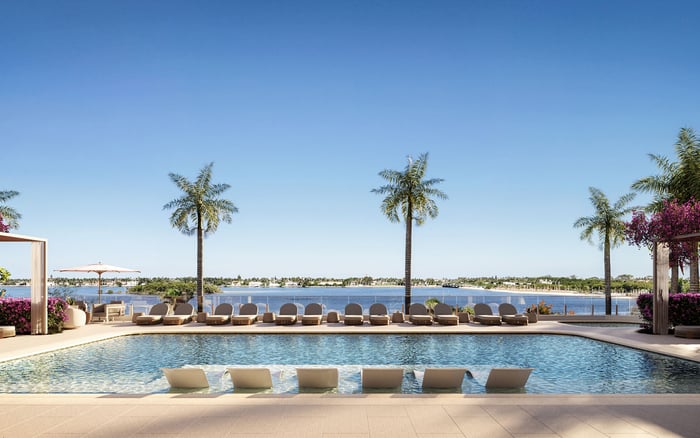
Outdoor amenities deserve the same scrutiny. A pool is an asset when it is well managed, well located, and supported by proper service routines. In a high-use season, the difference between a glamorous amenity and a frustrating one is often operational, not aesthetic.
New construction can offer contemporary systems, current design expectations, and a sense of lower immediate maintenance, but it should still be tested carefully. Buyers should examine completion quality, developer follow-through, association formation, staffing plans, warranty procedures, and how the building intends to operate once the sales environment gives way to daily life.
The strongest new residences feel resolved, not merely new. Corridors, elevators, parking, service areas, package rooms, amenity schedules, and security protocols should all support the same level of refinement as the private residence itself.
Resale properties can also perform beautifully when they have been maintained with rigor. A mature building with a serious culture, experienced staff, and a proven operating rhythm may be preferable to a newer address that has not yet demonstrated how it behaves under pressure.
Before committing, walk through the property as an owner rather than a guest. Arrive at different times if possible. Study the garage, the back-of-house areas, the loading zones, the elevator wait, the guest path, and the condition of spaces that are not staged for admiration.
Ask how storm preparation is handled, who communicates with owners, where furniture is secured, how common areas are protected, and what happens if an owner is away. Ask how the building manages holiday demand, visiting family, deliveries, private events, and vendor access. In a single-family context, ask who handles the home when the owner is traveling and how quickly vendors can respond.
The right residence should reduce the number of decisions an owner must make under pressure. That is the mark of a property that performs.
West Palm Beach has become more than a seasonal convenience. For many buyers, it is a strategic base: close to cultural life, private clubs, waterfront pleasures, aviation access, and the quieter elegance of Palm Beach living. But the best purchase is not defined by location alone.
The real distinction lies in ownership quality. A residence that performs during storms and high season gives its owner something more valuable than spectacle. It gives confidence. It allows the home to feel calm when the outside world becomes congested, humid, windy, or unpredictable. In the luxury market, that is not a minor advantage. It is the essence of discretion.
What is the first thing a West Palm Beach buyer should test? Start with operational ease: access, staffing, storm procedures, parking, service flow, and the condition of shared systems.
Is storm readiness only about impact glass? No. It includes the building envelope, drainage, generators, elevators, management protocols, communication, and recovery planning.
Why does high season matter in property selection? High season tests daily convenience. Traffic, guests, vendors, valet flow, and amenities all become more revealing when demand rises.
Should a second-home buyer prioritize management quality? Yes. If the owner is away, a disciplined management structure can be as important as the residence itself.
Is new construction always better for storm performance? Not automatically. New construction should still be evaluated for execution quality, staffing plans, warranties, and operating maturity.
Can a waterview create additional ownership concerns? It can. Exposure, moisture, wind, exterior maintenance, and terrace care should all be reviewed with care.
How should buyers think about insurance? Insurance should be part of the ownership model from the beginning, alongside reserves, maintenance, deductibles, and association finances.
Does a pool add complexity in high season? Yes. A pool is most valuable when service routines, capacity, privacy, and maintenance standards are consistently strong.
What makes a residence feel calm during a storm period? Clear responsibility, strong communication, reliable systems, and a prepared staff or vendor network create that sense of calm.
What is the best way to shortlist comparable options for touring? Start with location fit, delivery status, and daily lifestyle priorities, then compare stacks and elevations to validate views and privacy.
To compare the best-fit options with clarity, connect with MILLION.
If branded residences are on your mind — as a home or as an allocation — we would be glad to share what we are seeing, privately.
Begin a quiet conversation