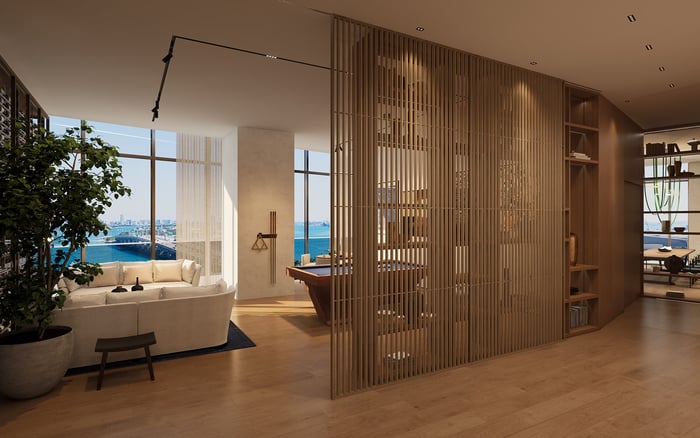
A buyer-focused editorial guide to evaluating household staff needs, laundry placement, and service corridors when comparing luxury residences in Sunny Isles Beach, Downtown Miami, and Boca Raton.

For South Florida’s most sophisticated condominium buyers, the next layer of due diligence is increasingly operational. Views, ceiling heights, terraces, kitchens, and brand pedigree still matter, but the daily choreography of a residence often determines whether it lives as elegantly as it presents. Armani Casa Sunny Isles Beach, Casa Bella by B&B Italia Downtown Miami, and Glass House Boca Raton each occupy a distinct lifestyle context, yet they raise the same essential question for 2026 buyers: how will the home function when family, guests, household staff, deliveries, wardrobe care, pets, and entertaining all move through one private environment?
This is not a minor planning issue. In the New-construction and Ultra-modern segment, a residence is expected to perform with the composure of a private estate. That requires a close look at where staff can enter, where laundry is handled, how service movement is separated from formal living areas, and whether the plan supports real routines rather than brochure-perfect stillness.
The first question is not simply whether a residence includes a staff room or service area. The more precise question is whether the plan supports the household’s actual rhythm. A seasonal owner who entertains intensely for three months may need a very different service strategy than a full-time family with daily housekeeping, childcare, drivers, chefs, personal assistants, and pet care.
In Sunny Isles Beach, a waterfront lifestyle can mean frequent guest turnover, beach-related laundry, and a heightened need for discreet transitions between arrival, wardrobe care, and private quarters. For a buyer considering Armani Casa Sunny Isles Beach, the due-diligence lens should include where staff can circulate during morning service, how groceries or catered items reach the kitchen, and whether bedrooms can remain private while the residence is being actively maintained.
Downtown has a different tempo. Casa Bella by B&B Italia Downtown Miami sits within an urban context where entertaining may involve cultural events, business dinners, and shorter-notice arrivals. In that setting, staff circulation should be evaluated against elevator access, kitchen adjacency, powder room placement, and the ability to reset the home quickly after an evening event without disrupting owners or overnight guests.
Boca Raton often carries a more residential cadence, especially for buyers prioritizing calm, privacy, and longer-term living. Glass House Boca Raton should be assessed through the lens of quiet daily function: where household help can stage supplies, whether laundry can be managed without crossing formal zones, and how service activity feels when the home is occupied throughout the day.
Laundry is one of the most underestimated elements in high-end condominium review. Buyers often focus on appliance size and finish, yet placement is more consequential. A laundry room near primary and secondary bedrooms may simplify wardrobe care, but it can introduce acoustic concerns if not properly buffered. A laundry zone near a service entrance may protect privacy, but it can be less convenient for linens, guest suites, and daily clothing.
A serious review should ask how laundry moves through the residence. Where do towels from the pool, spa, or beach return? Can staff collect laundry without entering a primary suite at an inconvenient hour? Is there space to hang delicate garments, fold linens, store cleaning products, and manage overflow after guests depart? These are not glamorous questions, but they separate a beautiful apartment from a residence that truly supports an elevated life.
For buyers who maintain multiple homes, laundry placement becomes even more important. When arrivals and departures are compressed into long weekends or holiday periods, staff may need to prepare wardrobes, refresh linens, receive luggage, and reset guest rooms quickly. A poorly placed laundry area can turn a refined plan into a logistical bottleneck.
The best service circulation is often the circulation one barely notices. In a large residence, service corridors, secondary entries, and carefully placed doors allow a household to operate in layers. Owners can host in the living room while staff prepare in the kitchen. Guests can use a powder room without crossing utility zones. Housekeeping can move between bedrooms and laundry without passing through the most formal spaces.
Not every condominium floor plan will offer estate-like separation, so the buyer’s task is to identify the quality of the compromise. If a service corridor is absent, can furniture placement, doors, vestibules, or millwork create discretion? If the kitchen is open to the main living area, is there a secondary prep zone or pantry that keeps service tasks contained? If elevators open near formal spaces, is there enough transitional depth to preserve a sense of arrival?
This is particularly important for households with rotating staff. A residence should be intuitive. Clear routes reduce interruptions, awkward crossings, and the need for constant instruction. In an exceptional home, service is not hidden because it is unimportant; it is discreet because privacy is part of the architecture of luxury.
The useful way to compare these residences is not to force them into the same lifestyle category. Armani Casa Sunny Isles Beach may appeal to buyers weighing oceanfront living, resort-like use patterns, and frequent guest stays. Casa Bella by B&B Italia Downtown Miami may resonate with buyers who want a cultured urban base in Downtown, with entertaining and mobility central to the experience. Glass House Boca Raton may suit buyers focused on a quieter residential atmosphere, ease, and refined daily continuity.
Each context changes the operational questions. A beach-oriented household should test storage, towel cycles, staff access, and guest turnover. An urban entertaining household should test catering flow, evening arrivals, elevator-to-kitchen movement, and post-event reset. A Boca Raton household should test everyday privacy, staff presence during working hours, laundry convenience, and the subtle boundary between family space and service space.
The shared principle is discipline. Buyers should walk a plan mentally from 7 a.m. to midnight. Where does breakfast service begin? Who enters first? Where does a housekeeper wait if a child is sleeping? Where do flowers, dry cleaning, luggage, groceries, and pet supplies go? Where can staff pause without occupying the home’s most visible areas? A residence that answers these questions gracefully is more likely to remain pleasurable over time.
Before committing, buyers should request a detailed review of the floor plan with daily operations in mind. The conversation should include staff entry, elevator sequence, kitchen support areas, laundry acoustics, storage depth, linen capacity, back-of-house ventilation, waste movement, and privacy around bedrooms. If the residence will be customized, these issues should be addressed early, before finish selections distract from circulation fundamentals.
The most discerning buyers also consider staffing assumptions. Will the home have live-in help, daily help, or event-based help? Will a chef need prep space separate from the display kitchen? Will wardrobes require steaming, pressing, and seasonal storage? Will pets require a service route that avoids formal rooms after walks? These choices influence whether a floor plan feels effortless or constantly negotiated.
Aesthetic luxury is visible at once. Operational luxury reveals itself slowly, in the absence of friction. That is why household staff needs, laundry placement, and service corridors deserve to sit beside view lines and interior design in the 2026 luxury due-diligence conversation.
Why do household staff needs matter in a luxury condominium? They influence privacy, timing, storage, and the way a residence functions during daily use or entertaining.
Is a staff room always necessary? Not always. The more important issue is whether the plan supports the household’s staffing model and service routines.
What makes laundry placement successful? It should balance convenience, acoustics, privacy, ventilation, and access to bedrooms, linens, and service areas.
Should buyers prioritize a service corridor? A service corridor can be valuable, but the broader goal is discreet movement that avoids disrupting formal spaces.
How should entertaining affect floor-plan review? Buyers should test catering flow, powder room access, kitchen support, and post-event cleanup paths.
What should seasonal owners examine most closely? They should focus on luggage handling, linen turnover, wardrobe preparation, storage, and rapid reset after arrivals.
Does Downtown living change service needs? Yes. Urban residences often require sharper planning around deliveries, guests, mobility, and event-driven use.
Why is Boca Raton different in this analysis? Boca Raton buyers may place greater emphasis on quiet daily function, privacy, and longer periods of occupancy.
Can customization solve service-flow concerns? Sometimes, especially through doors, millwork, storage, and layout refinements, but structural circulation limits still matter.
When should these questions be raised? They should be addressed before contract or early in customization, while layout decisions can still be refined.
If you'd like a private walkthrough and a curated shortlist, connect with MILLION.
If branded residences are on your mind — as a home or as an allocation — we would be glad to share what we are seeing, privately.
Begin a quiet conversation