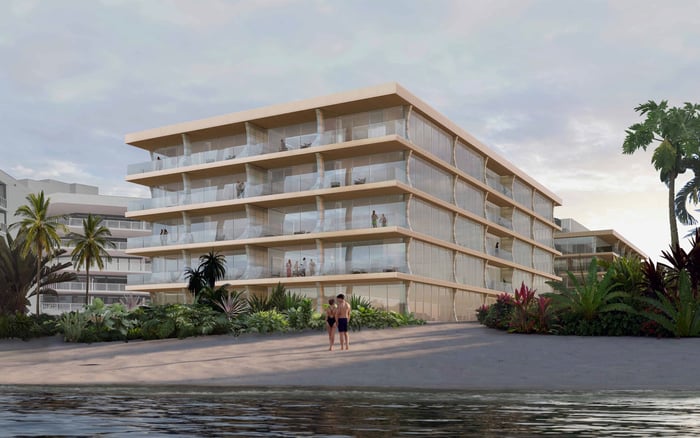
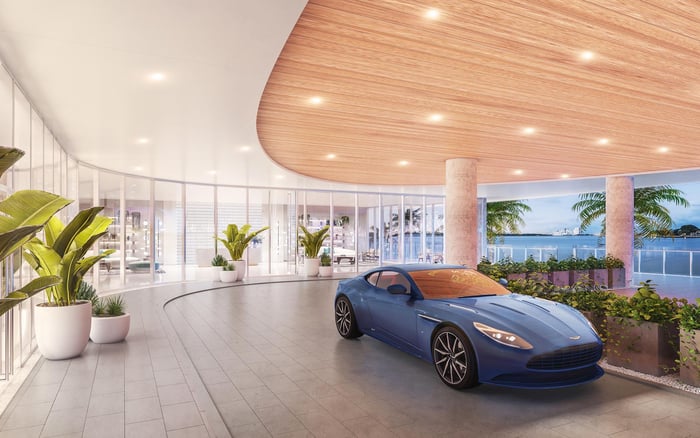
A buyer-focused editorial guide to the Palm Beach County residence profiles that best support private home gyms, discreet wellness routines, and controlled access.

For a certain Palm Beach County buyer, a home gym is not simply a room with mirrors and equipment. It is a controlled environment for discipline, recovery, and personal rhythm. Privacy matters because wellness routines can be deeply specific: early training, post-travel recovery, physician-guided movement, strength work, Pilates, boxing, or quiet stretching before the house begins to move.
In the luxury segment, the most compelling residences treat the gym as an intimate suite rather than a decorative amenity. The strongest layouts separate the fitness zone from guest circulation, shield it from entertainment areas, and create a private sense of arrival even inside a large home. The question is not whether a property can accommodate a treadmill. The question is whether the home can protect a routine.
1. Private waterfront estate - separated wellness wing
A private waterfront estate is often the most natural fit for buyers who want a gym that feels removed from the social heart of the house. The ideal version places fitness, recovery, and changing space in a dedicated wing, using water views for calm rather than display.
The privacy advantage is circulation. Owners can move from the primary suite to the training space without passing formal entertaining rooms, guest bedrooms, or service corridors. For buyers who train with a coach, the best configuration allows a professional to arrive, park, and enter without crossing the central living areas.
2. Gated estate compound - controlled arrivals and layered access
A gated estate compound suits buyers who want the gym to operate within a broader privacy system. Gates, deep setbacks, landscape buffers, and secondary entries can help make training feel invisible to visitors and household staff.
The strongest compounds treat access as a sequence: the public face of the residence, then the family zone, then the wellness zone. A private gym in this setting should feel protected by design, not hidden as an afterthought.
3. New-construction custom home - gym designed before the walls go up
New construction gives buyers the rare chance to define privacy from the beginning. Instead of adapting a spare bedroom, the owner can plan ceiling height, flooring, ventilation, sound control, storage, lighting, and recovery adjacencies around a true fitness program.
This profile is especially useful for buyers with specialized routines. A strength-focused gym needs a different structure than a yoga studio. A reformer room needs different clearances than a boxing area. When privacy is designed early, the home can support wellness without compromising elegance.
4. Large single-family home - flexible conversion with discreet separation
A large single-family home can be an intelligent choice when the floor plan already includes a secondary den, cabana room, guest suite, or garage-adjacent space that can become a private gym. The key is to avoid a conversion that feels exposed to guests or audible from bedrooms.
The best candidates have a room that can be entered without crossing the formal living sequence. If the gym shares a wall with a media room, staff zone, or secondary storage area, the arrangement may be easier to adapt than one placed beside a dining room or primary sitting area.
5. Boutique luxury residence - private wellness without estate-scale upkeep
Some buyers want the discretion of private fitness without managing a full estate. A boutique luxury residence can work when the unit itself has enough square footage for an enclosed training space, especially if the building environment is quiet and low-traffic.
The interior plan matters more than the amenity brochure. A true private gym inside the residence should be visually shielded from the main entry, buffered from bedrooms, and easy to close off when guests arrive. For a seasonal owner, this can offer a controlled wellness routine with simpler maintenance.
Privacy is not only visual. It is acoustic, operational, and behavioral. A gym can be concealed from view yet still transmit music, weights, vibration, or trainer conversation into the rest of the home. For discerning buyers, privacy means the room performs quietly even when the workout does not.
The most successful home gyms typically sit away from formal dining rooms, guest suites, and children’s bedrooms. They have doors that close properly, lighting that can be tuned for different times of day, and storage that keeps equipment from spilling into transitional spaces. A discreet gym should feel ready at all hours without announcing itself.
Ventilation is another quiet luxury. Training rooms need air movement, but visible mechanical clutter can undermine the architectural tone. Buyers should look for spaces where climate control can be handled without turning the gym into a utility room.
Palm Beach County offers several privacy languages. Some buyers prefer the formality and mature landscaping associated with estate living. Others want proximity to dining, clubs, marinas, or cultural districts while still maintaining a personal fitness sanctuary at home.
The same privacy logic applies across Palm Beach, West Palm Beach, and Boca Raton searches, whether the brief centers on single-family homes, a gated community, or new construction. The label matters less than the way the residence handles movement, sound, parking, and guest visibility.
For buyers comparing locations, it helps to ask how the home behaves at the busiest moment of the day. Can a trainer arrive while guests are at breakfast? Can family members pass through without interrupting a session? Can recovery happen quietly after entertaining? These small tests reveal whether the residence truly supports a private wellness life.
A private gym should be evaluated with the same seriousness as a primary suite, kitchen, or outdoor room. Walk the route from the primary bedroom to the proposed gym. Walk it again from the driveway, garage, pool, and service entry. Each path reveals who might see, hear, or interrupt the routine.
Then consider equipment. Free weights, reformers, rowing machines, and treadmills all carry different spatial and acoustic demands. A beautiful room with delicate flooring may not be the right gym. Conversely, a less glamorous secondary space may become exceptional if it has the right proportions, privacy, and ventilation.
Finally, look for future flexibility. Wellness habits evolve. A room that can shift from strength training to mobility, recovery, meditation, or physical therapy will have longer-term value than a highly specific installation. In a luxury home, privacy should feel adaptable, not rigid.
What is the most private home gym layout? A dedicated wellness wing with its own circulation is usually the strongest choice. It limits guest visibility and reduces interruptions.
Should the gym be near the primary suite? Proximity can be excellent if the route is discreet. The best arrangement allows private movement without crossing entertaining areas.
Is a garage conversion a good option? It can work if ceiling height, climate control, flooring, and acoustic separation are handled properly. The result should feel integrated, not improvised.
What matters more, size or separation? Separation often matters more than size for privacy-led buyers. A compact, enclosed gym can outperform a larger exposed room.
Can a condominium residence support a private gym? Yes, if the floor plan allows a fully enclosed fitness space within the residence. The room should be shielded from the entry and main entertaining area.
How should buyers think about sound? Test the room during active use, not just while empty. Music, weights, machines, and trainer conversation all affect privacy.
What is the best gym location for trainer access? A space near a secondary entry, motor court, or garage can be ideal. It allows professionals to arrive without moving through the main house.
Does outdoor access improve a private gym? It can, especially when paired with a terrace, garden, pool, or recovery area. The access should remain discreet and not expose the workout zone.
Should buyers prioritize new construction for gym privacy? New construction is valuable when the buyer wants purpose-built flooring, ventilation, sound control, and access. Existing homes can also work if the layout is strong.
What is the biggest mistake buyers make? They focus on equipment before evaluating circulation and privacy. The room must support the routine as much as the workout.
For a discreet conversation and a curated building-by-building shortlist, connect with MILLION.
If branded residences are on your mind — as a home or as an allocation — we would be glad to share what we are seeing, privately.
Begin a quiet conversation