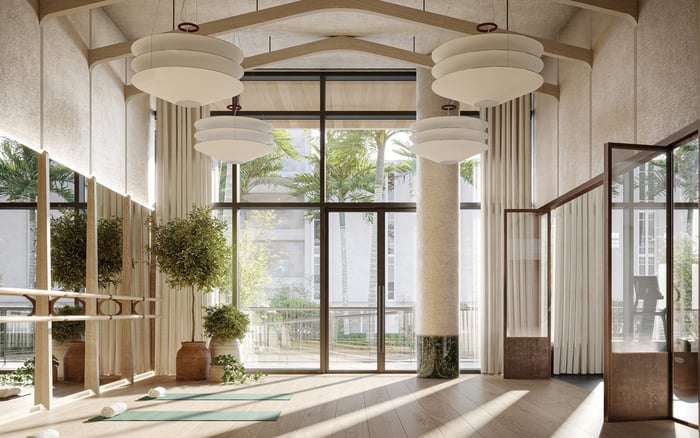
A buyer-focused comparison of The Well Bay Harbor Islands and The Well Coconut Grove, examining privacy, walkability, outdoor access, transit, and lifestyle fit for wellness-minded purchasers in South Florida.
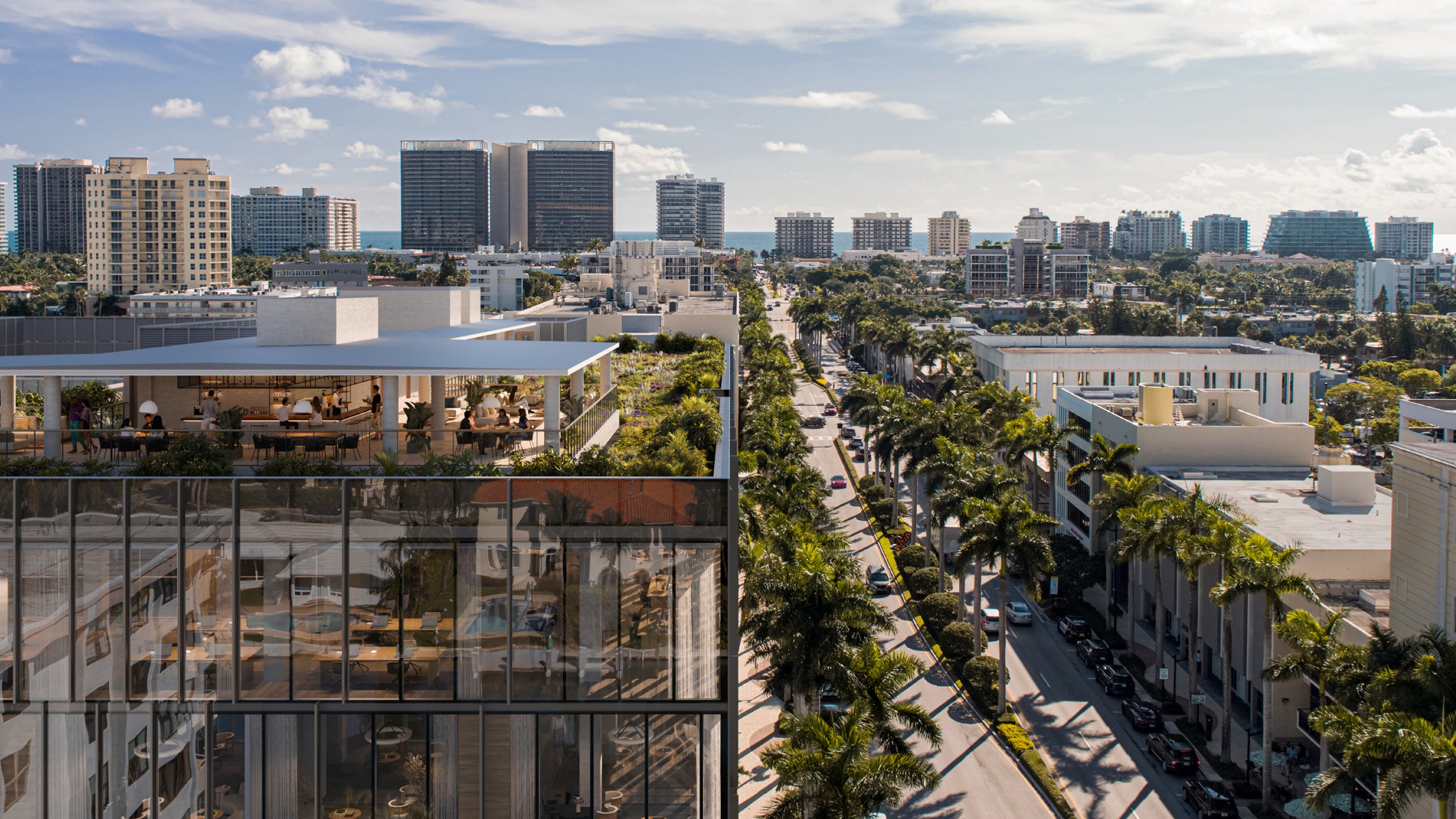
For a certain luxury buyer, the question is no longer simply which residence offers the finer finish palette or the more polished amenity story. In South Florida, wellness-driven purchasing has become more personal than that. It is about how a place allows you to move through the day, how much friction it removes, and whether your home feels like a sanctuary, a social village, or a thoughtful blend of both.
That is what makes The Well Bay Harbor Islands and The Well Coconut Grove such a compelling comparison. The shared wellness-forward branding may place them in the same conversation, but the two settings are fundamentally different. One is defined by the privacy and low-density character of Bay Harbor Islands. The other is woven into the walkable, layered fabric of Coconut Grove.
For buyers working with MILLION Luxury, the real distinction is not which is better in the abstract. It is which version of well-being feels most natural in daily life.
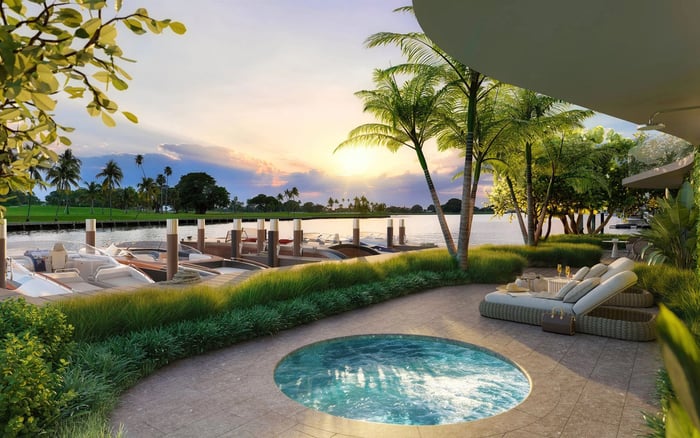
Bay Harbor Islands has the kind of scale that immediately shifts the mood of ownership. It is a small incorporated village of roughly 5,000 residents, with a limited residential footprint and a notably quiet, insulated feel. That modest scale matters. It creates a sense of remove from Miami’s busier mixed-use districts and reinforces the calm many affluent buyers now regard as a wellness amenity in its own right.
In practical terms, The Well Bay Harbor Islands will likely appeal to purchasers who value retreat over stimulation. This is the buyer who sees home as the primary place of restoration, who prefers a slower entry into and exit from the day, and who does not need a café, fitness studio, or dinner reservation to be a short stroll away in order for life to feel convenient.
Bay Harbor Islands also tends to attract residents who prioritize waterfront living, boating access, and an environment that feels buffered from urban intensity. Its limited land area further constrains supply, reinforcing the exclusive tone that often defines the village. For second-home buyers, privacy-minded families, and residents who prefer discretion over neighborhood theater, that scarcity is part of the appeal.
This atmosphere is echoed across nearby branded and boutique offerings such as Onda Bay Harbor and La Maré Bay Harbor Islands, where the broader setting leans toward refined seclusion rather than urban foot traffic. In that sense, The Well Bay Harbor Islands belongs to a micro-market where peace, water orientation, and low density are central to value.
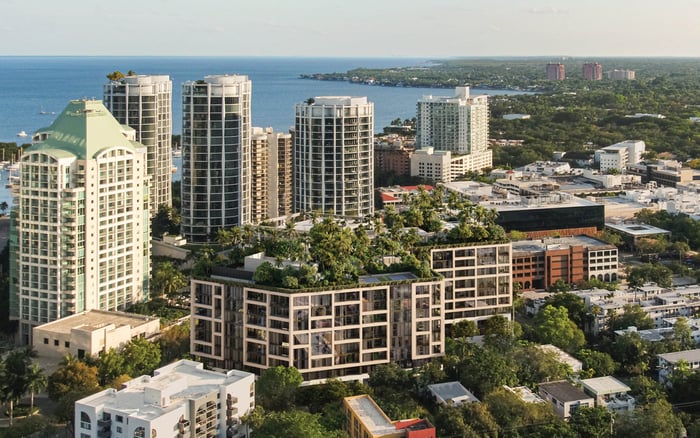
Coconut Grove offers a very different interpretation of luxury health and ease. One of Miami’s oldest neighborhoods, it retains a village-like urban fabric that feels distinct within the city. Streetscape, neighborhood identity, and the ability to move on foot all shape its appeal. For a wellness buyer, that translates into something simple but powerful: daily life can unfold without constant reliance on a car.
The neighborhood is meaningfully more walkable than Bay Harbor Islands, with a rhythm built around dining, retail, parks, and services that are part of an ordinary routine rather than a planned outing. CocoWalk functions as a central lifestyle hub, concentrating shops, restaurants, and wellness-oriented activity in one district. For buyers who associate well-being with spontaneity, social energy, and convenience, that density of options can feel far more supportive than a more secluded address.
Coconut Grove also benefits from public green space that broadens the definition of wellness beyond interiors and private amenity decks. Peacock Park brings recreation and family-friendly open space, while Kennedy Park adds waterfront outdoor access that reinforces the neighborhood’s active character. In a market where many luxury projects promise health-oriented living, the Grove has the advantage of extending that idea into the public realm.
That context helps explain the continued appeal of projects such as Arbor Coconut Grove and Opus Coconut Grove, which benefit from the same neighborhood logic: residents are buying not only into a building, but into a district where movement, dining, errands, and outdoor time can feel elegantly integrated.
One of the clearest distinctions between these two addresses is mobility. Bay Harbor Islands is best understood as a car-dependent environment. That does not diminish its luxury profile. For many buyers, driving is hardly an inconvenience when the reward is an island setting with less noise, less density, and more privacy. In fact, for residents accustomed to chauffeur service, second vehicles, or highly managed schedules, walkability may rank below serenity.
Coconut Grove offers a more flexible routine. Along with its pedestrian character, the area benefits from access to the Coconut Grove Metrorail station, giving some residents a viable car-light option for select trips. For full-time owners, younger luxury buyers, and households that want optionality in how they move, this becomes a meaningful differentiator.
The test is simple. If wellness means lowering stimulation and returning each evening to a quieter residential pocket, The Well Bay Harbor Islands has the stronger emotional case. If wellness means reducing the friction of daily life, walking to lunch, reaching a park without planning, and having more than one way to navigate the city, The Well Coconut Grove gains the advantage.
The two neighborhoods also occupy different positions in the luxury buying conversation. Bay Harbor Islands is generally associated with a higher entry point at the upper end, reflecting its constrained land area, tighter inventory, and the premium placed on exclusivity. Coconut Grove tends to present a broader pricing range, which can create a somewhat lower barrier to entry depending on product type, scale, and exact location.
For buyers, this is not merely about budget. It is about posture. Bay Harbor Islands often feels more insulated and finite, which can be especially attractive to purchasers seeking rarity and long-hold confidence. Coconut Grove, by contrast, offers a wider menu of residential experiences, from established luxury enclaves to more connected village settings, making it compelling for buyers who want both prestige and neighborhood participation.
This is why comparisons between The Well Bay Harbor Islands and The Well Coconut Grove should be viewed through the lens of use case rather than simple pricing. The value proposition of each address is closely tied to how an owner intends to live.
The buyer best suited to The Well Bay Harbor Islands is often someone who wants home to feel separate from the city, even while remaining connected to it. They may be a second-home owner, a privacy-minded end user, or a waterfront-oriented purchaser who values discretion, controlled pace, and a retreat-like environment. They are not looking for neighborhood energy to validate the purchase. They want calm.
The buyer best suited to The Well Coconut Grove is usually someone who wants wellness to extend beyond the front door. They may prioritize morning walks, easy access to dining and services, park time, and the casual sophistication of a neighborhood with visible street life. They are buying into Coconut Grove as much as the project itself.
For many clients, the answer becomes clearer when framed in a single sentence. Bay Harbor Islands is for the buyer who wants luxury wellness to feel inward and private. Coconut Grove is for the buyer who wants it to feel outward, connected, and woven into the neighborhood.
In a market increasingly fluent in wellness language, place remains the decisive luxury amenity. Branding may align these two developments, but geography separates them in all the ways that matter. Bay Harbor Islands offers a more secluded interpretation of elevated living, rooted in low density, water orientation, and privacy. Coconut Grove offers a more walkable and socially textured interpretation, grounded in village identity, parks, convenience, and flexibility.
Neither is the universal winner. The right choice depends on whether your version of well-being begins with stillness or movement, seclusion or interaction, insulation or access. That is the distinction sophisticated buyers should keep front of mind.
Is The Well Bay Harbor Islands better for buyers who value privacy? Yes. Bay Harbor Islands is defined by a smaller, lower-density residential setting that feels more secluded than mixed-use urban neighborhoods.
Is The Well Coconut Grove the more walkable option? Yes. Coconut Grove offers a more walkable neighborhood pattern, with dining, retail, parks, and services integrated into daily life.
Which location feels more like a retreat? The Well Bay Harbor Islands generally fits that brief better because the village setting is quieter, more residential, and more insulated.
Which project is better for buyers who enjoy being out and about? The Well Coconut Grove is the stronger fit for owners who want neighborhood energy, social activity, and spontaneous outings on foot.
Does Bay Harbor Islands appeal to boating-oriented buyers? Often, yes. The area is closely associated with waterfront living and a lifestyle that places a premium on water access.
Does Coconut Grove offer meaningful outdoor amenities beyond private residences? Yes. Parks such as Peacock Park and Kennedy Park strengthen the neighborhood’s active, open-air appeal.
Is Coconut Grove easier to navigate without relying entirely on a car? Yes. Its pedestrian character and access to Metrorail create more flexibility for car-light routines than Bay Harbor Islands.
Is Bay Harbor Islands considered more supply-constrained? Yes. Its limited land area naturally restricts inventory, which supports an exclusive residential profile.
Which area may offer a broader range of luxury pricing? Coconut Grove generally presents a wider range of entry points, while Bay Harbor Islands tends to feel tighter and more exclusive.
How should a wellness-driven buyer make the final decision? Match the purchase to your daily rhythm: choose Bay Harbor Islands for privacy and retreat, or Coconut Grove for walkability and neighborhood connection.
For a tailored shortlist and next-step guidance, connect with MILLION Luxury.
If branded residences are on your mind — as a home or as an allocation — we would be glad to share what we are seeing, privately.
Begin a quiet conversation