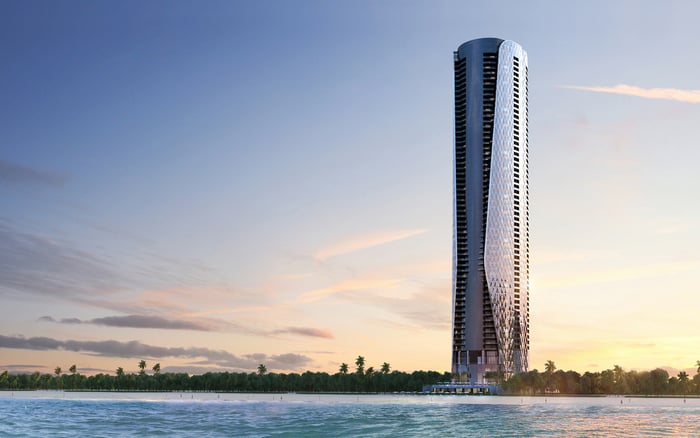
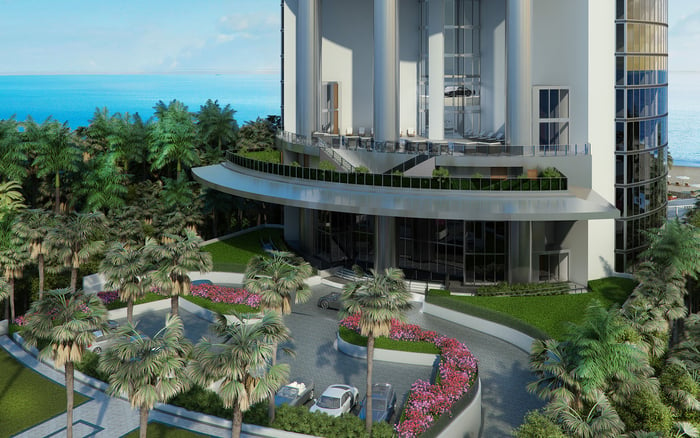
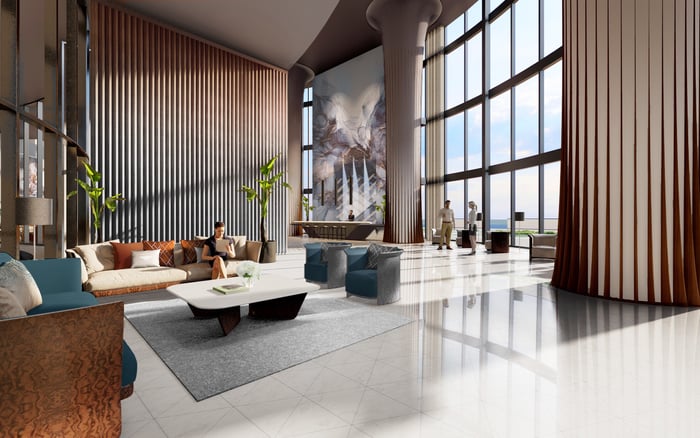
For luxury buyers deciding between vertical resort living and a quieter residential setting, Sunny Isles Beach and Surfside represent two distinct beachfront propositions. Sunny Isles Beach centers on scale, service, and tower-driven liquidity, while Surfside offers lower-density ownership, land value, and a more discreet daily rhythm.
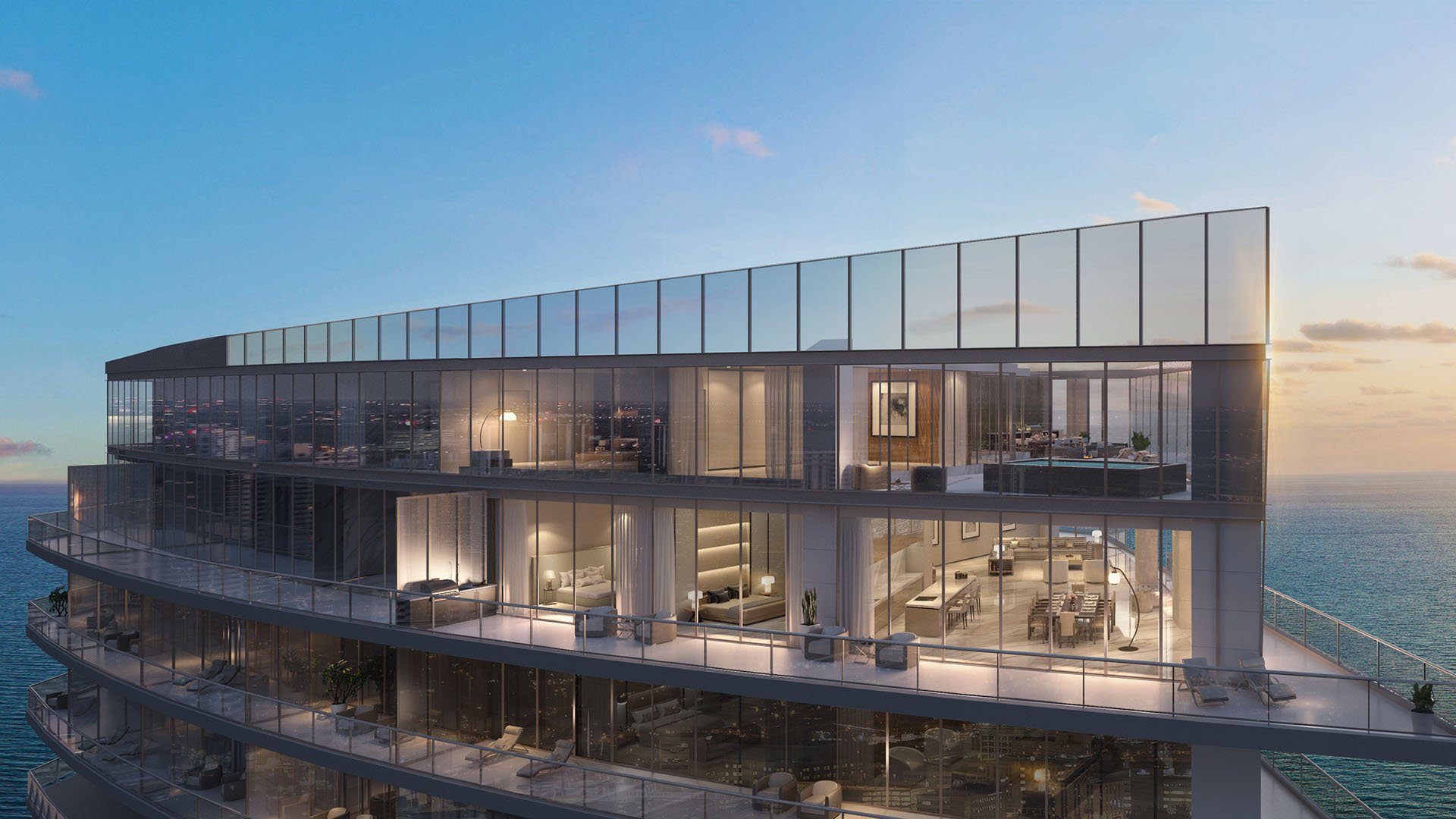
For beachfront buyers in North Miami-Dade, the choice between Sunny Isles Beach and Surfside is rarely about coastline alone. Both occupy coveted oceanfront land, both attract affluent domestic and international buyers, and both can command eight-figure transactions. Yet the ownership experience differs sharply.
Sunny Isles Beach is built around vertical luxury. Its identity is defined by tall residential towers, expansive service programs, and amenity ecosystems that make daily life feel closer to a private resort. Surfside, by contrast, presents as a more controlled and discreet neighborhood, with lower-scale development, a quieter commercial environment, and a stronger orientation toward private homes and long-term ownership.
For MILLION Luxury readers, the distinction is less about which address carries more prestige and more about which ownership model best aligns with lifestyle. Buyers weighing scale against discretion are really choosing between two expressions of luxury: one curated by the building, the other shaped by the neighborhood.
Sunny Isles Beach has long refined a high-rise beachfront formula. Zoning has supported tall residential towers along the shoreline, producing a dense luxury inventory centered on concierge service, wellness programming, private beach setups, fitness clubs, spas, and managed arrival experiences. In practical terms, ownership here can feel exceptionally turnkey.
That helps explain why the market continues to attract buyers who prioritize convenience, service, and immediate access to a polished lifestyle. In many buildings, the amenity stack is not supplementary; it is the product itself. The neighborhood’s identity has been shaped by residences where design, staff, and facilities work together to replace much of what a standalone estate would otherwise require.
Examples are easy to see in the evolution of Bentley Residences Sunny Isles, The Estates at Acqualina Sunny Isles, and Turnberry Ocean Club Sunny Isles, all of which reflect the broader Sunny Isles preference for highly programmed living. The same logic is evident in established trophy buildings such as Porsche Design Tower and boutique-oriented product such as Arte by Antonio Citterio in Sunny Isles Beach, where amenities remain central to value.
There is also a market case in Sunny Isles Beach’s favor. The area has sustained luxury development and launch activity over time, creating a comparatively liquid condo environment with faster sales activity than more constrained, house-led beachfront enclaves. For second-home buyers, global purchasers, and owners who may eventually resell into an active international audience, that liquidity can matter nearly as much as the view.
Surfside offers a different kind of confidence. It does not rely on spectacle. Its appeal comes from lower density, tighter neighborhood character, and a daily atmosphere that feels more residential than performative. Streets are quieter, commercialization is limited, and the housing mix leans more heavily toward single-family homes and selective luxury buildings than toward a continuous wall of towers.
In Surfside, discretion should not be mistaken for austerity. It means fewer shared theatrics and greater emphasis on private control. Instead of relying on a large building’s spa, club floor, or hospitality program, buyers often create value within the residence itself through lot size, landscaping, pools, security, and interior customization. The luxury proposition is therefore more land-driven and more personal.
That framework is reflected in projects such as Ocean House Surfside, The Delmore Surfside, and Arte Surfside, which align with Surfside’s more selective, boutique-feeling identity. Even when the product is condominium-based, the neighborhood context remains quieter than what buyers encounter in large-scale tower districts.
For families, long-hold owners, and buyers who place a premium on neighborhood calm, Surfside’s strength lies in what it avoids. There is less retail intensity, less through-traffic, and less of the constant turnover often associated with global condo markets. The result is a setting that feels measured rather than maximized.
Both markets can climb well into the upper luxury tier, but they get there differently. In Sunny Isles Beach, buyers can often access the luxury market at a lower entry point if they are willing to purchase a high-rise condominium rather than a detached beachfront or near-beach residence. At the top end, however, penthouses and signature residences still push pricing deep into eight figures when the tower, view line, and amenity package are exceptional.
Surfside’s price logic is usually more exacting at the entry level because buyers are often paying for something inherently scarcer: land, privacy, and detached-home ownership. Even when values align with Sunny Isles Beach on an absolute basis, the rationale is different. Sunny Isles Beach often prices lifestyle through services and shared infrastructure. Surfside often prices privacy through lot control and neighborhood scarcity.
On a per-square-foot basis, Surfside can command a premium because low-density coastal land is limited and difficult to replicate. In Sunny Isles Beach, values are more directly shaped by tower inventory, design pedigree, amenity depth, and where a residence sits within the building hierarchy.
The buyer best suited to Sunny Isles Beach is typically someone who wants seamless living. This may be a second-home owner, an international purchaser, or a highly mobile household that values staff support, lock-and-leave ease, and strong recreational programming within the building envelope. If the ideal day begins with valet, includes a training session and beach service, and ends with privacy handled by management rather than by maintaining an estate, Sunny Isles Beach is compelling.
Surfside tends to suit the buyer who wants luxury to feel less managed and more personal. This may be a primary resident, a family office buyer, or a household planning a longer ownership horizon. These buyers often care less about arriving through a dramatic tower lobby and more about having quiet streets, fewer immediate neighbors, and a residence that expresses privacy from the property line inward.
Neither market is universally better. The distinction is one of operating style. Sunny Isles Beach delivers hospitality-forward oceanfront living. Surfside delivers lower-density control and neighborhood continuity.
A final consideration is future context. Sunny Isles Beach already has substantial beachfront buildout, which means its luxury identity is firmly established and much of its shoreline product is already familiar to the market. That can support confidence in the area’s positioning as a mature, internationally legible condo district, though buyers are still choosing among buildings with very different levels of finish and service.
Surfside’s development posture is more restrained. The neighborhood is less defined by major new launch cycles and more by selective replacement homes and carefully controlled projects. For buyers who value predictability in the surrounding streetscape, this matters. The environment is not built around constant reinvention.
For many purchasers, that becomes the decisive question. Do you want a residence elevated by the building, or one elevated by the block? In Sunny Isles Beach, luxury is scaled, serviced, and socialized through architecture. In Surfside, luxury is edited, quieter, and often more private by design.
Is Sunny Isles Beach better for second-home buyers? Often, yes. Its tower inventory and building-managed lifestyle suit owners who want convenience and a lock-and-leave experience.
Is Surfside better for primary residents? It often appeals to primary residents and long-term owners because the neighborhood feels calmer and more residential.
Which market offers larger amenity packages? Sunny Isles Beach. Its luxury towers are generally built around concierge, fitness, spa, and private beach-style services.
Which area feels more discreet day to day? Surfside. Lower density and a smaller commercial footprint contribute to a quieter rhythm.
Is entry pricing usually lower in Sunny Isles Beach? It can be, particularly for buyers entering through high-rise condos rather than detached homes.
Why can Surfside command strong pricing despite fewer amenities? Because value there is often tied to scarce land, privacy, and lower-density ownership rather than shared services.
Does Sunny Isles Beach have stronger resale liquidity? In general, yes. Its larger condo inventory and active development pipeline support more frequent market activity.
Are Surfside transactions sometimes more selective? Yes. Limited inventory can lead to longer marketing periods and a more private transaction environment.
Do both neighborhoods reach the eight-figure tier? Yes. Sunny Isles Beach often gets there through trophy tower residences, while Surfside often gets there through prime homes and scarce locations.
What is the simplest way to choose between them? Choose Sunny Isles Beach if you want amenity scale and turnkey service. Choose Surfside if you want neighborhood discretion and greater privacy.
To compare the best-fit options with clarity, connect with MILLION Luxury.
If branded residences are on your mind — as a home or as an allocation — we would be glad to share what we are seeing, privately.
Begin a quiet conversation