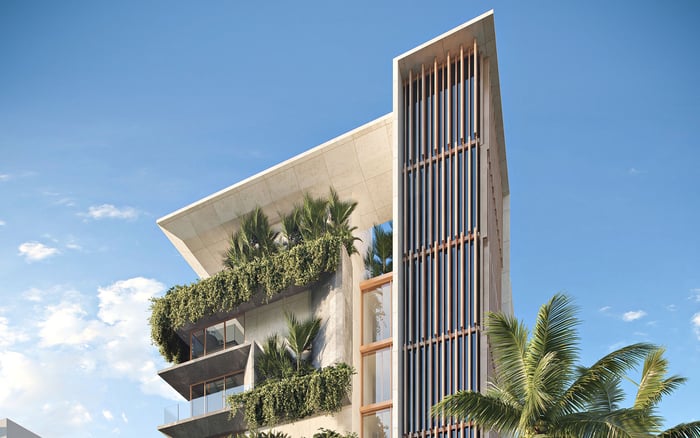
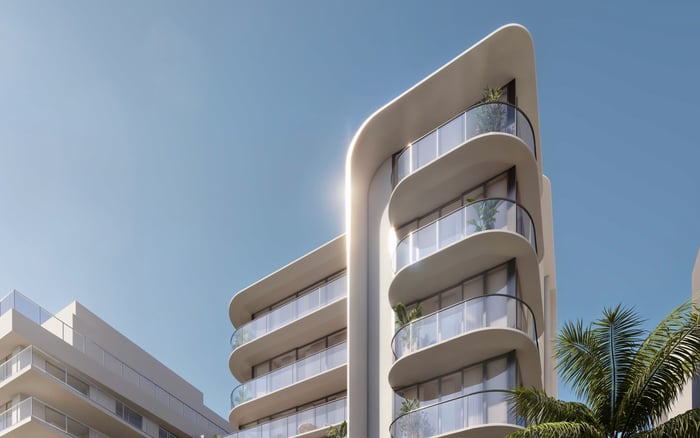
In Bay Harbor Islands, the most supportable distinction between The Well and Alma Bay is brand intent rather than verified building data: one reads as wellness-led, the other as more intimate and residential. For sophisticated buyers, the decision is less about headline positioning and more about confirming what each project actually delivers before assigning premium value.

For the ultra-luxury buyer, Bay Harbor Islands is rarely a story of broad neighborhood contrast. It is a story of individual buildings, scale, tone, and the subtle hierarchy of daily living. In that context, comparing The Well Bay Harbor Islands with Alma Bay Harbor Islands is less about two different destinations and more about two distinct interpretations of life in the same Bay Harbor setting.
The most defensible distinction is also the simplest. The Well Coconut Grove suggests a wellness-oriented brand framework, while Alma Bay reads as the quieter, more intimate residential option. That contrast is editorially useful, but it should not be mistaken for proof. No verified amenity roster, service structure, pricing matrix, or operational detail here is sufficient to establish one as clinically credible or the other as definitively more private.
For discerning readers, that nuance matters. In a market where branding can quickly command attention, the smarter question is not which concept sounds more compelling. It is which residence, once fully verified, aligns more convincingly with your standards for discretion, service, and long-term value.
Both projects appear tied to Bay Harbor Islands, placing them in the same micro-market rather than in competing municipalities with sharply different lifestyle profiles. That narrows the analysis. If a buyer is deciding between them, the decisive variables are likely to be internal: building programming, level of service, density, circulation, resident mix, and the lived quality of common spaces.
This is why the phrase clinical wellness credibility should be handled carefully. A true clinical or medically adjacent wellness proposition usually requires visible evidence such as operator identity, treatment depth, staffing standards, or a clearly articulated health program. None of those points is sufficiently established here. By the same token, quieter residential intimacy is a meaningful aspiration, but without confirmed detail on density, layout, or design features, it remains a matter of positioning rather than proof.
In practical terms, both names may be signaling a buyer archetype. One may be speaking to residents who prioritize routine, restoration, and a more curated wellness narrative. The other may be speaking to owners who want a lower-key home environment that feels insulated from the theatricality of larger branded towers.
A buyer considering The Well is likely responding to the idea of a residence that places wellbeing at the center of daily life. In South Florida, that can be a compelling proposition. Buyers already understand the premium attached to projects that shape experience around air, movement, recovery, and ritual.
But this is exactly where discipline matters. The Well Bay Harbor Islands may indeed aspire to that category, yet aspiration alone is not enough to justify a premium. A serious purchaser should want clarity on what wellness means in operational terms. Is it aesthetic, hospitality-based, or deeply programmed? Is it occasional and symbolic, or embedded in the building’s everyday infrastructure? Without those answers, the brand promise remains elegant but incomplete.
That does not diminish the appeal. It simply reframes it. If you are attracted to The Well, you are likely buying into a lifestyle thesis first. The next step is to confirm whether that thesis is matched by substance.
Alma Bay’s apparent appeal is subtler. The language surrounding it suggests a more residential, quieter expression of Bay Harbor living. For many high-net-worth buyers, that is not a lesser proposition. It is the more desirable one. Privacy, a sense of retreat, and the feeling of a home rather than a statement can be more enduring luxuries than visible programming.
In boutique enclaves like Bay Harbor, that distinction often becomes decisive. Buyers who are less interested in branded lifestyle narratives may find greater value in calm proportions, restrained common areas, and a building culture that feels more residential than performative. Comparable conversations often arise around other local boutique products such as Onda Bay Harbor and La Maré Bay Harbor Islands, where the appeal is often tied to atmosphere and scale as much as visible amenity.
Still, Alma Bay’s quieter identity should also be tested rather than assumed. Without confirmed information on unit count, design strategy, circulation, or privacy-enhancing features, the concept remains plausible but unproven. The promise may be exactly right for a certain buyer profile. It simply requires verification before it can be valued with confidence.
The temptation in luxury real estate is to let branding answer questions that only daily life can answer. In this case, that would be a mistake. Because both projects appear to sit within the same Bay Harbor context, neighborhood factors alone are unlikely to determine the outcome. The finer points of lived experience matter more.
A wellness-led buyer should ask whether the building can support the habits they actually keep. A privacy-led buyer should ask whether the residence will feel calm on an ordinary Tuesday in season, not only during a polished sales presentation. In both cases, the premium is justified not by the concept but by execution.
That is why pricing claims, inventory narratives, and simplistic declarations of superiority are premature. There is no supported basis here for a clean value ranking. No verified closed-sale picture, no confirmed service package, and no dependable roster of specifics allow for that kind of conclusion. The sharpest luxury decision-makers will view both projects as hypotheses until building-level facts are clear.
Before making a commitment, the first step is name and project verification. From there, the next layer is the one that truly matters: current pricing, available inventory, HOA structure, delivery expectations, service programming, and the exact amenity package that will shape resident life. In Bay Harbor Islands, these details are not administrative. They are the difference between a clever concept and a successful home.
It is also worth comparing each proposition against the broader new-construction conversation in the area. Bay Harbor has become attractive precisely because it offers an alternative to louder luxury districts. Buyers often arrive wanting boutique scale, genuine exclusivity, and a more measured residential rhythm. If either The Well or Alma Bay satisfies that brief with conviction, it may earn a place on the shortlist. If not, the market offers enough refined alternatives to keep standards high.
For now, the prudent reading is straightforward. The Well Bay Harbor Islands appears to present the more wellness-led identity. Alma Bay Harbor Islands appears to suggest the more intimate residential identity. Neither position should be treated as fully established until the underlying details are confirmed.
Is The Well Bay Harbor Islands clearly the wellness-focused option? It is presented that way, but the available facts do not fully substantiate the depth or credibility of any clinical wellness offering.
Is Alma Bay Harbor Islands definitively quieter and more private? That is the implied positioning, but there are no verified details here that conclusively prove a lower-density or more private living experience.
Are these two projects in different neighborhoods? No. They appear to be in the same Bay Harbor Islands micro-market, which makes building-level differences more important than municipal ones.
Can buyers compare pricing between the two right now? Not responsibly from the available facts alone. A current comparison requires live pricing and inventory verification.
Does The Well Bay Harbor Islands have confirmed medical or wellness partners? No verified partnership or operator detail is established here, so buyers should confirm that directly before assigning a premium.
Does Alma Bay Harbor Islands have confirmed boutique density or unit-count advantages? No. The quieter, more intimate framing is not supported here by verified density or design specifics.
Which project is better for long-term value? There is no supportable winner on value without confirmed pricing, service levels, and comparable transaction context.
Why is this comparison so nuanced? Because both projects appear to serve the same Bay Harbor Islands audience, and the distinctions depend more on execution than geography.
Who is The Well Bay Harbor Islands likely to appeal to most? Buyers who want wellness to be part of the residential identity, provided the programming ultimately proves substantive.
Who is Alma Bay Harbor Islands likely to appeal to most? Buyers who prefer a more understated, residential tone and are prioritizing calm over overt lifestyle branding.
For a confidential assessment and a building-by-building shortlist, connect with MILLION.
If branded residences are on your mind — as a home or as an allocation — we would be glad to share what we are seeing, privately.
Begin a quiet conversation