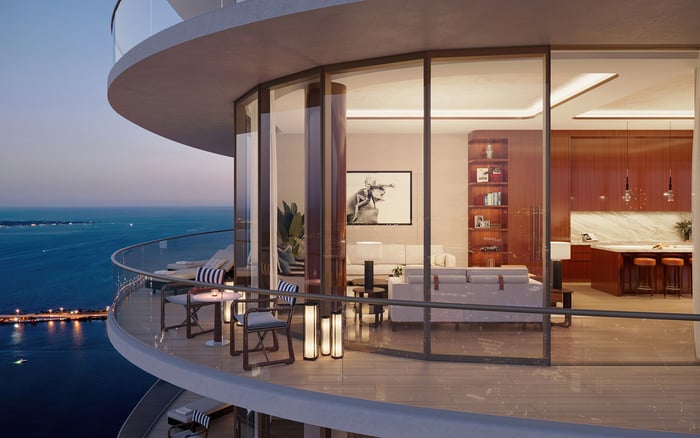
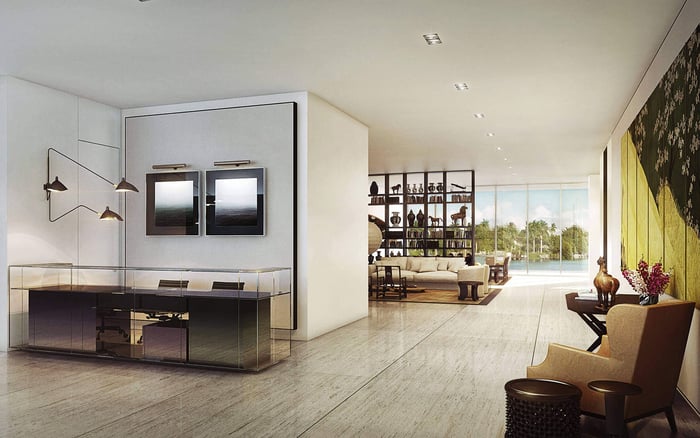
A luxury residence should welcome grandchildren gracefully without asking owners to sacrifice privacy, service, or long-term value. This MILLION guide outlines the practical due diligence that separates truly multigenerational buildings from expensive compromises.
.jpg)
For affluent buyers, grandchildren visits often reveal whether a building is truly well conceived or simply well marketed. A residence can be visually flawless yet function poorly when adult children arrive with strollers, suitcases, swim gear, caregivers, or a family dog. The goal is not to buy a "family building" in the casual sense. It is to choose a property where family use is integrated into the luxury experience so naturally that privacy, calm, and owner comfort remain intact.
That distinction matters across South Florida, whether you are considering the polished urban rhythm of Brickell, the wellness-forward shoreline of Miami Beach, or quieter enclaves with boutique scale and easier circulation. In buildings such as 2200 Brickell or The Well Bay Harbor Islands, the relevant question is not merely whether children can visit. It is whether those visits feel seamless enough that the home still serves beautifully during the 48 weeks of the year when grandchildren are not there.
A grand lobby cannot compensate for a frustrating approach road, an awkward drop-off sequence, or an area that becomes inconvenient once visits grow frequent. Surrounding land use, traffic patterns, transportation access, and future development all shape long-term livability. If grandchildren will come for school breaks, long weekends, or extended holiday stays, think through the entire arrival sequence: the airport run, car service staging, valet wait times, grocery access, pharmacy proximity, and whether nearby destinations work across generations.
For buyers in Broward, this often means looking beyond the tower itself to understand how the district is evolving around it. In waterfront settings, beach access may add obvious lifestyle appeal for younger family members, but sophisticated buyers weigh that appeal against storm exposure, elevation, and resilience planning. Oceanfront glamour is compelling, but convenience and durability matter more when the property is intended for years of recurring family use.
This is also where schools enter the conversation. Even if grandchildren will stay only occasionally, nearby school quality can influence both practicality and eventual resale appeal if the next buyer has a more permanent multigenerational plan.
Multigenerational usefulness begins with a simple test: can the residence absorb extra people elegantly? Buyers should favor true sleeping flexibility, whether that means an additional legal bedroom, a den with real utility, a guest suite with privacy, or a layout that allows children to sleep comfortably without turning the home into a camp-style arrangement.
That does not automatically mean buying the largest unit available. It means choosing a floor plan with intelligent zoning. Grandparents often want grandchildren nearby, but not directly across from the primary suite if wake-up times, naps, and evening routines conflict. A powder room near common areas, a secondary entrance sequence, durable yet refined finishes, and a laundry room that can genuinely handle family turnover all matter more than a dramatic but impractical great room.
Buildings that speak to this sensibility often appear in places where second-home ownership and polished daily service already intersect, from Aria Reserve Miami in Edgewater to **Alina Residences Boca Raton Boca-ratón. The right plan should preserve adult sophistication while quietly accommodating younger guests.
Family-oriented amenities are valuable only if they operate consistently. A playroom, game lounge, or teen space has limited relevance if programming is seasonal, staffing is uneven, or access becomes restricted outside peak periods. Buyers should ask which spaces are genuinely active year-round and which exist mainly for brochure photography.
Outdoor areas deserve even closer scrutiny in South Florida. The best amenity decks offer shaded seating, clear supervision lines, safe pool design, and zones that allow grandchildren to enjoy the property without turning the experience into a constant negotiation between noise and serenity. One generation should be able to read in peace while another swims nearby.
Gathering spaces are equally important. A private dining room, club lounge, or outdoor entertaining area can transform birthdays and holiday meals, allowing families to celebrate on property rather than coordinating reservations across town. At the highest end of the market, this is where a building proves whether it understands hospitality as an everyday service rather than an occasional flourish.
A beautiful residence intended for long-term family use deserves rigorous physical due diligence. In Miami-Dade especially, flood exposure, elevation, and stormwater management should be reviewed carefully, particularly for waterfront and beach-adjacent buildings. Buyers should also confirm that structural work, life-safety systems, and major mechanical upgrades were properly permitted and inspected. A refined building experience depends as much on what is behind the walls as on what is framed by the windows.
Health-centered features can also matter more than buyers initially assume. Air quality, water quality, thermal comfort, and overall interior wellness become especially relevant when older owners and younger visitors share the space for longer stretches. In practice, these details shape sleep, comfort, and the subtle sense of ease that distinguishes a truly superior residence.
For a wellness-minded coastal example, 57 Ocean Miami Beach fits naturally into this conversation, while buyers drawn to boutique privacy may frame similar questions around quieter properties such as Ocean House Surfside. The principle remains consistent: glamour should never outrun resilience.
Luxury is often measured by the small frictions a building removes. Security should protect privacy while still allowing grandchildren, adult children, caregivers, and babysitters to enter without repeated inconvenience. Guest management systems, concierge coordination, and thoughtful front-desk procedures can make arrivals feel smooth rather than procedural.
Parking also matters more than many buyers admit. If family members drive in regularly, guest parking and valet clarity become part of the ownership experience. A building can have excellent finishes and still become tiresome if every visit begins with a parking puzzle.
Smart-home controls can be especially valuable for seasonal owners. The ability to pre-cool the residence, monitor access, adjust lighting, and confirm security before family arrives helps a second home feel immediately ready. Noise control belongs in the same category. Window quality, wall construction, and a unit's position relative to elevators, pools, and event spaces can determine whether grandchildren visits are joyful or simply loud.
Before closing, buyers should review budgets, reserves, assessments, maintenance obligations, and use restrictions with unusual care. Even in the most elevated buildings, condominium and HOA rules shape daily enjoyment. Visitor procedures, pet restrictions, occupancy standards, renovation rules, and delivery policies all affect how gracefully a residence handles frequent family use.
Pet policies are especially easy to underestimate. If grandchildren visit with a dog, or if allergies are a concern, the building's rules and common-area practices become meaningful very quickly. The same is true for any owner who expects help from nannies, caregivers, or recurring household staff.
The most successful purchase is usually not the one with the longest amenity menu. It is the one whose documents, staffing model, physical resilience, and layout all support your real family rhythms without diminishing the elegance you wanted in the first place.
A no-compromise purchase should work today and remain legible to tomorrow's buyer. Flexible layouts, wellness features, quality common spaces, and practical guest services tend to support broader long-term appeal than narrowly themed amenities. If a property functions beautifully for grandchildren visits, there is a strong chance it will also resonate with future buyers seeking adaptable luxury.
That is why the wisest acquisitions are neither juvenile in tone nor austere in spirit. They are residential environments where owners can host three generations one weekend and return to complete peace the next. In that sense, family-readiness is not a concession. It is often a signal that the building has been designed with greater maturity.
What is the first thing to check in a luxury building for grandchildren visits? Start with layout and logistics: sleeping flexibility, guest access, parking, and noise control usually matter more than specialty amenities.
Is a larger residence always the better choice for family visits? No. A well-zoned floor plan with true guest privacy often outperforms a larger but less efficient layout.
Do family amenities actually add value? They can, but only when they are integrated into the overall luxury experience and operate reliably year-round.
How important is flood resilience in South Florida? It is essential, especially for waterfront purchases intended for long-term ownership and recurring family use.
Should buyers verify permits and inspections in newer luxury towers? Yes. Proper approvals for structural, mechanical, and life-safety systems are a basic part of serious due diligence.
Why do HOA documents matter so much for grandparent buyers? They govern reserves, assessments, guest rules, pets, and daily-use restrictions that can shape every family visit.
Are wellness features worth prioritizing? Often yes, because air, water, and thermal comfort affect both younger visitors and older owners during extended stays.
How should I evaluate building security for family use? Look for a balance between strong privacy and easy, well-managed access for relatives, caregivers, and short-notice guests.
Does proximity to schools matter if grandchildren visit only occasionally? It can, because longer stays become easier and school access may also support future resale appeal.
What defines a no-compromise purchase in this category? A building that supports multigenerational visits without sacrificing discretion, service, quiet, or owner comfort.
If you'd like a private walkthrough and a curated shortlist, connect with MILLION.
If branded residences are on your mind — as a home or as an allocation — we would be glad to share what we are seeing, privately.
Begin a quiet conversation