A practical luxury-buyer framework for evaluating how South Florida residences perform when family, friends, and short-stay guests arrive for a weekend.
A residence can be immaculate during a private showing and still falter when a long weekend begins. The second car arrives after dinner. A couple flies in with luggage. Children want the pool before lunch. Someone needs a quiet room for an early call. In South Florida luxury real estate, the weekend-guest test reveals whether a home is merely impressive or genuinely livable.
The test is not about entertaining at scale. It is about friction. The best residences allow guests to arrive, circulate, sleep, park, use amenities, and depart without turning the owner into a concierge. That distinction matters for second-home buyers, seasonal residents, and families who expect their Florida property to operate with the ease of a private resort while preserving the discretion of home.
In dense urban settings such as Brickell, the evaluation often begins outside the apartment. At The Residences at 1428 Brickell, for example, buyers naturally consider not only the residence itself but the choreography of arrival, vertical movement, and daily service. The question is simple: does the building make hosting feel effortless, or does it add another layer of management?
Elevators are one of the least romantic parts of a luxury purchase, yet they shape the daily rhythm more than almost any finish. For owners who entertain, the issue is not speed alone. It is separation, predictability, and dignity.
A guest arriving with luggage should not feel exposed in a crowded service sequence. A resident leaving for dinner should not be delayed by preventable circulation bottlenecks. Staff, deliveries, pets, and visitors all move through the building, and the strongest properties account for those overlapping patterns with clear access logic.
Buyers should ask how guests are announced, where they wait, and whether elevator access can be managed without repeated calls to the owner. In a boutique building, fewer residences may create a more intimate rhythm. In a larger tower, the elevator program must be sophisticated enough to absorb peak moments. Neither model is automatically superior. The best choice is the one that matches the owner’s lifestyle.
The weekend version of the test is revealing: imagine two couples arriving within the same hour while the household is preparing dinner. If the building can handle that moment quietly, it is doing something right.
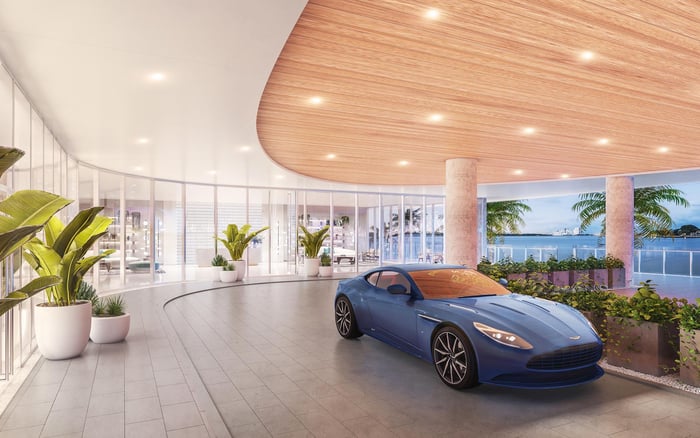
Parking is not glamorous until it fails. For South Florida owners, especially those hosting family from nearby neighborhoods or friends driving in from Palm Beach, Fort Lauderdale, or the Keys, guest parking determines whether the weekend starts calmly or with a phone call from the porte cochere.
The right questions are practical. How are guest vehicles received? Is valet appropriate for the tone of the building? Are temporary spaces intuitive, or do they require an explanation every time? Can a guest leave early without disturbing the household? If the owner has multiple cars, is there enough flexibility for a weekend when visitors overlap with daily drivers?
In Miami Beach residences, where access, beach routines, and restaurant plans often converge, the parking sequence becomes part of the lifestyle. A building such as The Perigon Miami Beach belongs in a conversation about how coastal living handles arrivals, departures, and guest convenience without losing its sense of privacy.
The most refined parking programs are not necessarily the most visible. They are the ones guests barely remember because the handoff was clean, the car was handled correctly, and no one needed to text the owner for instructions.
A guest suite succeeds when it allows visitors to feel considered without becoming too embedded in the owner’s private life. In luxury condominiums and estates alike, the suite should answer four questions: where the guest sleeps, where they store luggage, where they bathe, and where they can retreat.
A beautiful bedroom with no storage is not a suite. A secondary room near the primary bedroom may work for children but not for adult guests. A den with a sleeper sofa can be useful, but only if the nearby bath supports it gracefully. For owners who host often, the relationship between guest quarters and the kitchen, terrace, elevator foyer, and powder room matters as much as square footage.
New-construction buyers sometimes focus first on ceiling heights, views, and amenity decks. Those elements matter, but the weekend-guest test asks a different question: can this plan absorb real people with luggage, routines, and privacy needs? A residence with one fewer dramatic gesture but a better guest wing may live more luxuriously over time.
In waterfront and island settings, the issue can become even more nuanced. Fisher Island ownership, for instance, often implies extended stays by family or friends rather than quick drop-ins. At The Residences at Six Fisher Island, the broader lifestyle conversation naturally includes how private domestic space supports guests without diluting the owner’s sanctuary.
Amenities are no longer decorative. They are part of the operating system of a luxury building. Pools, fitness rooms, lounges, wellness areas, beach service, private dining rooms, and children’s spaces all raise the same question: how does a guest participate?
The answer should be clear before purchase. Some owners want guests to enjoy amenities freely while staying with them. Others prefer stricter controls that protect resident calm. Both positions are valid. The important point is alignment between the owner’s hosting style and the building’s access culture.
A Sunny Isles buyer who expects family to use the pool and beach throughout the day may evaluate guest policies differently from a downtown owner who hosts mainly for dinners and overnight stays. At Bentley Residences Sunny Isles, the amenity conversation is naturally tied to privacy, cars, vertical living, and the expectations of a branded residential environment.
Ask whether guests need wristbands, passes, registration, or resident accompaniment. Ask whether private rooms can be reserved and how far in advance. Ask whether seasonal rules change during holidays. The purpose is not to challenge the building’s standards. It is to understand whether those standards will support the way you actually live.
The most successful host residences create a boundary between generosity and retreat. A guest can enjoy breakfast, swim, take a call, and return from dinner without requiring constant direction. Meanwhile, the owner still has a private bedroom, bath, dressing area, office, or terrace that remains untouched by the weekend flow.
This is where floor-plan literacy matters. Split-bedroom layouts, secondary entries, service corridors, powder rooms near entertaining areas, and terraces large enough for multiple uses can all improve the guest experience. So can subtle details: a place for beach bags, a secondary refrigerator, acoustic separation, or an elevator foyer that gives arrivals a moment to compose themselves.
Coconut Grove, Coral Gables, Boca Raton, Fort Lauderdale, and Palm Beach each express hospitality differently, but the principle is consistent. The home should be gracious without surrendering control. At Alina Residences Boca Raton, buyers considering a more composed residential rhythm may think carefully about how overnight guests fit into daily wellness, dining, and outdoor routines.
During a showing, walk the guest path rather than only the owner path. Begin at the curb. Continue through the lobby, elevator, corridor, residence entry, guest room, bath, terrace, and amenity spaces. Imagine luggage, groceries, wet swimsuits, a late arrival, and an early departure. Luxury becomes visible when none of those moments feel awkward.
Also consider the emotional tone. Does the building feel welcoming without feeling public? Does staff interaction seem polished without feeling theatrical? Does the residence allow a guest to feel independent without feeling abandoned? These are soft measures, but sophisticated buyers recognize their importance.
The weekend-guest test is ultimately a test of stewardship. It protects the owner from buying a beautiful residence that performs poorly under real use. It also identifies the rare property where design, service, access, and privacy work together so seamlessly that hosting feels like a pleasure rather than an event plan.
What is the weekend-guest test in luxury real estate? It is a practical way to evaluate how a residence performs when visitors arrive, stay overnight, use amenities, and depart.
Why do elevators matter for hosting? Elevators shape privacy, timing, and the first impression of arrival, especially when multiple guests, staff, and deliveries overlap.
What should buyers ask about guest parking? Buyers should ask how guest vehicles are received, whether valet is available, and how departures are handled without disturbing the owner.
Is a guest suite the same as an extra bedroom? Not necessarily. A true guest suite should provide sleep space, storage, bath access, and enough separation for comfort.
How should amenity access be reviewed? Buyers should understand registration, passes, guest limits, reservation rules, and whether policies shift during peak periods.
Does this matter more for a second home? Yes. Second-home owners often host family and friends during concentrated stays, so small operational flaws become more noticeable.
Are boutique buildings better for weekend guests? They can feel more intimate, but the right answer depends on staffing, access systems, elevator planning, and the owner’s lifestyle.
What is the biggest mistake buyers make? Many buyers focus on the primary suite and views before testing the route a guest actually takes through the property.
Should guest policies affect resale thinking? Yes. Clear, elegant guest logistics can broaden appeal for future buyers who value hosting and seasonal flexibility.
When should buyers evaluate these details? They should review them before contract, ideally during showings, plan review, and building-policy discussions.
For a discreet conversation and a curated building-by-building shortlist, connect with MILLION.
If branded residences are on your mind — as a home or as an allocation — we would be glad to share what we are seeing, privately.
Begin a quiet conversation